[pageLogInLogOut]

#Recycling / Circular Economy

Toray to domestically sell chemical recycled fiber products derived from fishing nets
© 2022 Toray
Toray Industries, Inc., announced today that it will begin selling nylon 6 chemically recycled fiber (N6CR) yarns, textiles, and other products in Japan from March 2023. These offerings will apply Toray’s depolymerization and repolymerization technology to recycled plastics and other materials that Refineverse Group, Inc., makes from recovered fishing nets.

Toray looks for N6CR product sales to rise from around 800 million yen in the year ending March 31, 2023, to 1.2 billion yen two years later.

This year, Toray set up a new production system at its Nagoya Plant that identifies virgin raw materials from fossil sources. This setup comprises a raw materials input facility for recycled fishing net-derived resin and recycled lactam storage tanks. This setup will recycle nylon 6 fiber products, accelerate efforts to develop an advanced fiber to fiber recycling business, and contributing to a circular economy.

The world is increasingly interested in Sustainable Development Goals and environmental, social, and governance issues. Demand is growing for eco-friendly materials and products for apparel. In industrial applications, demand is surging for switching away from petrochemical feedstocks and for conserving resources.

Toray’s new N6CR facility will enable it to overcome technical challenges and reinforce its range of high-performance, high-value-added nylon fibers for apparel. The company looks particularly to expand sales of thin, eco-friendly fabrics for sports and outdoor wear, innerwear, and legwear.

Common applications for industrial nylon fiber are automotive parts, ropes, fishing nets, carpets, and other general industrial materials. Toray’s endeavor will help cut environmental impacts across an array of industrial fields and drive uptakes of sustainable resources.

Toray will expand its advanced fiber to fiber recycling business by collaborating with customers in initiatives to sell products incorporating its N6CR materials. Such endeavors will be in keeping with the company’s commitment to innovating ideas, technologies, and products that deliver new value.

One goal of the Toray Group Sustainability Vision is to help the world manage resources sustainably by 2050. Toray will accordingly keep pursuing that vision to help eliminate resource depletion and marine pollution from large amounts of waste, cut carbon dioxide emissions, and tackle other issues to materialize a circular economy.


1. Overview

(1)? Planned sales launch: March 2023

(2)? Annual production: Around 400 metric tons

(3)? +Sales target: 800 million yen in year ending March 31, 2023, rising to 1.2 billion yen in year ending March 31, 2025


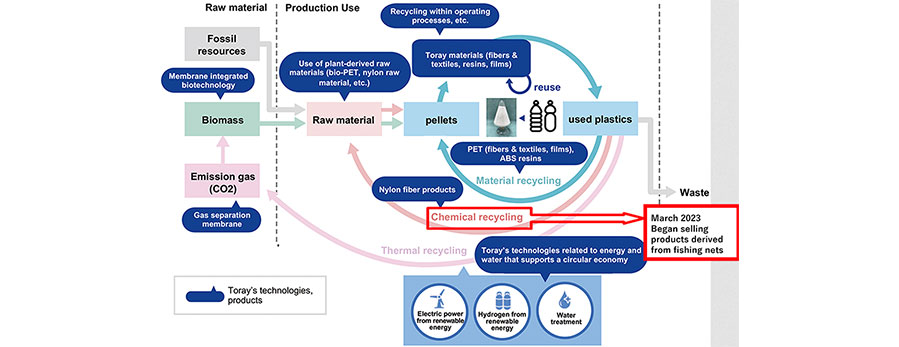
2. Toray Group circular economy initiatives 


Reference

Refineverse Group website

https://r-inverse.com/


More News from Toray Engineering Co. Ltd.

#Recycled Fibers

Toray develops Polyester-Nylon fiber containing at least 93% recycled material by mass

Toray Industries, Inc., announced today that it has developed a polyester-nylon fiber with at least 93% recycled content by mass, based on the total weight of the raw yarn. This percentage applies to the newly developed raw yarn and does not represent the recycled content of the finished fabric or garment.

#Man-Made Fibers

Toray develops AURLIST™ polyester filament fiber with luxurious luster and ultra-fine structure

Toray Industries has developed AURLIST™, a new polyester filament fiber designed to combine luxurious luster, soft loft and a subtle fibrillated surface texture. The company primarily targets applications in women’s apparel such as tops, bottoms and dresses.

#Recycling / Circular Economy

Toray develops recycling technology that retains carbon fiber strength and surface quality

Toray Industries, Inc., announced today that it has developed a recycling technology that can decompose diverse carbon fiber reinforced plastics (CFRP) made from thermosetting resins while retaining the strength and surface quality of those fibers. The company drew on this technology to create a nonwoven fabric employing recycled carbon fibers.

#Composites

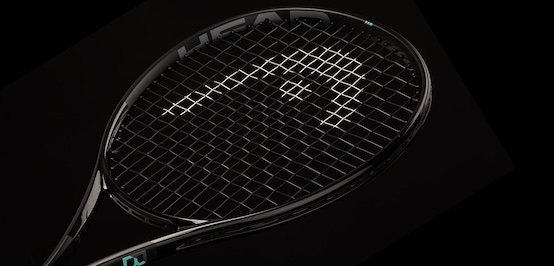
HEAD launches more sustainable(1) BOOM RAW racquet on Earth Day by using Toray’s bio-circular carbon fibers

HEAD continues to innovate with the launch of the BOOM RAW tennis racquet, an encouraging development in the search for a more sustainable future for racquet sports. All of the carbon fibers are bio-circular carbon fibers in the limited-edition and highly innovative BOOM RAW racquet, which offers the same explosive power - along with the same fun, feel and easy playability - as the regular, in-line BOOM racquet. The bio-circular carbon fibers are manufactured by Toray and its subsidiary Toray Carbon Fibers Europe.

More News on Recycling / Circular Economy

#Recycled Fibers

Recover and SUPIMA partner to develop recycled Pima cotton fibers and yarns

Recover and SUPIMA have partnered to turn waste from SUPIMA cotton production into a new line of recycled fibers and yarns. The collaboration will explore how recycled American-grown Pima cotton can be used in a wider range of yarns and garments for the premium market.

#Recycling / Circular Economy

ReSpin founder Åsa Strandberg receives Innovation Champion of the Year 2026 award

Åsa Strandberg, founder and CEO of Swedish textile recycling company ReSpin AB, has been named Innovation Champion of the Year 2026. The award recognises her development of RespinJenny, a patented technology designed to recycle textile waste into new, high-quality fibres without using water, chemicals or additional virgin raw materials. The distinction was presented by the Olle Oscarsson Foundation and Axera Inkubator at Guldgalan in Sweden.

#Recycling / Circular Economy

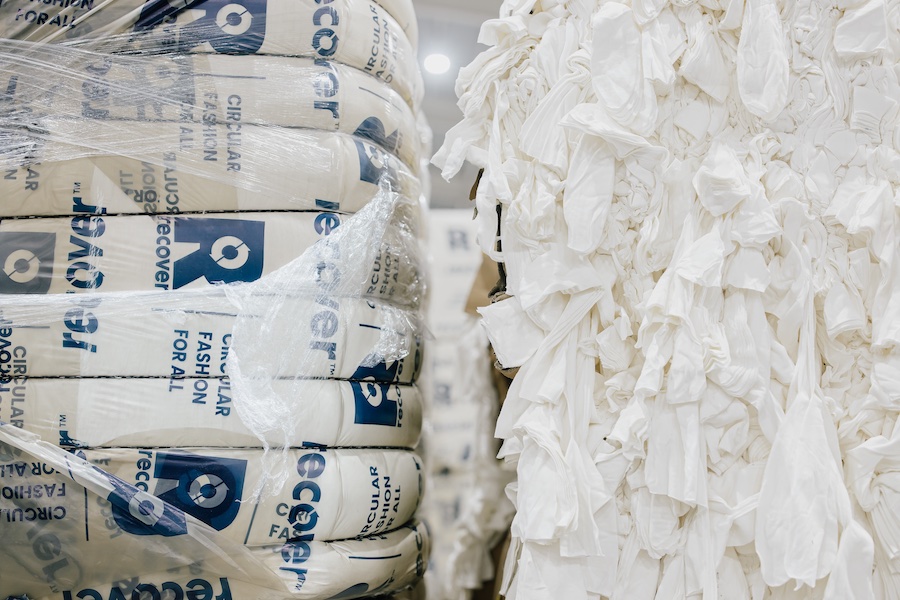
Circulose resumes recycling of discarded cotton textiles and appoints interim CEO

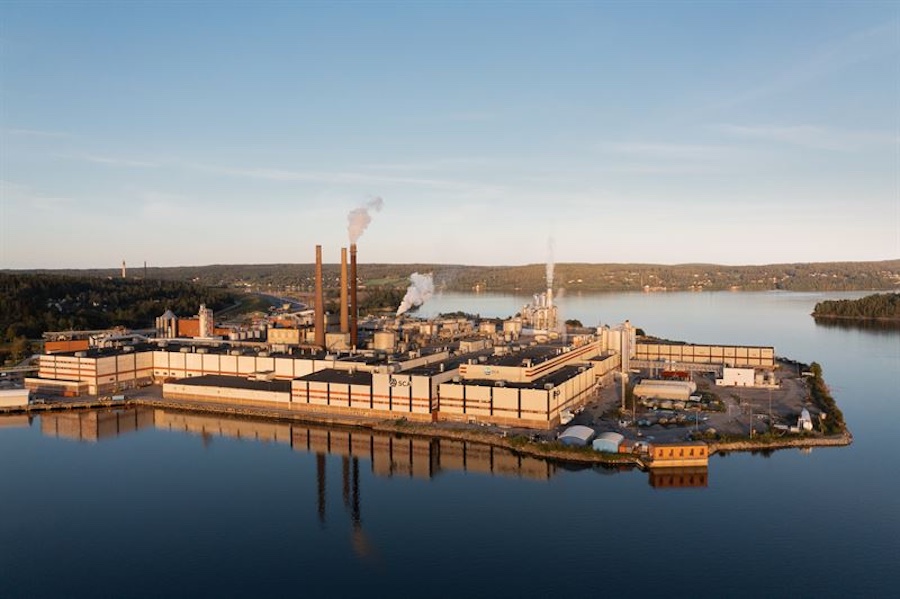
Circulose today announced its restart of commercial-scale production plant at Ortviken in Sundsvall, Sweden, marking a significant step in scaling next-generation materials for the global fashion industry. The Ortviken plant is the world’s first commercial-scale chemical textile recycling facility. Its restart demonstrates that the fashion industry is seeking ways to scale proven solutions that move beyond pilots and into commercial production.

#Recycled Fibers

Reju expands textile-to-textile recycling network with six international fabric manufacturers

Reju, a textile-to-textile regeneration company, is expanding its industrial network through collaborations with six fabric manufacturers in Europe and the Americas. The initiative aims to accelerate the integration of regenerated polyester into textile manufacturing and support the development of finished fabrics for commercial applications.

Latest News

#Associations

Christoph René Holler to succeed Uwe Mazura as managing director of textil+mode

Christoph René Holler will take over as managing director of textil+mode, the German textile and fashion industry confederation, on 1 January 2027. He succeeds Uwe Mazura, who has led the association for 13 years and will remain in charge of collective bargaining policy through the next round of negotiations before retiring.

#Heimtextil 2027

Heimtextil and The Florentin showcase the role of textiles in hotel design

Heimtextil has partnered with Frankfurt hotel The Florentin by Althoff Collection for its new Interior.Architecture.Hospitality campaign. The collaboration will give architects, interior designers and other contract-sector professionals a closer look at how textiles were used in the hotel. The two studios behind the project will discuss their work at Heimtextil on 14 January 2027 in Hall 4.1.

#EU Textile Strategy

EU Commission proposes advanced materials agenda with targets for 2035

The European Commission has proposed an Advanced Materials for Europe agenda to accelerate the development, production and adoption of safer and more sustainable advanced materials. The proposal sets three benchmarks for 2035 and calls for closer coordination among EU member states to help move new materials from the laboratory into industrial production.

#Research & Development

Empa develops liquid-core fibre for insecticide-treated mosquito nets

Empa researchers have developed a liquid-core fibre for mosquito nets that can incorporate insecticides unsuitable for conventional melt spinning. The fibre gradually releases the active ingredient through a polymer sheath. The team developed and tested the yarn over three years in the Innosuisse project MalCoFil with Swiss industry partners Vestergaard and Monosuisse.

TOP