#Recycling / Circular Economy
Recycling paths are best walked jointly: This year’s Advanced Recycling Conference (ARC) showed the importance of collaboration

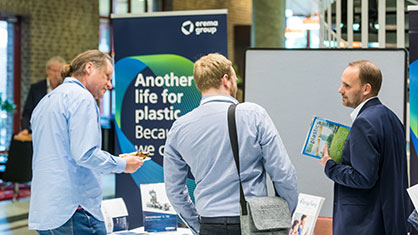
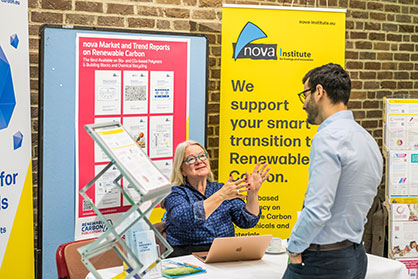
At the Advanced Recycling Conference (ARC), 230 participants from 21 countries discussed future opportunities and celebrated technological success stories. The conference took place from 14–15 November 2022 in Cologne, Germany. As the term “advanced recycling” refers to any process that reaches beyond mechanical recycling, it also includes chemical and specialised physical recycling technologies. Presenting speakers covered urgent topics such as technologies, sustainability, policy and regulation, as well as co-operation, financing, and digitalisation. During the seven panel discussions participants submitted more than 300 questions and proved the intense need for dialogue and exchange. The active participation emphasised the high interest in advanced recycling solutions and needed multi-perspective discussion. Exhibitors presented their innovative services, strategies and technology solutions, while participants labelled the ARC debut a complete success.
Building bridges towards optimised recycling
While each industry requires materials with specific properties and faces individual recycling challenges, they all have one thing in common: They want and need suitable, as well as environmentally and economically viable recycling solutions that provide high quality materials.
In a variety of legislative initiatives under the Green Deal, the EU is working on setting high mandatory recycled content quotas for many products – from packaging over textiles to cars and others. Recently leaked ambitions on mandatory recycled content for packaging aim at a ten-fold increase in the use of recycled material in this sector by 2040. While ambitious recycling targets are an important driver for investment and development, the current political framework is still lacking relevant details, especially with regard to chemical and other advanced recycling technologies. Technological pioneers are currently exploring and implementing ways to actively shape the path towards a truly circular economy, by developing technologies to recycle a wide array of waste into high-value chemicals. However, it is still unclear how chemically recycled materials can be accounted for, which stimulates discussions around mass balancing methods. The current development of end-of-waste criteria on plastic waste by the JRC excludes chemical recycling from scope. This needs to be addressed by policy makers rather sooner than later in order to provide security for investments.
The great variety of ARC presentations and speakers showed that many of these ambitious recycling goals can only be achieved jointly. They all emphasized the importance of collaboration, partnerships, and fusions. By merging expertise, experience, financial forces, value chains, and technologies, many companies proved that success is often only a handshake away. Strong partnerships allow to maximise recycling volumes, improve the properties and quality of the generated feedstock but also lower costs and increase feedstock safety. All of them follow two overarching goals: to minimise waste and resource-loss while also securing carbon feedstock for the chemical and material industry.
Recent announcements leave the sector optimistic, as they point towards strategies that build bridges between conventional mechanical recycling and advanced recycling technologies, where both elements complement each other in order to achieve best possible recycling results.
Representatives of a broad range of sectors scouted the newest developments in advanced recycling including the (petro-)chemicals, materials, and recycling industry, as well as machines, technology- and service providers, brands and investors, academia and research institutes, associations, networks, and press.
Smart technologies for PET-recycling
The conference covered various waste stream hot spots, such as packaging, textiles, composites, and rubber. While some waste streams allow easy recycling via conventional mechanical recycling, others require complementing measures or can only be processed through advanced recycling. One special focus was set on the polymer PET, which is part of numerous waste streams with vastly different recycling requirements. In consequence, PET waste streams are as diverse as the recycling technologies tackling this issue.
ARC also presented new and unique solutions, including various twin-screw extruder setups. Those extruders can function as reactors for chemical recycling processes, as well as pre- and post- treatment elements and realise high throughputs of up to 20 t/h. In order to depolymerise PET into its building units that then can be reintroduced into the production cycle, chemical PET recycling techniques like the intensely discussed solvolysis, utilise solvents or other chemicals to initiate alcoholysis or hydrolysis. While methanol and glycol have established themselves as effective solvents, they are also the subject of critical claims. An alternative approach was presented in the form of enzymatic recycling, where the deconstruction of PET into its building blocks is executed by enzymes.
What’s up next?
The Advanced Recycling Conference 2022 left participants inspired and motivated to strive for new and best possible recycling solutions. All introduced technologies prove that we can incorporate smart solutions, recycling methods, and renewable material into our industries and close the carbon loop for a sustainable future. Advanced recycling does not only allow the recycling of difficult waste streams, but also presents a key source for renewable raw materials. It hereby secures the renewable carbon supply for the chemical and materials industry. Plenty more developments are ahead of us in the dynamic sector of advanced recycling.
The second edition of the Advanced Recycling Conference is scheduled for 28–29 November 2023 and will provide the ideal opportunity to present recent developments to a broad and relevant audience.
Stay informed about the upcoming programme of the Advanced Recycling Conference 2023 at https://advanced-recycling.eu.
We kindly thank our sponsors for their great support. In this year the following sponsor companies enriched the ARC event with their participation:
Alfa Laval (SE) showed disc stack separators for industrial fermentation and algae processes in food and pharma industries. BASF (DE) presented Chemicals, Materials, Industrial Solutions, Surface Technologies, Nutrition & Care and Agricultural Solutions. Last but not least the manufacturer Erema Group (AT) demonstrated plastic recycling machines as well as their innovative system components.
Special thanks also go out to the conference partners BCNP Consultants (DE), CLIB – Cluster Industrial Biotechnology (DE), IBB – Industrielle Biotechnologie Bayern (DE), kunststoffland.NRW (DE), PlasticsEurope Deutschland (DE) and the RCI – Renewable Carbon Initiative (international).
Discover the full spectrum of advanced recycling solutions in nova’s report “Mapping of advanced recycling – Providers, technologies, and partnerships” and benefit from our 20 % winter special using the code Winter22 until 6 January 2023. The report is available under https://renewable-carbon.eu/publications/.