[pageLogInLogOut]

#Recycling / Circular Economy

Advancing circular solutions with chemistry

At its first appearance at the IFAT trade fair, Covestro will be presenting innovative recycling technologies, among other things. Shown here is a pilot plant for smart pyrolysis. © Covestro
Plastics manufacturer Covestro is presenting recycling methods for the Circular Economy at the IFAT trade fair. At the joint booth of the German Society for Waste Management (DGAW) (Hall/Booth: A6 125/224), Covestro will provide an overview of innovative technology approaches with which plastics from the product portfolio can be mechanically and chemically recycled. Covestro is also a co-exhibitor at the joint stand of the VCI (German Chemical Industry Association, Hall/Booth: A6 231), which is entirely dedicated to the topic of chemical recycling.
  • Innovative development for chemical recycling processes
  • New product applications designed for recycling
  • Circular product concept launches with Desmodur®CQ

Covestro intends to focus entirely on the Circular Economy. The company is driving the development of innovative and resource-saving processes to make its products recyclable to meet this goal. That is why Covestro intends to offer more material solutions based on sustainability and circularity in the markets in which it is active. Covestro's own technological development is focused on four recycling approaches. In addition to mechanical recycling, which is already used for the high-performance plastic polycarbonate and thermoplastic polyurethane (TPU), Covestro is developing chemical recycling processes: These include chemolysis, smart pyrolysis and enzymatic recycling. The aim of these processes is to produce recycled plastics in virgin material quality while significantly reducing the environmental footprint compared to the conventional fossil-based production of polymers and polymer raw materials. Covestro applies its core competence in chemistry to process development.

"We see ourselves as the driving force behind the Circular Economy industry that is currently being developed, where the chemical and waste management industries will have to grow closer together in perspective and synergies will have to be created," explains Markus Steilemann, Chairman of the Board of Covestro. "We are moving forward here with vigor for the entire industry: with various recycling approaches, we can systematically recover the different raw materials we need for the production of our plastics. Our goal is to fully circularize materials from end-of-life products to save fossil raw materials and greenhouse gas emissions, while offering recycled high-performance materials in virgin quality." The company plans to invest around one billion Euro in Circular Economy projects by 2030. In Leverkusen, Covestro already operates a pilot plant for the chemical recycling of flexible polyurethane foams.
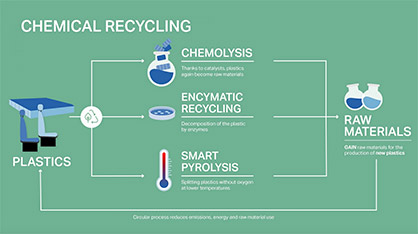
In addition to mechanical recycling, Covestro also develops chemical recycling processes. These include chemolysis, smart pyrolysis and enzymatic recycling. © Covestro


In addition, Covestro will showcase how circular solutions in the product portfolio can be made even more visible to customers at IFAT in Munich. With the "CQ" concept, in the future Covestro will highlight the alternative raw material base in products if it is at least 25 percent. "CQ" here stands for Circular Intelligence. Among the first "CQ" products is Desmodur®CQ. Polyurethanes based on Desmodur®CQ are deployed, for example, in upholstered furniture, mattresses and thermal insulation. They are used, for example, as coatings for cars or household appliances.

 "In order to take meaningful climate protection measures, we need a change, a paradigm shift, for us, our customers and everyone else in the entire value chain. At the same time, the benefits must be clear in the application of such solutions. The chemical industry must fundamentally change as a central part of the value chain - toward alternative raw materials and renewable energies," says Sucheta Govil, Chief Commercial Officer at Covestro. "We have set ambitious targets to make our production fully circular and ultimately independent of fossil resources. In doing so, we are supporting a wide range of industries to reduce the carbon footprint of their own products," Govil said.


Cooperations provide contribution to full Circular Economy

New recycling processes and cooperation with partners from industry and research are making an important contribution to achieving full circularity. For example, Covestro is coordinating the EU project "CIRCULAR FOAM" with 22 partners from nine countries. The aim of the project is to develop innovative chemical recycling processes for rigid polyurethane foams. As an insulating material, rigid polyurethane foams contribute to the energy efficiency of refrigerators and buildings - but coordinated waste management and suitable recycling processes are still lacking for a sustainable life cycle. Chemical recycling could save up to one million tons of waste and 2.9 million tons of CO2 annually from 2040.

Markus Steilemann and Sucheta Govil at IFAT

To kick off IFAT on Monday, May 30, 2022, Sucheta Govil will be a guest on the show's opening session. The topic will be the role of environmental technologies for a more sustainable future. Participants will include founder Mikela Druckman, an expert on AI in recycling and a member of the WEF Global Future Council; Prof. Dr. Erich Zahn, co-author of the Club of Rome report "The Limits to Growth"; Dr. Johannes Kirchhoff, Board of Management of the Circular Economy Initiative from the Federation of German Industries; and Ren Xiaoyuan, (UNEP) Young Champions of the Earth 2020 and founder of the water information network MyH2O.

CEO Markus Steilemann will discuss the topic "Global Value Creation in the Crisis? The Circular Economy as Europe's Response" on a BDI panel on Tuesday, May 31, at 2:15 p.m. with Delara Burkhardt, environmental policy spokeswoman for the Socialists and Democrats delegation in the European Parliament, Dr. Christoph Epping, head of the Circular Economy subdivision at the German Federal Ministry for the Environment, Nature Conservation, Nuclear Safety and Consumer Protection, and Wolfgang Niedermark, member of the BDI's Board of Management. On Wednesday, June 1, Markus Steilemann will give an introduction at 12:15 p.m. to the panel discussion "Chemistry for circular mobility: Chemical recycling as a building block of circular value creation for automotive?" with experts from Audi, Covestro and TU Dortmund University.

Covestro at IFAT 2022 in Munich, Germany

• DGAW booth (Hall/Booth: A6 125/224) and VCI booth (Hall/Booth: A6 231)

• Monday, 30 May, 11:50 a.m. - 1 p.m.: Opening panel "How to create change?" - From activism and politics to environmental solutions and impacts" with Sucheta Govil (Forum Water Hall C3. 139/238)

• Tuesday, May 31, 2:15 p.m., (Hall C6, Room C62a, BDI Initiative Circular Economy), and Wednesday, June 1, 2022 (12:15 p.m., Hall A5 | 317/416 | Waste / Secondary Materials Forum): Markus Steilemann visits IFAT


More News from Covestro AG

#Smart Textiles

Covestro, FILK Freiberg, and OUT e.V. develop flexible, conductive polymer smart textile system

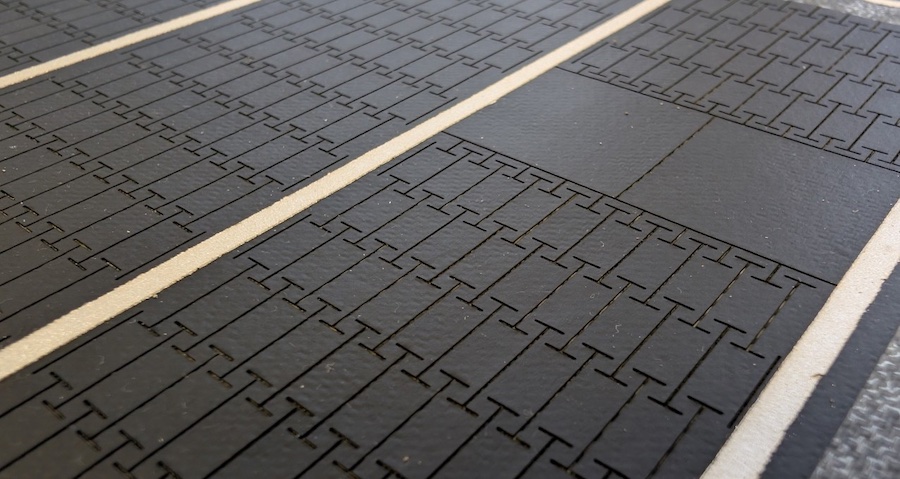
As the smart textiles market continues to grow across healthcare, personal protection, sportswear, and automotive applications, developers are seeking new ways to integrate electronic functionality directly into textiles, without the rigidity and complexity of conventional wiring. To address this challenge, FILK Freiberg Institute, an independent research institution with expertise in polymer coatings for textile applications, collaborated with Optotransmitter-Umweltschutz-Technologie (OUT) e.V. The joint project, funded under the German Industrielle Gemeinschaftsforschung (IGF) program of the Bundesministerium für Wirtschaft und Energie (BMWE), focused on developing flexible, conductive polymer surfaces for next-generation smart textiles.

#Techtextil 2026

Covestro to exhibit solutions for a more sustainable and productive textile industry at Techtextil 2026

Covestro will present a broad portfolio of material innovations for textile coatings, adhesive films and thermoplastic polyurethanes (TPUs) at Techtextil 2026 (Hall 11.0, Booth C79). The exhibits will demonstrate how advanced solutions can enhance durability, recyclability and manufacturing efficiency across applications such as automotive, infrastructure, protective apparel and sportswear. A particular focus will be on more sustainable coating technologies, including antimicrobial systems based on INSQIN® in combination with AGXX from Heraeus Precious Metals, as well as the integration of Pontacol® thermoplastic adhesive films into Covestro’s offering.

#Technical Textiles

Covestro showcases monomaterial concept in autonomous SUE People Mover

UE | STUDIOS has unveiled the fully autonomous electric minibus “Self-driving Urban E-Shuttle” (SUE), placing strong emphasis on sustainable material design. Developed within a project funded by the Federal Ministry for Economic Affairs and Energy (BMWE) and the European Union, the vehicle will begin public road testing this year. At the core of the concept is the consistent use of recyclable monomaterials to improve circularity at end of life.

#Textile chemistry

Covestro and Heraeus Precious Metals collaborate to enable safer, more sustainable antimicrobial textile coatings

Laboratory tests reveal that AGXX antimicrobial surface technology from Heraeus Precious Metals is fully compatible with Impranil® PU dispersions which are part of the waterborne INSQIN® textile coating technology from Covestro, paving the way for more sustainable antimicrobial textile coatings. This discovery comes at a key moment for the textile coatings industry. As the sharing economy continues to grow, more people are coming into regular contact with high-use surfaces, creating ideal conditions for bacteria, viruses, and other microorganisms to thrive.

More News on Recycling / Circular Economy

#Research & Development

ALADIN paves the way for circular and demand-driven textile production in Europe

Textile production can be organized sustainably by utilizing short supply chains and preventing overproduction. This can already be achieved today by intelligently connecting and efficiently utilizing existing infrastructure. At the same time, production becomes circular when innovative technologies and materials are used that enable high-quality recycling. The ALADIN research project, launched in May 2026 and co-funded with five million euros under the EU Horizon Europe program, is creating the conditions for this.

#Recycling / Circular Economy

Ence and ShareTex begin initial testing of the ATENEA innovation project to promote textile recycling in Spain

Ence and ShareTex are making progress on the Atenea R&D project, which aims to develop a complete value chain for textile recycling in Spain. Specifically, the goal of the ATENEA project—which is funded by the Center for Technological Development and Innovation (CDTI)—is to connect all the necessary stages for the recovery of textile waste, from collection and management, through recycling and transformation into new raw materials, to their incorporation into new textile products.

#Recycling / Circular Economy

DePoly Inaugurates its Showcase Plant in Monthey Switzerland

What if used plastic bottles, PET packaging material and polyester textiles could become raw materials just as high performing as virgin resources? That is the ambition of DePoly, a circular materials company based in Sion, Switzerland which inaugurated its Showcase Plant in Monthey on July 6th & 7th. The first depolymerization facility of its kind and scale in Switzerland, this industrial Showcase Plant represents a major milestone in the company's growth and its journey toward commercialization.

#Recycling / Circular Economy

Commission clarifies rules on plastic bottles recycling

The European Commission today adopted new rules on recycling of single-use plastic beverage bottles made primarily of polyethylene terephthalate (PET bottles). These rules establish, for the first time, a methodology to calculate, verify and report chemically recycled content. This is part of the Commission’s December 2025 plastics package.

Latest News

#Nonwovens

Katharina Obergruber appointed to the Management Board of Sandler AG

The Supervisory Board of Sandler AG has appointed Katharina Obergruber to the company’s Management Board. Effective September 1, 2026, the Board will consist of Philipp Ebbinghaus (CEO), Dr. Ulrich Hornfeck (currently CCO, future COO), and Katharina Obergruber (CCO). Katharina Obergruber, currently Chief Sales Officer Hygiene and member of the Management Team of Sandler AG, will assume responsibility for all sales activities as Chief Commercial Officer. She will assume this role from Dr. Ulrich Hornfeck, who will focus primarily on production and supply chain topics.

#Sustainability

Global Standards establishes new non-profit foundation to strengthen governance

Global Standards gGmbH, the nonprofit organisation behind the globally recognised Global Organic Textile Standard (GOTS), announced a new governance structure designed to support its long-term mission and reinforce organisational autonomy of its Voluntary Sustainability Standards and programmes.

#Textile chemistry

DyStar releases FY2025 sustainability report, marking a new milestone towards its 2030 targets

DyStar, a leading specialty chemicals company with more than a century of expertise in product development and innovation, today announced the release of its FY2025 Sustainability Report, marking a significant milestone in its sustainability journey and reinforcing its commitment to long-term value creation.

#Research & Development

TERIS reaches milestone: Fraunhofer consortium develops new standards for tire analysis

In the “TERIS” project, the Fraunhofer institutes ICT, IGD, and IWM—led by the Fraunhofer Institute for Structural Durability and System Reliability LBF—have reached a decisive milestone. For the first time, the teams aim to generate, analyse, and predict tire wear in the laboratory in a standardized and practical manner. As part of this milestone, results are now available on reference abrasion, particle analysis, tribological models, AI-based surface analysis, a test bench concept, and methods for accelerated aging and VOC detection. The tire industry, testing services, and environmental agencies will in future benefit from reliable, rapid laboratory procedures for emissions assessment.

TOP