[pageLogInLogOut]

#Recycling / Circular Economy

Solvay announces groundbreaking solution for recycling PVDC
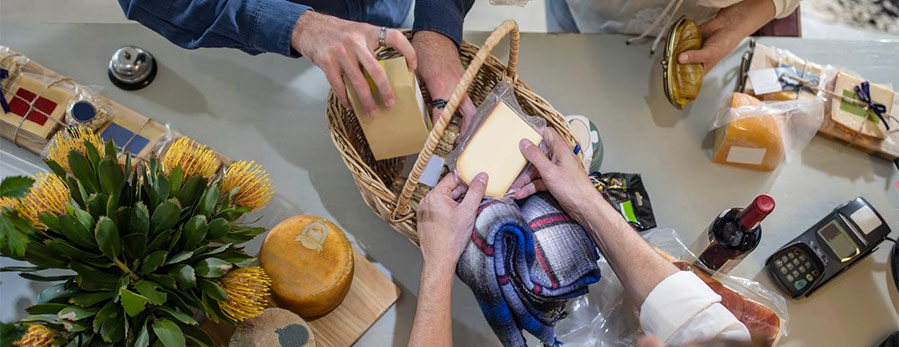
© 2021 Solvay
Scientists at Solvay have developed an innovative process that could revolutionize the future recycling of PVDC food packaging

Solvay, a science company delivering high performance materials for safe and reliable food packaging, has conducted a proof of concept showing that polyvinylidene chloride (PVDC) has the potential to be recycled. PVDC is used in food, beverage and healthcare multilayer barrier packaging across the world. 

The proof of concept involves a process to recycle Ixan® PVDC bioriented film from a post-industrial waste source from food packaging without compromising the performance of the high barrier polymer. It marks an important step towards more sustainable and circular packaging applications, with the potential to launch other initiatives like recycling post-consumer packaging containing PVDC.

“The proof of concept developed by our research team is a solution for PVDC packaging circularity. It shows there is a possibility to reintegrate the recycled polymer into future applications, meaning it can be re-used and re-blended with virgin materials – without losing or degrading its high barrier properties."

Claire Guerrero, Global Marketing Manager for Packaging Segment and Sustainability


“The recycling technology developed by our team enables us to achieve the right quality so that the recycled PVDC meets the strict requirements for indirect food contact, creating the closed loop,” adds Yves Vanderveken, Senior Project Portfolio Leader R&I.

Maintaining the high quality of the polymer was essential to Solvay in their quest to find a sustainable solution. Solvay specialty polymer’s function of providing a strong barrier against water, oxygen and aromas is why it is used in essential applications to preserve food and reduce waste. A reduction of these properties would defeat its purpose. 

Now that this initial breakthrough has been achieved, Solvay is urging fellow companies operating within the plastics industry to work together to turn the recycling of PVDC into reality. There is a particular need to introduce the infrastructure required to collect and segregate packaging containing PVDC.

“It goes without saying that setting a global PVDC recycling stream is a huge task, so we are therefore inviting our fellow companies to work alongside us to introduce a way to recycle PVDC across the globe. We all have a role to play in the plastic packaging recycling challenge, and Solvay is committed to playing its part," adds Claire Guerrero.

The results of this proof of concept are opening new possibilities to test the recyclability concept on other packaging applications using PVDC.




More News from TEXDATA International

#ITM 2026

ITM 2026: The new geography of textile production

New production hubs are emerging across North Africa and Central Asia, while Türkiye is accelerating its transformation toward higher-value, technology-driven and more sustainable textile manufacturing.

#Research & Development

“Production is a product”

From technical textiles and AI-driven robotics to the limitations of textile circularity: Professor Dr Thomas Gries looks back on more than two decades of development at ITA Aachen. In the interview, he explains why production technology remains a decisive success factor, discusses international collaborations and innovation ecosystems, and shares his views on the transformation of production landscapes and the challenges facing an increasingly regulated industry.

#Knitting & Hosiery

“We need to move away from the price trap and return to a value-driven mindset.”

With its new Textile Innovation Center, KARL MAYER is sending a strong signal for innovation, collaboration, and the future of textile applications. In this interview, Karl Josef Mayer discusses new opportunities in warp knitting, the processing of staple fibres, recycling, the changing role of machinery manufacturers, and why the textile industry must once again focus more strongly on the value of textiles. by Oliver Schmidt

#Associations

“Innovation, resilience and international experience remain the great strengths of the Swiss textile machinery industry”

Geopolitical uncertainty, growing competitive pressure from China, new free trade agreements and the shift towards a circular economy are currently reshaping the global textile industry. In this interview, Cornelia Buchwalder discusses the current mood within the Swiss textile machinery sector, the industry’s distinctive innovative strength, new market opportunities in India and Asia, and the technological trends that could shape the upcoming trade fair cycle leading up to ITMA 2027.

More News on Recycling / Circular Economy

#Recycling / Circular Economy

HKRITA signs MoU with Jeanologia and Looptworks to establish the Green Machine Circular Textile Ecosystem

The Hong Kong Research Institute of Textiles and Apparel (HKRITA) yesterday officially signed a landmark Memorandum of Understanding (MoU) with two key global partners, Jeanologia and Looptworks, to establish the Green Machine Circular Textile Ecosystem – a first-of-its-kind collaboration to accelerate the large-scale recycling of blended textiles.

#Spinning

Object Carpet tests production of rPET BCF yarn on Neumag BCF line

In a joint project with Object Carpet GmbH, Denkendorf; the Institute for Textile Technology (ITA), Augsburg; and Next Generation Recyclingmaschinen GmbH (NGR), Feldkirchen, Austria, Barmag investigated the processing of recycled polyester for BCF yarn. The goal was to evaluate the fundamental suitability of 100% recycled carpet material for reuse in carpet yarn production to create a closed-loop system in carpet manufacturing. To date, commercial rPET BCF processes have been based solely on rPET from bottle pellets.

#Recycling / Circular Economy

Albany International reports progress with Cyclezyme on industrial textile recycling project

Albany International Corp. (NYSE:AIN) reports continued progress in the ongoing project with Cyclezyme AB, a leader in advanced enzyme-based plastic recycling, based in Sweden. The project exemplifies leading edge innovation in materials science, focusing on the development of enzyme-based recycling of industrial textiles primarily consisting of polyester and polyamide, where there is currently a significant lack of effective solutions for circular material flows. The objective of the project is to establish enzymatic processes for depolymerization and recycling of technical textiles and high-performance industrial materials.

#Recycling / Circular Economy

The textile industry in transition

Recycling, traceability, eco-design and digitalisation are among the key future challenges facing the European textile industry. The Erasmus+ project Skills4Circularity, involving 21 partners from twelve countries, is investigating the skills required to address these challenges. As the German industry partner, the Industry Association for Finishing – Yarns – Fabrics – Technical Textiles (IVGT) is bringing the industry’s perspective to the project.

Latest News

#Research & Development

2026 general meeting of the Friends and Supporters of RWTH Aachen at ITA

The Friends and Supporters of RWTH Aachen e. V. (proRWTH) looked back on a successful year of support at their 2026 general meeting. The meeting took place at Institut für Textiltechnik (ITA) of RWTH Aachen and was combined with a joint session of the Executive Board and the Administrative Board. Before the general meeting began, participants were given a guided tour of ITA, providing them with fascinating insights into current research and development topics in textile engineering.

#Natural Fibers

Cotton ConneXions Insight to Impact brings supply chain leaders together around cotton innovation

Cotton Incorporated’s Cotton ConneXions Insight to Impact brought together more than 300 industry leaders from 140 companies across 10 countries, including more than 45 top global brands and sourcing organizations, underscoring strong global interest in cotton-rich product development, sourcing and supply chain collaboration.

#Knitting & Hosiery

Footwear innovation enabled by warp knitting technology– insights from New Balance

The future of the athletic shoe is increasingly being shaped on warp knitting machines. For KARL MAYER, the footwear industry is one of the most important growth markets – and one of the sectors where innovative textiles can realize their full potential. In his keynote address at the opening of KARL MAYER’s TEXTILE INNOVATION CENTER in Obertshausen in April, Vishnu Prakash Muthusamy, Senior Textile and Materials Engineer at New Balance, explained the opportunities that warp knitting technology opens up for performance, sustainability, and faster development processes, and why textile manufacturers are transitioning from suppliers to development partners.

#Natural Fibers

Cashmere specialist joins AbTF Board of Trustees

The Aid by Trade Foundation (AbTF) is pleased to welcome Brian Yu, the chief executive officer of the Artwell Group, to its board of trustees. As CEO, Brian Yu developed Artwell into the world’s largest supplier of responsibly produced cashmere knitwear.

TOP