[pageLogInLogOut]

#Recycling / Circular Economy

Covestro supports development of Chinese standards for recycled plastics
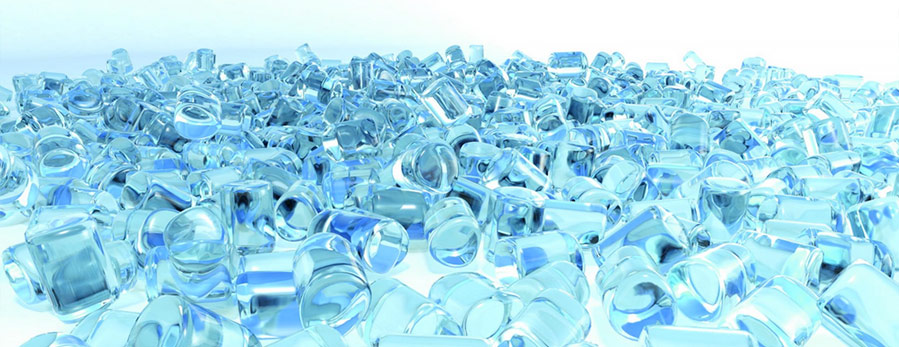
Covestro supported a consortium of recycling value chain partners in China in the recent development of national standards for recycled polycarbonate – a durable and versatile engineering plastic. © Covestro
Covestro, a leading global polymer manufacturer, is focusing on innovative recycling as one of the key levers to achieve a circular economy. China is one of the most important producing countries for plastics in the world and is taking various measures to promote domestic plastics recycling while banning or restricting single-use plastics. Working with a consortium of partners from the recycling value chain in China, Covestro contributed to the recent development of national standards for recycled polycarbonate, a highly durable and versatile engineering plastic with high recycled value.
  • Covestro a member of the drafting committee of China’s Guobiao (GB) standards on recycled polycarbonates
  • Unified quality specifications for recycled polycarbonates from post-consumer and post-industrial waste

For use from July 13, 2021, specifications on the quality and property requirements for recycled polycarbonates from post-consumer and post-industrial waste have been developed in the Guobiao (GB) standards. In addition, standards for testing methods, packaging, transportation and storage of these recycled materials will be introduced to ensure proper handling throughout the value chain.

"Creating uniform standards is essential to improve the polycarbonate recycling value chain while promoting the use of these recycled materials in downstream applications," said Kayla Wu, global program manager of mechanical recycling, Covestro's Engineering Plastics segment. "As a global leader in polycarbonate sustainability solutions, Covestro is proud to contribute our expertise to the development of the national standards while living up to our vision of full circularity."


Improving quality and traceability in recycling

To turn polycarbonate waste into high-quality recyclates, the materials need to go through many quality control steps and specifications and require close collaboration along the value chain. End-of-life polycarbonate products are first collected, sorted, shredded and cleaned before being reprocessed into pellets by recycling companies. Covestro then blends these recyclates with virgin polycarbonates to produce high-quality post-consumer recycled materials to be used again in new products like laptops, copiers, printers and other electronic devices.

In its collaboration with Chinese beverage producer Nongfu Spring and recycling company Ausell, Covestro has gone one step further in closing the material loop with new business models. Through this collaboration, the companies have further optimized the recycling efficiency of Nongfu Spring's 19-liter polycarbonate barrels and improved the traceability and quality of recycled materials. Building on this success, Covestro plans to further look into other waste streams such as e-waste to help the electrical and electronics industry build a circular economy.

"Improving the quality and standardization of recycled plastics is key to the transition to a Circular Economy. The Chinese GB standards for polycarbonate recyclates will create even more transparency regarding the quality of recycled polycarbonates, thus boosting market demand," says Daner Xue, product technology expert of Covestro's Engineering Plastics segment.



More News from Covestro AG

#Smart Textiles

Covestro, FILK Freiberg, and OUT e.V. develop flexible, conductive polymer smart textile system

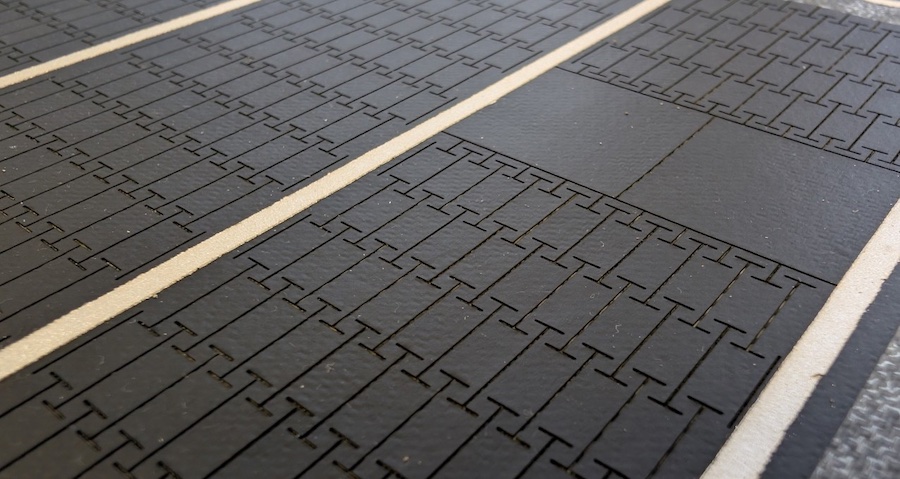
As the smart textiles market continues to grow across healthcare, personal protection, sportswear, and automotive applications, developers are seeking new ways to integrate electronic functionality directly into textiles, without the rigidity and complexity of conventional wiring. To address this challenge, FILK Freiberg Institute, an independent research institution with expertise in polymer coatings for textile applications, collaborated with Optotransmitter-Umweltschutz-Technologie (OUT) e.V. The joint project, funded under the German Industrielle Gemeinschaftsforschung (IGF) program of the Bundesministerium für Wirtschaft und Energie (BMWE), focused on developing flexible, conductive polymer surfaces for next-generation smart textiles.

#Techtextil 2026

Covestro to exhibit solutions for a more sustainable and productive textile industry at Techtextil 2026

Covestro will present a broad portfolio of material innovations for textile coatings, adhesive films and thermoplastic polyurethanes (TPUs) at Techtextil 2026 (Hall 11.0, Booth C79). The exhibits will demonstrate how advanced solutions can enhance durability, recyclability and manufacturing efficiency across applications such as automotive, infrastructure, protective apparel and sportswear. A particular focus will be on more sustainable coating technologies, including antimicrobial systems based on INSQIN® in combination with AGXX from Heraeus Precious Metals, as well as the integration of Pontacol® thermoplastic adhesive films into Covestro’s offering.

#Technical Textiles

Covestro showcases monomaterial concept in autonomous SUE People Mover

UE | STUDIOS has unveiled the fully autonomous electric minibus “Self-driving Urban E-Shuttle” (SUE), placing strong emphasis on sustainable material design. Developed within a project funded by the Federal Ministry for Economic Affairs and Energy (BMWE) and the European Union, the vehicle will begin public road testing this year. At the core of the concept is the consistent use of recyclable monomaterials to improve circularity at end of life.

#Textile chemistry

Covestro and Heraeus Precious Metals collaborate to enable safer, more sustainable antimicrobial textile coatings

Laboratory tests reveal that AGXX antimicrobial surface technology from Heraeus Precious Metals is fully compatible with Impranil® PU dispersions which are part of the waterborne INSQIN® textile coating technology from Covestro, paving the way for more sustainable antimicrobial textile coatings. This discovery comes at a key moment for the textile coatings industry. As the sharing economy continues to grow, more people are coming into regular contact with high-use surfaces, creating ideal conditions for bacteria, viruses, and other microorganisms to thrive.

More News on Recycling / Circular Economy

#Recycling / Circular Economy

RE&UP contributes to Global Fashion Summit 2026 circularity discussion

RE&UP contributed to the global conversation on textile circularity at Global Fashion Summit 2026 in Copenhagen, where Fatih Konukoğlu, Chairman of RE&UP and Vice Chairman of Sanko Holding, took part in both the keynote session “The New Rules” and the panel discussion “A Reckoning and Renewal for Circular Horizons”, alongside leaders from H&M Group, Looper Textile Co. and Sourcing Journal.

#Recycling / Circular Economy

Europe’s textile future at a turning point: New 2030 Circularity Blueprint aims to scale recycling and unlock investment opportunities

The EU textile system is at a critical crossroads. Today, less than 1% of discarded garments are recycled into new garments, despite EU-wide obligations for separate collection. In response, Global Fashion Agenda (GFA) is launching the 2030 Circularity Blueprint, in partnership with ReHubs. This ambitious initiative is designed to support the transformation of the EU textile ecosystem to advance textile-to-textile recycling and drive the transition to a circular economy.

#Recycling / Circular Economy

Efficient recycling of textile PET

At the upcoming Plastics Recycling Show Europe in Amsterdam on May 5–6, BB Engineering will present its portfolio of PET recycling technologies. The German machinery manufacturer will once again focus on textile recycling and melt filtration.

#Recycled Fibers

Circulose and CTA announce collaboration to enable lyocell fibers using CIRCULOSE® pulp

Circulose has announced an agreement with China Textile Academy Green Fibre (CTA) to offer lyocell fibers produced using CIRCULOSE® pulp. Producing lyocell from recycled pulp at commercial scale is an important step in making textile-to-textile recycled materials available across a wider range of textile applications.

Latest News

#INDEX 2026

STFI highlights textile circular economy and alternative fibres at INDEX™ 2026

From 19 to 22 May 2026, INDEX will invite visitors to Lake Geneva for the world's leading nonwovens trade fair. The Centre of Excellence in Nonwovens at the Sächsisches Textilforschung- sinstitut e.V. (STFI) will be in attendance to present the latest developments in nonwovens research. In the field of the textile circular economy, the STFI will present acoustically effective nonwovens made from chemical recycling residues. The range also includes innovations aimed at replacing conventional raw materials, such as the biobased and biodegradable polymer polybutylene succinate (PBS) and Kendyr as an alternative to cotton.

#Associations

Italian textile machinery sector faces weak start to 2026 despite domestic growth

In the first quarter of 2026, order intake for Italian textile machinery manufacturers recorded a decrease of 5% compared to the same period in 2025, reflecting a still challenging start to the year. The decline affected foreign markets (-7%), while the domestic market showed growth (+21%).

#Nonwovens

Temafa Maschinenfabrik GmbH supplies a complete decortication plant for processing hemp straw to Hanffaser Geiseltal eG

Temafa Maschinenfabrik GmbH, a leading supplier of machinery and plants for fibre processing, has successfully secured an order to supply a complete plant for processing hemp straw to Hanffaser Geiseltal eG, based in Mücheln.

#Techtextil 2026

FET’s revolutionary gel spinning system wins Techtextil Innovation Award

FET has received the prestigious Techtextil Innovation Award 2026 in the New Production Technology category. The Techtextil Innovation Award honours outstanding ideas in textile technology, sustainability, AI and the creation of technical textiles, selected by an international jury of experts. Ranging from new materials to new production technologies, this award recognises progressive ideas that are driving forces for numerous industries, such as automotive, medical and construction.

TOP