[pageLogInLogOut]

#Recycling / Circular Economy

Borealis commits to major expansion of Project STOP in Indonesia
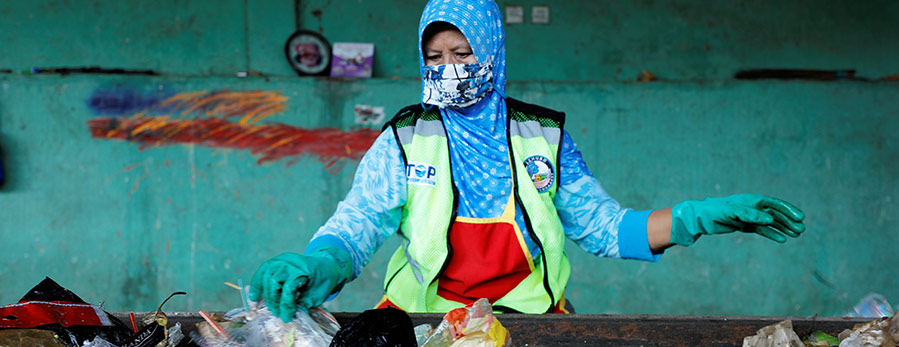
Thanks to the commitment of our partners and the incredible work of local communities, Project STOP has collected more than 10,000 tonnes of waste and prevented environmental leakage
Photo: © Project STOP
Borealis is pleased to announce today on World Ocean Day a significant financial commitment to expand Project STOP, an initiative it co-founded with SYSTEMIQ in 2017 to prevent plastic waste from entering the world’s oceans. With this expansion, Project STOP will extend effective circular waste management to two million people in Indonesia, with the goal of properly managing 25,000 tonnes of plastic each year once at full scale by 2025. The ultimate objective is to enhance the circular economy for plastics in the region.

Support will enable continued scale-up of circular waste management to prevent plastic pollution

  • Borealis’ expansion commitment will extend effective waste management to 2 million people in Indonesia by 2025.
  • Project STOP, co-founded by Borealis and Systemiq, aims to prevent 25,000 tonnes of plastic from polluting the environment each year, and create 1,000 full-time jobs.
  • EverMinds™ in action: A five-year programme to expand activities in East Java, enabling Project STOP to accelerate the circular economy in Indonesia.

“We at Borealis want to showcase together with our partners how to end the plastic waste issue,” says Borealis CEO Thomas Gangl. “Plastics are key for prosperity and a modern life. We need to implement waste management solutions to avoid any negative impact to the environment from those valuable materials. Turning challenges into opportunities, this approach is in line with Borealis’ commitment to accelerating the circular economy for plastics. As Project STOP continues to grow, we look forward to welcoming new strategic partners, whose skills and resources will be crucial to addressing this significant global challenge together.”

Project STOP works hand-in-hand with city governments to create effective circular waste management systems in high-need areas of Southeast Asia. The initiative supports cities with technical expertise to achieve zero-leakage of waste, increase recycling, build economically sustainable programs, creating new jobs and reducing the harmful impact of mismanaged waste on public health, tourism and fisheries. The first city partnership was established in 2018 in Muncar, located in the Regency of Banyuwangi, East Java. Project STOP also operates two additional city partnerships, in Pasuruan, also in Java, and Jembrana, on the northwest coast of Bali.


By the end of April 2021, Project STOP had reached nearly 200,000 people across its three city partnerships with new waste management services, collected more than 11,000 tonnes of waste, and prevented nearly 10,000 tonnes of waste from leaking into the environment. The initiative has created 210 jobs in the waste management industry in these cities, contributing to both the creation and protection of livelihoods in the communities where it works. 

As Project STOP’s impact has grown, the number of strategic partners has also grown to include the Norwegian Government, NOVA Chemicals, Nestlé, Borouge, the Alliance to End Plastic Waste, and Siegwerk. Project STOP’s success is in large part thanks to these collaborations as well as its close partnership with local and national government offices in Indonesia, including the Regency DLH (Environmental agency) and the National Ministry for Environment and Forestry (KLHK) and the Coordinating Ministry for Maritime and Investment Affairs (CMMAI). ??Optimising the financial sustainability of waste collection and sortation remains a key priority for all partners to ensure future continuity of the system. Project STOP explores sustainable financing models through governmental and private sector systems. Renewed financing will support a coordinated governance model with clear responsibilities and accountabilities, further contributing to the waste system’s effectiveness and efficiency. These efforts in sum aim to contribute to Indonesia’s national commitment to reduce ocean plastic pollution by 70% by 2025.

“The success of these city partnerships has shown that Project STOP’s concept works,” says Joi Danielson, Partner at SYSTEMIQ. “In close collaboration with all levels of government, it has established the necessary infrastructure, secured investment and developed a sustainable financial model that will cover the system’s running costs. The inclusive nature of the approach—drawing on the experience and expertise of stakeholders including national ministries, local authorities, communities and the private sector—is the cornerstone of our approach, and it is the key to future growth. We are excited to see the additional positive impact this renewed commitment will make on the lives and livelihoods on so many people.”




More News from TEXDATA International

#People

Happy Holidays!

Dear reader, the year 2025 is drawing to a close. We are entering what we hope will be a peaceful holiday season, spending time with our families and taking a moment to pause and reflect. We hope we have been able to support you once again this year with relevant news and articles, and we look forward to surprising you with many innovations in the coming year. Enjoy the festive season, stay healthy, and we wish you a happy and joyful holiday season.

#Recycling / Circular Economy

textile.4U publishes special edition “Top 100 Textile Recycling Companies 2025”

With a comprehensive 176-page special edition, textile.4U is dedicating its latest issue entirely to one of the most dynamic and influential topics in today’s textile industry: textile recycling. The new issue, published exclusively in high-quality print, presents the Top 100 textile recycling companies researched and selected by TexData – organizations that already play a key role in the transition to circular textiles or are expected to have a significant impact in the near future.

#Recycling / Circular Economy

Responsible Textile Recovery Act of 2024 signed by Governor

Senator Josh Newman (D-Fullerton) is proud to announce that Senate Bill 707 (SB 707), the Responsible Textile Recovery Act of 2024, has been signed into law by the Governor of California, Gavin Newsom. This groundbreaking legislation establishes the country’s first Extended Producer Responsibility (EPR) textile recycling program, marking a significant step forward in the state’s efforts to combat waste and promote sustainability.

#Textiles & Apparel / Garment

Modtissimo promotes sustainability with 28 coordinates in the Green Circle

Modtissimo is proving more and more to be a textile and clothing show that delivers the latest innovations in the area of sustainability, with the iTechStyle Green Circle being the main showcase for companies' creations. In this 60+4 edition, taking place on 12 and 13 September, 28 coordinates will be exhibited in a section organised by CITEVE and curated by Paulo Gomes.

More News on Recycling / Circular Economy

Latest News

#Weaving

Lindauer Dornier announces leadership transition in weaving machine business

After more than ten successful years at Lindauer DORNIER GmbH, Mr Wolfgang Schöffl will leave the family-owned company at the end of the year to enter well-deserved retirement.

#Heimtextil 2026

Texpertise Focus AI: Messe Frankfurt puts Artificial Intelligence centre stage at its international textile and apparel trade fairs

Under the banner 'Texpertise Focus AI, Messe Frankfurt will place a strong emphasis on Artificial Intelligence (AI) across its international textile and apparel trade fairs from 2026 onwards, setting a future-shaping signal for the industry. The initiative highlights the responsible use of AI along the entire textile value chain, from fibre production to the point of sale. The programme will launch at Heimtextil in Frankfurt in January 2026.

#Technical Textiles

Autoneum and Polestar set new benchmarks for passenger experience and sustainability

As the global market leader in sustainable acoustic and thermal management, Autoneum is a key supplier of interior and exterior components for the highly anticipated Polestar 5 model. The successful collaboration between Autoneum and Polestar marks a significant milestone in sustainable automotive engineering: the electric grand tourer sports car features several innovations in lightweight, fully recyclable polyester-based components that ensure a superior driving experience. Polestar 5 was revealed at the IAA Mobility 2025 in Munich and is available in 24 markets.

#Natural Fibers

Cashmere producers stress the importance of The Good Cashmere Standard®

At the invitation of the Aid by Trade Foundation (AbTF), over 70 experts from the cashmere production and supply chain, as well as other specialists, met at the GCS Unit Meeting in Shanghai, China to discuss the progress and new objectives of The Good Cashmere Standard (GCS). The meeting focused on implementation and verification of the standard, important aspects of animal welfare and the importance of the standard in the global textile market.

TOP