[pageLogInLogOut]

#Recycling / Circular Economy

BP AND SABIC EMBARK on new cooperation for products from advanced plastics recycling
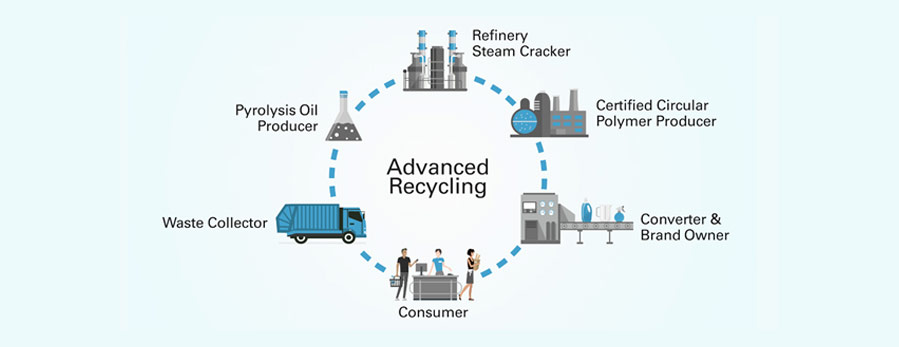
bp and SABIC have just signed a new agreement to work together to drive circular economy in the petrochemical activities at the Gelsenkirchen (Germany) chemical complex. Building on a long established relationship between the two companies at the production site, the new collaboration will help to increase production of certified circular products that take used mixed plastics to make feedstock, thereby reducing the amount of fossil resources needed in the petrochemical plants at the site.
  • bp and SABIC have signed a new cooperation to drive a circular economy at the Gelsenkirchen, Germany production site
  • The new collaboration will help to increase production of certified circular products that use used mixed plastics as feedstock, thus reducing the amount of fossil resources needed in the petrochemical process.

Certified circular polymers are part of SABIC’S TRUCIRCLE™ portfolio and are produced using advanced recycling to convert low quality mixed and used plastic, otherwise destined for incineration or landfill, into pyrolysis oil. The oil, which acts as an alternative feedstock to traditional fossil materials, will be processed at bp’s Gelsenkirchen refining site and then used by SABIC in its Gelsenkirchen polymer plants to produce certified circular products. The final material has identical properties to virgin-based polymers and allows plastics to be recycled over and over again, with no loss of properties or characteristics. After successful trials in December 2020, polymer production using the alternative feedstock started at the site early this year.

“SABIC is committed to helping to create a new circular economy where plastic never becomes waste. Advanced recycling allows us to increase the production of more sustainable materials and use our planet’s resources wisely, whilst reducing the use of conventional approaches such as landfill and combustion. Advanced recycling has a crucial role to play in the current recycling mix as it can capture value from plastic waste streams that have traditionally been ignored or discarded,” said Fahad Al Swailem, Vice President, PE & Sales at SABIC. “We continue to increase our collaborations with upstream suppliers and downstream customers, and this new initiative with our long-term partner bp takes us one step further to achieving our vision.”

bp and SABIC have a collaboration going back decades in petrochemicals at the Gelsenkirchen site, which is the starting point for the value chain of the chemical industry’s network in the northern Ruhr Area. The refining and petrochemicals site in Gelsenkirchen plays an important role within the chemical industry in North Rhine-Westphalia, Germany’s most populous state. bp operates one of the largest olefin plants in Germany, with a production capacity of around two million tonnes.
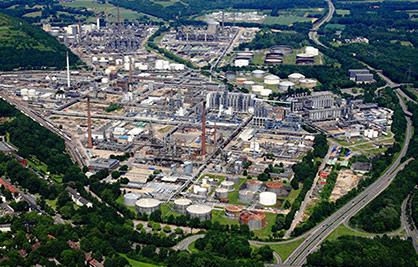


© 2021 Sabic
© 2021 Sabic


“This is an important milestone in our vision of achieving up to 30 percent of our ethylene and propylene production from sustainable, recyclable raw materials by 2030,” says Wolfgang Stückle, Vice President Refining and Specialities Solutions Europe & Africa at bp. “It is a fantastic achievement on the part of the Gelsenkirchen team, after more than a year’s preparation, to set up the new initiative with our partners at SABIC. At the same time, it is what bp’s recently announced Net Zero strategy is all about.”

The certified base chemicals from bp and the certified circular polymers from SABIC are recognised through the International Sustainability and Carbon Certification plus (ISCC+) scheme that certifies content and standards across the value chain from source to end product. The ISCC+ certification works on what is known as a ‘mass balance system’, meaning that for each tonne of circular feedstock fed into the cracker and substituting fossil-based feedstock, a tonne of the output can be classified as circular.

The circular polymers form part of SABIC’s TRUCIRCLE portfolio and services for circular innovations. The TRUCIRCLE portfolio spans design for recyclability, mechanically recycled products, certified circular products from feedstock recycling of used plastic, certified renewable products from bio-based feedstock and closed loop initiatives to recycle plastic back into high quality applications.
More News from TEXDATA International

#ITM 2026

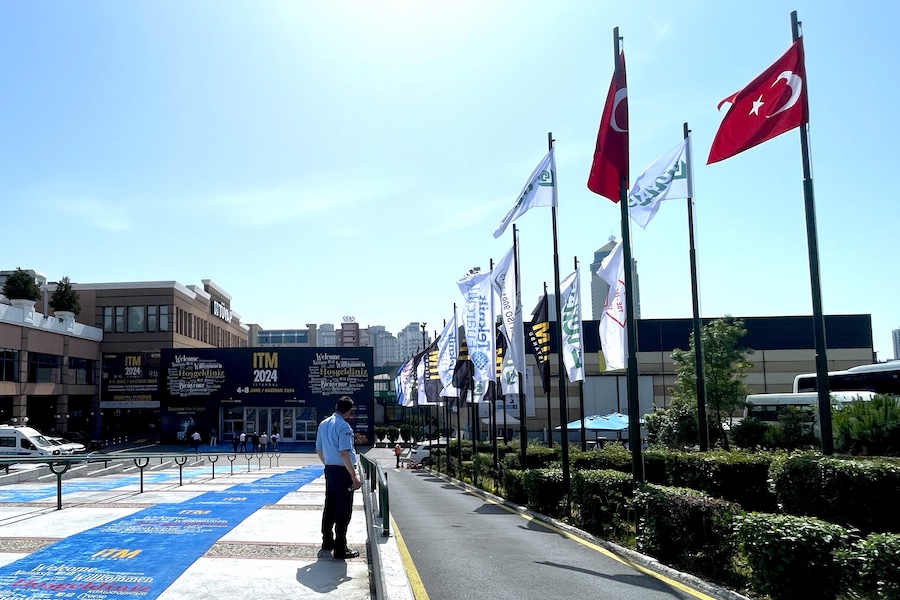
ITM 2026: The new geography of textile production

New production hubs are emerging across North Africa and Central Asia, while Türkiye is accelerating its transformation toward higher-value, technology-driven and more sustainable textile manufacturing.

#Research & Development

“Production is a product”

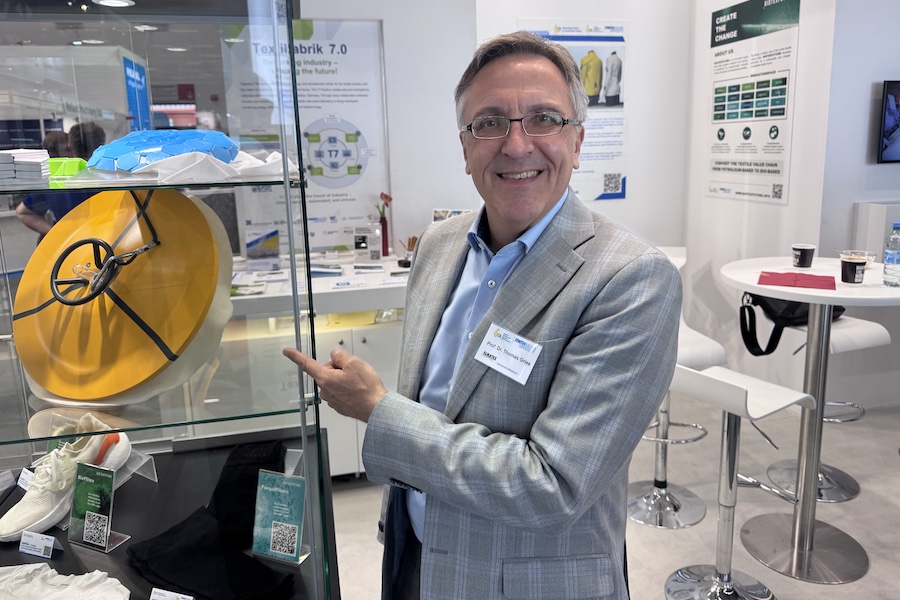
From technical textiles and AI-driven robotics to the limitations of textile circularity: Professor Dr Thomas Gries looks back on more than two decades of development at ITA Aachen. In the interview, he explains why production technology remains a decisive success factor, discusses international collaborations and innovation ecosystems, and shares his views on the transformation of production landscapes and the challenges facing an increasingly regulated industry.

#Knitting & Hosiery

“We need to move away from the price trap and return to a value-driven mindset.”

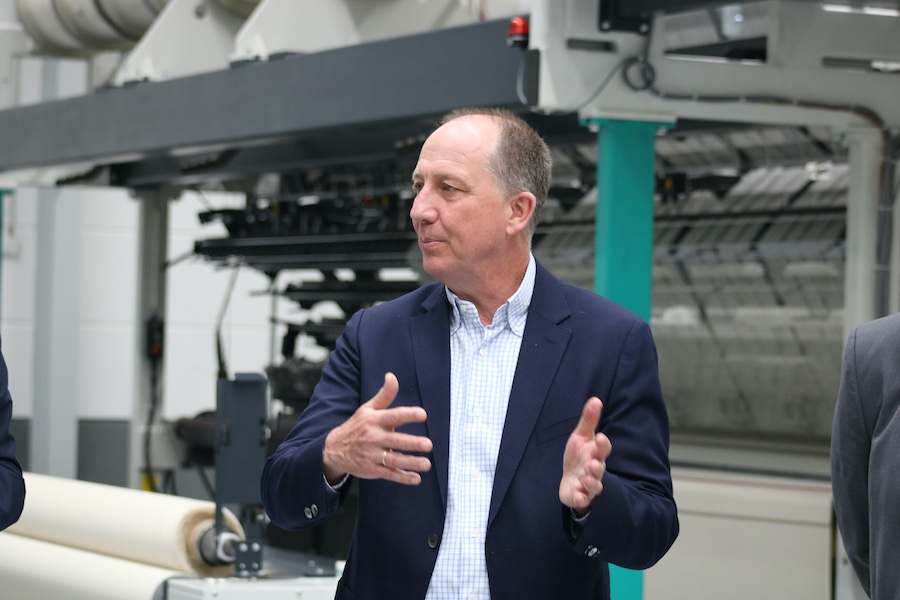
With its new Textile Innovation Center, KARL MAYER is sending a strong signal for innovation, collaboration, and the future of textile applications. In this interview, Karl Josef Mayer discusses new opportunities in warp knitting, the processing of staple fibres, recycling, the changing role of machinery manufacturers, and why the textile industry must once again focus more strongly on the value of textiles. by Oliver Schmidt

#Associations

“Innovation, resilience and international experience remain the great strengths of the Swiss textile machinery industry”

Geopolitical uncertainty, growing competitive pressure from China, new free trade agreements and the shift towards a circular economy are currently reshaping the global textile industry. In this interview, Cornelia Buchwalder discusses the current mood within the Swiss textile machinery sector, the industry’s distinctive innovative strength, new market opportunities in India and Asia, and the technological trends that could shape the upcoming trade fair cycle leading up to ITMA 2027.

More News on Recycling / Circular Economy

#Spinning

"We will become a recycling powerhouse"

The textile industry is now in its fourth consecutive year of crisis, while automation, artificial intelligence and recycling are reshaping the rules of the game. In this interview, Rieter CEO Thomas Oetterli discusses the first signs of a market recovery, reflects on his first three years at the helm of the company, explains the integration of Barmag, outlines Rieter’s vision of the fully automated spinning mill and highlights the strategic importance of recycling. In doing so, he explains why the new Rieter Group aims to play a leading role in transforming the textile value chain into a circular economy.

#Recycling / Circular Economy

Countdown to Textiles Recycling Expo 2026: Brussels prepares for Europe’s textile recycling gathering

With only two weeks remaining until the start of the second edition of the Textiles Recycling Expo 2026, preparations are entering the final phase. The exhibition and conference, dedicated exclusively to textile recycling and circularity, will take place on 24–25 June 2026 at Brussels Expo and is expected to attract stakeholders from across the textile recycling value chain.

#Recycled Fibers

Indorama Ventures enables brands to scale circular textiles through proven, traceable supply chains

Indorama Ventures, a global leader in recycled polyester staple fibers and filament yarns, will exhibit at Textiles Recycling Expo in Brussels on June 24–25. At the event, the company will show how brands and textile manufacturers can build traceable, circular textile supply chains by working with proven partners who deliver recycled materials on an industrial scale.

#Recycled Fibers

RECOVER™ launches Recover™ Yarns to accelerate recycled cotton uptake

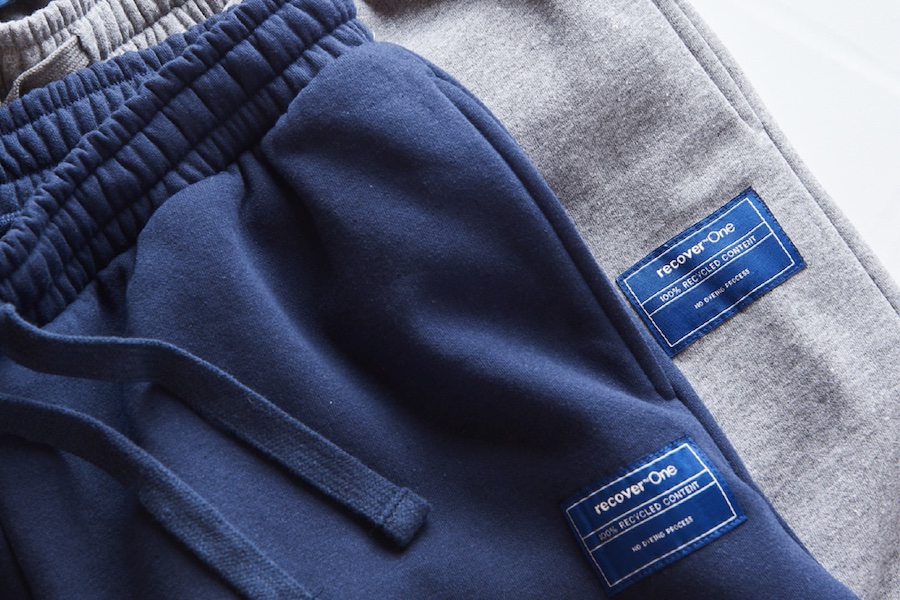
Recover™, a leading materials science company and one of the world’s largest producers of recycled cotton fiber, today announces the launch of Recover™ Yarns, a curated portfolio of ready-to-use yarn solutions designed to accelerate the adoption of recycled cotton across the apparel supply chain.

Latest News

#Man-Made Fibers

ROICA™ launches new global brand identity and digital experience

ROICA™, the premium stretch fiber developed by Asahi Kasei, today announced the launch of its new global brand identity, including a new key visual and a fully redesigned website. This milestone initiative marks the beginning of a new phase in ROICA™’s evolution as a global brand.

#Nonwovens

EDANA launches landmark continence report to mark the start of the World Continence Week

Today marks the official commencement of the World Continence Week. To honour this global awareness initiative, EDANA has published a comprehensive report titled "The Central Role of Absorbent Hygiene Products in the Management of Adult Urinary Incontinence: Benefits, Costs and Environmental Impact." The World Continence Week (WCW) is an annual global initiative dedicated to raising public awareness about incontinence and bladder or bowel health issues. Traditionally held in June, this awareness week aims to shed light on a condition that affects millions of people worldwide but is frequently kept secret due to widespread social stigma, embarrassment, and taboo.

#Associations

Mario Jorge Machado re-elected President of EURATEX

The EURATEX General Assembly has re-elected Mario Jorge Machado as President of EURATEX, renewing its confidence in his leadership at a crucial moment for the European textile and clothing industry. The sector is facing rising costs, global competitive pressure and an increasingly challenging transition towards sustainability and digitalisation.

#ITM 2026

ITM 2026 makes happy participants with its international and qualified visitor profile

ITM 2026 International Textile Machinery Exhibition, one of the most prestigious meeting points of the textile machinery sector, attracted attention in its first three days, particularly with its diverse international visitor numbers. Industry professionals from all over the world had the opportunity to closely examine the latest technology machines and solutions displayed in operation. Thousands of visitors from approximately 100 countries, primarily Egypt, Pakistan, India, Uzbekistan, Syria, Turkmenistan, Tajikistan, Morocco, Algeria, and Tunisia, met at the Tüyap Fair and Congress Center for new investment and cooperation opportunities.

TOP