[pageLogInLogOut]

#Recycling / Circular Economy

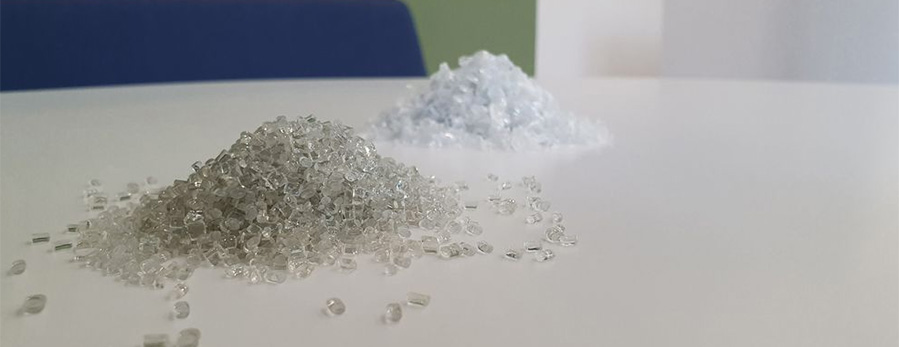
rPET pellets for BOPET film production
© 2020 Lindauer DORNIER
When two mechanical engineering technology leaders work together in order to fulfil specific customer requirements, unique recycling solutions are the result. The recycling of production waste in the manufacture of biaxially stretched flat films is already common practice, but film production becomes an application-specific challenge if post-consumer recyclate is also to be added to a BOPET film. EREMA and Lindauer DORNIER were able to fulfil this specific customer requirement by integrating components from both companies for the first time in a recycling line for a film manufacturer in Europe.

EREMA and DORNIER combine machine components to create an innovative recycling solution 

They combined an INTAREMA 1512 TE recycling machine with a DORNIER melt filter for fine filtration. The compact INTAREMA® recycling system has proven its merits again and again over the years for the recycling of BOPET and BOPP waste in the manufacture of packaging film. The EREMA machine features a short single screw extruder and in the TE series is equipped with double degassing. The Lindauer DORNIER melt filter is an electric-heated filter that the manufacturer of weaving machines and specialty machines normally implements in the extrusion stage of its film stretching lines. The filter is designed individually for the required throughput of the customer and is suitable for 10 µm filtration grade.

© 2020 Lindauer DORNIER


Even when operated around the clock, a filter change is only necessary every four weeks. The integration of these two components reduces the load on the melt filters in the film stretching system during further processing of the recycled pellets, because the fine filtration of the rPET material has already been carried out during the recycling process. As a result, it increases the availability and production output of the film stretching line.


The customer that operates this recycling combination uses it to process washed PET bottle flakes that they buy-in. The flakes have a bulk density of 370 kg/m³ and measure between 0.6 and 8 mm. The 3 x 3 x 2 mm recycled pellets with a bulk density of 700 to 800 kg/m³ are part of the recipe for a biaxially stretched polyester film with a thickness of 23 and 30 µm for industrial applications. The main extrusion layer of this BOPET film is manufactured using a recycled pellet content of 30 percent. Additional clouding of the film cannot be detected as a result.

By investing in this recycling machine, the customer is now able to continuously monitor the processing of the bought-in PET bottle flakes themselves. This means that they have full control over the quality of the recycled pellets as well as in-house added value. "Our customers' customers increasingly specify plastic film with the highest possible proportion of recycled polyester. With the recycling machine especially configured by EREMA and DORNIER for this application, the recycled pellets are optimised to match the highest possible performance of the film stretching line," says Michael Stötzel, Head of Service at DORNIER. "Overall, the demand for higher proportions of rPET in film products is continuing to grow," confirms Andreas Dirnberger, Business Development Manager Application Inhouse & Industrial in the EREMA Group: "Film manufacturers are driven by the development of sustainable product concepts. The high quality rPET pellets that this customer now produces is the result of the ongoing technological development of the post-consumer material recycling process. This is only possible if the project partners work together efficiently towards the same goal." EREMA and DORNIER have been cooperating for many years on in-house recycling solutions for BOPET film manufacturers. "The fact that the teams involved in this project are already familiar with each other's product was certainly a decisive success factor for this customer's application," say Michael Stötzel and Andreas Dirnberger in agreement.

More News from Lindauer DORNIER GmbH

#Weaving

Lindauer Dornier announces leadership transition in weaving machine business

After more than ten successful years at Lindauer DORNIER GmbH, Mr Wolfgang Schöffl will leave the family-owned company at the end of the year to enter well-deserved retirement.

#ITMA Asia + CITME Singapore 2025

DORNIER celebrates its anniversary at ITMA Asia + CITME

To mark its 75th anniversary, machine and plant manufacturer Lindauer DORNIER will be presenting the latest developments in its rapier and air-jet weaving machines at ITMA Asia + CITME in Singapore (Hall 2, Stand B401) from 28 to 31 October 2025. The focus will be on energy-efficient weaving technologies, new IoT solutions for networked textile production and systems for the series production of modern fibre composite components.

#Weaving

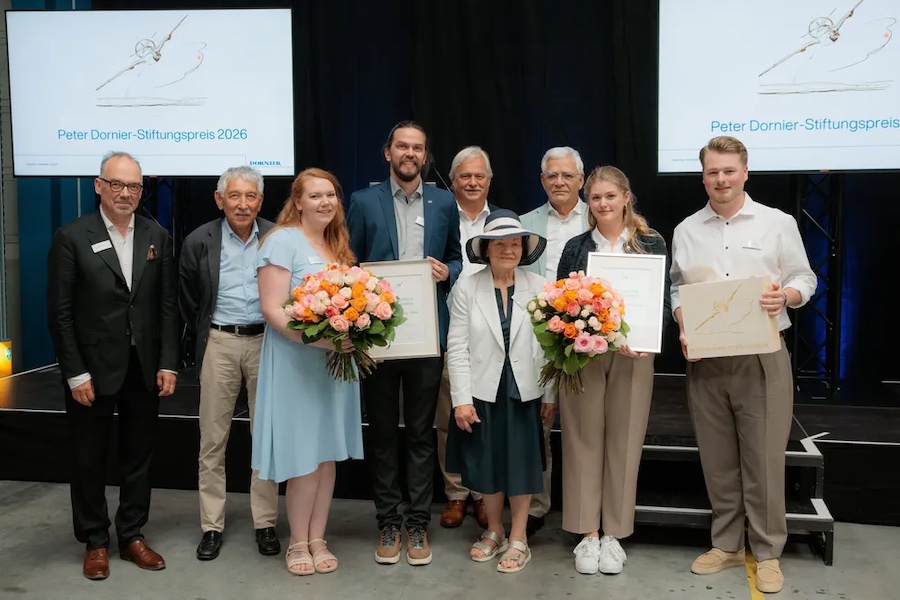
From the Venus flytrap to foldable aircraft wings: Peter Dornier Foundation Prize 2025 honours bionic research on 3D weaving technology

Long wings with foldable tips have the potential to reduce aircraft fuel consumption and make aviation more sustainable. An interdisciplinary research team has now developed a new solution based on the Venus flytrap: Freely movable wingtips made of fibre composites which are produced using innovative 3D weaving technology. For this pioneering combination of textile technology, aviation and bionics, researchers Patrick Meyer (TU Braunschweig) and Michael Vorhof (TU Dresden) were awarded the Peter Dornier Foundation Prize 2025 in mid-July.

#Weaving

Pattern-controlled “pic-a-pic” setting of rapier release timing on right-hand side

DORNIER PIRO enables the operator to set the timing of the rapier release on the right-hand side of the machine “pic-a-pic” and pattern-controlled. For applications with weft yarns of different fineness or elasticity, the optimum timing can be set for each weft channel. This offers great potential for reducing weft waste on the right-hand side.

More News on Recycling / Circular Economy

Latest News

#People

Happy Holidays!

Dear reader, the year 2025 is drawing to a close. We are entering what we hope will be a peaceful holiday season, spending time with our families and taking a moment to pause and reflect. We hope we have been able to support you once again this year with relevant news and articles, and we look forward to surprising you with many innovations in the coming year. Enjoy the festive season, stay healthy, and we wish you a happy and joyful holiday season.

#Heimtextil 2026

Texpertise Focus AI: Messe Frankfurt puts Artificial Intelligence centre stage at its international textile and apparel trade fairs

Under the banner 'Texpertise Focus AI, Messe Frankfurt will place a strong emphasis on Artificial Intelligence (AI) across its international textile and apparel trade fairs from 2026 onwards, setting a future-shaping signal for the industry. The initiative highlights the responsible use of AI along the entire textile value chain, from fibre production to the point of sale. The programme will launch at Heimtextil in Frankfurt in January 2026.

#Technical Textiles

Autoneum and Polestar set new benchmarks for passenger experience and sustainability

As the global market leader in sustainable acoustic and thermal management, Autoneum is a key supplier of interior and exterior components for the highly anticipated Polestar 5 model. The successful collaboration between Autoneum and Polestar marks a significant milestone in sustainable automotive engineering: the electric grand tourer sports car features several innovations in lightweight, fully recyclable polyester-based components that ensure a superior driving experience. Polestar 5 was revealed at the IAA Mobility 2025 in Munich and is available in 24 markets.

#Natural Fibers

Cashmere producers stress the importance of The Good Cashmere Standard®

At the invitation of the Aid by Trade Foundation (AbTF), over 70 experts from the cashmere production and supply chain, as well as other specialists, met at the GCS Unit Meeting in Shanghai, China to discuss the progress and new objectives of The Good Cashmere Standard (GCS). The meeting focused on implementation and verification of the standard, important aspects of animal welfare and the importance of the standard in the global textile market.

TOP