[pageLogInLogOut]

#Recycling / Circular Economy

Albstadt ID: The circular textile economy needs new skills

IVGT presents initial findings from the Erasmus+ project Skills4Circularity
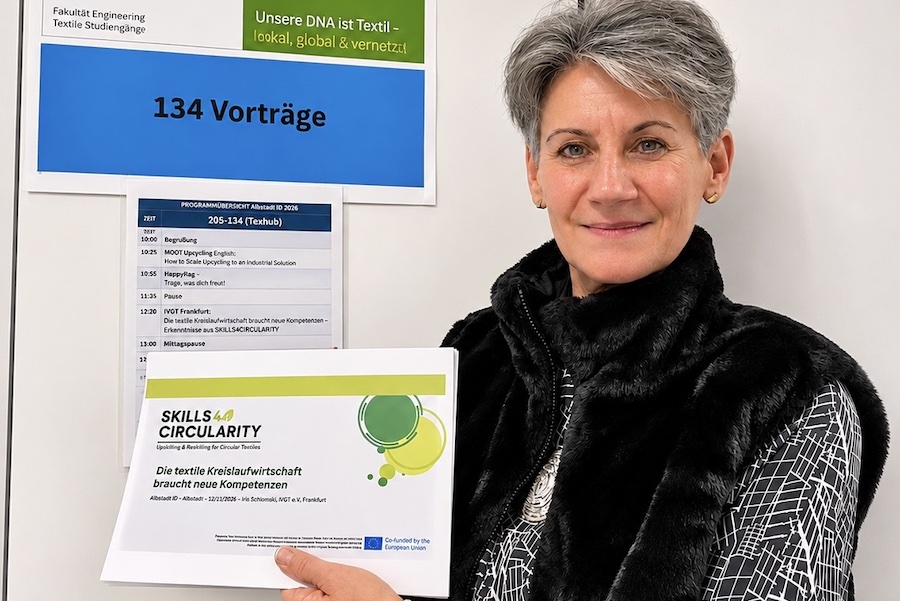
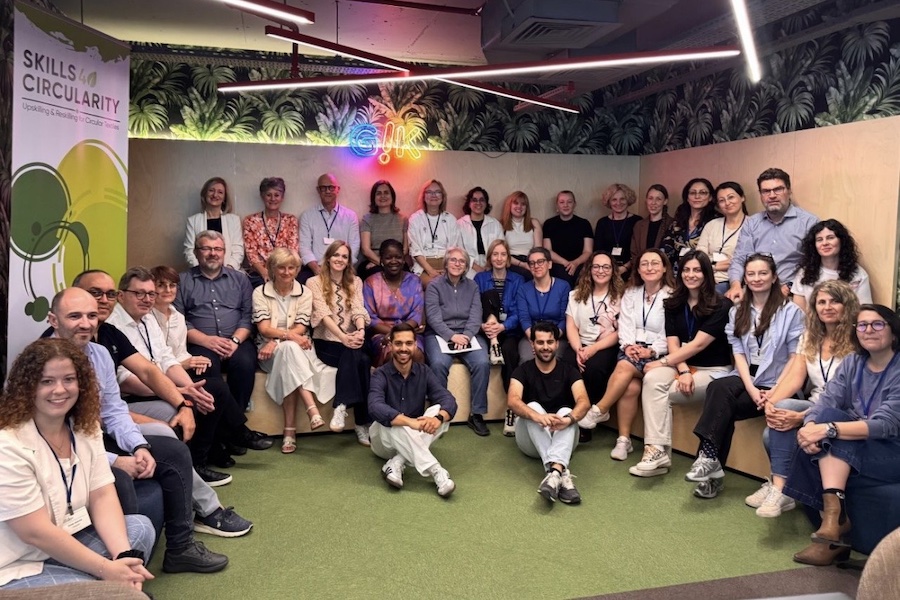
Iris Schlomski, Skills4Circularity project manager at IVGT, spoke at Albstadt ID about the skills needed for a circular textile economy. Photo credit: IVGT.
At Albstadt ID 2026, hosted by Albstadt-Sigmaringen University of Applied Sciences, IVGT project manager Iris Schlomski presented initial findings from Skills4Circularity on 12 November 2026. She opened her presentation with an estimate from the European Environment Agency: the EU generated around seven million tonnes of textile waste in 2022. The Erasmus+ project brings together 21 partners from twelve countries to identify the skills textile and clothing professionals need to design more durable products, use fewer resources in production and recover fibres after use.

Regulatory compliance is the biggest skills gap

The skills analysis drew on 183 company surveys and 22 in-depth interviews led by IVGT, as well as an AI-assisted analysis of 313 job advertisements from eleven countries. The biggest gap was in regulatory compliance. Companies need to identify which rules apply to them and how to put them into practice. Other areas where training is needed include life cycle assessment, data management and integrating circular economy requirements into day-to-day operations.

How roles in the textile industry are changing

Using a jumper made from recycled cotton yarn as an example, Schlomski showed how responsibilities are changing along the value chain. Product developers assess how the yarn can be used to make a durable and recyclable jumper. Textile engineers adjust machine settings so the yarn can be knitted reliably, while procurement and quality management teams verify its origin and recycled content. Specialist tasks are also becoming more important, including preparing data for digital product passports and monitoring automated sorting systems.

From skills needs to training

Based on the analysis, the project team developed three online modules on recycling technologies, ecodesign and sustainable textile production. The modules were trialled in workshops from May to September 2026. Topics include sorting used textiles, designing durable and recyclable products, and finding ways to reduce resource use in production. From 2027, the findings will inform curricula and freely accessible online courses for vocational training, higher education and continuing professional development. The project’s first boot camp for students is planned for November 2027 in Liberec, Czechia.

With around 550 participants and presentations from 33 companies, Albstadt ID gave industry professionals an opportunity to share experience and explore potential partnerships. IVGT thanks the university for the invitation and looks forward to continuing the conversation at the next Albstadt ID.

*Source for the textile waste estimate: European Environment Agency, Circularity of the EU textiles value chain in numbers.

More News from Industrieverband Veredlung - Garne - Gewebe - Technische Textilien e.V.

#Recycling / Circular Economy

Eco-design as the foundation of circular textiles

Based on the results of an extensive European analysis, the Erasmus+ project Skills4Circularity is currently developing three practice-based training modules covering recycling technologies, eco-design for the circular economy and sustainable manufacturing. This was preceded by a comprehensive company survey and a joint analysis conducted by the project partners under the leadership of IVGT. The results show that the greatest challenges lie not so much in a lack of technology as in skills gaps.

#Associations

IVGT membership: expertise that pays off

For energy-intensive textile companies, government compensation mechanisms are an important economic factor. The IVGT successfully supports its member companies in applying for state aid and thereby regularly contributes to significant financial relief.

#Recycling / Circular Economy

New skills for a circular textile economy

Based on the results of a comprehensive analysis, the Erasmus+ project Skills4Circularity is developing three practical training modules covering recycling technologies, eco-design for the circular economy and sustainable manufacturing. The content of the first module, Recycling Technologies, has now been developed and validated together with industry representatives. The module provides participants with knowledge of regulatory requirements, material sorting and the preparation of textile waste for recycling.

#Recycling / Circular Economy

The textile industry in transition

Recycling, traceability, eco-design and digitalisation are among the key future challenges facing the European textile industry. The Erasmus+ project Skills4Circularity, involving 21 partners from twelve countries, is investigating the skills required to address these challenges. As the German industry partner, the Industry Association for Finishing – Yarns – Fabrics – Technical Textiles (IVGT) is bringing the industry’s perspective to the project.

More News on Recycling / Circular Economy

#Recycling / Circular Economy

DITF establishes CYCLOTEXUM recycling center to advance mechanical and solvent-based textile recycling

As part of the CYCLOTEXUM research project, the German Institutes of Textile and Fiber Research Denkendorf (DITF) established the CYCLOTEXUM recycling center. There, in collaboration with industry partners, the center develops application-oriented solutions for mechanical and solvent-based recycling processes. The technologies developed make a significant contribution along the textile value chain toward the efficient use of textile resources in the future and the transition of production in the German textile sector to a circular economy. The project was funded by the Ministry for the Environment, Climate and Energy Sector of the State of Baden-Württemberg.

#Recycled Fibers

Recover and SUPIMA partner to develop recycled Pima cotton fibers and yarns

Recover and SUPIMA have partnered to turn waste from SUPIMA cotton production into a new line of recycled fibers and yarns. The collaboration will explore how recycled American-grown Pima cotton can be used in a wider range of yarns and garments for the premium market.

#Recycling / Circular Economy

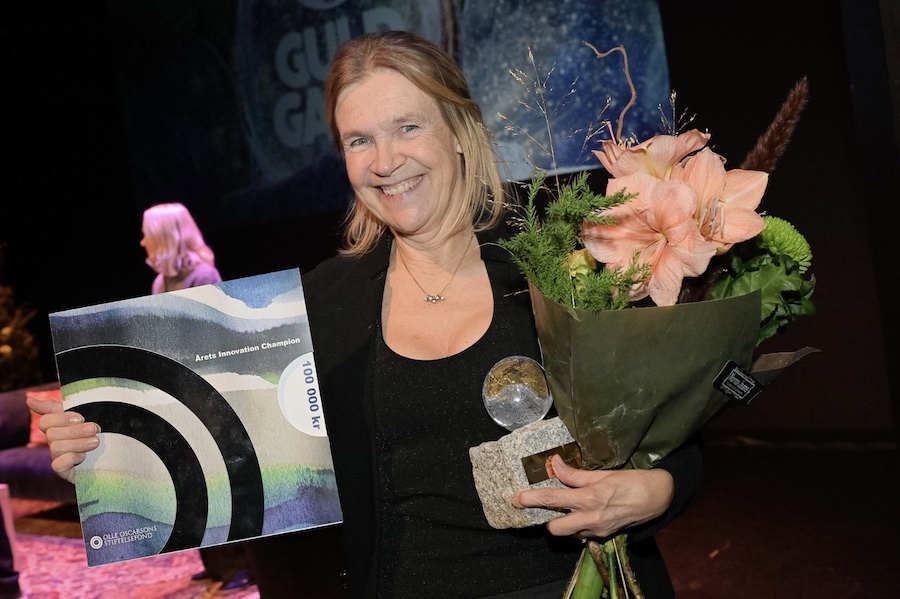
ReSpin founder Åsa Strandberg receives Innovation Champion of the Year 2026 award

Åsa Strandberg, founder and CEO of Swedish textile recycling company ReSpin AB, has been named Innovation Champion of the Year 2026. The award recognises her development of RespinJenny, a patented technology designed to recycle textile waste into new, high-quality fibres without using water, chemicals or additional virgin raw materials. The distinction was presented by the Olle Oscarsson Foundation and Axera Inkubator at Guldgalan in Sweden.

#Recycling / Circular Economy

Circulose resumes recycling of discarded cotton textiles and appoints interim CEO

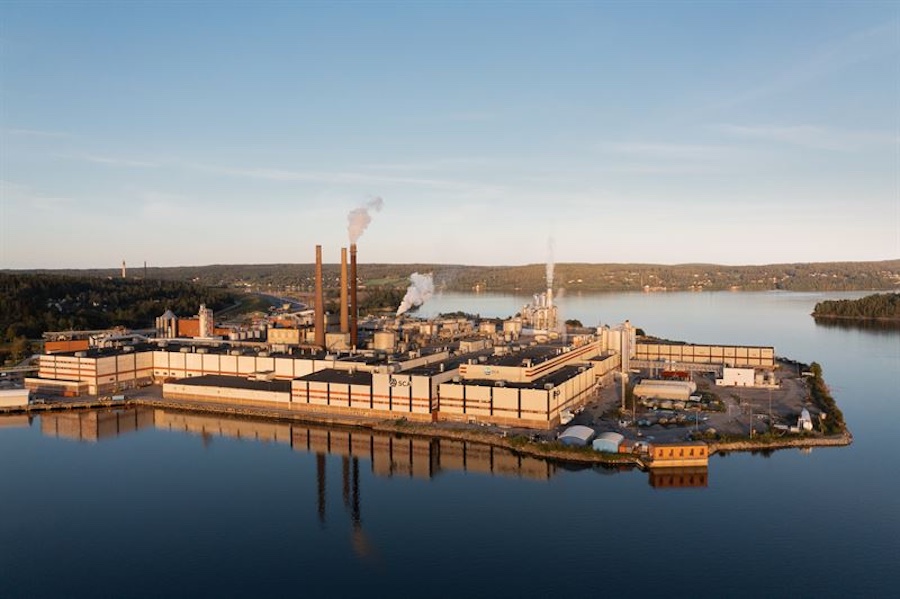
Circulose today announced its restart of commercial-scale production plant at Ortviken in Sundsvall, Sweden, marking a significant step in scaling next-generation materials for the global fashion industry. The Ortviken plant is the world’s first commercial-scale chemical textile recycling facility. Its restart demonstrates that the fashion industry is seeking ways to scale proven solutions that move beyond pilots and into commercial production.

Latest News

#Knitting & Hosiery

Monarch extends its Woven Look knitting technology from mattress ticking to apparel and performance textiles

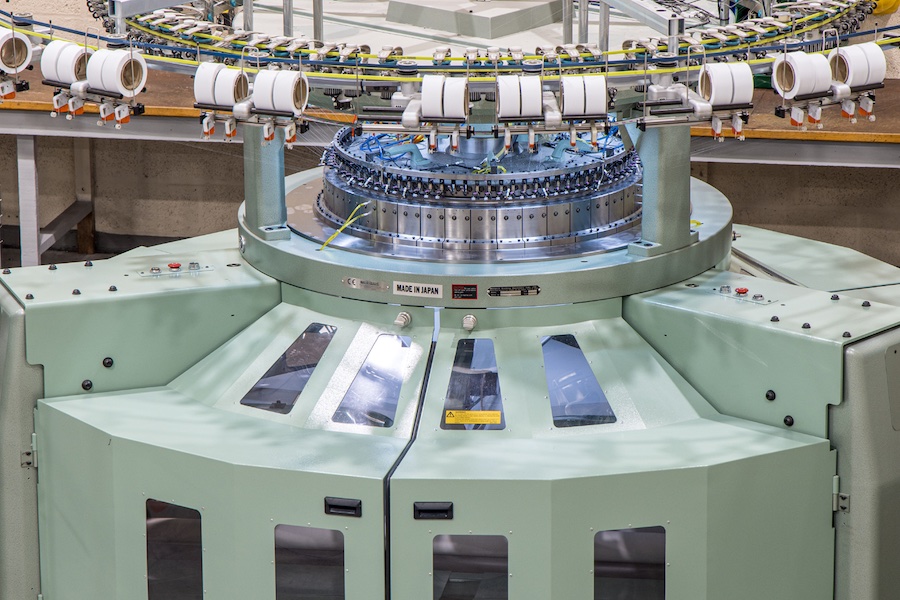
A fabric technology originally developed to reproduce the appearance of woven mattress ticking by Monarch Knitting Machinery, a member of the British Textile Machinery Association (BTMA), is finding new applications in apparel. With the introduction of its 36-gauge OD5B-M-7ED44 double-knit machine, Monarch is expanding the possibilities for producing fine knitted structures that closely resemble woven textiles while retaining the stretch and comfort associated with knitting.

#India ITME 2026

SHIMA SEIKI connects knitting innovation, digital product development and automated cutting at India ITME 2026

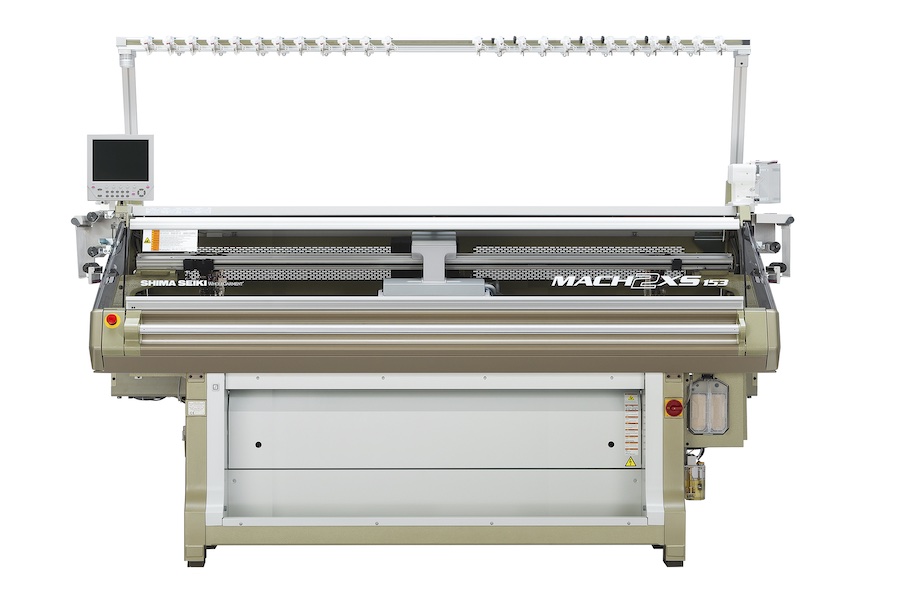
Japanese textile machinery and technology specialist SHIMA SEIKI MFG., LTD. will present a comprehensive portfolio of advanced knitting, digital design and automatic cutting solutions at India ITME 2026 in Greater Noida from 4 to 9 December. At Hall 14, Booth D1, the company will showcase its latest WHOLEGARMENT® and shaped knitting technologies, digital product development solutions and the Indian premiere of its new P-CAM® R multi-ply automatic cutting machine, designed for a wide variety of industries beyond fashion apparel.

#Raw Materials

Cotton Brazil calls for balanced textile sustainability regulations and stronger international cooperation

Cotton Brazil has concluded its strategic agenda in Brussels, Belgium, reinforcing the importance of recognising natural fibres in European sustainability policies and expanding exchanges with policymakers, agricultural attachés and representatives of cotton-producing countries. Discussions at the European Parliament highlighted the need for balanced textile sustainability regulations, while meetings with cotton-producing countries opened opportunities for international cooperation.

#India ITME 2026

Vandewiele to run Cabler & Twister live at India ITME 2026

At India ITME 2026, taking place from December 4 to 9 in Greater Noida, the Vandewiele Group will showcase its comprehensive portfolio of technologies covering yarn processing, spinning, winding, twisting, weaving, tufting, quality control and digital manufacturing. A particular highlight at the group's joint stand in Hall 15, Booth E2F1, will be the live demonstration of Vandewiele’s Cabler & Twister technology for fine-denier filament yarns. Together with Savio, Loepfe, Mesdan and BMSvision, Vandewiele will present solutions addressing the growing requirements of the Indian textile industry in terms of productivity, quality, flexibility and automation.

TOP