#Recycling / Circular Economy
DePoly Inaugurates its Showcase Plant in Monthey Switzerland
At a time when more than 450 million tons of plastic waste are generated every year worldwide, of which less than 10% is effectively reused, DePoly views plastic waste as a valuable material resource. Reintegrating it into production chains not only reduces the reliance on fossil resources but also strengthens the resilience and sovereignty of supply chains.
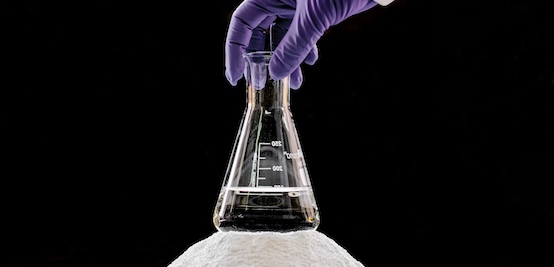
Unlike traditional recycling, which progressively degrades material quality with each cycle, DePoly's technology breaks PET down into its original chemical components, enabling it to recreate virgin-quality raw materials with no loss of performance and suitable for all PET applications.
From laboratory to industrial scale
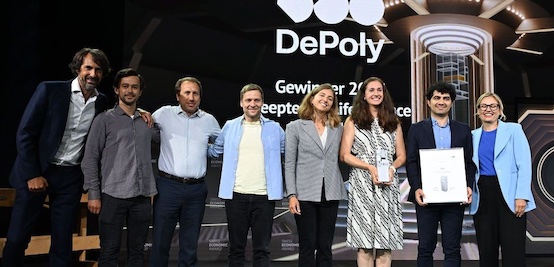
Founded in 2020 as an EPFL spin-off by Samantha Anderson, Chris Ireland and Bardiya Valizadeh, DePoly was born from the ambition to make plastics truly circular. Based in Sion with a team of around 30 employees, the company is taking a decisive step with the opening of its Showcase Plant in Monthey.
To house this first industrial unit, DePoly chose to establish itself at the heart of Monthey’s Industrial Park (CIMO), which brings together cutting-edge infrastructure, chemical expertise and proximity to its Valais headquarters, an environment that enabled the company to accelerate its deployment while drawing on a well-established industrial ecosystem.
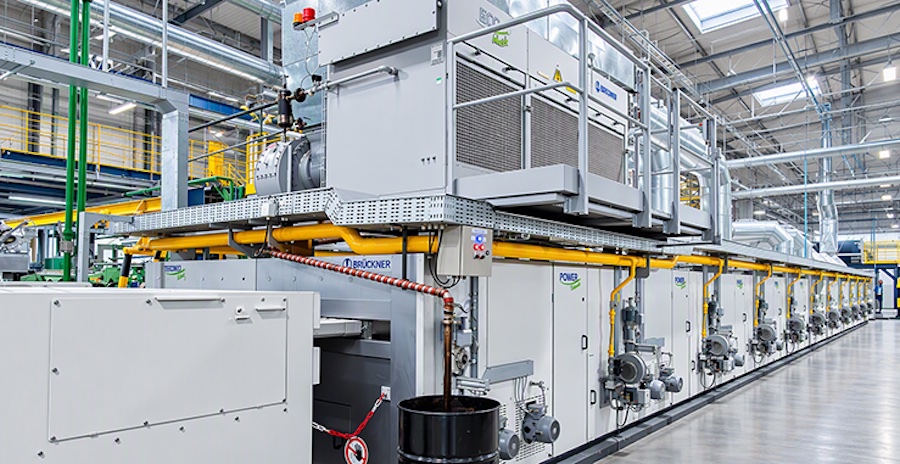
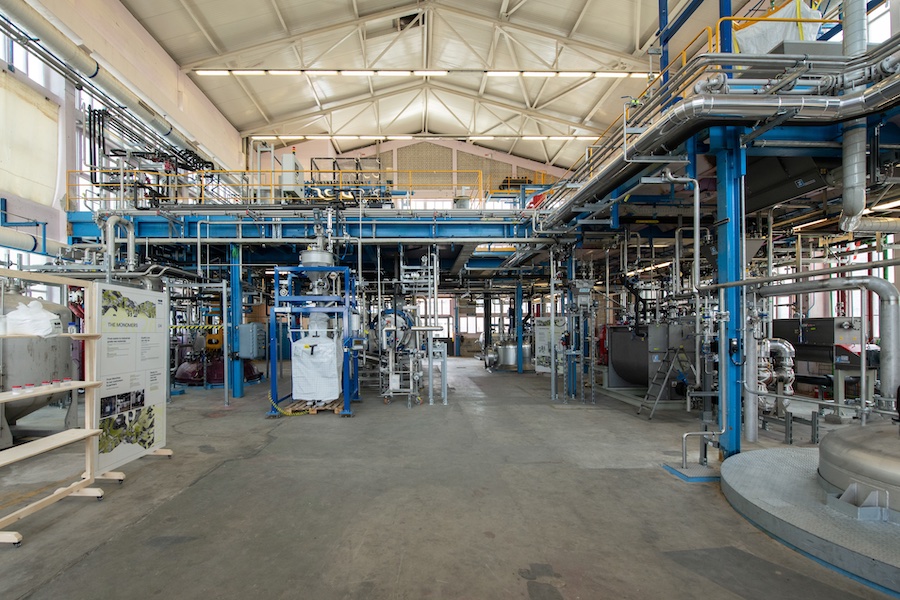
The result of a significant investment with the creation of 12 direct jobs and more than 30 indirect jobs, the Showcase Plant has a nominal capacity of around 500 tons feedstock input per year. Beyond production, it will serve to optimize the process, qualify raw materials with industrial customers, and prepare for the deployment of DePoly's first commercial plant, which targets a capacity of 50,000 tons per year.
“Innovation is often celebrated in the lab, but impact happens when the technology enters the industrial world. This Showcase Plant represents that transition for DePoly, it is the point where vision becomes execution and it represents more than just steel, pipes and equipment. It represents six years of asking if the circular economy is possible, and proving that it is. It's the first visible step toward a future where waste is no longer seen as a problem to manage, but as a resource that can be continuously reused, and DePoly will lead that future.” says Samantha Anderson, CEO and co-founder of DePoly
An alternative to traditional recycling streams
DePoly's process is based on light-activated chemical depolymerization, capable of processing PET in under 60 minutes, without the need for high temperatures or added pressures. This approach recovers the material's original monomers, which can be directly reused in existing industrial processes with no loss of quality.
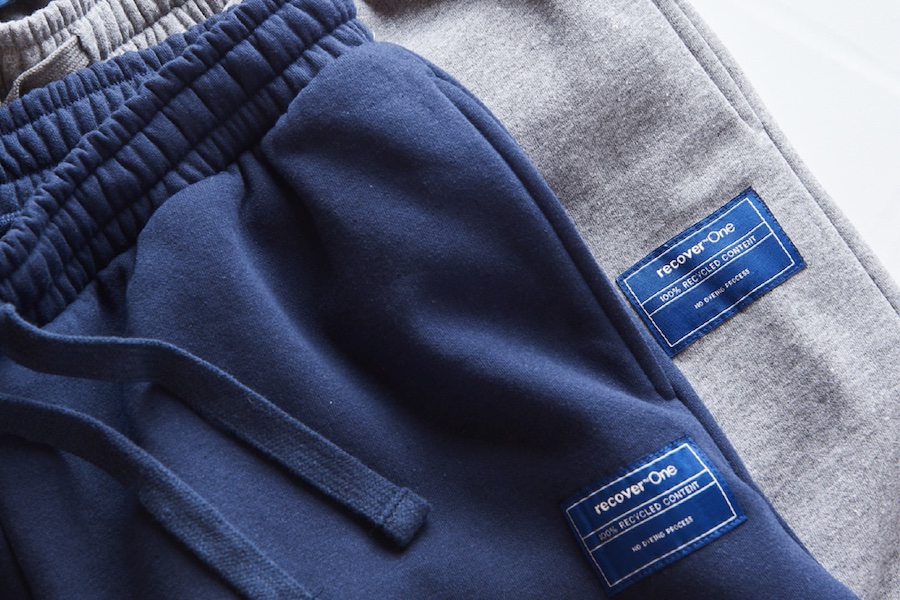
Its strength lies in its versatility. It handles a wide range of waste streams that are poorly served by conventional recycling today: food packaging, polyester textiles, complex films, colored or contaminated materials. The recovered raw materials find applications across sectors as varied as packaging, textiles, automotive and electronics.
An industrial milestone for Switzerland and the circular economy
Beyond its environmental impact, DePoly's technology addresses strategic industrial challenges. By transforming local waste into virgin-quality raw materials, the company helps secure access to essential resources, strengthens supply chain resilience and reduces dependence on fossil-based materials. It also opens new possibilities for sectors that are particularly hard to decarbonize, such as technical textiles, automotive and electronics.
The inauguration of the Showcase Plant marks a major milestone for DePoly and for Switzerland's industrial innovation ecosystem. It demonstrates that DePoly can not only develop breakthrough technology, but also successfully scale it to industrial level to address one of the major challenges of our time: preserving resources by keeping materials in circulation while strengthening industrial competitiveness.
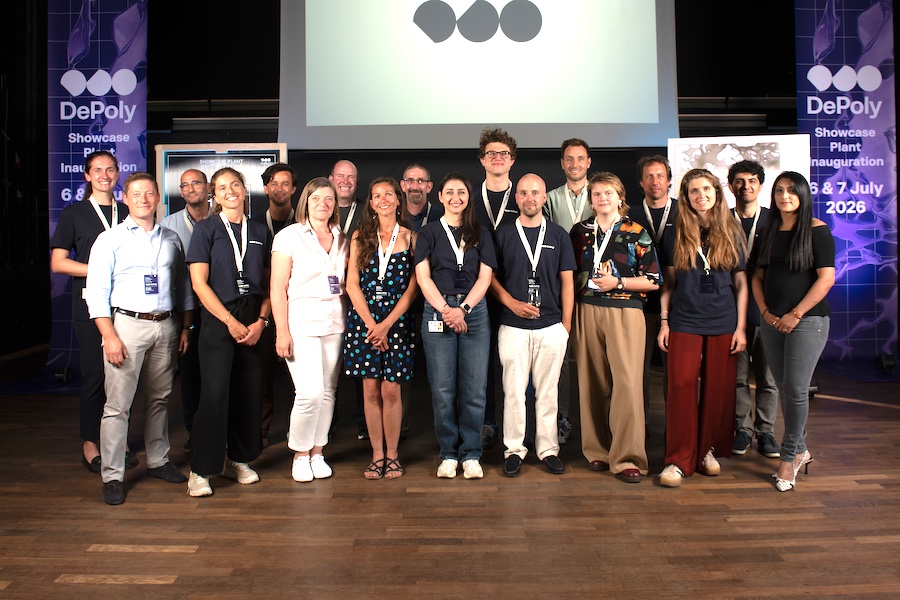
On the 6th and 7th of July, DePoly will welcome industrial partners, investors, institutional representatives and media in Monthey to discover the facility and discuss the future of circular plastic and textile recycling.
The inauguration will also bring together a number of DePoly's investors, including its newest investor, Una Terra Venture Capital, alongside existing investors such as Infinity, Founderful, BASF, Beiersdorf, ACE & Company, MassMutualVentures and many more. Their presence reflects the strong support of leading industrial and financial partners for DePoly's technology, its industrial execution and its long-term vision.
Outlook
The Showcase Plant is above all a blueprint for commercial scale up. It allows DePoly to demonstrate its technology at industrial scale, qualify its products with customers, and gather the operational data needed to deploy its future commercial facilities.
The lessons learned and process built at the Monthey site will feed directly into the development of DePoly's first commercial plant — a pioneering facility unprecedented at this scale, already in preparation, with its location to be announced in the first half of 2027. Targeting a capacity of 50,000 tons per year, this plant will represent a decisive step toward the large-scale deployment of DePoly's technology. Beyond this next milestone, DePoly has already established itself for international growth with commercial projects and strategic partnerships in key markets around the world. The long-term goal: to make material circularity an industrial reality on a global scale.
Key figures
- Signed customer volume of 50MCHF
- Nominal Showcase Plant capacity: around 500 tonnes feedstock input per year
- Up to 75% lower emissions than virgin PTA*
- 20% of global oil is used for plastic production
- Around 600 billion PET bottles produced every year
- 57% of textile fibres produced worldwide are polyester
- 450 million tons of plastic waste generated worldwide every year
- Less than 10% of plastic waste is reused
*based on Showcase Plant products, including emissions credits for waste incineration