[pageLogInLogOut]

#Recycling / Circular Economy

Discover how Textile Exchange is paving the way for tracing textile waste across the supply chain

Textile Exchange has released an update to its Reclaimed Materials Declaration Form (RMDF) which will mean that data will now be collected around where recycled material came from. This recalibration of the RMDF paves the way for a foundational shift to how textile waste is traced in the supply chain, highlighting Textile Exchange’s commitment to tracking the difference between recycled bottles and recycled textiles.

Tracing Textile Waste 

There is currently a lack of transparency around the origins of textile feedstock. At present, the industry cannot tell whether the recycled fibers it is using come from plastic bottles or from another source, and the data that is collected is often not classified or standardized efficiently. 

To tackle this challenge, in 2023 Textile Exchange and Fashion for Good launched a project alongside brand partners including adidas, Target, BESTSELLER, Norrøna, and Levi Strauss & Co. with support from Control Union, Reverse Resources, Recover and Usha Yarns. 

The aim was to harmonize data and system capabilities and to standardize how textile waste data is collected and shared across the supply chain, from collectors and recyclers to certification bodies. The initiative also explored integration with digital platforms like Reverse Resources to pre-fill data and reduce duplication, paving the way to a fully digital, interoperable traceability system. 

The project looked to adapt Textile Exchange’s Reclaimed Material Declaration Form, which verifies the source of the reclaimed material certified to GRS and RCS.

In 2023, the RMDF gathered data including seller information, shipment information and product information such as the type of material, where it had come from and whether it was pre or post consumer. 

A key finding from the project was that Textile Exchange’s Reclaimed Material Declaration Form (RMDF) could be adapted to capture data in a standardized way to facilitate traceability. 

The report also found that the RMDF can be integrated with other systems that recyclers are currently using. This means that recyclers who use other systems to collect data around recycling inputs won’t have to enter the same data in two different places. Instead, they will be able to link the outside system with Trackit, reducing the burden of traceability on recyclers. 

The recalibrated Reclaimed Materials Declaration Form 

Using the findings of the multistakeholder project, Textile Exchange’s launched its recalibrated RMDF in July 2025. The new RMDF collects, standardizes and classifies data on textile and non-textile waste, enabling more reliable, efficient tracking and information exchange across the recycling value chain. 

The revised RMDF captures and standardizes data points such as a fiber’s composition, color, origin, or source. It also lays the groundwork for future digitization and scalable solutions in textile waste management. 

Once collected, the data in the updated form will help brands to discern whether feedstock has come from recycled bottles or recycled textiles. With this greater transparency, brands will be able to increase the volume of recycled textiles used in their products and reduce the use of recycled bottles. 

Use of the new RMDF is optional for now, and the first certified organizations in the recycled supply chain can choose to use it when recording their reclaimed information. 

In the future, it will become part of Textile Exchange’s Trackit system—where companies can easily verify the data they need to make product claims. 

Expected outcomes 

Knowing where recycled material came from will allow brands to make evidence-based claims about their products, leading to greater transparency across the industry.

More News from Textile Exchange

#Sustainability

Textile Exchange evolves its membership structure to unlock the next stage of collective action for climate and nature

Textile Exchange is excited to announce that it is evolving its membership structure to a more action-oriented, impact-driven model designed to provide clearly defined pathways that help organizations respond to the climate and nature crisis.

#Sustainability

Key takeaways from the 2025 Textile Exchange conference

Brands and retailers, suppliers, innovators, recyclers, farmers, non-profit organizations, and academics convened at Textile Exchange’s Annual Conference, held in the Lisbon Conference Centre.

#Sustainability

Textile Exchange announces the winners of the 2025 Climate and Nature Impact Awards

Textile Exchange is pleased to announce the winners of the 2025 Climate and Nature Impact Awards. These awards recognize individuals and partnerships making progress toward a regenerative and equitable raw materials economy.

#Sustainability

Textile Exchange Conference 2025: Setting the course for systemic change

The 2025 Textile Exchange Conference brought together more than 1,600 participants on site in Lisbon and online, marking two days of intense dialogue on the future of sustainable and regenerative material systems. With a focus on collaboration, data-driven progress, and systemic transformation, the sessions highlighted both the challenges and the opportunities in building a truly resilient textile industry.

More News on Recycling / Circular Economy

#Recycling / Circular Economy

Advanced Recycling Conference 2025 fuels innovation across key waste streams

The Advanced Recycling Conference (ARC) 2025 brought together nearly 220 experts from 28 countries to spotlight pioneering advancements and foster industry collaboration in recycling across diverse waste streams including plastics, textiles, automotive and other materials.

#Recycling / Circular Economy

ADVANSA launches ADVA®tex: A new step toward textile-to-textile recycling

ADVANSA has introduced ADVA®tex, a new filling fibre made entirely from recycled pre-consumer textile waste, positioning the material as a significant step forward in textile-to-textile (T2T) recycling. The fibre is designed for use in duvets, pillows, mattresses, and furniture applications and is available in three versions.

#Recycling / Circular Economy

European research project addresses textile waste through integrated recycling technologies

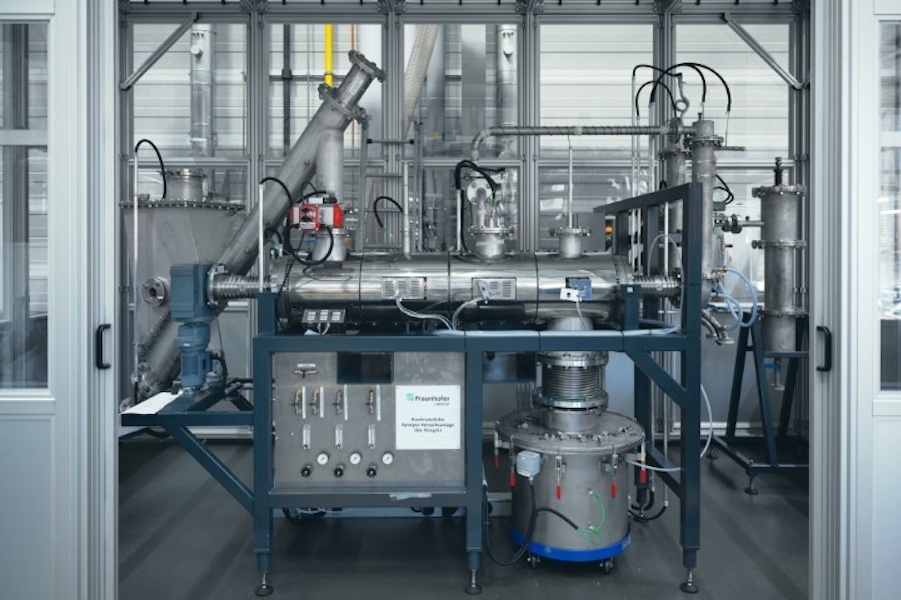
A major European research initiative coordinated by Fraunhofer UMSICHT has been launched to develop integrated solutions for textile waste recycling. The AUTOLOOP project aims to create a comprehensive system that could process 1.24 million tonnes of textile waste annually by 2050, whilst potentially creating over 130,000 green jobs across the EU. This project aims to develop, test and integrate automated sorting, tracing, and closed-loop recycling technologies for polyester-based textiles (NRT), addressing the pressing challenge of textile waste management.

Latest News

#Dyeing, Drying, Finishing

Navis TubeTex announces U.S. partnership with Icomatex

Navis TubeTex, a global leader in advanced dyeing and finishing machinery solutions, is pleased to announce a new partnership with Icomatex (www.icomatex.com), a respected European manufacturer of high-quality stenters and textile finishing equipment. Under this agreement, Navis TubeTex will exclusively represent the Icomatex stenter line in the United States.

#Knitting & Hosiery

KARL MAYER celebrates 35 years of EL pattern drive

KARL MAYER is celebrating an anniversary this year: on 30 November 1990, the first warp knitting machine with electronic guide bar control, the KS 4 EL, was delivered – another milestone for patterning. As early as 1980, the SU gearbox with the MRS42SU had initiated the transition from mechanical chains to digital data.

#Research & Development

The region of renewable raw materials: Central German Alliance for Bioplastics

The development of sustainable plastic solutions is rapidly gaining importance in light of global environ- mental pollution, dwindling fossil resources and ambitious climate protection targets. As part of the re- gional alliance RUBIO, which brings together 18 partners from central Germany and the Berlin-Branden- burg area, the bio-based and biodegradable plastic polybutylene succinate (PBS) was comprehensively investigated, starting with the raw material, through the manufacturing process, to industrial application.

#Textile processing

YKK receives ISPO Textrends Awards for circular innovations

YKK Corporation (Headquarters: Chiyoda-ku, Tokyo; President: Koichi Matsushima; hereafter, YKK) is pleased to announce that the ISPO Textrends judges have selected YKK's 3D Composite Puller as the Best Product in the Accessories category. They also selected YKK’s NATULON Plus® Fiber Sourced™ zipper with Recycled PET Open Parts as a Top 5 item in the same category. The competition, held twice a year in conjunction with the ISPO trade show, recognizes the most innovative performance textiles, components, and apparel.

TOP