[pageLogInLogOut]
TRÜTZSCHLER SPINNING - FROM WASTE TO VALUE

#Spinning

Innovative Textile Recycling: New Partnership to simplify textile processing at the Recycling Atelier
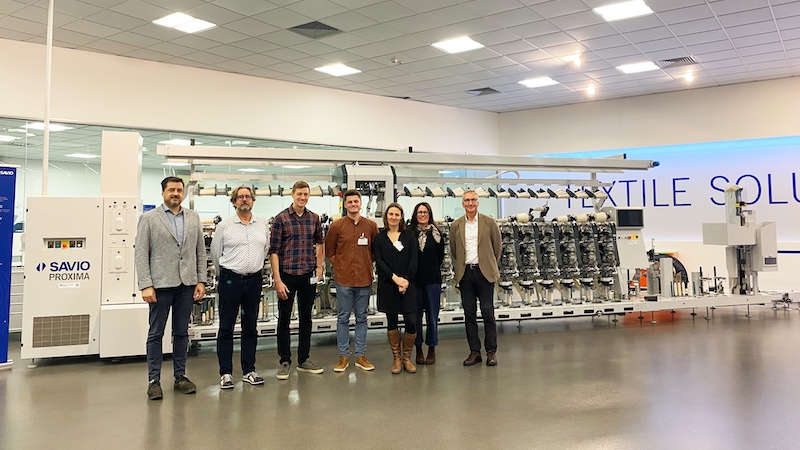
Savio Macchine Tessili S.p.A. from Italy collaborates with the Recycling Atelier of Technical University of Applied Sciences Augsburg and ITA Augsburg since September 2024. Savio will support the Recycling Atelier in the areas of winding and quality control of yarns. This cooperation completes the process chain for mechanical textile recycling and opens up new research possibilities.
Meeting in Pardenone between Savio and ITA. From left to right: Fabio D’Angolo (Savio), Jürgen Krüger (Savio), Georg Stegschuster (ITA), Justin Kühn (ITA), Nicole Hühn (ITA), Eva Babbo (Savio), Mauro Moro (Savio). Source: ITA Augsburg © 2025


Savio Macchine Tessili S.p.A. specialized in the textile machinery sector for the yarn finishing segment. The Italian company offers a portfolio of winding, twisting, air-jet spinning, shrinking and bulking machines with manufacturing plants in Italy and Asia. It has been operating for more than 110 years. The partnership adds another step to the process chain for mechanical textile recycling, completing it and opening up research possibilities in the areas of winding and quality control of yarns. 

The Recycling Atelier partner network consists of twelve industrial companies that together cover the entire process chain of mechanical textile recycling. The addition of Savio Macchine Tessili S.p.A. is an important component for the high-quality recycling of textiles. Savio contributes not only by sharing their valuable know-how in the winding field. The company also provides Proxima Smartconer® winder to the Recycling Atelier. The winding process is crucial for the quality of the yarn. Winding is the last step of the spinning process where the yarn can be controlled and qualified before it goes to the downstream processes of weaving, knitting, dyeing, and finishing. 

Know-how directly from the manufacturer

Dr.-Ing. Georg Stegschuster, Head of Recycling Atelier, says: “Savio winding machines offer high productivity, low energy consumption, premium yarn quality, automation, and data connectivity. Those criteria are ideal for the setup in the Recycling Atelier. Plus, we receive insightful know-how directly from the manufacturer. We are looking forward to the cooperation and the positive impact that Savio's involvement will bring to our applied research.” 

Mauro Moro, CEO of Savio Macchine Tessili, is delighted about the partnership with the Recycling Atelier Augsburg: “The collaboration with the Recycling Atelier Augsburg is a step forward to advancing research in winding technology and quality control within the recycling context.”

Prof. Mesut Cetin, Institute Director of ITA Augsburg and professor at the Faculty of Mechanical and Process Engineering at Augsburg University of Applied Sciences, explains the impact and work of the Recycling Atelier: “The Recycling Atelier, ITA Augsburg and the Technical University of Applied Sciences Augsburg see themselves as a catalyst for industry towards sustainability. We welcome innovation and progress in any form. Whether application-oriented content or basic research, whether publicly funded projects or direct contract research - we are open to any exchange between industry and research.”
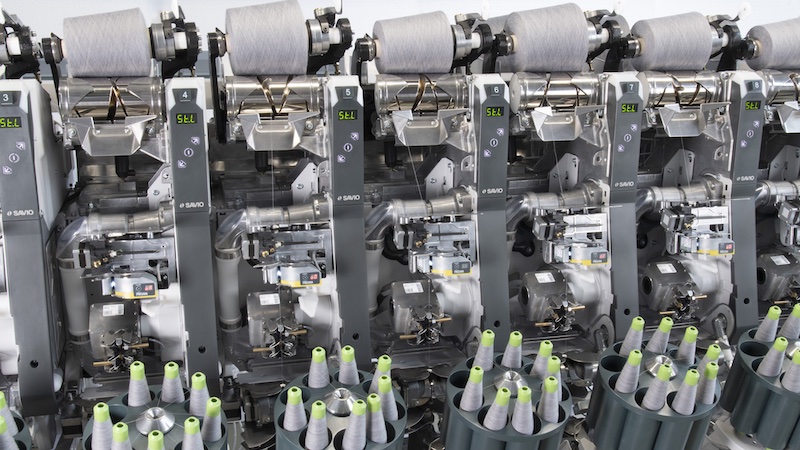
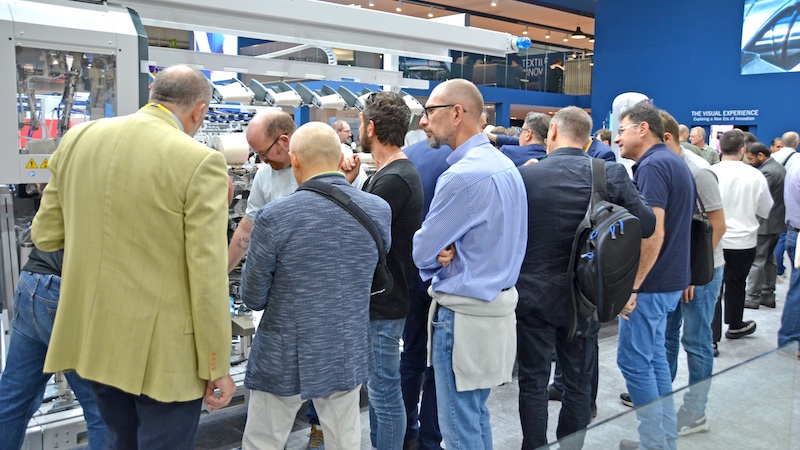
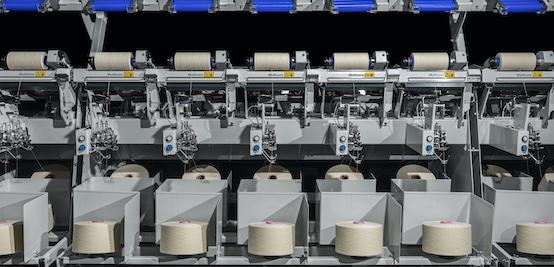
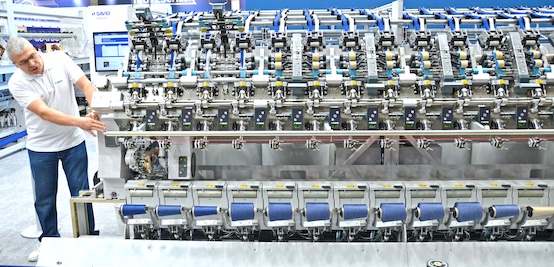
Winder “Proxima” from Savio Macchine Tessili S.p.A. Source: Savio Macchine Tessili S.p.A. © 2025


More News from Savio Macchine Tessili S.p.A.

More News on Spinning

#Spinning

New spinning package with two-step filtration for recycled yarns and more

At the ITM in Istanbul, BB Engineering unveiled its new, patented ValuePack spinning package for the first time, which features a two-stage filtration system. This is particularly beneficial for re-cycling processes. Until now, spinning packs have used either metal powder (“sand”) or filter candles as filter media. Both options are suitable for differ-ent applications, and each has its own specific advantages and dis-advantages.

#Research & Development

GenuTrace client advisory: Is your cotton supply chain UFLPA ready?

U.S. Customs and Border Protection has released updated operational guidance (CBP Publication No. 5560-0526) expanding its forced labor enforcement framework. The guidance supersedes the original 2022 UFLPA Operational Guidance and now covers all forced labor enforcement authorities — UFLPA, CAATSA, and WROs/Findings — in a single unified document. For cotton importers, the enforcement posture has not softened. It has become more structured, more documented, and more demanding. Learn more about UFLPA.

#Spinning

"We will become a recycling powerhouse"

The textile industry is now in its fourth consecutive year of crisis, while automation, artificial intelligence and recycling are reshaping the rules of the game. In this interview, Rieter CEO Thomas Oetterli discusses the first signs of a market recovery, reflects on his first three years at the helm of the company, explains the integration of Barmag, outlines Rieter’s vision of the fully automated spinning mill and highlights the strategic importance of recycling. In doing so, he explains why the new Rieter Group aims to play a leading role in transforming the textile value chain into a circular economy.

#Spinning

Barmag and Hitech Automation enter into partnership for an auto-doff system for texturing machines

Barmag (Suzhou) Technology Co., Ltd. and Hitech Automation Solutions PVT LTD. of Surat, India, have agreed to an exclusive partnership to jointly market Hitech’s Doffmatic automation solution for Barmag’s proven manual eFK texturing machines. In many texturing facilities, manual doffing processes remain heavily operator-dependent – resulting in issues such as increased scrap, inconsistent quality, and limited productivity.

Latest News

#Natural Fibers

Bremen Cotton Exchange: Fritz A. Grobien re-elected as President

The members of the Bremen Cotton Exchange have re-elected Fritz A. Grobien as President during the association’s 152nd General Assembly on June 18, 2026. The election confirms the organization’s commitment to maintaining its role as a leading international platform for the cotton and fiber industry amid a period of geopolitical and economic uncertainty.

#Natural Fibers

Organic cotton at the crossroads: Ideology, evidence, and the road ahead

Organic cotton occupies one of the most contentious spaces in global agriculture. While praised by brands and consumers for its environmental ideals, it also faces persistent questions about yield stability, certification integrity, and scalability. The current edition of The ICAC Recorder cuts through the ideology to deliver a rigorous, evidence-based assessment of both sides of the debate.

#ITMA 2027

ITMA 2027 gains strong momentum

In line with the theme "Co-creating the future of textiles", ITMA continues to strengthen its support for start-ups, recognising their role in driving innovation and shaping the future of textile and garment manufacturing. Through the Start-Up Valley, emerging companies gain access to a global marketplace where they can connect with industry leaders, potential partners, investors and customers.

#ITM 2026

Positive market signals for KARL MAYER at ITM 2026

KARL MAYER is pleased with its participation as an exhibitor at ITM 2026. Faced with the challenges of rising domestic costs and fierce competition from low-priced Asian markets, the industry leader had traveled to Istanbul with mixed feelings – yet still draws a really positive conclusion.

TOP