[pageLogInLogOut]

#Recycling / Circular Economy

Advanced Recycling Conference 2024 – Driving innovation in sustainable materials management
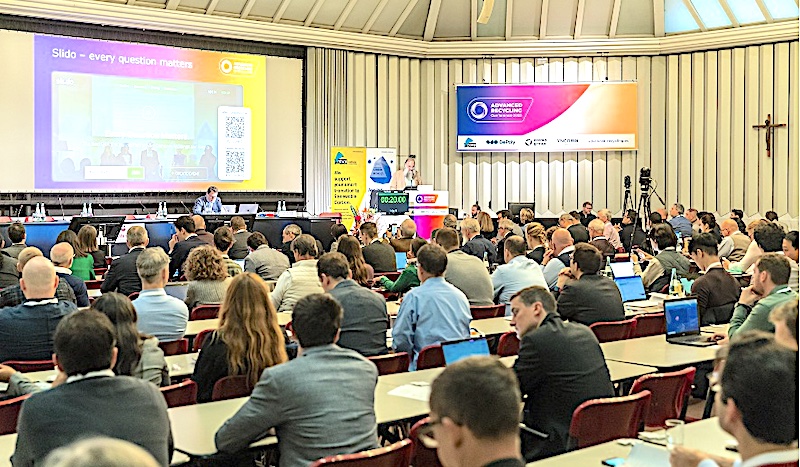
ARC 2024 promises invaluable insights into emerging trends and collaboration opportunities in both physical and chemical recycling and serves as a crucial platform for industry leaders, brands, investors, and policymakers to navigate the evolving regulatory landscape and explore new opportunities in recycling.
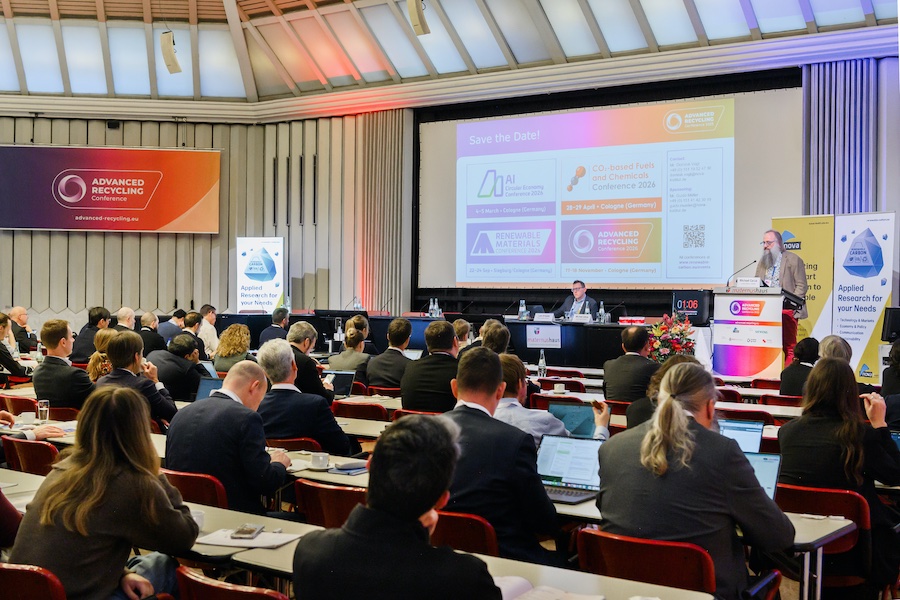
Audience Advanced Recycling Conference 2023 © 2024 nova-Institute


This year, the Advanced Recycling Conference (ARC) 2024 will expand its scope beyond conventional plastic packaging to address pressing issues like e-waste valorisation, PVC recycling, textile recycling, and advanced recycling techniques for engineering thermoplastics. The conference will also highlight innovative funding strategies essential for these advancements.

ARC is set for November 20-21, 2024, in Cologne, Germany, and online and will gather industry leaders, researchers, and policymakers to explore groundbreaking technologies and strategies that can reshape sustainability.

Europe’s largest conference on advanced recycling explores innovative technologies and transformative strategies that are reshaping the future of sustainability.

Europe’s largest conference on advanced recycling

With nearly 300 participants from 26 countries attending the 2023 event – a 30 % increase of attendees compared to the year before – ARC has established itself as the largest conference in Europe for advanced recycling. This standing is underlined by this year’s program, with a lineup of 46 speakers, the largest to date. Dedicated sessions will introduce innovative technologies such as dissolution, depolymerisation, pyrolysis and gasification with Carbon Capture and Utilisation (CCU). They will also discuss policy issues such as the EU recycling targets of up to 70 % for packaging and 55 % for plastics.

ARC 2024 promises invaluable insights into emerging trends and collaboration opportunities in both physical and chemical recycling and serves as a crucial platform for industry leaders, brands, investors, and policymakers to navigate the evolving regulatory landscape and explore new opportunities in recycling. 

More information on the conference is available at https://advanced-recycling.eu. 

Navigating the next wave of recycling challenges

The conference will feature various dynamic sessions led by industry experts that explore all aspects of the diverse landscape of advanced recycling, which among others include:

Perspectives of Advanced Plastics Recycling, Markets, Investments and Funding

Recycling requirements vary depending on the specific polymer and sector. From this viewpoint, topics such as recycling technologies and capacities, their complementary use, solutions for engineering and commodity thermoplastics as well as e-waste plastics, will be addressed. Further topics include price dynamics and market evolution in the plastics recycling industry as well as funding and the perspective of investors.

Dissolution Technologies for Recycling of PS and Engineering Plastics and Commodity Plastics

This solvent-based technology dissolves targeted polymers from mixed plastic wastes while the chemical structure of the polymer remains intact. Other undissolved plastic components (e.g. additives, pigments, fillers, non-targeted polymers) can be cleaned from the dissolved target polymer. The session covers polymer extraction or purification from PS and engineering plastics (e.g. ABS) through physical recycling using dissolution technologies.

From Polymer to Building Units and Back to Polymer – An Excursion Through Different Depolymerisation Technologies

Assisted by heat, radiation, the use of catalysts or addition of chemicals and enzymes, depolymerisation breaks plastic waste, and even textiles into its building units (e.g. monomers) that can be fed back into polymer production. The session covers thermal depolymerisation, solvolysis, and enzymatic recycling.

Thermochemical Recycling 

Pyrolysis is a versatile tool able to complement mechanical recycling and to produce a wide range of different products for the chemical and plastics industry. Depending on the reactor and reaction design, different products in different qualities can be obtained to realise open or closed recycling loops.

Depolymerisation Technologies for PET

Assisted by solid or liquid chemicals and enzymes, depolymerisation breaks PET waste, and even textiles into its building units (e.g. monomers) that then can be fed back into polymer production. Deeper insights into solid-state hydrolysis, solvolysis, and enzymolysis will be provided.

Pre-/Post Treatment and Upgrading

These technologies are connecting elements (enablers) to all advanced recycling technologies. The here introduced processes realise higher yields and achieve higher product qualities while bringing recycling to another level.

Insights into Policy, Sustainability, Mass-balance and Alternative Naphtha

The latest updates about EU policy on Chemical Recycling and Mass Balance and Attribution will be presented, as well as deeper insights into Chemical Recycling for the Production of Alternative Naphtha and the status quo of Life Cycle Assessment (LCA) Recycling.

Registration Information

Find the full program at https://advanced-recycling.eu/program/. 

The ARC 2024 presents a unique opportunity to connect with transformative developments in sustainable materials management and contribute to shaping a more sustainable future. 

Registration is available for on-site and online attendance: https://advanced-recycling.eu/registration/. 

Sponsorship and exhibition

ARC 2024 is supported by visionary sponsors and kindly thanks gold sponsor DePoly and bronze sponsors BUSS ChemTech AG, Erema Group and Starlinger Group for their support and commitment to advancing recycling technologies.

For more information on sponsorship packages and exhibition options, please visit the website or contact the sponsorship team at: https://advanced-recycling.eu/sponsoring/. 

Partnerships

The Advanced Recycling Conference is supported by industry and trade associations, non- profit organisations, research institutions and interest groups that are thematically linked to the conference: Alliance to End Plastic Waste (International), BCNP Consultants (DE), C.A.R.M.E.N. (DE), CEFIC (EU), ChemCologne (DE), Chemical Recycling Europe (EU), Chemie-Cluster Bayern (DE), CPRRA -China Plastics Reuse and Recycling Association (CN), Circular Plastics NL (NL), CLIB (DE), IBB Netzwerk (DE), ITA - International Centre for Sustainable Textiles (DE), kunststoffland.NRW (DE), Plastics Europe (DE), Renewable Carbon Initiative (International).

More News from nova-Institut für politische und ökologische Innovation GmbH

#Man-Made Fibers

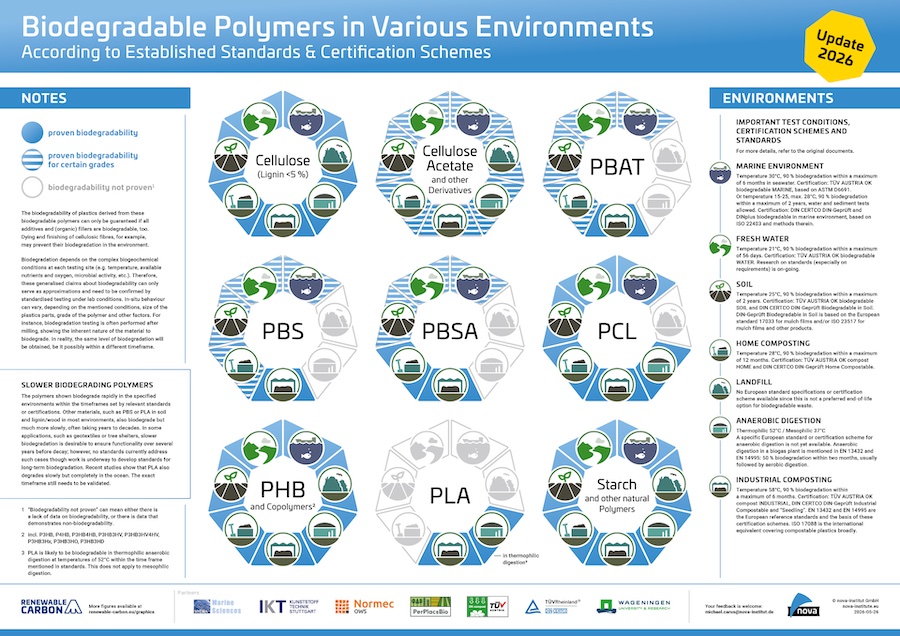
The updated poster on biodegradable Polymers in various environments has been released

As part of the PerPlacsBio project, nova-Institute has updated its popular poster on the biodegradability of polymers in different environments. The updated version reflects current standards, certifications and the latest scientific findings. The poster can be used to assess biodegradable alternatives for use in agriculture and forestry, and it is now available in German for the first time.

#Recycling / Circular Economy

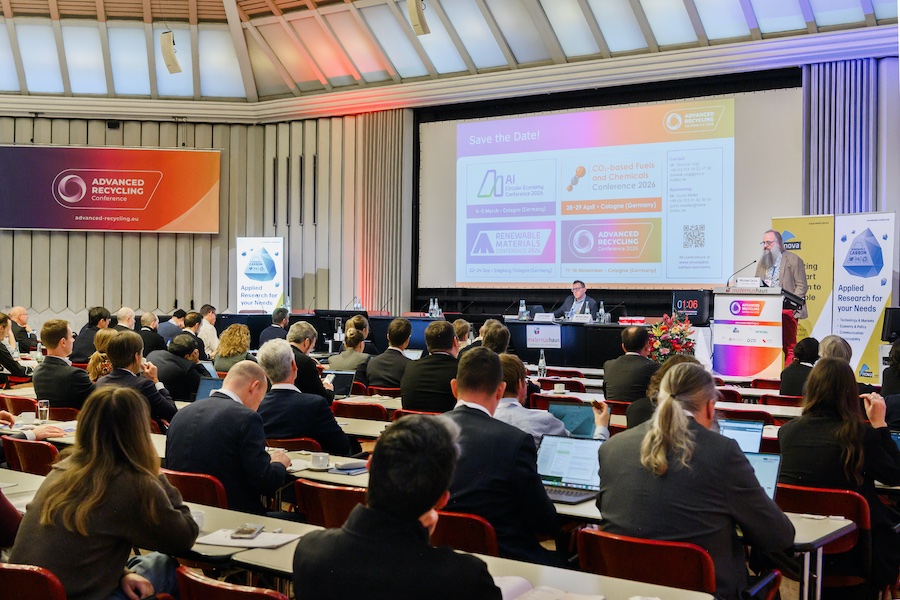
Advanced Recycling Conference 2026 to showcase innovations – Call for abstracts

The call for abstracts is now open for the Advanced Recycling Conference (ARC) 2026, taking place on 17–18 November 2026 in Cologne, Germany, and online. Europe’s leading platform for advanced recycling brings together hands-on solutions and cutting-edge research on recycling technologies for various waste streams like plastics, polymers, textiles or automotive, highlighting progress towards a circular renewable carbon economy.

#Recycling / Circular Economy

AI Circular Economy Conference 2026 fuels innovation at the intersection of AI and Circular Economy

The AI Circular Economy Conference 2026, organised by nova-Institute, brought together 116 participants from 15 countries in Cologne and online to explore the transformation of the chemical and materials industry supported and accelerated by artificial intelligence. During the two-day event, leading experts from industry, research, start-ups and the investment community discussed how AI can maximise the potential of renewable carbon creating efficient circular value chains. The conference featured 24 presentations and multiple panel discussions, highlighting the growing convergence of digital technologies and circular material systems. It demonstrated how artificial intelligence is progressing from the experimental stage to real industrial implementation within the circular economy.

#Research & Development

Pioneer of the first hour: Michael Carus steps down after more than 30 years from nova-Institute’s Management

After more than three decades at the helm, founder and CEO Michael Carus is set to step down as head of the Renewable Carbon division on 1 March 2026. Lars Börger as the new CEO, will take over this key position of the nova-Institute together with COO Linda Engel, while Carus will remain with the research and consulting company as a senior advisor and shareholder. This change takes place after a one-year transition phase, as planned.

More News on Recycling / Circular Economy

#Recycling / Circular Economy

HKRITA signs MoU with Jeanologia and Looptworks to establish the Green Machine Circular Textile Ecosystem

The Hong Kong Research Institute of Textiles and Apparel (HKRITA) yesterday officially signed a landmark Memorandum of Understanding (MoU) with two key global partners, Jeanologia and Looptworks, to establish the Green Machine Circular Textile Ecosystem – a first-of-its-kind collaboration to accelerate the large-scale recycling of blended textiles.

#Spinning

Object Carpet tests production of rPET BCF yarn on Neumag BCF line

In a joint project with Object Carpet GmbH, Denkendorf; the Institute for Textile Technology (ITA), Augsburg; and Next Generation Recyclingmaschinen GmbH (NGR), Feldkirchen, Austria, Barmag investigated the processing of recycled polyester for BCF yarn. The goal was to evaluate the fundamental suitability of 100% recycled carpet material for reuse in carpet yarn production to create a closed-loop system in carpet manufacturing. To date, commercial rPET BCF processes have been based solely on rPET from bottle pellets.

#Recycling / Circular Economy

Albany International reports progress with Cyclezyme on industrial textile recycling project

Albany International Corp. (NYSE:AIN) reports continued progress in the ongoing project with Cyclezyme AB, a leader in advanced enzyme-based plastic recycling, based in Sweden. The project exemplifies leading edge innovation in materials science, focusing on the development of enzyme-based recycling of industrial textiles primarily consisting of polyester and polyamide, where there is currently a significant lack of effective solutions for circular material flows. The objective of the project is to establish enzymatic processes for depolymerization and recycling of technical textiles and high-performance industrial materials.

#Recycling / Circular Economy

The textile industry in transition

Recycling, traceability, eco-design and digitalisation are among the key future challenges facing the European textile industry. The Erasmus+ project Skills4Circularity, involving 21 partners from twelve countries, is investigating the skills required to address these challenges. As the German industry partner, the Industry Association for Finishing – Yarns – Fabrics – Technical Textiles (IVGT) is bringing the industry’s perspective to the project.

Latest News

#Research & Development

2026 general meeting of the Friends and Supporters of RWTH Aachen at ITA

The Friends and Supporters of RWTH Aachen e. V. (proRWTH) looked back on a successful year of support at their 2026 general meeting. The meeting took place at Institut für Textiltechnik (ITA) of RWTH Aachen and was combined with a joint session of the Executive Board and the Administrative Board. Before the general meeting began, participants were given a guided tour of ITA, providing them with fascinating insights into current research and development topics in textile engineering.

#Natural Fibers

Cotton ConneXions Insight to Impact brings supply chain leaders together around cotton innovation

Cotton Incorporated’s Cotton ConneXions Insight to Impact brought together more than 300 industry leaders from 140 companies across 10 countries, including more than 45 top global brands and sourcing organizations, underscoring strong global interest in cotton-rich product development, sourcing and supply chain collaboration.

#Knitting & Hosiery

Footwear innovation enabled by warp knitting technology– insights from New Balance

The future of the athletic shoe is increasingly being shaped on warp knitting machines. For KARL MAYER, the footwear industry is one of the most important growth markets – and one of the sectors where innovative textiles can realize their full potential. In his keynote address at the opening of KARL MAYER’s TEXTILE INNOVATION CENTER in Obertshausen in April, Vishnu Prakash Muthusamy, Senior Textile and Materials Engineer at New Balance, explained the opportunities that warp knitting technology opens up for performance, sustainability, and faster development processes, and why textile manufacturers are transitioning from suppliers to development partners.

#Natural Fibers

Cashmere specialist joins AbTF Board of Trustees

The Aid by Trade Foundation (AbTF) is pleased to welcome Brian Yu, the chief executive officer of the Artwell Group, to its board of trustees. As CEO, Brian Yu developed Artwell into the world’s largest supplier of responsibly produced cashmere knitwear.

TOP