[pageLogInLogOut]

#Raw Materials

Greater transparency through tracking system

© 2021 Cotton made in Africa
Global trading companies must be able to rely on transparency in the value chain — while also taking on more responsibility themselves. Incidents underlining the need for more insight and traceability in the supply chain are not infrequent, especially in countries like China and India. In response, Cotton made in Africa developed the SCOT tracking system. In this interview, Gerlind Bäz explains how it works and who can use it.

Ms Bäz, what exactly is SCOT?

Throughout its history, CmiA has developed various systems to ensure a degree of transparency and data security. With most clients working under the Mass Balance system (MB), it was not always easy for us to provide a reasonable degree of transparency as well. As the years went by, retailers increasingly began letting us know that they wanted to use sustainable cotton. We developed SCOT to be able to meet their needs without abandoning the Mass Balance system.

What kind of information does SCOT track?

All partners in the textile chain are integrated into the system, which is based on CmiA ordering data and purchase orders provided to SCOT by our licensing partners, i.e. the trading companies. Building on these orders, all producers of products, fabric, or yarn record their sales and purchases in the system. Cotton quantities are recorded at each production stage, making it possible to calculate the exact amount of cotton used to fulfil each individual order.

What comes next for SCOT?

At the moment, SCOT only works for the MB system. However, it could be adapted to fit other CmiA products as well. For example, our cotton can be used under the Hard Identity Preserved (HIP) system or as an organic cotton variant. We want to adapt SCOT for these purposes. To achieve this goal, we will need to collect more data about the individual production stages of a given CmiA item. We will also need more detailed documentation regarding implementation  in the CmiA supply chain, which we will secure by uploading the relevant documents. This will enable us to offer our clients secure CmiA implementation and reliable data for these content claims as well.


What are the advantages of SCOT?

SCOT is a user-friendly system that can be used all throughout the world. We provide the platform. Usage depends on dynamics and systematics, with every link in the value chain feeding its product information into the system. This will allow us to offer CmiA’s clients an unprecedented level of control over their products in all global value chains.

Who can use SCOT?

We follow a simple principle: Anyone can use the information, and everyone must enter certain data into the system. We completed SCOT in 2020 and successfully launched it in early 2021. Retailers were already closely involved in the development phase, so we assume that SCOT will see intensive use in 2021.


Gerlind Bäz - Project Manager Supply Chain Management at Cotton made in Africa © 2021 Cotton made in Africa


More News from TEXDATA International

#Texprocess 2026

Texprocess 2026: Automation, digitalisation and AI redefine textile processing

Making investment decisions in textile processing has become significantly more demanding. Increasing energy costs, a shortage of skilled labour and ongoing geopolitical uncertainties are compelling companies to focus on technologies that deliver clear gains in efficiency and process reliability. This applies equally to apparel manufacturing and to the processing of technical textiles and high-performance materials. As a result, modernisation initiatives are assessed more carefully – even as the need to upgrade production systems continues to intensify.

#Techtextil 2026

Techtextil 2026: Between innovation pressure & market reality

From 21 to 24 April 2026, Techtextil in Frankfurt am Main will once again become the central meeting point for the international technical textiles and nonwovens industry. Running in parallel, Texprocess will focus on the industrial implementation of textile processing technologies as the leading platform in this field. Together, the two trade fairs form a closely integrated presentation and working platform along the entire textile value chain – from material development to finished applications.

#Techtextil 2026

Between geopolitical pressure and industrial resilience

In this interview, Dr. Janpeter Horn (VDMA) discusses the current challenges facing textile machinery manufacturers, shaped by geopolitical tensions, regulatory developments and subdued investment. He also outlines why innovation strength, integrated solutions and strategic positioning remain key to global competitiveness.

#Texprocess 2026

Between investment restraint and modernization pressure

Texprocess 2026 takes place in a complex market environment shaped by uncertainty and innovation pressure. In this interview, Elgar Straub (VDMA) explains why the trade fair is particularly relevant this year and which technologies are driving efficiency and competitiveness.

More News on Raw Materials

#Raw Materials

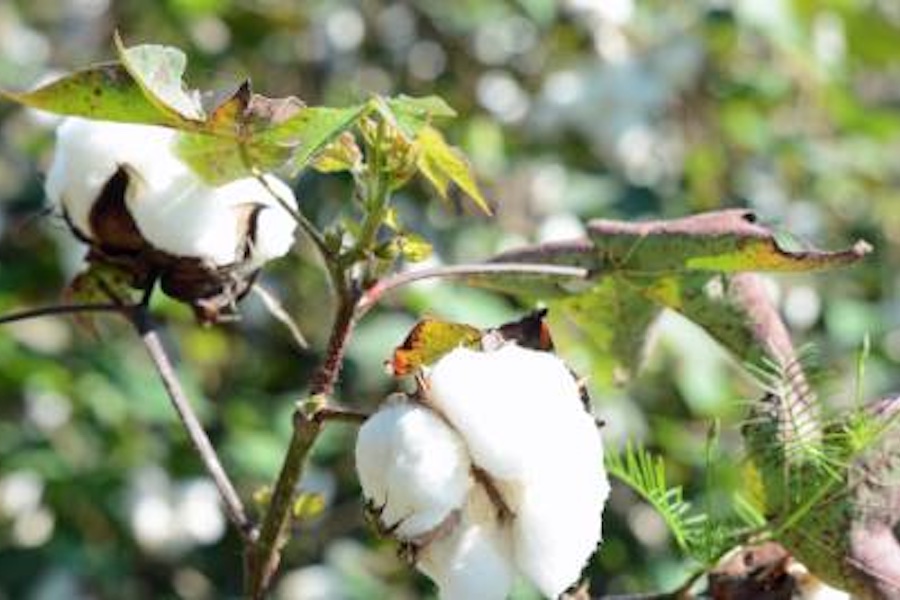
China projected to increase cotton production, yields, and imports in 2026/27

World cotton production in the 2026/27 season is projected at 25.9 million tonnes, exceeding global consumption of 25.2 million tonnes, according to the May 2026 issue of Cotton This Month. That means both production and consumption are expected to remain close to current season levels, while global cotton trade is projected to decline by 2.7% to approximately 9.6-9.7 million tonnes.

#Raw Materials

ICAC launches Carbon Credits Initiative to deliver new income streams to cotton farmers

The International Cotton Advisory Committee (ICAC) has announced a new initiative designed to unlock additional income streams for cotton farmers through participation in carbon credit markets, linking sustainable production practices directly to financial returns.

#Raw Materials

ECCO introduces first shoe featuring innovative protein-based fibre

ECCO, in partnership with Spinnova, announces the launch of the limited edition ECCO BIOM® 720, a first-of-its-kind shoe utilising an often overlooked leather by-product, transformed into a protein-based fibre. The fibres are produced using patented technology that advances material innovation while reducing waste and supporting full resource use across the leather and textile industry.

#Raw Materials

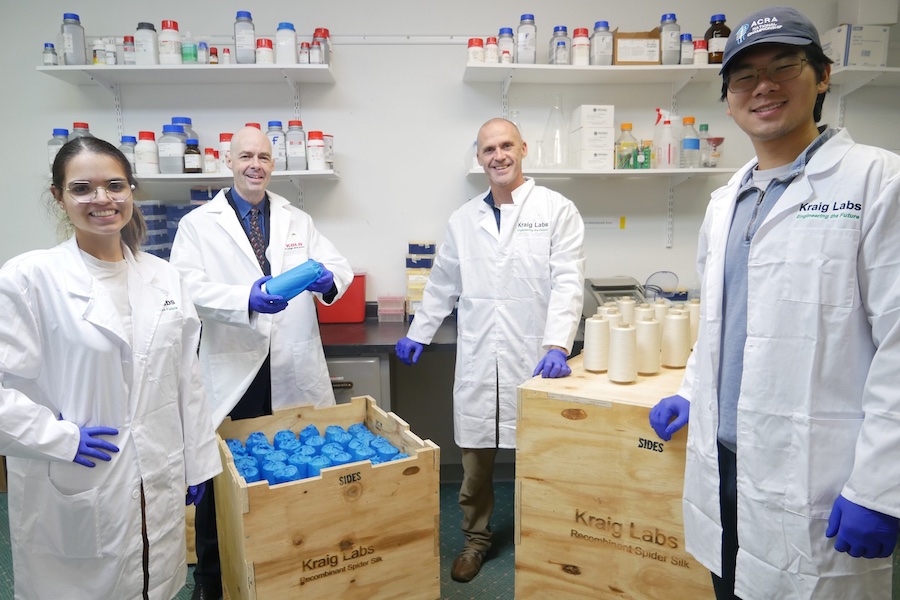
Kraig Biocraft Laboratories reports major progress converting record-setting spider silk cocoon production into reeled silk

Kraig Biocraft Laboratories, Inc. (OTCQB: KBLB) (“the Company”, “Kraig Labs”, or “Kraig’s”), a world leader in spider silk technology*, today announced significant progress in the processing of its recently produced recombinant spider silk cocoons into reeled silk.

Latest News

#INDEX 2026

STFI highlights textile circular economy and alternative fibres at INDEX™ 2026

From 19 to 22 May 2026, INDEX will invite visitors to Lake Geneva for the world's leading nonwovens trade fair. The Centre of Excellence in Nonwovens at the Sächsisches Textilforschung- sinstitut e.V. (STFI) will be in attendance to present the latest developments in nonwovens research. In the field of the textile circular economy, the STFI will present acoustically effective nonwovens made from chemical recycling residues. The range also includes innovations aimed at replacing conventional raw materials, such as the biobased and biodegradable polymer polybutylene succinate (PBS) and Kendyr as an alternative to cotton.

#Associations

Italian textile machinery sector faces weak start to 2026 despite domestic growth

In the first quarter of 2026, order intake for Italian textile machinery manufacturers recorded a decrease of 5% compared to the same period in 2025, reflecting a still challenging start to the year. The decline affected foreign markets (-7%), while the domestic market showed growth (+21%).

#Nonwovens

Temafa Maschinenfabrik GmbH supplies a complete decortication plant for processing hemp straw to Hanffaser Geiseltal eG

Temafa Maschinenfabrik GmbH, a leading supplier of machinery and plants for fibre processing, has successfully secured an order to supply a complete plant for processing hemp straw to Hanffaser Geiseltal eG, based in Mücheln.

#Techtextil 2026

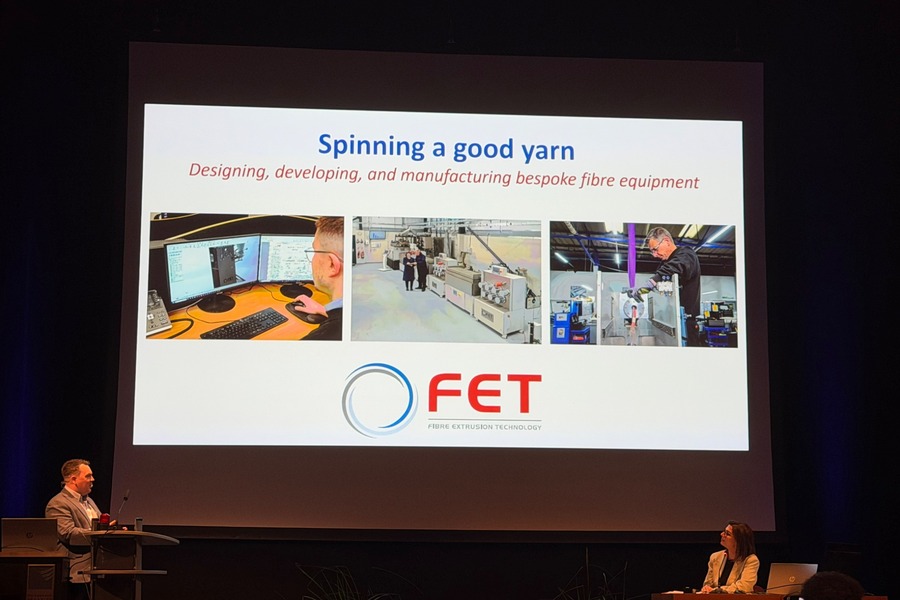
FET’s revolutionary gel spinning system wins Techtextil Innovation Award

FET has received the prestigious Techtextil Innovation Award 2026 in the New Production Technology category. The Techtextil Innovation Award honours outstanding ideas in textile technology, sustainability, AI and the creation of technical textiles, selected by an international jury of experts. Ranging from new materials to new production technologies, this award recognises progressive ideas that are driving forces for numerous industries, such as automotive, medical and construction.

TOP