[pageLogInLogOut]

#INDEX 23

INDEX™ : Sustainable nonwovens developments for Geneva
Center for lightweight textile construction © 2023 STFI
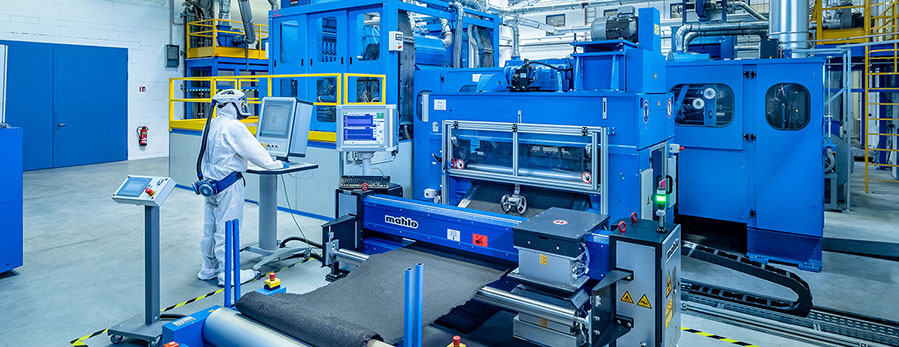
From April 18 to 21, INDEX™ 23 invites to Lake Geneva for the world's leading nonwovens fair. A trade fair team from the Saxon Textile Research Institute e.V. (STFI) will be on site to present news from nonwovens research at STFI. Among other things, a bio-based hygiene nonwoven, the recycling of high-performance fibers using the example of the VliesSMC project, an innovative hose liner system and water jet nonwovens made from recycled fibers will be on display. Meet our exhibition team at booth 1369 in Geneva.

Bio-based hygiene nonwoven: BioHyg

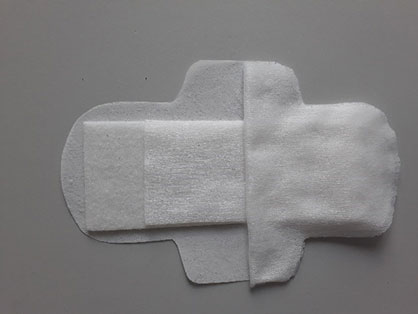
The starting point for the innovation was the search for a washable and thus reusable absorbent pad made from completely bio-based materials for applications in baby, feminine and incontinence hygiene. The focus was on two main requirements: fast and efficient liquid distribution and high absorbency to minimize rewetting and leakage. Both are guaranteed by special viscose fibers from Kelheim Fibres, which have been making this essential contribution in absorbent hygiene products such as tampons for many years.
© 2023 STFI
© 2023 STFI


Here, the advantages of nonwovens in combination with special viscose fibers in terms of absorptive capacity (through, for example, more open-pored structures) have been perfectly transferred from the petrochemical- to the world of biobased fiber materials. For reusable products, however, there is another challenge to overcome: they must remain stable during washing and over several cycles of use. To ensure this, an innovative nonwoven construction was developed at the Saxon Textile Research Institute (Sächsisches Textilforschungsinstitut e.V.). The developed nonwovens close the technological gap between sufficient dimensional stability and as little fiber damage as possible due to the bonding mechanisms. The developed nonwoven layers can be used as a stand-alone solution as a single-use product with bio-based materials or integrated into a washable composite structure, such as the diaper from start-up Sumo. In the Sumo cloth diaper, the absorbent pad's fluid management sets new standards. The new solution combines the worlds of hygiene and sustainability and provides proof that high-performance reusable absorbent products can be developed without fossil materials.

The research collaboration between STFI, Kelheim Fibres GmbH and Sumo GmbH received the 2022 Techtextil Innovation Award in the "New Concept" category for the development of a bio-based hygiene nonwoven - a good example of how research and industry are breaking new ground in sustainability through collaboration in an open innovation approach.


Recycling of high performance fibers: VliesSMC

STFI will be showing innovations in the recycling of high-performance fibers at INDEX™ 23. On display will be a battery housing developed jointly with the research partner Fraunhofer ICT, Pfinztal. Detailed investigations into the use of recycled carbon fibers in the SMC process chain were carried out at STFI, Chemnitz. To this end, nonwovens were first developed that enable the recycled carbon fibers to be fed into the SMC plant.

The SMC semi-finished products produced could then be processed by both molding and impact extrusion.

Comparison with conventional SMC products showed that comparable characteristic values could be achieved with a lower fiber volume content. Developments in the field of renewable raw materials in combination with bio-based resin systems also offer forward-looking materials.Further project information: VliesSMC

Innovative hose liner system

The aim of the research project was to develop an improved pipe liner system for trenchless pipe rehabilitation.

In particular, the force absorption in the longitudinal direction, the bendability without wrinkling were improved and the use of material as well as the pore volume of the textiles were optimized for the best possible impregnation with resin. The project included nonwoven development, coating of the liners and the use of UV-curable resins for curing. At INDEX™ 23, STFI will present a demonstrator showing a nonwoven-based pipe liner with coating, which in turn was impregnated with a UV-curable resin and cured using UV LED lamps. (49MF200100)

From recycled fibers to water-jet nonwovens

At INDEXTM 23, STFI will be exhibiting nonwoven structures that have been bonded by the waterjet process or stitch-bonding technologies after mechanical recycling by means of a tearing machine. The nonwovens are characterized by their soft feel and unique appearance. Whether wet-strength wipes, classic knitted pile fiber nonwovens with cushioning and insulating properties or sustainable needle-punched nonwovens; by using torn fibers in combination with established nonwoven formation processes, new applications for used textiles are found at STFI and material cycles are closed.

We would like to discuss with you the possibility of joint research projects and suitable funding programs. Have we aroused your interest? We are looking forward to exciting discussions with you. Visit us at the INDEX™23 at booth 1369.
More News from Sächsisches Textilforschungsinstitut e.V. (STFI)

#Recycling / Circular Economy

17th Colloquium on Recycling for Textiles with accompanying trade exhibition in Chemnitz

On 3 and 4 December 2025, the 17th colloquium on recycling for textiles will take place at the Hotel Chemnitzer Hof. The event brings together experts from industry, science and research to present and discuss current developments, technologies and business models for a sustainable circular economy in the textile industry.

#Research & Development

Kendyr as a climate-friendly cotton alternative: STFI explores new value chains for salinised land in Central Asia

In large parts of Central Asia, decades of cotton irrigation have led to severe soil salinisation, with serious consequences for soil fertility and the future of cotton cultivation. An international research consortium, including the Saxon Textile Research Institute (STFI), has therefore investigated the potential of alternative fibre plants. The focus was on Apocynum spp. (kendyr), a bast fibre plant that can thrive on saline soils. The aim: to restore the agricultural use of former cotton fields and establish new textile value chains in the region.

#Research & Development

Tour de LOOP Exclusive specialist trip to Chemnitz – textile art and design in the European Capital of Culture 2025

The European Capital of Culture 2025, Chemnitz, opened its doors to textile designers, textile artists and experts from the fields of fashion, art and textiles: the Tour de LOOP on 26 and 27 May 2025 took participants on an exclusive professional tour of one of Europe's most traditional and innovative textile regions. 19 visitors from Europe explored Chemnitz and its textile region. They came from the Nether- lands, Austria, the Czech Republic, Great Britain and Germany.

#Research & Development

STFI is investigating textile applications for PU casting compounds

Polyurethane (PU) casting compounds are classically used as protective and insulating material in electronics and electrical engineering, e.g. in battery modules or on circuits or for embedding LEDs. In addition to their electrical insulating properties, they are heat resistant and mechanically flexible . In addition, the transition from liquid to solid aggregate state is so favorable that these PU masses can be applied with a precise fit.

More News on INDEX 23

Latest News

#Knitting & Hosiery

Mayer & Cie. to shut down after failed search for investor – 270 jobs affected

Mayer & Cie., the long-established German manufacturer of circular knitting and braiding machines, will cease operations after its international search for an investor ended without success. The company, based in Albstadt-Tailfingen, had been undergoing insolvency proceedings in self-administration since its filing on 23 September 2025. As Schwarzwälder Bote reports, the insolvency court has now formally opened the proceedings, triggering the decision to wind down the business in an orderly process.

#Man-Made Fibers

Trevira CS® ignites Heimtextil 2026 with "WE CARE" campaign

Indorama Ventures, a global sustainable chemical company, announces its Trevira CS® brand’s powerful and socially responsible presentation at Heimtextil 2026 in Frankfurt, Germany, from January 13 to 16, 2026. The impactful theme of the show: “WE CARE.”

#Recycling / Circular Economy

European research project addresses textile waste through integrated recycling technologies

A major European research initiative coordinated by Fraunhofer UMSICHT has been launched to develop integrated solutions for textile waste recycling. The AUTOLOOP project aims to create a comprehensive system that could process 1.24 million tonnes of textile waste annually by 2050, whilst potentially creating over 130,000 green jobs across the EU. This project aims to develop, test and integrate automated sorting, tracing, and closed-loop recycling technologies for polyester-based textiles (NRT), addressing the pressing challenge of textile waste management.

#Recycled_Fibers

CARBIOS and Wankai sign strategic PET biorecycling pact

CARBIOS (Euronext Growth Paris: ALCRB) and Wankai New Materials (“Wankai”), a listed subsidiary of Zhink Group, the 3rd largest PET producer in China and 4th worldwide, announce the signing of the definitive agreement establishing a strategic partnership for the industrial rollout of CARBIOS’s PET biorecycling technology in Asia. The first milestone will be the construction of a PET biorecycling plant in China.

TOP