[pageLogInLogOut]

#Nonwovens / Technical Textiles

Inside Bananatex®: the world’s first technical fabric made from naturally grown Abacá banana plants.
© 2022 Bananatex®
100% made from plants cultivated in the Philippines within a natural ecosystem, Bananatex® was developed by Swiss bag brand and material innovators QWSTION in collaboration with Taiwan-based yarn specialists and weaving partners, united by the ambition to make a positive impact on the future of our planet.

This award-winning Cradle to Cradle Certified® Gold fabric is the outcome of a multi-year research, development and production process, resulting in a new material that answers questions of environmental, economic and social sustainability. As an open source project, Bananatex® offers a circular alternative to the synthetic fabrics that dominate the market today.

Sustainability

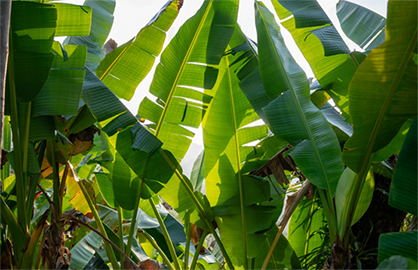
Cultivated in the Philippine highlands within a natural ecosystem of sustainable mixed agriculture and forestry, the naturally grown Abacá banana plant is sturdy and self-sufficient, requiring no pesticides, fertilizer or extra water. These qualities have allowed it to contribute to reforestation in areas of former Philippine jungle eroded by soil damage due to monocultural palm plantations, whilst enhancing biodiversity and the economic prosperity of its farmers.

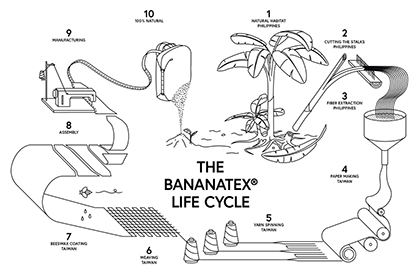
Abacá fibres are extracted by boiling and then pressed into sheets (pulp sheets) in the Philippines. Followed by paper making and yarn spinning in Taiwan. The Natural White colourway yarn reflects the actual colour of the fibres and is accordingly not dyed. In the case of the All Black colourway, the yarn is coloured using the yarn dyeing method, which is more sustainable than the typical roll dyeing alternative, and certified to Oeko-Tex® Standard 100. 
© 2022 Bananatex®
© 2022 Bananatex®


For Bananatex®, contributing to a better planet begins with sourcing – guided by the available expertise in different locations, whilst keeping a low environmental footprint. Design and development begins at the brand’s studio in Zurich, Switzerland, and the fabric is made across Asia.

This video documentary provides insights into the process and steps alongside the Bananatex® supply chain, showing how the company has structured its business for resilience and sustainability: https://vimeo.com/294328565

The Product

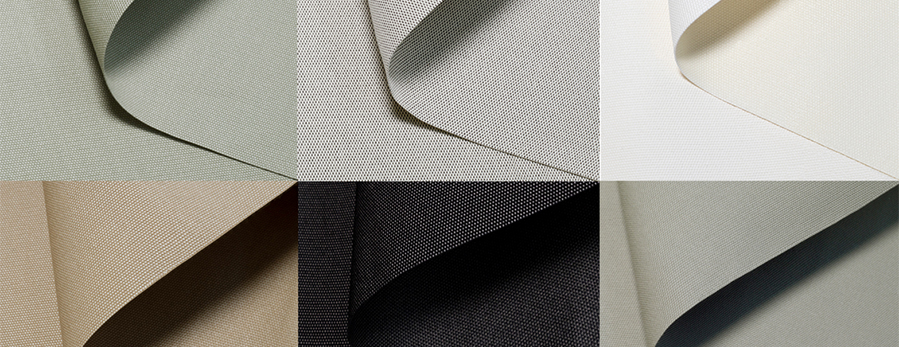
Bananatex® is a strong and durable fabric, while remaining soft, lightweight and supple. An all-natural bio-based wax coating can be applied to make Bananatex® waterproof, giving it a smooth and distinctive handfeel. The fabric is available in different dyed versions, and also in a white undyed version.


Besides QWSTION’s own range of approximately 60 Bananatex® SKUs that include tote bags, backpacks, pouches and computer sleeves (view here), a number of products using Bananatex® are also on the market from third party brands, ranging from furniture, to accessories, to fashion. Visit their showcase here.

A circular business model approach

The company has prepared the groundwork for a closed technical recycling and they take back Bananatex® bags that have reached end-of-life status. However, as the first bags were introduced in 2018, recycling volumes to date have not been significant due to the fact that the bags are still in their first user phase.

As part of a closed technical cycle, the used products can be taken back into existing paper recycling methods, and new Bananatex® yarn can be made out of it. The company is also encouraging their partners to start introducing similar projects, in order to be fully circular.

In this way, they can minimize waste and generate post-user value.

Bananatex® can also be decomposed in composting facilities or through usual kitchen compost. Moreover, a lab test (ISEGA, Germany) evaluating the biodegradability of Bananatex® for industrial composting and marine conditions was recently accomplished.
© 2022 Bananatex®
© 2022 Bananatex®


International recognitions

Since its launch in October 2018 Bananatex® has won a variety of international sustainability and design awards such as the Green Product Award 2019, the Design Prize Switzerland Award 2019/20 as well as the German Sustainability Award Design 2021.

The Bananatex® fabric achieved Cradle to Cradle Certified® Gold in December 2021 for a number of colours, including Natural White, All Black, Gravel, Asphalt and their respective durable water repellent (DWR) versions. This acknowledgment affirms Bananatex®’s commitment to protect the natural environment and support the communities the brand engages with.

View on the Cradle to Cradle Certified product registry:

https://www.c2ccertified.org/products/scorecard/bananatex-bananatex-ag



More News from TEXDATA International

#ITM 2026

ITM 2026: The new geography of textile production

New production hubs are emerging across North Africa and Central Asia, while Türkiye is accelerating its transformation toward higher-value, technology-driven and more sustainable textile manufacturing.

#Research & Development

“Production is a product”

From technical textiles and AI-driven robotics to the limitations of textile circularity: Professor Dr Thomas Gries looks back on more than two decades of development at ITA Aachen. In the interview, he explains why production technology remains a decisive success factor, discusses international collaborations and innovation ecosystems, and shares his views on the transformation of production landscapes and the challenges facing an increasingly regulated industry.

#Knitting & Hosiery

“We need to move away from the price trap and return to a value-driven mindset.”

With its new Textile Innovation Center, KARL MAYER is sending a strong signal for innovation, collaboration, and the future of textile applications. In this interview, Karl Josef Mayer discusses new opportunities in warp knitting, the processing of staple fibres, recycling, the changing role of machinery manufacturers, and why the textile industry must once again focus more strongly on the value of textiles. by Oliver Schmidt

#Associations

“Innovation, resilience and international experience remain the great strengths of the Swiss textile machinery industry”

Geopolitical uncertainty, growing competitive pressure from China, new free trade agreements and the shift towards a circular economy are currently reshaping the global textile industry. In this interview, Cornelia Buchwalder discusses the current mood within the Swiss textile machinery sector, the industry’s distinctive innovative strength, new market opportunities in India and Asia, and the technological trends that could shape the upcoming trade fair cycle leading up to ITMA 2027.

More News on Nonwovens / Technical Textiles

#ITMA Asia + CITME Singapore 2025

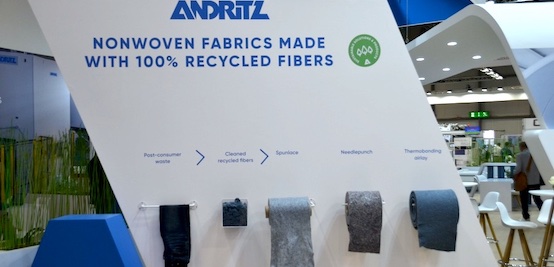
ANDRITZ sets focus on textile recycling and durable nonwoven production technologies at ITMA Asia 2025

International technology Group ANDRITZ will be presenting its innovative nonwovens production and textile solutions at ITMA ASIA + CITME 2025 in Singapore, from October 28 to 31, 2025 (Hall 2, D106). ANDRITZ will showcase its MMCF production plants, textile sorting and recycling, bast fiber processing, needlepunch, airlay, and life-cycle service technologies, with a focus on sustainable solutions. Discover how these innovations can grow your business opportunities and support a greener future.

#ITMA Asia + CITME Singapore 2025

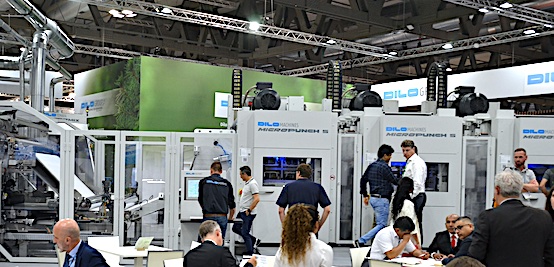
Dilo Group at ITMA ASIA Singapore 2025

At ITMA ASIA Singapore, the Dilo Group will exhibit at Booth No. H2 – D202. Together with Kansan Materials, Izmir, the company will present its latest developments and looks forward to welcoming visitors to exchange ideas and explore innovations in needling technology.

#Nonwovens

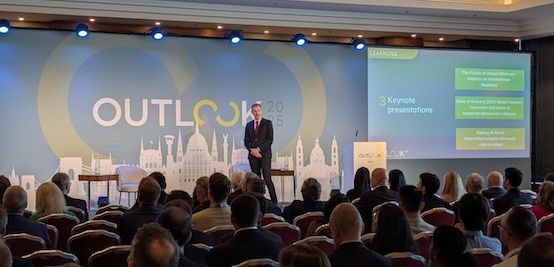
OUTLOOK™ 2025: Charting a sustainable and innovative future for the Nonwovens Industry

EDANA concluded its flagship event, OUTLOOK™ 2025, last week, marking it as a major success and addressing the biggest questions facing the industry. The three-day conference highlighted the urgent need for a unified approach to sustainability, regulation, and innovation in the absorbent hygiene and wipes sectors.

#Nonwovens

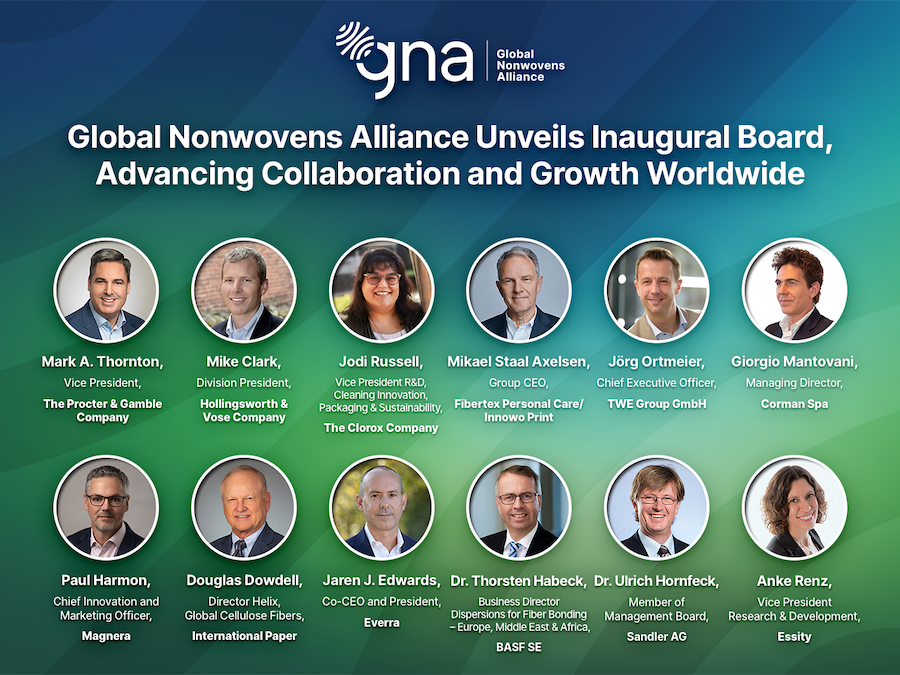
Global Nonwovens Alliance unveils Inaugural Board, advancing collaboration and growth worldwide

The Global Nonwovens Alliance (GNA), a tax-exempt federation jointly founded by INDA, the Association of the Nonwoven Fabrics Industry, and EDANA, the Voice of Nonwovens, announces the appointment of its founding Board of Directors. This group of leaders represents some of the most influential executives across the nonwovens value chain and reflects GNA’s mission to foster global collaboration, innovation, and growth in the industry.

Latest News

#Associations

Mario Jorge Machado re-elected President of EURATEX

The EURATEX General Assembly has re-elected Mario Jorge Machado as President of EURATEX, renewing its confidence in his leadership at a crucial moment for the European textile and clothing industry. The sector is facing rising costs, global competitive pressure and an increasingly challenging transition towards sustainability and digitalisation.

#ITM 2026

ITM 2026 makes happy participants with its international and qualified visitor profile

ITM 2026 International Textile Machinery Exhibition, one of the most prestigious meeting points of the textile machinery sector, attracted attention in its first three days, particularly with its diverse international visitor numbers. Industry professionals from all over the world had the opportunity to closely examine the latest technology machines and solutions displayed in operation. Thousands of visitors from approximately 100 countries, primarily Egypt, Pakistan, India, Uzbekistan, Syria, Turkmenistan, Tajikistan, Morocco, Algeria, and Tunisia, met at the Tüyap Fair and Congress Center for new investment and cooperation opportunities.

#ITM 2026

KARL MAYER presents a textile TEXTRONIC® innovation at ITM 2026

With highly efficient machines and continuous textile innovations, KARL MAYER underscores its role as a reliable partner for discerning top-tier customers. Just in time for ITM 2026 in Istanbul, the industry leader is introducing a true innovation: an eyelash lace with its characteristic fringed look – combined with a previously unattainable 4-way stretch. While the established fabric could until now only be produced as rigid version or with one-dimensional stretch, the new elasticity in both dimensions expands the possibilities for cross-band panel fabrics.

#Raw Materials

Better Cotton Initiative welcomes new and returning Council members

The Better Cotton Initiative (BCI) has confirmed a series of appointments and reappointments to its Council, the multistakeholder board responsible for BCI’s strategic direction.

TOP