[pageLogInLogOut]

#Market Analysis & Forecasts

Sustainability concerns driving industry to innovate with more fibre-based nonwovens, latest Smithers study finds

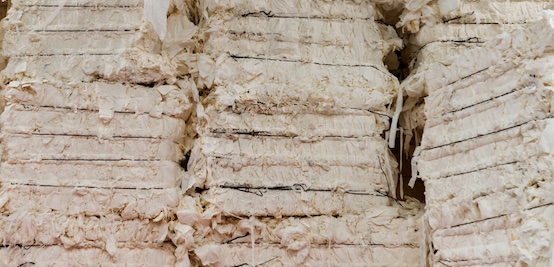
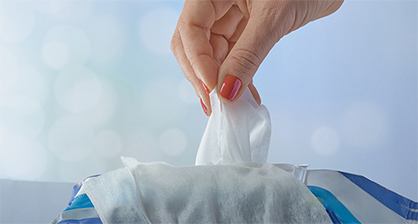
Nappies/diapers, wipes, and feminine hygiene goods are all vital parts of a global nonwovens industry worth $55.6 billion in 2022. Legislative pressure to reduce single-use plastics is now combining with consumer and brand owner demand for more sustainable nonwovens, including the market deployment of more advanced biodegradable fibre-based substrates.

Smithers’ new expert study – The Future of Fibre vs. Polymer Based Nonwovens to 2027 – charts the evolution of this trend and the broader impact on nonwoven supply and product performance. Its data show that in 2022, 100% of polymers used in polymer-based nonwovens are plastic (PE, PET, PP, Others). Only 64% of fibre-based nonwovens are plastic (PP or PET fibres); with Rayon, Lyocell, bi-component fibres and wood pulp representing the remainder.

The market is evenly split a projected 6.53 million tonnes of fibre-based nonwovens worth $28.7 billion will be produced worldwide in 2022. This contrasts to a market for polymer nonwovens consuming 6.64 million tonnes and worth $27.0 billion; and a much smaller segment for fibre-polymer composite nonwovens projected at 225,200 tonnes valued at $761.9 million.

Fibre-based nonwovens have the technological lead in 2022 for producing sustainable and increasingly fully plastics-free products. This will lead to accelerated demand in multiple applications through to 2027. Countering this is a lack of installed production capacity, which will require investment to reverse. While matching the technical performance of polymer nonwovens will be a leading R&D priority for realising a more sustainable future in an industry where most consumer formats are still designed for single-use. 
© 2022 Smithers
© 2022 Smithers


This will be balanced against the introduction of new nonwoven processes and other iterative trends, such as the production of lower basis weight substrates. Simultaneously the market will see a wider use of recycled plastics and bioplastics, such as polyhydroxyalkanoates (PHAs) providing alternative routes to more sustainable nonwovens.

These factors will retard any wider transition to fibre-based nonwovens, giving both material sets nearly equal growth rates through to 2027 – at 6.9% for fibre-based nonwovens by weight; 6.8% for polymer-based.

The majority of expansion for fibre-based nonwovens will come from drylaid lines. Globally consumption will increase faster than for the main polymer nonwoven process, spunlaid; though expansion on supply from both airlaid and wetlaid lines will be significantly slower.

The greatest growth in fully plastics-free nonwovens will be in wipes, leveraging the technical heritage that is increasingly diversifying the range of flushable wipe substrates available. In contrast polymer-based disposable nonwovens will continue to increase sales, especially into the dominant hygiene market, where there are currently no cost-competitive sustainable alternatives.

In durable nonwovens, enthusiasm from the fashion industry will see much wider use in apparel interlinings. Fibre-based coating substrates also have a very positive growth outlook as nonwovens continue to supplant higher cost, heavier weight textiles in multiple segments.


The historic, current and future market outlook for polymer and fibre-based nonwovens, along with expert analysis of when and where fully plastic-free nonwovens will be feasible, is available now in The Future of Fibre vs. Polymer Based Nonwovens to 2027. Its authoritative market dataset subdivides the market (value, tonnage, and surface area) by:

  • Raw material (PP polymer, PET polymer, PE polymer, Other polymer; PP fibre, PET fibre, Rayon/Lyocell, Bicomponent fibre, wood pulp, Other fibre)
  • Nonwoven process (Spunlaid, Drylaid, Airlaid, Wetlaid, Other)
  • End-use application (Hygiene, Medical, Baby wipes, Personal Care wipes, Home Care wipes, Industrial wipes, Other disposable nonwovens; Air & gas filtration, Liquid filtration, Garments, Interlinings, Footwear & leather, Coating substrates, Upholstery & bedding, Floor coverings, Building & roofing, Geotextiles & civil engineering, Automotive, Agriculture, Other durable nonwovens
  • Regional market (Asia, North America, South America, Europe, Rest of the World).

This expert strategic study on nonwoven materials supply and the role of sustainability in the industry’s future is available to purchase now, priced $6,750 (€5,950, £4,950).



More News from TEXDATA International

#Recycling / Circular Economy

textile.4U publishes special edition “Top 100 Textile Recycling Companies 2025”

With a comprehensive 176-page special edition, textile.4U is dedicating its latest issue entirely to one of the most dynamic and influential topics in today’s textile industry: textile recycling. The new issue, published exclusively in high-quality print, presents the Top 100 textile recycling companies researched and selected by TexData – organizations that already play a key role in the transition to circular textiles or are expected to have a significant impact in the near future.

#Recycling / Circular Economy

Responsible Textile Recovery Act of 2024 signed by Governor

Senator Josh Newman (D-Fullerton) is proud to announce that Senate Bill 707 (SB 707), the Responsible Textile Recovery Act of 2024, has been signed into law by the Governor of California, Gavin Newsom. This groundbreaking legislation establishes the country’s first Extended Producer Responsibility (EPR) textile recycling program, marking a significant step forward in the state’s efforts to combat waste and promote sustainability.

#Textiles & Apparel / Garment

Modtissimo promotes sustainability with 28 coordinates in the Green Circle

Modtissimo is proving more and more to be a textile and clothing show that delivers the latest innovations in the area of sustainability, with the iTechStyle Green Circle being the main showcase for companies' creations. In this 60+4 edition, taking place on 12 and 13 September, 28 coordinates will be exhibited in a section organised by CITEVE and curated by Paulo Gomes.

#Europe

The EU and Egypt team up to mobilise private sector investments at Investment Conference and sign a Memorandum of Understanding underpinning €1 billion in macro-financial assistance for Egypt

At the EU-Egypt Investment Conference, co-organised by the EU and the Government of Egypt on 29-30 June, the EU and Egypt are teaming up to intensify private sector investments in Egypt. They are also signing a Memorandum of Understanding (MoU) for the disbursement to Egypt of up to €1 billion in Macro-Financial Assistance.

More News on Market Analysis & Forecasts

Latest News

#Spinning

First PA66 spinning plant with EvoQuench successfully commissioned

With the successful commissioning of a multi-digit PA66 spinning line for microfiber yarns, Chinese textile company Shandong Nanshan Fashion Technology Co., Ltd. has added yarn production to its textile value chain.

#Knitting & Hosiery

SHIMA SEIKI returns to ShanghaiTex

Leading flat knitting solutions provider SHIMA SEIKI MFG., LTD. of Wakayama, Japan, together with its Hong Kong and Chinese market subsidiary SHIMA SEIKI (HONG KONG) LTD., will exhibit at the ShanghaiTex 2025 exhibition (Booth No.: Hall N3, Booth A20) held in Shanghai, China this month. This marks the return of SHIMA SEIKI to ShanghaiTex after a 14-year hiatus, its last exhibit at the show having been in 2011.

#Research & Development

Fraunhofer CCPE presents the “Monomaterial Design Set” – Innovative solutions for circular product design

Composite materials made from different types of plastic often extend the lifetime of products but make recycling more difficult in the circular economy. That is why Fraunhofer CCPE has developed the “Monomaterial Design Set”. This new approach helps to reduce the variety of plastics used in durable products and offers circular solutions for designers and product developers.

#Man-Made Fibers

arena introduces renewable LYCRA® EcoMade fiber in its latest swimwear collection

Italian swimwear specialist arena has unveiled a new collection that brings sustainability and performance even closer together. Launched on December 4, the line features swimsuits made from recycled nylon and renewable LYCRA® EcoMade fiber — the first time the bio-based spandex has been used commercially in swimwear.

TOP