[pageLogInLogOut]

#Nonwovens / Technical Textiles

Fibertex Nonwovens announces further DKK 300m investment in high-tech plant expansions in Europe

Fibertex Nonwovens, headquartered in Aalborg, Denmark, is embarking on a second stage of expansions with an investment of DKK 300 million in the company’s plants in the Czech Republic and Turkey. The investment was prompted by increased global demand for the company’s high-tech and sustainable speciality products.

In March 2021, Fibertex Nonwovens, a subsidiary of the Danish industrial conglomerate Schouw & Co. in Aarhus, Denmark, announced an investment of just over DKK 300 million in a capacity expansion of one of the company’s two plants in the USA. Fibertex Nonwovens is now investing the same amount in Europe with a capacity expansion of the company’s existing plants in the Czech Republic and Turkey:

“Demand for our nonwovens has increased significantly in recent years. It concerns particularly the more specialised applications and high-performance materials for the healthcare sector, industrial products, specialist acoustic products for the automotive industry, nanofiltration for industrial purposes, etc. Our business development and research activities over the past ten years have afforded us a leading position in both Europe and the USA, and this is the direct reason for the total investment of just over DKK 600 million in capacity expansions,” explains Jørgen Bech Madsen, CEO of Fibertex Nonwovens, from the company’s headquarters in Aalborg.

He adds that the coronavirus pandemic has led to an explosive demand for hygiene products, such as disinfectant wipes. Fibertex Nonwovens ability to produce specialised products with unique properties at relatively low costs is increasingly recognised in the market.

New production line in the Czech Republic focusing on high-tech, sustainable products

Fibertex Nonwovens is increasingly using the so-called spunlace technology which is a relatively new production method where high-speed jets of water are used to entangle the fibres of the nonwoven textiles. Fibertex Nonwovens has years of positive experience with this particular technology, and the lion’s share of the investment will be spent on a new spunlace production line at the company’s plant in Svitavy in the eastern Czech Republic:

“We’ve got a lean and high-tech production setup with clear focus on innovation, and the new production line is to serve the huge demand for disinfection wipes from the healthcare sector. This demand was rising even before the coronavirus pandemic, but we expect it to increase even further in the coming years. With this new investment, we’ll be able to offer new and sustainable product properties that’ll help meet the demands of the future in this field. At the same time, we’re freeing up capacity at several of our other European plants, allowing us to explore new opportunities within the manufacture of acoustic products for the automotive industry and products for filtration,” Bech Madsen continues.


Capacity expansion in Turkey for value-added products

In 2015, Fibertex Nonwovens acquired the nonwovens operations of the Turkish manufacturer Ribatek. The plant is located in the city of Cerkezkoy in western Turkey, nearly 100 kilometres northwest of Istanbul, and it specialises in spunlacing. Here, Fibertex Nonwovens is now investing in an expansion of the current production facilities as well as adding additional lines in finishing and coating with a view to manufacturing specialised nonwovens products:

“The plant in Turkey complements the production units of our other European and US plants by manufacturing high-tech products. For example, we’re experiencing growing demand for various forms of finishing, which allow us to add entirely unique properties to the products,” says Bech Madsen.

Consolidation is part of ambitious growth plan

The investments in Europe and the USA totalling DKK 600 million form part of an ambitious growth strategy for the period to 2026. Fibertex Nonwovens generated revenue of DKK 1.8 billion in 2020 and is expected to increase the top line to around DKK 2.5 billion over the next five years.

“It’s crucial that we take advantage of the current momentum to strengthen our position. There’s an ‘open window’ for expansion and we’ve got the resources to take advantage of the opportunities,” says Jens Bjerg Sørensen, President and CEO of Schouw & Co., and he continues:

“Fibertex Nonwovens has huge potential and with the new investments in both the USA and Europe, it can significantly increase its revenue and earnings. It’s simply an excellent business case.”

The investment in the Czech Republic and Turkey will not affect revenue and profit expectations for the current financial year.

Facts about Fibertex Nonwovens

Fibertex Nonwovens is among the world’s leading manufacturers of special-purpose nonwovens produced on high-tech processing facilities with various purpose-specific post-processings. The processed materials are used in cars, the construction industry, for wipes and face masks as well as for filtration solutions, in which they often replace heavier and more environmentally harmful alternatives.

Fibertex Nonwovens is wholly owned by Schouw & Co. and headquartered in Aalborg, Denmark, where the business was founded in 1968. The company generates annual revenue of DKK 1.8 billion (2020) and has production facilities in Denmark, Brazil, France, the Czech Republic, Turkey, the USA and South Africa as well as sales subsidiaries in France, Portugal, Spain and China.


More News from TEXDATA International

#India ITME 2026

India’s textile industry: Current position, growth targets and industrial development

With ambitious export targets, major investments in manufacturing infrastructure and new international trade agreements, India is pursuing a comprehensive development strategy for its textile and apparel industry. An overview of the industry’s current position, government initiatives, progress achieved and challenges ahead.

#India ITME 2026

India ITME 2026: Textile technology meets India's investment ambitions

With ambitious growth targets, government incentive programmes and industrial development initiatives already underway, India is preparing for the next stage of its textile transformation. Against this backdrop, the 12th India ITME, taking place in Greater Noida from 4 to 9 December 2026, arrives at a particularly important moment for machinery manufacturers and textile producers alike.

#Digital Printing

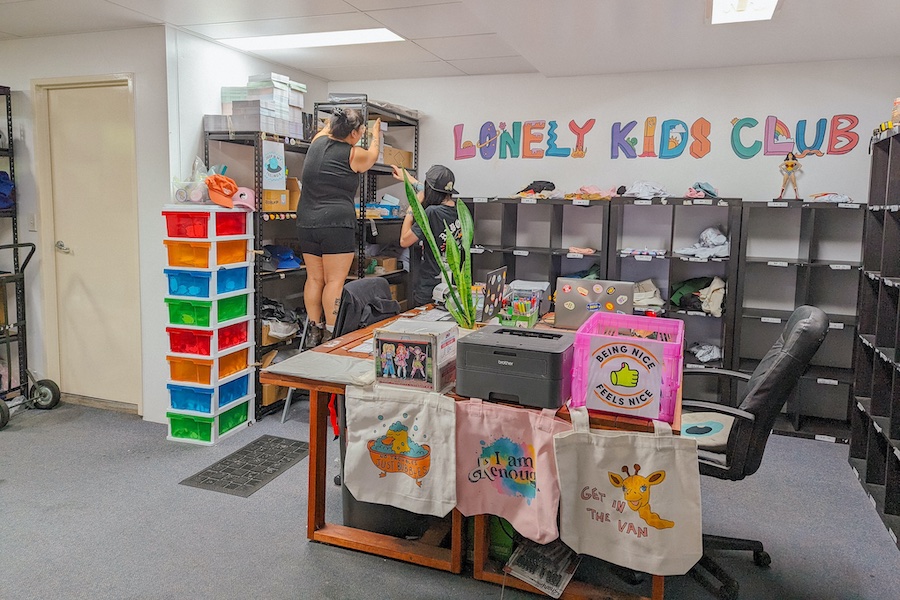
From a bedroom startup to 3,000 designs: How Lonely Kids Club built its business with DTG printing

Founded in Sydney in 2011, independent clothing label Lonely Kids Club has grown from a bedroom startup into a business offering around 3,000 graphic T-shirt designs. With its own production studio, direct-to-garment printing and a demand-driven manufacturing model, the company demonstrates how smaller apparel brands can combine creative independence with flexible production – while navigating the everyday challenges of quality control, workflow efficiency and sustainability.

#Weaving

“A complex design is only useful if the machine can reproduce it consistently”

Andreas Schnabel, Head of R&D for Technical Weaving Systems at Stäubli, discusses how 3D weaving can create textile reinforcements tailored to the loads within a composite component, where near-net-shape weaving can reduce processing steps and material waste, and what it takes to produce complex structures reliably and economically. He also explains how manufacturers can adapt Stäubli’s modular TF weaving platforms to new applications and how the company’s centre of excellence in Bayreuth supports the transition from research to industrial production.

More News on Nonwovens / Technical Textiles

#ITMA Asia + CITME Singapore 2025

ANDRITZ sets focus on textile recycling and durable nonwoven production technologies at ITMA Asia 2025

International technology Group ANDRITZ will be presenting its innovative nonwovens production and textile solutions at ITMA ASIA + CITME 2025 in Singapore, from October 28 to 31, 2025 (Hall 2, D106). ANDRITZ will showcase its MMCF production plants, textile sorting and recycling, bast fiber processing, needlepunch, airlay, and life-cycle service technologies, with a focus on sustainable solutions. Discover how these innovations can grow your business opportunities and support a greener future.

#ITMA Asia + CITME Singapore 2025

Dilo Group at ITMA ASIA Singapore 2025

At ITMA ASIA Singapore, the Dilo Group will exhibit at Booth No. H2 – D202. Together with Kansan Materials, Izmir, the company will present its latest developments and looks forward to welcoming visitors to exchange ideas and explore innovations in needling technology.

#Nonwovens

OUTLOOK™ 2025: Charting a sustainable and innovative future for the Nonwovens Industry

EDANA concluded its flagship event, OUTLOOK™ 2025, last week, marking it as a major success and addressing the biggest questions facing the industry. The three-day conference highlighted the urgent need for a unified approach to sustainability, regulation, and innovation in the absorbent hygiene and wipes sectors.

#Nonwovens

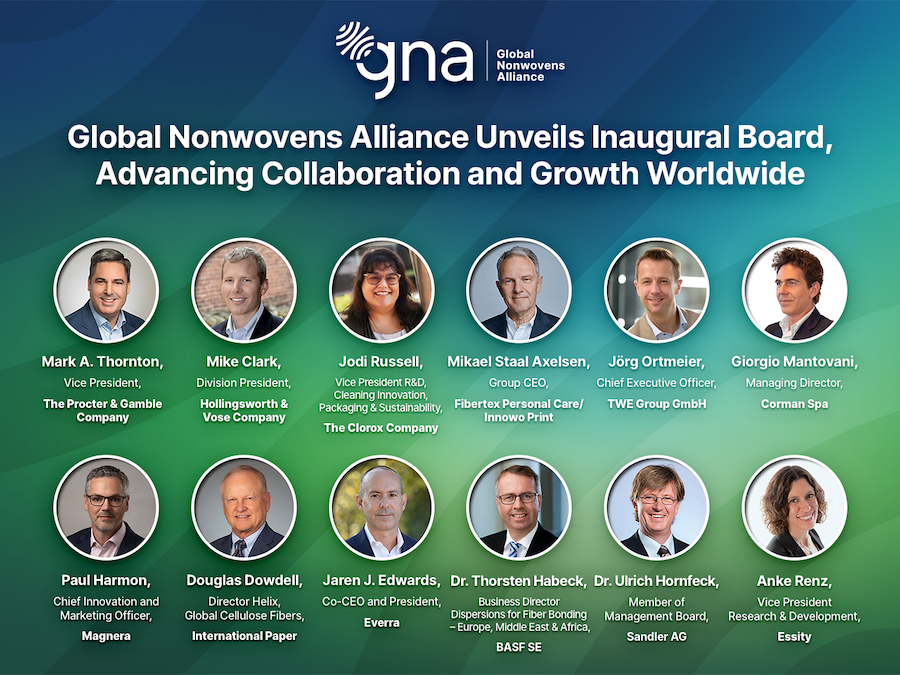
Global Nonwovens Alliance unveils Inaugural Board, advancing collaboration and growth worldwide

The Global Nonwovens Alliance (GNA), a tax-exempt federation jointly founded by INDA, the Association of the Nonwoven Fabrics Industry, and EDANA, the Voice of Nonwovens, announces the appointment of its founding Board of Directors. This group of leaders represents some of the most influential executives across the nonwovens value chain and reflects GNA’s mission to foster global collaboration, innovation, and growth in the industry.

Latest News

#Knitting & Hosiery

Monarch extends its Woven Look knitting technology from mattress ticking to apparel and performance textiles

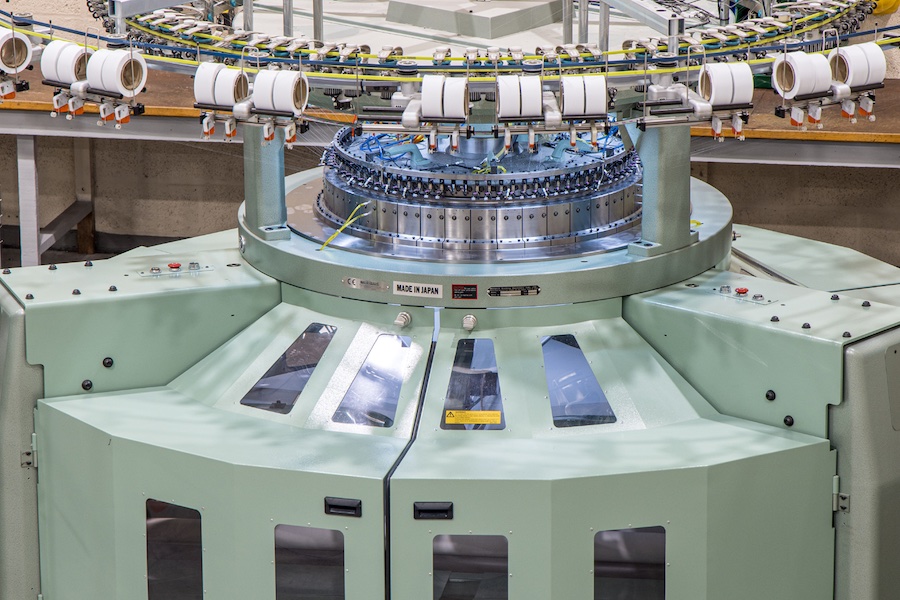
A fabric technology originally developed to reproduce the appearance of woven mattress ticking by Monarch Knitting Machinery, a member of the British Textile Machinery Association (BTMA), is finding new applications in apparel. With the introduction of its 36-gauge OD5B-M-7ED44 double-knit machine, Monarch is expanding the possibilities for producing fine knitted structures that closely resemble woven textiles while retaining the stretch and comfort associated with knitting.

#Recycling / Circular Economy

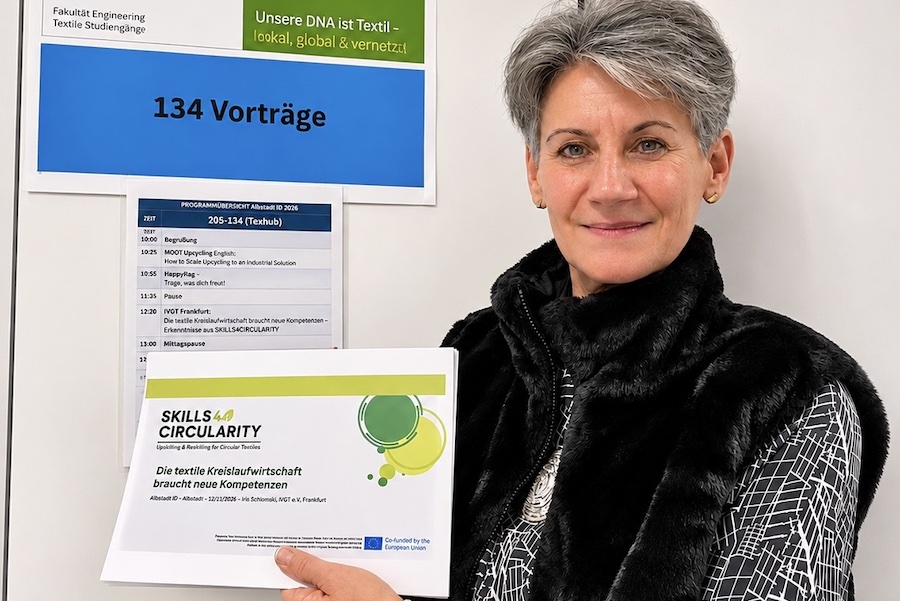
IVGT presents initial findings from the Erasmus+ project Skills4Circularity

At Albstadt ID 2026, hosted by Albstadt-Sigmaringen University of Applied Sciences, IVGT project manager Iris Schlomski presented initial findings from Skills4Circularity on 12 November 2026. She opened her presentation with an estimate from the European Environment Agency: the EU generated around seven million tonnes of textile waste in 2022. The Erasmus+ project brings together 21 partners from twelve countries to identify the skills textile and clothing professionals need to design more durable products, use fewer resources in production and recover fibres after use.

#India ITME 2026

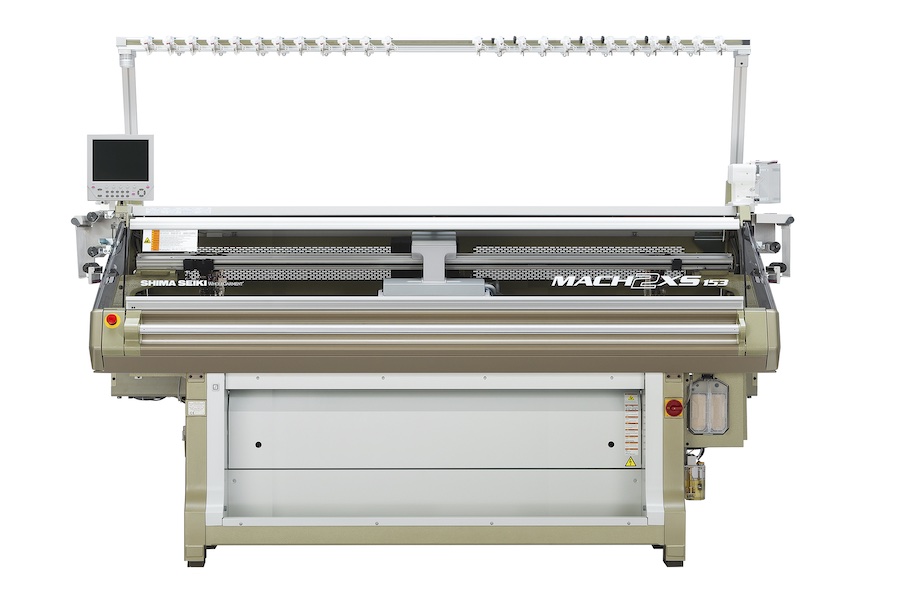
SHIMA SEIKI connects knitting innovation, digital product development and automated cutting at India ITME 2026

Japanese textile machinery and technology specialist SHIMA SEIKI MFG., LTD. will present a comprehensive portfolio of advanced knitting, digital design and automatic cutting solutions at India ITME 2026 in Greater Noida from 4 to 9 December. At Hall 14, Booth D1, the company will showcase its latest WHOLEGARMENT® and shaped knitting technologies, digital product development solutions and the Indian premiere of its new P-CAM® R multi-ply automatic cutting machine, designed for a wide variety of industries beyond fashion apparel.

#Raw Materials

Cotton Brazil calls for balanced textile sustainability regulations and stronger international cooperation

Cotton Brazil has concluded its strategic agenda in Brussels, Belgium, reinforcing the importance of recognising natural fibres in European sustainability policies and expanding exchanges with policymakers, agricultural attachés and representatives of cotton-producing countries. Discussions at the European Parliament highlighted the need for balanced textile sustainability regulations, while meetings with cotton-producing countries opened opportunities for international cooperation.

TOP