[pageLogInLogOut]

#Nonwovens / Technical Textiles

Recent investment expands nonwoven innovation and collaboration capacity

New premises (c) 2018 Niri
With over 450 projects completed for more than 200 clients, the Nonwovens Innovation & Research Institute (NIRI) has invested significantly in a range of new equipment, made possible by the Institute’s move from the University of Leeds campus to a new facility, and giving NIRI even greater scope to help companies develop better-performing products.

Using Technology Readiness Levels (TRLs) to demonstrate the innovation process, each project undertaken by NIRI – whether consultancy for commercial clients or co-funded joint ventures – is evaluated against the parameters for each technology level and then assigned a TRL rating based on the project’s progress. NIRI’s expertise is evidenced in the Institute’s focus on the ‘valley of death’ stage, the point of no return from which many novel technologies fail to progress, and the point at which the Institute’s expertise can be seen – working out how to develop proof-of-concepts and prototypes into commercially-viable products. The investment in new facilities includes a range of equipment (detailed below) all of which are already helping NIRI’s clients through the increased ability to develop, manufacture and test new products.

Purchase of an Inovenso NE300 electrospinner responds to the increasing use of nanofibers across a whole range of sectors.  A laboratory scale electrospinning unit, able to produce uniform nanofibrous structures at an area of up to ~24x37cm, the electrospinner is designed to be compatible with a broad range of polymers, PA, PET, PVA and PU, and various solvent systems.  The equipment applied voltage can be altered from 0–40kV, with the capability to alter the distance-to-collector from 3.5-23.5cm.  The unit works on a closed volumetric feed system to minimise solvent evaporation and is capable of utilising 1-9 of its nozzles.  This allows small-scale investigation and parameter optimisation, before scaling to larger sample sizes.  Structures can be collected on a static collector or onto a rotating drum that is capable of 80–2,000 RPM with the ability to align fibres, and the system allows for fibre diameters lower than 100nm.  

A new Perfojet flatbed hydro-entanglement pilot line can work with widths ~35cm.  The flexibility of this pilot line allows 1-3 injectors to be utilised with a varying hydro-entanglement pressure of 20-180 Bars, at belt speeds of 0-22m/min.  With various jet strip diameters available to NIRI, from 90-140 µm, key hydro-entanglement processing parameters’ adjustment allows the degree of entanglement to be tailored to specified requirements.

NIRI’s new Phenom-Pro SEM is ideal for imaging nonwoven structures at micro-scale.  With an acceleration voltage of 5-10kV, high resolution images can be produced without the need for an additional conductive coating.  The SEM provides a powerful tool for understanding the characteristics of a nonwoven fabric, including; fibre orientation, manufacturing methods and blend composition.  With the aid of an integrated software package, NIRI can produce fibre diameter distributions and surface pore area distributions autonomously.

Investment in a new liquid extrusion capillary flow porometer, a Porolux 100FW, helps NIRI’s clients through the quick quantification of through-pore diameters present in a nonwoven structure.  The equipment uses gas-liquid extrusion to detect the smallest, mean flow and largest pore diameters while providing a relative air-flow distribution through the detected diameter range.  The Porolux 100FW has the potential to measure through-pore diameters ranging from 0.43-500µm, making it ideal for characterising the pore sizes of a broad range of nonwoven media.

NIRI have responded to continued growth in the hygiene sector, where the balance of wet strength and user comfort is considered alongside biodegradability and dispersibility, through the specification and purchase of bespoke testing equipment.  Their new liquid strike through time and re-wet testing equipment is designed in accordance to NWSP 070.7.RO (15) and NWSP 070.8.RO (15).  This can accurately measure the penetration time for successive insults of a desired liquid through a sample’s surface in conjunction with the sample’s resistance to release liquid to its surface under loading.  These measurements are particularly pertinent when analysing hygiene products, and considering end user comfort.  A new fluff pulp specific volume and absorption tester SCAN-test, designed in accordance to SCAN-C 33:80, measures the specific volume of a pulp fluff specimen in conjunction with its absorbent capacity and the speed of a desired liquid under a standard load.  

Building on the expertise of Professor Stephen Russell, leader of University of Leeds’ Nonwovens Research Group and Technical Director at NIRI, the Institute’s investment in new facilities and new equipment reflects the expansion of nonwoven technologies across a vast range of sectors, while responding to an ever-increasing demand for product development and enhancement, cost-reduction and quality improvement for existing products, identification and evaluation of new markets, and the reduction of environmental impact. The NIRI team consists of highly qualified technical textile scientists with industrial experience and has a proven record of helping companies grow their business across many sectors including; medical, hygiene, filtration and transport.

Dr Matthew Tipper, Business Director at NIRI, comments on the investment, “With over 10 years’ track record in successful R&D, helping clients develop and improve products and processes across numerous sectors, this further investment in testing and production equipment enhances our extensive facilities, building on our research excellence and further helping realise the business imperatives of our industry collaborators and commercial clients.”



More News from TEXDATA International

#Texprocess 2026

Texprocess 2026: Automation, digitalisation and AI reshape textile processing

Investment decisions in textile processing have become increasingly complex. Rising energy prices, labour shortages and geopolitical uncertainties are forcing companies to prioritise technologies that deliver measurable improvements in efficiency and process stability. This applies not only to apparel production, but also to the processing of technical textiles and high-performance materials. Modernisation projects are therefore being evaluated more selectively – but the pressure to upgrade production systems continues to grow. Texprocess 2026 reflects this tension between cautious investment behaviour and increasing technological demand.

#Techtextil 2026

Textile Chemicals & Dyes: Innovation in Textile Chemistry moves into focus at Techtextil 2026

From PFAS-free finishes and water-saving dyeing technologies to advanced coatings and recycling-compatible formulations, innovation in textile chemistry is accelerating across the industry. Reflecting this development, Techtextil 2026 introduces Textile Chemicals & Dyes as a dedicated product segment, highlighting the growing role of chemical solutions in shaping the next generation of technical textiles.

#Recycling / Circular Economy

textile.4U publishes special edition “Top 100 Textile Recycling Companies 2025”

With a comprehensive 176-page special edition, textile.4U is dedicating its latest issue entirely to one of the most dynamic and influential topics in today’s textile industry: textile recycling. The new issue, published exclusively in high-quality print, presents the Top 100 textile recycling companies researched and selected by TexData – organizations that already play a key role in the transition to circular textiles or are expected to have a significant impact in the near future.

#Recycling / Circular Economy

Responsible Textile Recovery Act of 2024 signed by Governor

Senator Josh Newman (D-Fullerton) is proud to announce that Senate Bill 707 (SB 707), the Responsible Textile Recovery Act of 2024, has been signed into law by the Governor of California, Gavin Newsom. This groundbreaking legislation establishes the country’s first Extended Producer Responsibility (EPR) textile recycling program, marking a significant step forward in the state’s efforts to combat waste and promote sustainability.

More News on Nonwovens / Technical Textiles

#ITMA Asia + CITME Singapore 2025

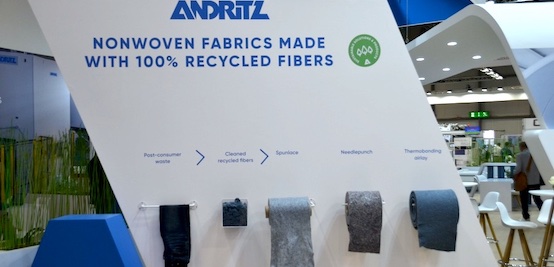
ANDRITZ sets focus on textile recycling and durable nonwoven production technologies at ITMA Asia 2025

International technology Group ANDRITZ will be presenting its innovative nonwovens production and textile solutions at ITMA ASIA + CITME 2025 in Singapore, from October 28 to 31, 2025 (Hall 2, D106). ANDRITZ will showcase its MMCF production plants, textile sorting and recycling, bast fiber processing, needlepunch, airlay, and life-cycle service technologies, with a focus on sustainable solutions. Discover how these innovations can grow your business opportunities and support a greener future.

#ITMA Asia + CITME Singapore 2025

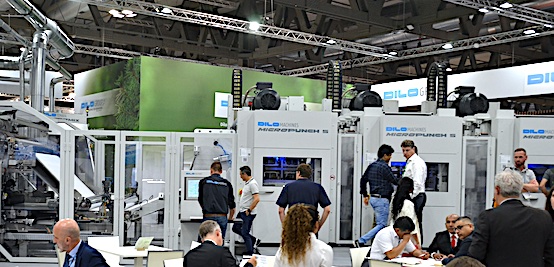
Dilo Group at ITMA ASIA Singapore 2025

At ITMA ASIA Singapore, the Dilo Group will exhibit at Booth No. H2 – D202. Together with Kansan Materials, Izmir, the company will present its latest developments and looks forward to welcoming visitors to exchange ideas and explore innovations in needling technology.

#Nonwovens

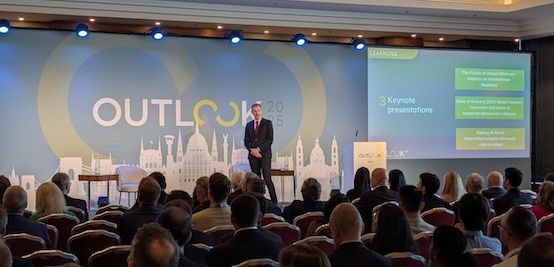
OUTLOOK™ 2025: Charting a sustainable and innovative future for the Nonwovens Industry

EDANA concluded its flagship event, OUTLOOK™ 2025, last week, marking it as a major success and addressing the biggest questions facing the industry. The three-day conference highlighted the urgent need for a unified approach to sustainability, regulation, and innovation in the absorbent hygiene and wipes sectors.

#Nonwovens

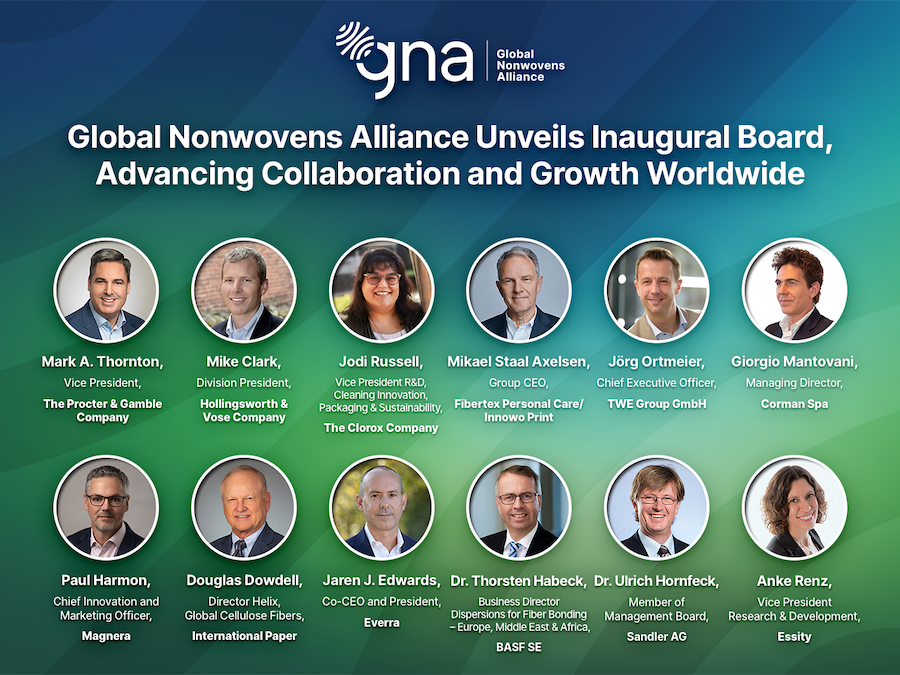
Global Nonwovens Alliance unveils Inaugural Board, advancing collaboration and growth worldwide

The Global Nonwovens Alliance (GNA), a tax-exempt federation jointly founded by INDA, the Association of the Nonwoven Fabrics Industry, and EDANA, the Voice of Nonwovens, announces the appointment of its founding Board of Directors. This group of leaders represents some of the most influential executives across the nonwovens value chain and reflects GNA’s mission to foster global collaboration, innovation, and growth in the industry.

Latest News

#Techtextil 2026

Gebr. Otto highlights versatility at Techtextil with regional supply chains, yarn innovations and new hygiene segment

At this year’s Techtextil, Gebr. Otto places its versatility at the center of its presentation. In addition to spinning, twisting and dyeing – traditionally focused on fine cotton – textile processors will also find a competent development partner for technical specialty solutions. The Dietenheim-based spinning mill has now built up a decade of experience in the production of technical yarns, particularly from aramids. A new hygiene segment has also been established, where yarns for medical and hygiene products are currently being produced. In the future, this department could also develop textile products for the food sector. Gebr. Otto will once again be present at the BW-i joint stand, booth D81, hall 12.1. What is wound onto the spool is determined by the customer: Gebr. Otto develops according to specific customer requirements and transforms its own ideas into yarn innovations.

#Europe

Commission presents proposal for EU Inc. - unlocking the full potential of the Single Market for Europe's entrepreneurs

Today, the European Commission presented its proposal for EU Inc., a new single set of corporate rules, building the cornerstone and starting point for the EU's 28th regime. EU Inc. is an optional, digital-by-default European corporate framework. It will make it easier for businesses to start, operate and grow across the EU – incentivising them to stay in Europe, and encourage those who once looked elsewhere to return.

#Man-Made Fibers

OnceMore® from Södra brings end-to-end traceability for circular Man-made Cellulosic Fibers (MMCF) using TextileGenesis

OnceMore® from Södra, the world’s first large-scale process for recycling blended fabrics into high‐quality dissolving pulp, will begin using TextileGenesis, a Lectra company, to strengthen traceability from raw material to retail across the value chain. OnceMore® produces dissolving pulp made from blended textile waste and wood sourced from responsibly managed Swedish forests. By integrating TextileGenesis, OnceMore® supports the growing need for verified data and secure, transparent tracking throughout increasingly complex supply chain.

#Sustainability

Experts publish APAC policy priorities

Cascale today announced the publication of its APAC Policy Priorities Paper, developed by the Asia-Pacific (APAC) Policy Member Expert Team (MET) to identify key regional sustainability challenges and provide practical, aligned recommendations for policymakers and industry stakeholders across Asia-Pacific.

TOP