#Market Analysis & Forecasts
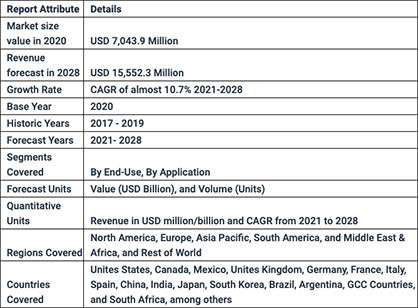
Bioplastics market to worth USD 15,552.3 Million by 2028
The global bioplastics market research report gives in-depth market research studies that provide the best solutions for strategy development and implementation depending on the client’s needs to extract tangible results. It helps businesses obtain detailed clarity on current business trends and expected future developments in the bioplastics industry.
Get a Sample Copy of the Research Report:
https://www.fortunebusinessinsights.com/enquiry/request-sample-pdf/bioplastics-market-101940
The demand for bioplastics in the farming area is supposed to develop essentially by virtue of the rising spotlight on decreasing ecological contamination and giving a favorable climate to fertilizing the soil.
Biodegradable products are progressively being used in nurseries and cultivation attributable to their unrivaled properties, for example, advancing the development of plant seedlings and forestalling the spoiling of natural products. This is supposed to impact the extension and increment of the entrance of bioplastics in the horticulture area.
List of the Companies Profiled in the Bioplastics Market:
Taghleef Industries (U.A.E.)
LyondellBasell Industries Holdings B.V. (Netherlands)
Matrìca S.p.A. (Italy)
Toray Industries, Inc. (Japan)
Kaneka Takasago (Japan)
NatureWorks LLC (U.S.)
PTT MCC Biochem Co., Ltd. (Thailand)
Novamont S.p.A. (Italy)
Report Scope & Segmentation
Segmentation-
Increasing Application in Various Industries Spurs Non- Biodegradable Segment Growth
On the basis of type, the Bioplastics Market share is bifurcated into non-biodegradable and biodegradable. The non-biodegradable segment will dominate due to its high strength and utility application, such as carrying electronics equipment and automotive housings.
Growing Investments in R&D Surge demand from the Automotive & Transportation Sector
In terms of application, the Bioplastics Market value is categorized into flexible packaging, rigid packaging, agriculture & horticulture, textiles, consumer goods, automotive & transportation, and others. The flexible packing is further sub-divided into shopping/waste bags, pouches, and others. The rigid packing is further sub-divided into trays, bottle and jars and others. The automotive & transportation segment will gain traction due to its essential properties such as rust-proof, durability, reducing the vehicle's weight, and fuel consumption.
Inquire Before Buying This Research Report:
https://www.fortunebusinessinsights.com/enquiry/queries/bioplastics-market-101940
Report Coverage
The report includes qualitative and quantitative analysis of several factors, such as the key drivers and restraints that will impact the Bioplastics Market data analysis. The adoption of strategies by major players to introduce partnerships, collaboration, and new products will contribute to the Bioplastics Market growth.
The report provides insights into the regional analysis covering different regions, contributing to the market's growth.
Drivers and Restraints
Increasing Applications in Agriculture & Horticulture Sector to Stimulate Growth
Due to the high consumer acceptance for bio-based products, environmental-friendly properties of bioplastics, and availability of renewable raw material sources, the demand for bioplastics products has increased. Also, its capability to reduce plastic pollution in the ecosystem and the growing trend for e-commerce globally are some significant factors that boost the bioplastic market growth. Furthermore, protecting crops from pests, resisting weeds growth, and regulating soil moisture and nutrient content have bolstered the product demand. Meanwhile, the increased cost compared to conventional plastics could hamper the Bioplastics industry growth.
Regional Insights
Growing Demand from Packaging Industry Bolstered Growth in the Asia Pacific
Stakeholders have projected remarkable growth in regions such as Japan, India, and China during the forecast period due to the growing packaging industry development. Also, the growing demand for bioplastics in horticulture & agriculture is another factor that could influence the market's growth.
Europe is expected to showcase significant growth due to growing investment in R&D, skills, and technologies to expand its presence. Also Japan increasing demand for bioplastic packaging products by various firms could favor the region’s growth.
North America held the prominent bioplastic market share and is expected to lead the global market due to growing demand for electronics goods and lightweight automobile parts. Also, the growing adoption of quality products and the high living standards of the people could foster the region’s growth.
Competitive Landscape
Collaboration among Companies to Secure Their Brand Values in Global Market
Leading companies will likely invest in R&D activities, technological advancements, and product rollouts to expand their geographical presence. With soaring investments in innovation and advanced design, stakeholders could inject funds into mergers and acquisitions.
Browse Detailed Summary of Research Report with TOC:
https://www.fortunebusinessinsights.com/industry-reports/bioplastics-market-101940
Detailed Table of Content:
Introduction
Research Scope
Market Segmentation
Research Methodology
Definitions and Assumptions
Executive Summary
Market Dynamics
Market Drivers
Market Restraints
Market Opportunities
Key Insights
Key Emerging Trends – For Major Countries
Key Developments: Mergers, Acquisition, Partnership, etc.
Latest Technological Advancement
Insights on Regulatory Scenario
Porters Five Forces Analysis
Qualitative Insights on Impact of COVID-19 on Global Bioplastics Market
Supply Chain Analysis & Challenges
Steps taken by Government / Companies to Overcome this Impact
Potential Challenges and Opportunities due to COVID-19 Outbreak
Global Bioplastics Market Analysis, Insights and Forecast, 2017-2028
Key Findings / Summary
Market Size Estimates and Forecast
By Type (Volume & Value)
Biodegradable
Starch Blends
Polylactic Acid (PLA)
Polybutylene Adipate Terephthalate (PBAT)
Polybutylene Succinate (PBS)
Polyhydroxyalkanoates (PHA)
Other Biodegradables
Non-Biodegradable
Bio-Polyetheylene Terephthalate (Bio-PET)
Bio-Polyamide (Bio-PA)
Bio-Polyethene (Bio-PE)
Bio-Polytrimethylene Terephthalate (Bio-PTT)
Other Non-Biodegradables
TOC Continued…!
Speak to Our Expert:
https://www.fortunebusinessinsights.com/enquiry/speak-to-analyst/bioplastics-market-101940
Key Industry Developments:
March 2021: To reduce non-recyclable waste, Iren and Novamont signed a three-year agreement in the field of integrated waste collection systems to implement the objectives of a circular bioeconomy.
January 2021: Novamont acquired BioBag Group to expand its distribution channels in untapped regions.
Read Related Insights:
At 5% CAGR, Plastics Market Worth USD 643.37 Billion by 2029 | Expanding Footprint of Engineering Plastics to Propel Growth Potentials
Recycled Plastic Market Size to Reach USD 76.23 Billion by 2028 | With 8.2% CAGR during 2021-2028