#Market Analysis & Forecasts
Worldwide Textile Recycling Industry to 2026 - Featuring Anandi Enterprises, Patagonia and Unifi among others
The global textile recycling market reached a value of around US$ 5 Billion in 2020. Looking forward, the publisher expects the global textile recycling market to exhibit moderate growth during the next five years.
Companies Mentioned
- Anandi Enterprises
- American Textile Recycling Service
- Boer Group Recycling Solutions
- I:Collect GmbH
- Infinited Fiber Company
- Patagonia
- Prokotex
- Retex Textiles
- Unifi
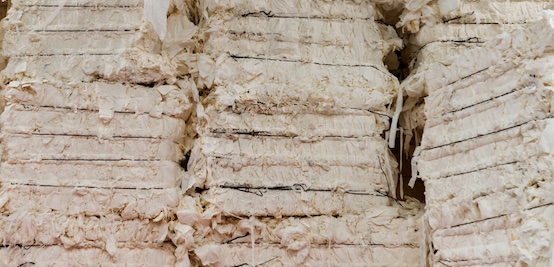
Textile recycling refers to the method of reprocessing and reusing old clothing, scarps, and fibrous waste materials. Generally, these materials are recovered from discarded clothes, carpets, furniture, tires, footwear, and other non-durable goods, such as towels and sheets. Textile recycling offers several environmental and economic benefits, such as reducing land and water pollution, minimizing dependence on virgin fibers, curbing usage of chemical dyes, and optimum consumption of energy and water. In recent times, it has emerged as an effective method for sustainability development in the apparel industry. Owing to these benefits, recycled textiles find wide applications across several end-use industries, including apparel, home furnishings, and other industrial sectors, such as retail, automotive, mining, building, construction, etc.
The increasing demand for recycled textile is primarily driven by the rising environmental concerns towards the detrimental impact of waste incineration, heavy industrial discharges from textile mills, and depletion of raw materials, such as silk, wool, etc. Furthermore, the growing production of synthetic and polyester fabrics have led to the high emission levels of greenhouse gases, thereby fueling the need for recycled fabrics on a global level. Apart from this, the growing public awareness towards the importance of recycling old clothes coupled with the increasing number of collection bins for cloth sorting, have further propelled the market growth. Additionally, various recycling companies are launching informative initiatives regarding textile recycling along with introducing door-to-door pickup programs for old garments.
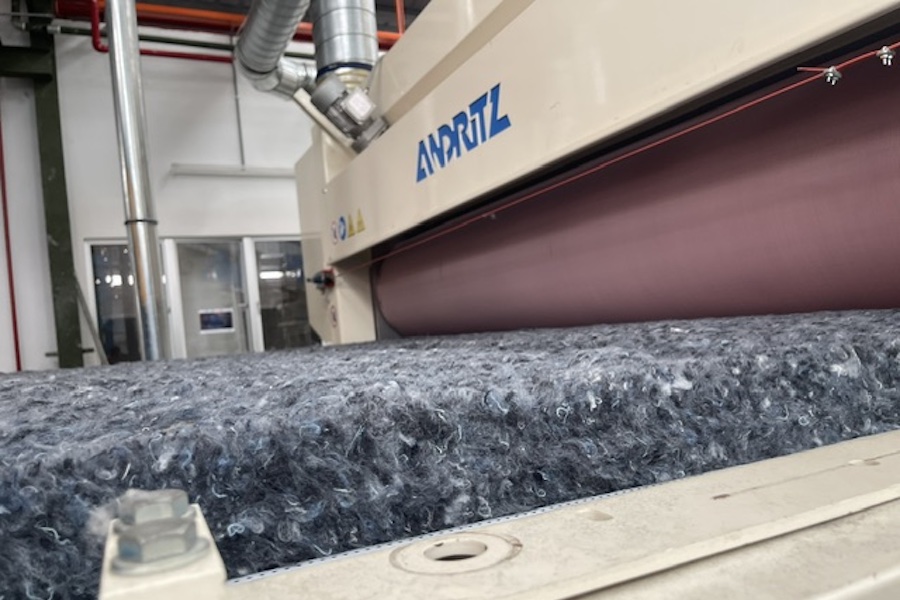
Furthermore, these companies are also adopting innovative strategies for picking up post-consumer clothing materials by installing attractive cloth bins in public places such as parking spaces, parks, shopping malls, walkways, and other high visibility locations. In addition to this, several technological upgradations supported by the rising penetration of automation in the recycled textile industry have also catalyzed the market growth. For instance, Textile for Textile (T4T), an eco-innovation initiative by the European Commission, has led to the introduction of near-infrared (NIR)-spectroscopy technology for performing automated sorting applications in the recycled textile sector. Moreover, the emergence of eco-clothes that are made up of recycled textiles, plastics, and other organic raw materials have helped in waste reduction and resulted in minimal landfill space, and low dependency on virgin resources, such as cotton and wool. All the above-mentioned factors will continue to fuel the growth of the global textile recycling market in the coming years.
Key Topics Covered:
1 Preface
2 Scope and Methodology
3 Executive Summary
4 Introduction
4.1 Overview
4.2 Key Industry Trends
5 Global Textile Recycling Market
5.1 Market Overview
5.2 Market Performance
5.3 Impact of COVID-19
5.4 Market Forecast
6 Market Breakup by Product Type
6.1 Cotton Recycling
6.1.1 Market Trends
6.1.2 Market Forecast
6.2 Wool Recycling
6.2.1 Market Trends
6.2.2 Market Forecast
6.3 Polyester & Polyester Fibre Recycling
6.3.1 Market Trends
6.3.2 Market Forecast
6.4 Nylon & Nylon Fibre Recycling
6.4.1 Market Trends
6.4.2 Market Forecast
6.5 Others
6.5.1 Market Trends
6.5.2 Market Forecast
7 Market Breakup by Textile Waste
7.1 Pre-consumer Textile
7.1.1 Market Trends
7.1.2 Market Forecast
7.2 Post-consumer Textile
7.2.1 Market Trends
7.2.2 Market Forecast
8 Market Breakup by Distribution Channel
8.1 Online Channel
8.1.1 Market Trends
8.1.2 Market Forecast
8.2 Retail & Departmental Stores
8.2.1 Market Trends
8.2.2 Market Forecast
9 Market Breakup by End Use
9.1 Apparel
9.1.1 Market Trends
9.1.2 Market Forecast
9.2 Industrial
9.2.1 Market Trends
9.2.2 Market Forecast
9.3 Home Furnishings
9.3.1 Market Trends
9.3.2 Market Forecast
9.4 Non-woven
9.4.1 Market Trends
9.4.2 Market Forecast
9.5 Others
9.5.1 Market Trends
9.5.2 Market Forecast
10 Market Breakup by Region
11 SWOT Analysis
12 Value Chain Analysis
13 Porters Five Forces Analysis
14 Competitive Landscape
14.1 Market Structure
14.2 Key Players
14.3 Profiles of Key Players
For more information about this report visit:
https://www.researchandmarkets.com/r/9hd45b