[pageLogInLogOut]

#Knitting & Hosiery

KNIT COUTURE upcycling project

Close cooperation between educational institutions and industry is vital in today’s world: they can inspire young students to new ideas, offer them future opportunities and awaken new passions. With this in mind, the KNIT COUTURE upcycling project was initiated between STOLL – part of the KARL MAYER GROUP – and the TEXOVERSUM Faculty of Textiles at Reutlingen University as part of the 3rd semester for fashion design. Both partners are leading the way in their industry. The results are clear to see.

Fashion design students at Reutlingen University breathe new life into historic STOLL knitting patterns

Both the supervising professor Natalie Seng and project partners at STOLL have been impressed by the students’ creative achievements. “The works are evidence of extraordinary creativity and diversity. It is not a given that students in the 3rd semester are already able to demonstrate such creative achievement. We are excited to see how the students will develop throughout their studies and of course hope that we have been able to spark an interest in flat knitting as part of this project,” says Ellen Judith Müller, 3D designer at STOLL.

Cooperating with the best

STOLL is an industry leader in flat knitting machine technology and has a wide range of knitted swatches, as well as in-shape and seamless knitted garment products that make the possibilities afforded by flat knitting technology tactile. Regular trend collections constantly symbolise new technological possibilities.

Reutlingen University was recently named as Top University in Baden-Württemberg by the ratings portal Study-Check. It is second in the nationwide rankings for universities of applied sciences. As part of their fashion design studies, the students at TEXOVERSUM in Reutlingen focus on future issues facing the fashion industry, such as sustainability and digitization, where there are conflicts between handicrafts and consumer society.

A lens on sustainability

The joint KNIT COUTURE project also primarily focused on the topic of sustainability. A total of 13 students were asked to draw inspiration from historical knitting patterns donated by STOLL and to create new looks that brought old materials into a modern context, thereby giving them a new value. The young creatives developed mood boards, colour and collection concepts, and subsequently extended them into a compilation of at least ten different looks. The final piece included four outfits with two real-life models and two digital 3D simulations. These resultant diverse creations breathed new life into STOLL’s historic knitting patterns.

TURNING OLD INTO NEW AND BEYOND

Lisa Bassot, for example, wants to appeal to a young target audience with her “Old is the new new” collection, featuring a modern design language. She is focusing on youngsters who want to get to grips with the production, personalisation and possible combinations of their clothes. Lisa Bassot wants to encourage people to wear clothes for several years and to value their wardrobe. These outfits – made from what already exists – stand out thanks to their creativity: knitted trousers were stuffed and knotted into novel tops. Tops were turned into a multi-layered skirt with lacing, and two jumpers were transformed into accessories.
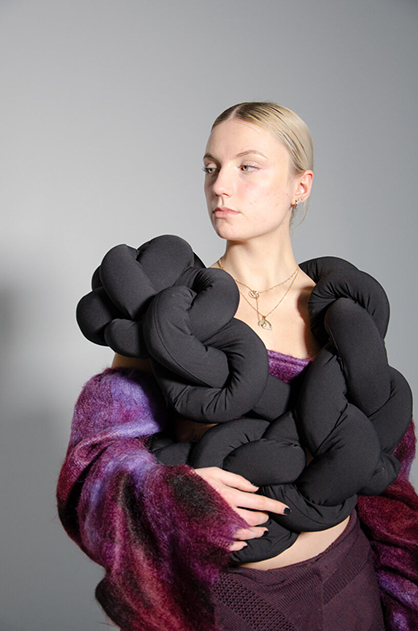


Figure 1: “Old is the new new” collection by Lisa Bassot


Group work by Janna Sautter and Özgenur Kesimal also demonstrates a feel for current trends: The two designers’ “Break the System” collection reflects how modern upcycling can look through street-style-inspired outfits. Their designs not only reflect knitted STOLL patterns but also include their packing materials. In this case, novel knitwear creations have been combined with filled plastic puffer garments. As such, both designers are making a statement that no material is beyond upcycling. 
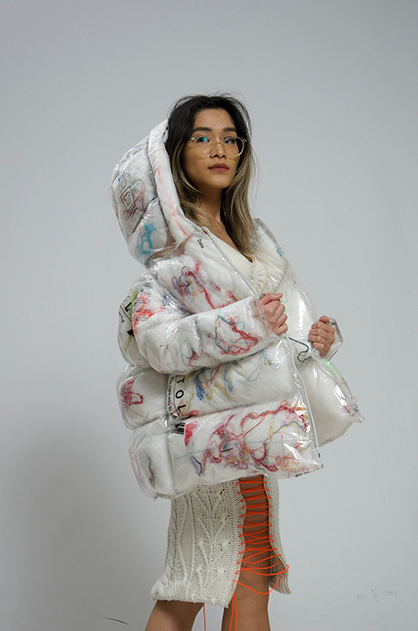
Figure 2: “Break the system” collection by Janna Sautter and Özgenur Kesimal


Packaging also inspired Kirsten Hippmann and Klara Mahn to create their “Selfesque” collection. The students stuffed real waste material with cut-up knitting pattern snippets and used them to make corsages and a cape. They also used excess yarn to develop new knitting patterns on the university’s own STOLL warp knitting machine. The new creations were combined with historical pattern pieces, satin, borders and feather accessories.
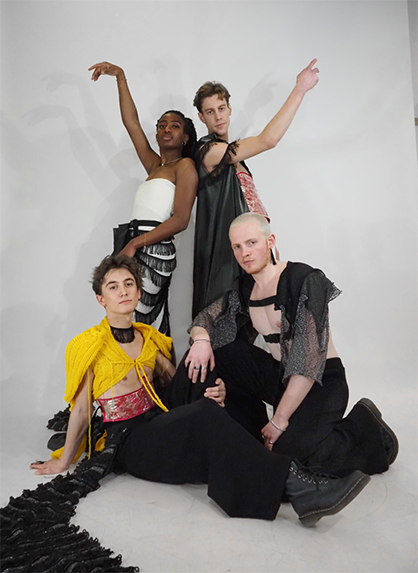
Figure 3 “Selfesque” collection by Kirsten Hippmann and Klara Mahn


In contrast, Karina Gaus placed nature at the very heart of her collection: “Tails of the forest”. The budding designer explains that she believes nature is a magical place that needs to be protected. Stylistically, she was inspired by fairy-tale creatures. As part of her collection, she transformed a variety of STOLL knitting patterns into fantastic new creatures using smocking techniques, layering, crimping and embroidery.

Figure 4 “Tails of the forest” collection by Karina Gaus


Bilgen Colak also focuses on nature with her work “Contamination”. With polluted and deconstructed models, she is creatively denouncing the current environmental and marine pollution. To do so, she distorted knitting patterns that were originally colourful using dyeing techniques and foil printing to visualise how nature is being contaminated.

Figure 5: “Contamination” collection by Bilgen Colak


Sophia Heinisch refers to current social issues in her collection, including the latest women’s movement in Iran, and demands for upholding human rights. “Through my ‘CHANGE.org’ collection, I want to pay tribute and express my admiration to those who are courageous enough to stand up and fight for a better future,” says Sophia Heinisch. Her collection represents empowerment: the courage to express oneself freely and individually. With skilled craftsmanship, she has combined different techniques, such as patchwork, crochet, screen-printing and classic pattern construction, to create expressive models.

Figure 6: “Change.org” collection by Sophia Heinisch


More News from KARL MAYER Textilmaschinenfabrik GmbH

#Knitting & Hosiery

KARL MAYER and Lenzing partner to advance warp knitting with scalable cellulose fiber solutions

The Lenzing Group, a leading supplier of regenerated cellulosic fibers for the textile and nonwovens industries, together with KARL MAYER, the global market leader in warp knitting machines and warp preparation systems, debut a joint innovation project during Premiere Vision, Paris.

#Knitting & Hosiery

KARL MAYER opens a new TEXTILE INNOVATION CENTRE – a new era of textile innovation begins

KARL MAYER is opening its new TEXTILE INNOVATION CENTRE (TIC), sending a strong signal that it is driving textile innovation forward and opening up new perspectives for the textile industry. The TIC brings together the latest developments in Warp Knitting, Technical Textiles and Warp Preparation – KARL MAYER’s core areas of expertise.

#Knitting & Hosiery

Proven performance, optimised costs – the new RE 6 EL

Nowadays textile companies increasingly need to produce small production runs and respond to market changes with instantaneous pattern changes in order to operate profitably – meaning they require machines that offer maximum flexibility, reliability and cost efficiency. KARL MAYER understands the challenges of the market and is launching its new RE 6 EL. The Raschel machine offers the core strengths of the classic RSE 6 EL and essentially the same performance parameters, but has been further cost-optimised largely due to local production advantages. This makes the newcomer an efficiency champion in production, especially when it comes to frequent pattern changes.

#Knitting & Hosiery

Live more beautifully and comfortably with Warp Knits

Knitted fabrics are the all-rounders among home textiles. They can be designed in many different ways and are used in mattresses, blankets and pillows as well as in terry towelling, curtains and upholstery fabrics to create trendy designs, constantly new products and good business.

More News on Knitting & Hosiery

#Knitting & Hosiery

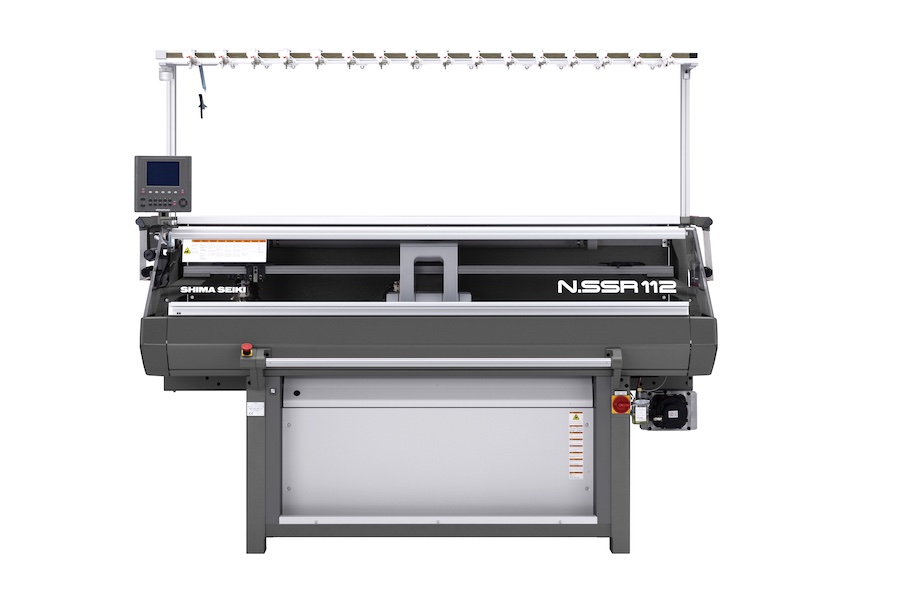
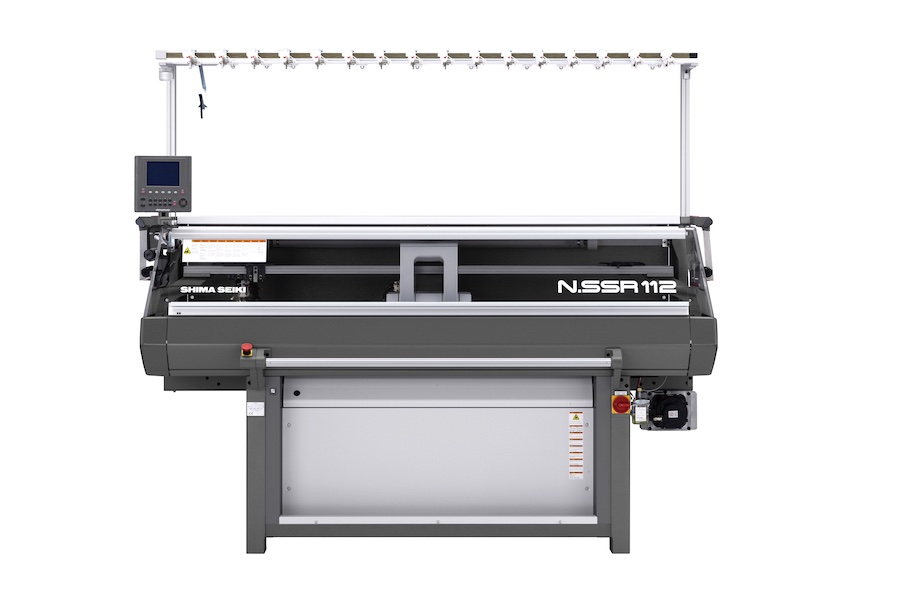
SHIMA SEIKI to exhibit at GMMSA Expo India

Leading Japanese computerized flat knitting technologist SHIMA SEIKI MFG., LTD. of Wakayama, Japan, together with its Indian sales representative Universal MEP Projects & Engineering Services, Ltd., will participate in the upcoming Garments Machinery Manufacturers & Suppliers Association (GMMSA) Expo India 2026 exhibition to be held in Ludhiana, India next month. Through its lineup at GMMSA, SHIMA SEIKI aims to further strengthen its presence within the Indian market with an exhibit that caters to diverse needs, consisting of seam-free WHOLEGARMENT® knitting technology as well as a brand-new shaping machine with high productivity and excellent cost performance.

#Knitting & Hosiery

Terrot introduces T-Frame platform to redefine stability and flexibility in large-diameter circular knitting

Terrot Textilmaschinen GmbH has unveiled the new T-Frame, a universal machine frame platform for large-diameter circular knitting machines. Designed to meet growing demands for flexibility, stability, and operational safety, the T-Frame provides a next-generation foundation for both current and future industrial knitting machines, combining German engineering expertise with a modular, future-ready design approach.

#Knitting & Hosiery

SHIMA SEIKI returns to ShanghaiTex

Leading flat knitting solutions provider SHIMA SEIKI MFG., LTD. of Wakayama, Japan, together with its Hong Kong and Chinese market subsidiary SHIMA SEIKI (HONG KONG) LTD., will exhibit at the ShanghaiTex 2025 exhibition (Booth No.: Hall N3, Booth A20) held in Shanghai, China this month. This marks the return of SHIMA SEIKI to ShanghaiTex after a 14-year hiatus, its last exhibit at the show having been in 2011.

#Knitting & Hosiery

The newcomers HKS 3-M EL ECO and HKS 4-M EL ECO set new standards in the tricot market

Short development cycles, frequent pattern changes, and maximum efficiency – even with small batch sizes: Today's global fashion and apparel market demands more flexibility than ever before. High-performance warp knitting machines with compound needles (HKS) and EL pattern drive are KARL MAYER's answer to this challenge.

Latest News

#Dyeing, Drying, Finishing

Orthopac RVMC-20 plus: German Engineering for Smarter Weft Straightening

In times of rising cost pressure and growing quality demands, textile producers worldwide are searching for solutions that combine precision, efficiency, and sustainability. With its latest innovation, the Orthopac RVMC-20 plus, Mahlo once again demonstrates the strength of German engineering: improving proven technology to meet today’s challenges.

#Textile chemistry

RUDOLF gets the exclusive global distribution rights for Sanitized® textile technologies

With effect from today, RUDOLF officially assumes exclusive global distribution rights for Sanitized® textile technologies from SANITIZED AG. This is the next milestone in the strategic collaboration announced in 2025, with the partnership between the two companies now fully implemented and expanded worldwide.

#Europe

ICAC to support European Commission on pending PEF legislation

The International Cotton Advisory Committee (ICAC) is proud to announce that it has been included as a member of the European Commission’s Technical Advisory Board (TAB) on the Product Environmental Footprint methodology. The Commission developed the Product Environmental Footprint (PEF) to assess and communicate the life cycle environmental performance of products and organizations.

#Raw Materials

Cotton production continues to exceed consumption, some growers shift away from cotton

World cotton lint production in the 2025/26 season is currently estimated at 26 million tonnes, continuing to exceed world consumption, which is estimated at 25.2 million tonnes, according to the February 2026 edition of Cotton This Month. Global production is estimated to be 1% higher than the previous season, while consumption is estimated to be 0.4% higher, resulting in a continued supply surplus in the world cotton market.

TOP