[pageLogInLogOut]

#Knitting & Hosiery

Comfortable and sustainable: home and hobbywear made from warp knitted terry fabrics
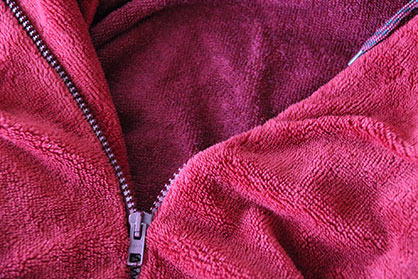
Warp knitted terry cloth article made using a yarn based on bamboo and a polyester microfibre yarn © 2021 KARL MAYER
The coronavirus has led to the rediscovery of our indigenous nature in many places around the world. Recreational opportunities that can be enjoyed close to home are gaining in importance, and traditional hobbies such as fishing are coming back into fashion, even among young people. If you want to land a big fish, you need not just the right equipment, but the right outfit too. Snuggly, soft, super-comfortable and quick-drying: the terry cloth shorts on this page (Fig. 1) complete the obligatory wellies-and-checked-shirt look for unlimited fishing pleasure.

New market opportunities due to goods made of innovative materials and a TM 4-TS EL in a new width

The fluffy textile was produced on a TM 4-TS EL. This terry warp knitting machine is designed for use with staple fibres, and processed the cotton for the shorts in combination with a matrix polyester microfibre yarn. The natural fibre yarn was knitted in as loops on the inside of the warp knitted terry cloth. The large surface area and the inherent properties of cotton give it a high absorbency, while the outside is made of a special man-made fibre yarn with fine fibrils that provide a soft, pleasant feel.

Thanks to the warp knitting technology, the terry loops are reliably anchored into the ground structure by means of stitches. The high loop strength means the item is comfortable to wear for long periods of time with no loss of quality. Given their long life, and also thanks to a manufacturing process that does not require sizing and desizing, terry knitted fabrics represent an ecological alternative to their woven counterparts. As such, the demand for them is high. 
© 2021 KARL MAYER
© 2021 KARL MAYER


In order to support its numerous customers in the terry cloth market, KARL MAYER is always working hard to ensure that its machines and textile products continue to evolve. As recently as June this year, the company launched its TM 4-TS EL with a new working width of 210". Another of KARL MAYER’s latest innovations is a warp knitted terry cloth made using a bamboo yarn.

TERRY.ECO: The ecological way to produce warp knitted textiles

KARL MAYER’s portfolio includes a full range of machines for the highly efficient and ecological production of terry cloth. The range includes warp knitting machines with an integrated brushing system, as well as warping machines for processing filament and staple yarns. These innovative solutions bear the title TERRY.ECO.

Warp knitted terry cloth made in this way is extremely durable and can be designed in a variety of ways. It can be used to produce absorbent cotton towels, as well as heavy towel qualities with weights of up to 600 g/m² and double-sided terry cloths. In particular, terry warp knitting machines with an electronic guide bar control system make loop-free areas possible for creating striped patterns, finished edges and small checks. What’s more, the lengths of the towels, the patterns, and the terry loop pile height can easily be changed within a fabric.

Besides being chic, warp knitted terry articles also offer ecological benefits. The TM 4-TS EL model for processing staple yarns consumes approximately 87% less energy per kilogram of fabric produced than air-jet weaving looms, since it does not require any electrical power to generate compressed air. Also, no sizing process is required. This saves on textile auxiliaries, effluent and energy costs – to the value of about 0.20 US dollars/kg, or roughly 30% of the production costs for the grey fabric (excluding the yarn).
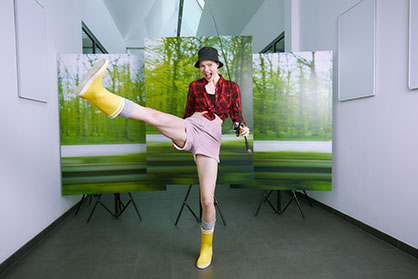
Shorts made of a warp knitted terry cloth made using a cotton and matrix polyester microfibre yarn © 2021 KARL MAYER


In addition to this, the TM 4-TS EL impresses with its improved efficiency. With a width of 186" and a speed of 800 rpm, the innovative model produces around 1,800 kg of terry cloth weighing 400 g/m2 per day when used in 24-hour operation. Its output is therefore approximately 250% higher than that of an air-jet weaving loom. Combining the TM 4-TS EL with the ISO COTTON direct warping machine is a particularly effective way of giving customers maximum efficiency when producing warp knitted terry cloth made of cotton.


Larger working width, greater output

The TM 4-TS EL has become even more productive with the latest extension to its working width, from 186" to 210". Similar to its narrower counterpart, the super-wide model achieves a speed of 800 rpm and is also offered in gauges E 24 and E 28. Thanks to its higher gauge and fabric density, it can be used to produce premium-quality towels, which are currently in demand in China.

Since the beginning of this year, China’s home textile exports have been rising rapidly. According to an internal survey at KARL MAYER, customer numbers have increased by around 54% in the first half of 2021 compared to the same period last year. This upward trend is expected to continue until the end of the year, and is mainly a result of the COVID-19 pandemic. In the wake of this globally rampant and highly infectious disease, people are staying at home and taking more interest in their own four walls. As part of the home textiles business, the towel market is also benefitting from this.
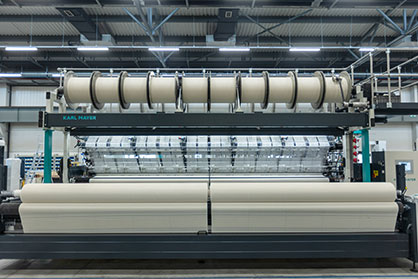
The TM 4-TS EL 210
The TM 4-TS EL 210" during the in-house show at KARL MAYER (CHINA) in June 2021 © 2021 KARL MAYER


For a long time, terry cloth bathroom items were considered low-price in China. This attitude has changed in recent years. On the one hand, improved living conditions have led to an increase in quality requirements, frequency and willingness to pay for towels. On the other hand, the growing trend towards customisation has led to new demands for use. Nowadays, customers increasingly expect their towels not only to offer good drying properties, but also to be colourful, stylish and feel pleasant to the touch, all while offering consistent quality. 


In light of the shift from a price-driven market to a quality-driven one, the TM 4-TS EL 210" in E 28 offers many competitive advantages. As such, it was no surprise that the newcomer drew plenty of interest when it was launched at an in-house show at KARL MAYER (CHINA) during ITMA ASIA + CITME in June 2021 (Fig. 2). The machine’s equipment includes a beam attachment of 3 x 40" and 1 x 50", as well as KARL MAYER’s carbon technology, which ensures high temperature stability in particular.

Yarns made from bamboo viscose, greater variety in sustainable materials

COVID-19 is confining people all over the world to their homes and causing demand for comfortable leisurewear to soar. As a result, product developers are working hard as well. In order to cater to the demand for feel-good outfits, a cosy terry fabric has been created using a yarn obtained from bamboo cellulose, thus also reflecting the trend towards sustainability (Fig. 3). The natural fibre material forms soft, absorbent loops that are densely arranged on the inside of the textile. The outside is made of a polyester microfibre yarn that creates an ultra-soft fleece layer.

A sporty set comprising a hooded jacket and jogging trousers – made from this innovative double-faced material – was presented at KARL MAYER’s booth at ITMA ASIA + CITME in June 2021, where it attracted a great deal of attention. The warp knitted terry cloth was also an important topic at a company webinar held shortly after the exhibition.

More News from KARL MAYER Textilmaschinenfabrik GmbH

#Knitting & Hosiery

The new RDJ 7/3 defines the design footprint of modern athletic shoes

Stylish, functional, and efficient to produce – spacer fabrics are the all-arounders among textile materials. These versatile fabrics are particularly in demand in the sports and casual footwear sector, as they combine comfort, breathability, and design freedom. At the same time, this industry is trend-driven, dynamic, and price-sensitive like few others. Innovations are therefore a decisive factor for success. With the RDJ 7/3, KARL MAYER offers a solution specifically tailored to these requirements. The particular strength of the new double raschel machine: its exceptional flexibility, thanks to its three jacquard bars.

#Knitting & Hosiery

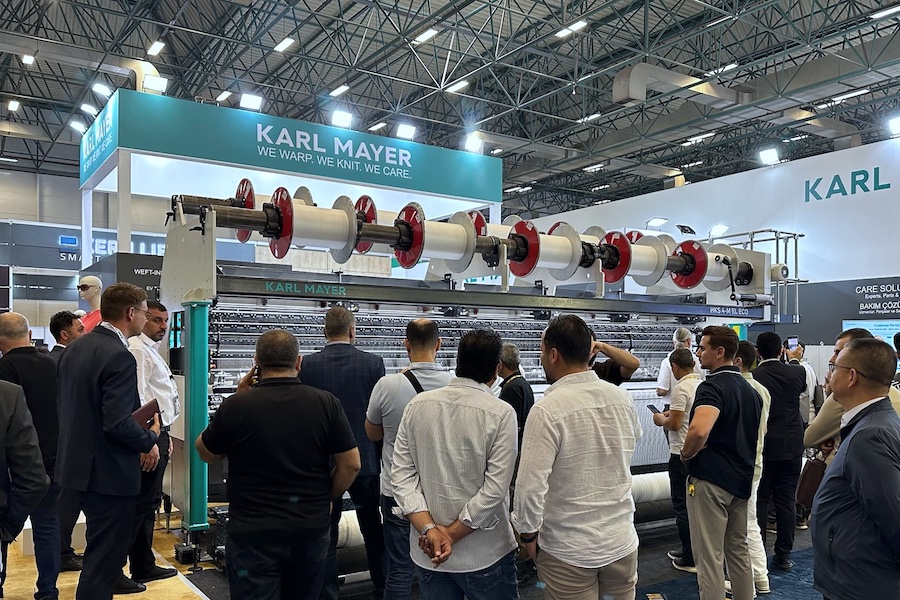
Significantly greater versatility and productivity with the HKS 4-S EL from KARL MAYER

With the new HKS 4-S EL, KARL MAYER is introducing an innovation to the market that impresses in two ways: with outstanding speed and maximum flexibility.

#Knitting & Hosiery

More Jacquard. More functionality. More fashion.

With the addition of another member to its successful RASCHELTRONIC® family, KARL MAYER is opening up new possibilities for creative product development for warp knitting mills and brands. The RJ 4/2 EL offers with two stitch-forming Jacquard bars entirely new design options for functional sportswear and bi-elastic lingerie. Available in gauges E 28 and E 32, this new model helps manufacturers set their collections apart from the competition. The fine E-32 gauges, in particular, impress with their clean surface, a pleasantly soft feel, and an exceptionally elegant look.

#Knitting & Hosiery

KARL MAYER's HKS 2-SE Expands Possibilities for Premium Stretch WARP KNITS

Warp knitted fabrics with a woven look are more in demand than ever in the fashion and apparel industries. Stretch WARP KNITS, in particular, impress with their freedom of movement, breathability, and virtually wrinkle-free wear – thereby opening up new style worlds such as smart casual or business casual. When it comes to the highly efficient production of premium-quality stretch WARP KNITS, the HKS 2-SE has long been the machine of choice. KARL MAYER’s best-selling tricot machine produces standard elastic fabrics characterized by high gauges, smooth, delicate surfaces, and a soft hand feel.

More News on Knitting & Hosiery

#Nonwoven machines

Groz-Beckert highlights nonwovens and knitting innovations at Cinte Techtextil China

From September 1 to 3, 2026, Groz-Beckert will present its latest innovations and solutions across the product areas of Nonwovens and Knitting at CINTE Techtextil China (Hall W5, Booth A01).

#Knitting & Hosiery

Groz-Beckert at Igatex 2026

From October 15 to 18, 2026, Groz-Beckert will present its latest innovations and solutions across the product areas of Knitting, Weaving, Sewing and Spinning at Igatex in Pakistan (Hall 1, Booth A-1-08).

#Knitting & Hosiery

Footwear innovation enabled by warp knitting technology– insights from New Balance

The future of the athletic shoe is increasingly being shaped on warp knitting machines. For KARL MAYER, the footwear industry is one of the most important growth markets – and one of the sectors where innovative textiles can realize their full potential. In his keynote address at the opening of KARL MAYER’s TEXTILE INNOVATION CENTER in Obertshausen in April, Vishnu Prakash Muthusamy, Senior Textile and Materials Engineer at New Balance, explained the opportunities that warp knitting technology opens up for performance, sustainability, and faster development processes, and why textile manufacturers are transitioning from suppliers to development partners.

#ITM 2026

ITM 2026: Mayer & Cie. Global presents itself successfully at international industry trade fair

Mayer & Cie. Global has used ITM 2026 in Istanbul for its first major international appearance since the restart. Together with the Turkish representative Mayer Mümessillik, the company presented its premium circular knitting machines "Made in Germany", explained its future positioning within the group of companies and held talks with customers and representatives from numerous markets. The response to the restart was positive. The clear orientation of the company, the reliable worldwide network of representatives and the resumption of service and spare parts supply were welcomed by customers.

Latest News

#ITMA 2027

ITMA 2027 receives strong industry response

ITMA 2027 has unveiled its sector plan, marking progress towards the 2027 edition as planning continues ahead of the show. The ITMA 2027 sector plan covers 12 halls at the Messegelände Hannover venue, spanning over 180,000 square metres, and features 20 sectors of the textile and garment making processes, from spinning to finishing, software and automation, recycling, and fibres, yarns and fabrics.

#Heimtextil 2027

Heimtextil expands Bed, Bath & Living with new ‘Comfort & Connect’ area

Heimtextil is expanding its product range for Bed, Bath & Living in a targeted manner: ‘Comfort & Connect‘ is creating a new meeting place in the foyer of Hall 5.1 for high-quality bed, bath and lifestyle collections. Following on from ‘Sleep & Meet‘, this is now the second area where Heimtextil is further refining its offering for exhibitors and buyers. The new area brings together established brands, high-profile returning exhibitors and international buyers in a central location with easy access.

#Associations

Business situation weakens slightly, but the industry stays cautiously optimistic

The International Textile Manufacturers Federation (ITMF) has published the results of its 39th Global Textile Industry Survey (GTIS), conducted from 14 to 22 July 2026 among companies along the entire global textile value chain. Worldwide, 10% of participants rated their business situation as good, 53% as satisfactory and 37% as bad — a balance of -26pp, down from -17pp in May but still well above the 2023 lows. All regions are now in negative territory, from South Asia at -3pp to North & Central America at -58pp.

#Man-Made Fibers

Ministry of Industry Delegation visits NatureWorks’ second global manufacturing site at Nakhon Sawan Biocomplex

NatureWorks Asia Pacific Limited welcomed a high-level delegation led by Mr. Varawut Silpa-archa, Minister of Industry, to its manufacturing site at the Nakhon Sawan Biocomplex (NBC). The visit follows the successful inauguration of the site on April 29, 2026, and highlights the role of public-private collaboration in advancing Thailand’s sustainable industrial development and bioeconomy ambitions.

TOP