[pageLogInLogOut]

#Industry 4.0 / Digitalization

Joachim Hensch Consulting unveils program to enable Smart Factory applications

The next industrial revolution will leave its mark as well on apparel creation, manufacturing and sourcing. Though lagging a bit compared to other industries, the fashion industry is on the verge of a huge digital technology revolution. Today, everyone in the apparel arena – from major players to small start-up labels – is talking about Industry 4.0 creating what has been called a Smart factory.

To walk the talk – to building and scaling the smart factory – on a broad basis for apparel a lack of knowledge and experience has to be tackled: Professional and managerial training is downright precarious. While technical and higher education institutions are still adapting its curricula, there is a lack of required expertise - now. Added to this is the need to create the mindset, necessary for the paradigm shift at management level.

Profound guidance to now be available with an inverted (online) class room program, offered by one of the few, who know what they are talking about, from someone who has made the Digital Lean Factory concept a reality - with sustainable success.

Leveraging untapped potential

The protagonist under whose leadership a prime example of clothing feasibility in broad scale industrial environment came true is Joachim Hensch. “It took my team and me five years to turn the Hugo Boss Izmir factory into a real smart factory”, said Hensch, tailor for bespoken men’s wear by trade, who has had a remarkable career in product development and production up to the position as managing director for the Izmir manufacturing plant of Hugo Boss Group as of 2015.

His guest lectures at key apparel industry events around the globe on the process remain legendary. Today Hugo Boss brand to as well represent leap forward from more traditional automation to a fully connected and flexible system — one that can use a constant stream of data from connected operations and production systems to learn and adapt to new demands.

Mission completed

After two decades with Hugo Boss Group Joachim Hensch is ready for an all new challenge: “The apparel business excites me for more than three decades now.” Said it and turned to new tasks, driven by the spirit of his knowledge and experience on the way to support brands, organizations, start-ups or single players to define their own individual digital strategy – “essential starting point for any smart factory/sourcing concept”, Hensch emphasizes.

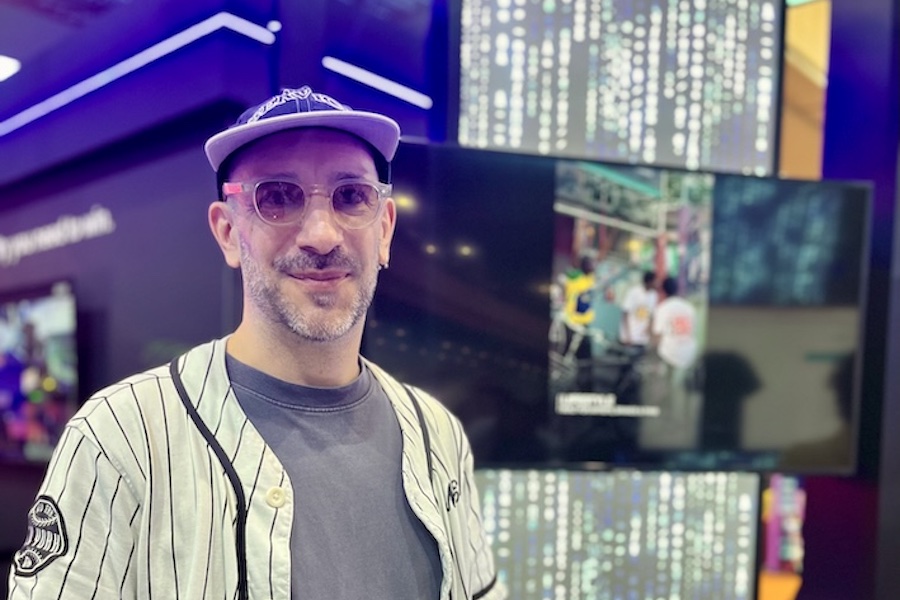
From tailor to consultant: Joachim Hensch himself has learned at all stages of his exciting career (c) 2021 JHC


These days Joachim Hensch Consulting launches the Inverted Online Class Room program, staggered with three degrees. The application protagonist’s framework for the Digital Lean Factory builds the foundation of the training, where everyone determines their individual learning pace for working through

  •  6 modules for the Bachelor
  • 12 modules for the Champion
  • and a demand-based, upwardly open number of modules for the Master degree.

Big picture learning objective: Successfully implement Industry 4.0 - in daily interactions, digital and analog. “One aim is to enable attendees to re-consider the way how to look to their structures, the processes within their organization, their assets and also workforce”, Hensch rolled out.

Joachim Hensch’s smart learning program to also include one-to-one sessions between him and each single attendee for process-related guidance – e.g. on managing their essential digital twin (c) 2021 JHC


Time requirement:

  • 3-4 h/week including online meetings for guidance through the process
  • One-to-one sessions with Joachim Hensch
  • Specific expert group sessions

Extensive material plus exercise kit to be provided offline for practice purposes and reviews to be provided by JHC.

Think Big, start small and scale fast

True Industry 4.0 applications, defined as factories where physical production processes and operations are combined with digital technology, smart computing, and big data to create a more opportunistic system have remained in laboratory status to date. We encounter them at trade fairs or we read about the pilot factory by Asian e-commerce leader Alibaba in the Eastern Chinese city of Hangzhou as part of its smart manufacturing business initiative. 

One fully implemented smart factory in the Western hemisphere is represented by the Hugo Boss production site in Izmir, where suits, jackets, shirts and coats are manufactured on an area of around 65,000 m2 with 3,800 employees. Here, the market leader in menswear demonstrates what Industry 4.0 looks like in practice - with networked machines, in-depth data analyses and flexible processes. Yvonne Heinen-Foudeh


http://www.joachimhensch.com.



More News from TEXDATA International

#Techtextil 2026

Performance Apparels: Functional textiles drive innovation at Techtextil 2026

From high-performance fibres and advanced membranes to smart textiles and sustainable material concepts – functional apparel is becoming one of the most dynamic innovation fields in technical textiles. At Techtextil 2026, exhibitors demonstrate how new materials, finishing technologies and digital functions are shaping the next generation of protective, workwear and outdoor systems.

#Texprocess 2026

Texprocess 2026: Automation, digitalisation and AI reshape textile processing

Investment decisions in textile processing have become increasingly complex. Rising energy prices, labour shortages and geopolitical uncertainties are forcing companies to prioritise technologies that deliver measurable improvements in efficiency and process stability. This applies not only to apparel production, but also to the processing of technical textiles and high-performance materials. Modernisation projects are therefore being evaluated more selectively – but the pressure to upgrade production systems continues to grow. Texprocess 2026 reflects this tension between cautious investment behaviour and increasing technological demand.

#Techtextil 2026

Textile Chemicals & Dyes: Innovation in Textile Chemistry moves into focus at Techtextil 2026

From PFAS-free finishes and water-saving dyeing technologies to advanced coatings and recycling-compatible formulations, innovation in textile chemistry is accelerating across the industry. Reflecting this development, Techtextil 2026 introduces Textile Chemicals & Dyes as a dedicated product segment, highlighting the growing role of chemical solutions in shaping the next generation of technical textiles.

#Recycling / Circular Economy

textile.4U publishes special edition “Top 100 Textile Recycling Companies 2025”

With a comprehensive 176-page special edition, textile.4U is dedicating its latest issue entirely to one of the most dynamic and influential topics in today’s textile industry: textile recycling. The new issue, published exclusively in high-quality print, presents the Top 100 textile recycling companies researched and selected by TexData – organizations that already play a key role in the transition to circular textiles or are expected to have a significant impact in the near future.

More News on Industry 4.0 / Digitalization

#Research & Development

Textilfabrik 7.0 launched: Mönchengladbach becomes a real-world lab for sustainable textile production

With the official kick-off event of the Textilfabrik 7.0 (T7), a major transformation project for the German textile and apparel industry has been launched in the Monforts Quarter in Mönchengladbach. At the “Textile Roundtable,” an event format organized by the Zukunftsagentur Rheinisches Revier, representatives from industry, research, politics, and the regional economy came together to jointly lay the foundation for CO₂-neutral, circular, and economically viable textile production in Germany.

#Man-Made Fibers

OnceMore® from Södra brings end-to-end traceability for circular Man-made Cellulosic Fibers (MMCF) using TextileGenesis

OnceMore® from Södra, the world’s first large-scale process for recycling blended fabrics into high‐quality dissolving pulp, will begin using TextileGenesis, a Lectra company, to strengthen traceability from raw material to retail across the value chain. OnceMore® produces dissolving pulp made from blended textile waste and wood sourced from responsibly managed Swedish forests. By integrating TextileGenesis, OnceMore® supports the growing need for verified data and secure, transparent tracking throughout increasingly complex supply chain.

#Denim

Jeanologia launches Billy

The new AI extracts precise laser designs from a garment image in minutes, transforming how vintage denim is recreated for production. If Jeanologia’s laser changed the way jeans were made at the end of the last century, its AI now takes the next step: moving from reproducing wear to designing it. / archive photo © 2026 Jeanologia

#Dyeing, Drying, Finishing

Monforts unveils interactive digital platform for textile finishers

Monforts has launched a new digital platform designed to give textile manufacturers faster, more intuitive access to the company’s finishing technologies, technical expertise and aftersales support worldwide.

Latest News

#Raw Materials

New study shows low environmental impact by Cotton made in Africa Organic Cotton from Tanzania

Today, the Aid by Trade Foundation (AbTF) is announcing the results of a comprehensive life-cycle analysis (LCA) for cotton produced in Tanzania under the Cotton made in Africa Organic (CmiA Organic) standard. The study emphasises the small ecological footprint of CmiA Organic verified cotton. This can largely be traced back to the absence of synthetic pesticides, artificial fertilisers, and artificial irrigation. Consequently, CmiA Organic cotton can help the textile industry meet regulatory requirements as well as science-based targets. The results also show that the consequences of climate change threaten the livelihoods of these cotton farmers, even though the type of agriculture they practise barely contributes to climate change.

#Raw Materials

Better Cotton Initiative strengthens regenerative focus in standard update

The Better Cotton Initiative (BCI) has strengthened the regenerative focus of its field-level standard with the launch of a new version of its Principles & Criteria (P&C), which marks the next step in the organisation’s journey to becoming a regenerative standards system.

#Man-Made Fibers

Selenis and Kintra Fibers partner to scale 100% bio-based synthetic fiber technology

Selenis, a leading global specialty polyester manufacturer, today announced a strategic manufacturing partnership with materials science company Kintra Fibers to scale Kintra’s patented fiber-grade PBS resin - a 100% bio-based and biodegradable material designed for textile applications.

#Functional Fabrics

PERFORMANCE DAYS proves its relevance as the industry’s key meeting point

Held on March 18–19, 2026, PERFORMANCE DAYS once again confirmed its position as a leading international platform for functional textiles. A total of 3.366 trade visitors and around 560 exhibitors gathered in Munich, with the event already kicking off successfully on DAY 0, which received highly positive feedback for its interactive format. Despite challenging conditions caused by the public transport strike in Munich, the event saw strong attendance and a consistently high level of activity across both exhibition days.

TOP