[pageLogInLogOut]
TRÜTZSCHLER SPINNING - THE NEW CARD

#Industry 4.0 / Digitalization

Quick overview thanks to digital management assistant

The new k.management dashboard © 2021 KARL MAYER
Using the k.management dashboard, KM.ON customers have a direct connection to their production – no matter when and from where. The smart tool provides a comprehensive overview of what is happening at production level and uses near-time data from machines that have been securely networked to the KM.ON cloud via the industrial computer k.ey for this purpose. This therefore provides an overview of all important machine key figures as a basis for efficient management.

KM.ON’s enhanced dashboard offers even more data

Decisions can be made quickly and soundly, and processes can be planned prudently. In the event of malfunctions and bottlenecks, rapid intervention is possible and the customer can save valuable time when completing routine work.

The dashboard – and its many benefits – was launched on the market at ITMA ASIA 2018. It has now received a major upgrade. The new features offer even greater clarity, functionality and ease of use. What’s more, the data quality and data availability have been optimised. Following further development, the tool works reliably worldwide – including in China.

Quick orientation, easy to use

Given the new design, changes to the new dashboard version are immediately apparent. The way information is presented has been fundamentally revised. It offers greater clarity and faster orientation in terms of colouring and structure.

Even the overview page, with its reduced colour scheme and functional structure, invites you in and encourages you to explore. Instead of being displayed in a mix as in the previous version, key figures are now visually separated according to their function. “Every value has its framework,” says KM.ON Product Manager Marcel Wenzel. The content is easier to access and is also explained in a way that is easy to understand.

For each key figure displayed, more detailed explanations can be obtained by clicking on the adjacent question mark symbol. By clicking the “Help” question mark symbol, which is superimposed above the entire application in the top right-hand corner, the user can also access the user manual. The reference guide contains background information on the complete application, including publication references.

The users can adjust the language based on their preference under their personal “User settings” by clicking their user avatar. The available languages include German, English, modern Chinese and traditional Chinese.

These extensive changes were driven by discussions with customers. As part of these joint exchanges, the desire for simplicity emerged above all. “Given their profession, our customers are not digital natives. They want simple, intuitive solutions, without usage barriers,” says Marcel Wenzel. The software specialist and his team also closely followed user wishes when optimising the dashboard content.

Appropriate data for making informed decisions

No matter where the machines are located and information is needed, the dashboard provides data in near real time. On the overview page, the machine name and the next upcoming beam change time are displayed for each machine as before. New symbols now provide information about the status of the machine in eye-catching colours. Possible states are Stop, Running and Offline. The symbols illustrate the degree of production utilisation, even when briefly checking the homepage. A filter function can also be used to detect machines that are idle and by extension, capacity reserves or technical problems.

Other new display features include the number of stops and the remaining time when processing an item, including the number of items per job.


A sorting function for all networked machines based on specified categories makes it possible to optimise production. By prioritising according to remaining production time and upcoming beam replacement time, the capacities for item removal and beam replenishment can be planned perfectly. In turn, the number of stops when producing an item allows conclusions to be drawn about the fabric quality produced, for example.
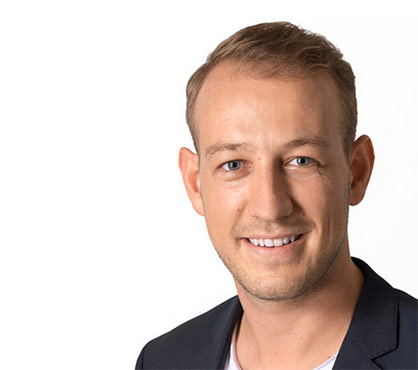
KM.ON Product Manager Marcel Wenzel © 2021 KARL MAYER


Just like the overview page, the details page for each individual machine has also been decluttered. As part of a structured display, an adjusted offering appears, consisting of information on status, output, current and maximum speed, upcoming beam change times for all warp beams – sorted by urgency – as well as job stage with remaining time per item and for the complete job.

Information on the machine type, serial number and available KAMCOS® version are found at the bottom of the details page.

Further developments pre-programmed

The new k.management dashboard was extensively tested with customers in Germany and the USA in February this year. The roll-out to all KM.ON customers then began the following April. In order to attract other textile companies, the innovative solution will be presented at the KARL MAYER stand at ITMA ASIA, which is being held from 12 to 16 June 2021. Additional changes are in the pipeline for the year. After a transitional phase, there are plans to switch from the previously free mode to an optional paid-for mode. A fee will then be levied in exchange for extended information and functionalities.

In addition, Marcel Wenzel is already working on new ideas. “We are constantly asking ourselves which target groups need which additional information. Step by step, we are developing our dashboard together with our customers,” explains Marcel Wenzel. The current version already offers possibilities for suitable further developments. For example, the overview page could help the machine operator to plan their to-do list even better by incorporating additional key figures, or indeed attract new stakeholders such as managers and directors with strategic rather than operational information.

More News from KARL MAYER Textilmaschinenfabrik GmbH

#Knitting & Hosiery

KARL MAYER's HKS 2-SE Expands Possibilities for Premium Stretch WARP KNITS

Warp knitted fabrics with a woven look are more in demand than ever in the fashion and apparel industries. Stretch WARP KNITS, in particular, impress with their freedom of movement, breathability, and virtually wrinkle-free wear – thereby opening up new style worlds such as smart casual or business casual. When it comes to the highly efficient production of premium-quality stretch WARP KNITS, the HKS 2-SE has long been the machine of choice. KARL MAYER’s best-selling tricot machine produces standard elastic fabrics characterized by high gauges, smooth, delicate surfaces, and a soft hand feel.

#Knitting & Hosiery

Footwear innovation enabled by warp knitting technology– insights from New Balance

The future of the athletic shoe is increasingly being shaped on warp knitting machines. For KARL MAYER, the footwear industry is one of the most important growth markets – and one of the sectors where innovative textiles can realize their full potential. In his keynote address at the opening of KARL MAYER’s TEXTILE INNOVATION CENTER in Obertshausen in April, Vishnu Prakash Muthusamy, Senior Textile and Materials Engineer at New Balance, explained the opportunities that warp knitting technology opens up for performance, sustainability, and faster development processes, and why textile manufacturers are transitioning from suppliers to development partners.

#ITM 2026

Positive market signals for KARL MAYER at ITM 2026

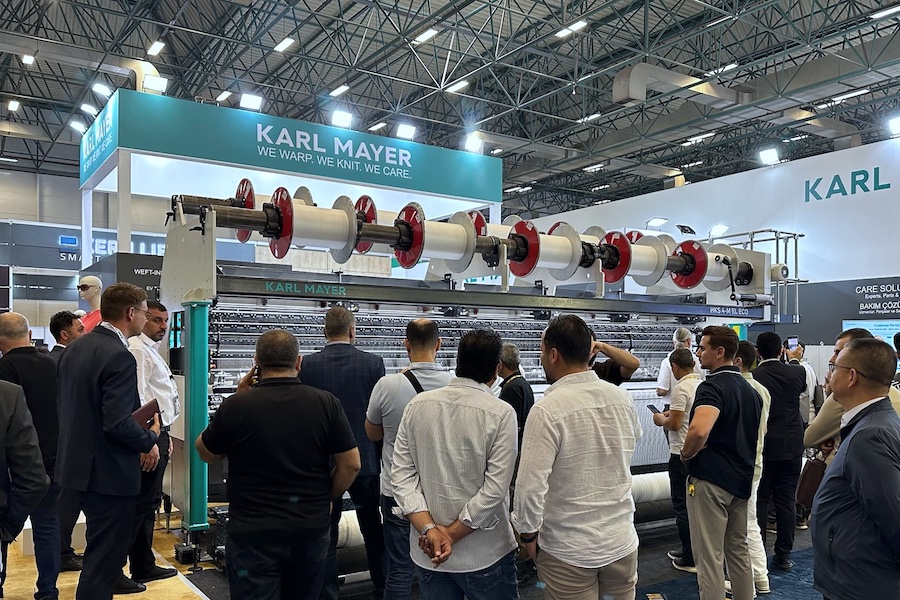
KARL MAYER is pleased with its participation as an exhibitor at ITM 2026. Faced with the challenges of rising domestic costs and fierce competition from low-priced Asian markets, the industry leader had traveled to Istanbul with mixed feelings – yet still draws a really positive conclusion.

#Knitting & Hosiery

STOLL: Agreement signed for the divestiture of selected assets

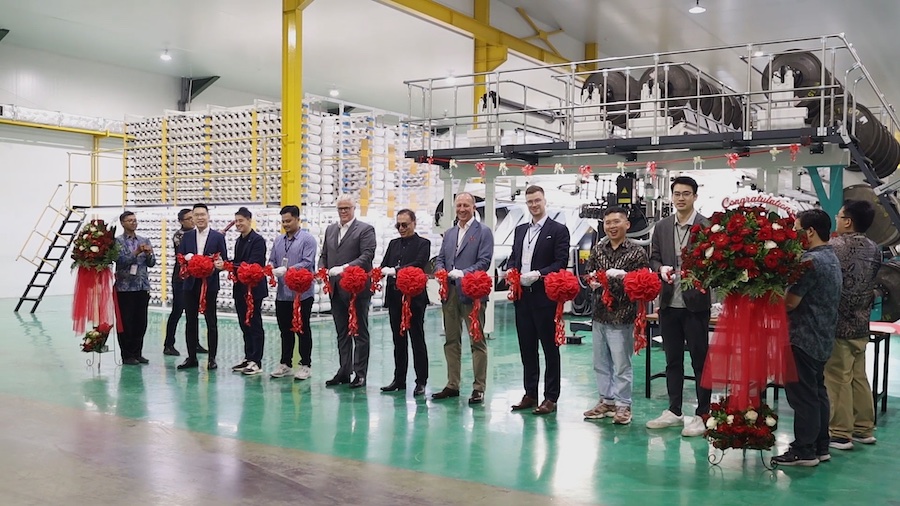
In early 2025, KARL MAYER announced its strategic decision to focus on its core business areas of WARP KNITTING, WARP PREPARATION, and TECHNICAL TEXTILES. As part of this move, the flat knitting machine business under the STOLL brand was discontinued and the production site in Reutlingen was closed in October 2025.

More News on Industry 4.0 / Digitalization

#ITM 2026

Driving digitalization, efficiency, and Smart Manufacturing across textiles and carpets

At this year’s ITM, BMSvision proudly showcases its next leap forward in digital manufacturing excellence. As a long-standing global pioneer in Manufacturing Execution Systems (MES) for the textile and plastics industries, BMSvision continues to accelerate digital transformation by delivering powerful, data-driven solutions that boost productivity, enhance quality and support sustainable growth. Visit BMSvision at the Vandewiele booth in Hall 7, Booth 710, to experience the future of textiles manufacturing.

#Industry 4.0 / Digitalization

Textile ETP launches digital transformation strategy, calling for urgent collective action across the value chain

Textile ETP’s DigitX Innovation Hub published its strategic roadmap for the digital transformation of Europe's textile and apparel industry.

#Research & Development

Textilfabrik 7.0 launched: Mönchengladbach becomes a real-world lab for sustainable textile production

With the official kick-off event of the Textilfabrik 7.0 (T7), a major transformation project for the German textile and apparel industry has been launched in the Monforts Quarter in Mönchengladbach. At the “Textile Roundtable,” an event format organized by the Zukunftsagentur Rheinisches Revier, representatives from industry, research, politics, and the regional economy came together to jointly lay the foundation for CO₂-neutral, circular, and economically viable textile production in Germany.

#Man-Made Fibers

OnceMore® from Södra brings end-to-end traceability for circular Man-made Cellulosic Fibers (MMCF) using TextileGenesis

OnceMore® from Södra, the world’s first large-scale process for recycling blended fabrics into high‐quality dissolving pulp, will begin using TextileGenesis, a Lectra company, to strengthen traceability from raw material to retail across the value chain. OnceMore® produces dissolving pulp made from blended textile waste and wood sourced from responsibly managed Swedish forests. By integrating TextileGenesis, OnceMore® supports the growing need for verified data and secure, transparent tracking throughout increasingly complex supply chain.

Latest News

#Textile processing

YKK develops concept EXCELLA® zipper tape using nonwoven fabric partially derived from used clothing

YKK Corporation has developed a concept version of its premium EXCELLA® zipper series made from nonwoven fabric sheets created by fiberizing used clothing and other textile materials. Based on a proposal by fashion designer Yuima Nakazato, this item was created as a result of collaboration between Nakazato, Seiko Epson Corporation and YKK. The concept zipper was incorporated as a material component for pieces in the newest YUIMA NAKAZATO Couture Collection, “INFERNO,” which was unveiled in Paris, France on July 8, 2026.

#Textiles & Apparel / Garment

Texworld Apparel Sourcing Paris highlights evolving global sourcing landscape

From 31 August to 2 September 2026, Texworld Apparel Sourcing Paris will bring together more than 1,000 international exhibitors at Paris-Le Bourget Exhibition Centre. This edition reflects the new global balance of textile and apparel sourcing, highlighting a strong diversity of sourcing countries — some unexpected.

#Textile processing

Dedicated car seat model of SHIMA SEIKI’s P-CAM® R Cutting Machine unveiled

Leading Japanese textile solutions provider SHIMA SEIKI MFG., LTD. of Wakayama, Japan, showed a special version of its P-CAM® R multi-ply computerized cutting machine dedicated to the production of car seats for the first time, at a private exhibition held over two days on Thursday, July 2nd and Friday, July 3rd at the Kariya City Industrial Promotion Center in Aichi Prefecture.

#Research & Development

ALADIN paves the way for circular and demand-driven textile production in Europe

Textile production can be organized sustainably by utilizing short supply chains and preventing overproduction. This can already be achieved today by intelligently connecting and efficiently utilizing existing infrastructure. At the same time, production becomes circular when innovative technologies and materials are used that enable high-quality recycling. The ALADIN research project, launched in May 2026 and co-funded with five million euros under the EU Horizon Europe program, is creating the conditions for this.

TOP