[pageLogInLogOut]

#Raw Materials

Small-Scale farmers in Africa increasing focus on biodiversity in fight against effects of climate change
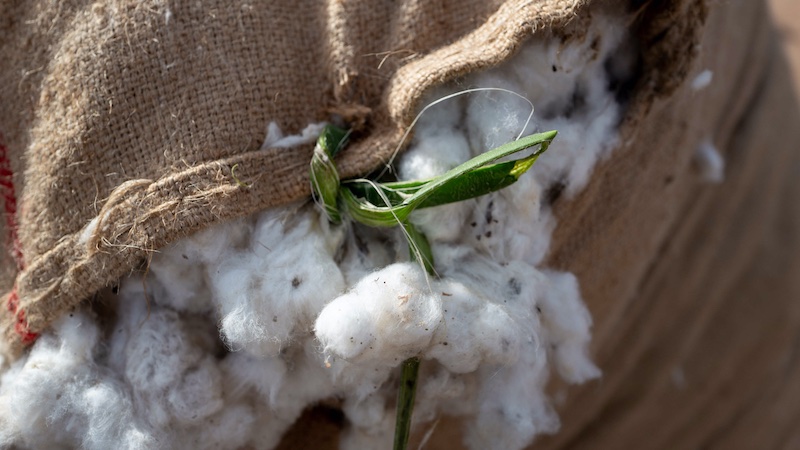
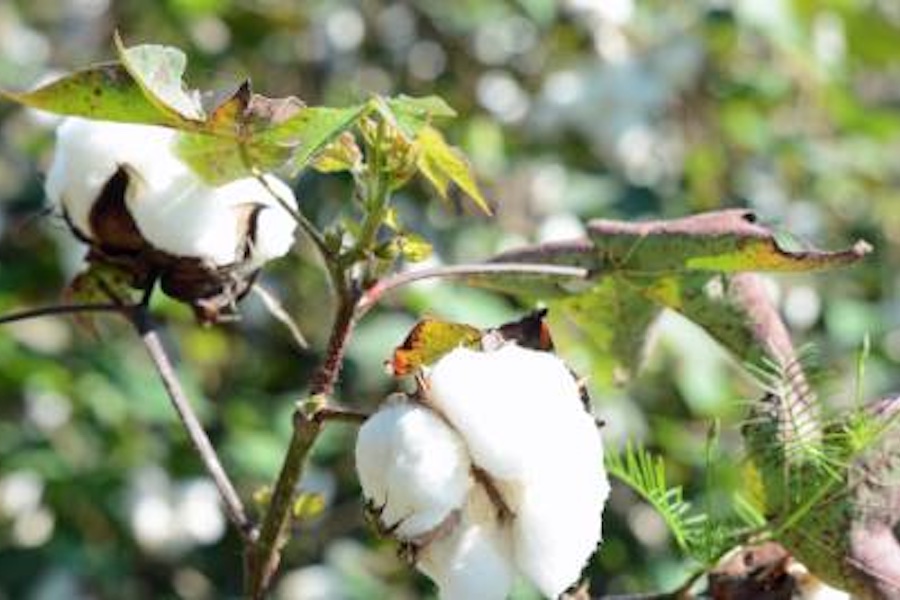
How much of an impact is climate change having on Africa’s biodiversity? How is it damaging agriculture? To answer these questions, Cotton made in Africa (CmiA), the internationally recognised standard for sustainably produced cotton, worked together with the Zambia Agriculture Research Institute to survey the people whose very existence is under threat by climate change: cotton farmers in Zambia.
Harvested Cotton; Copyright Martin J. Kielmann for Cotton made in Africa © 2024


Beyond observing how the consequences of climate change threaten their work and lives, the survey shows that they also know that there are ways to counteract these consequences effectively. 

The loss of biodiversity and the effects of climate change are currently taking a serious toll on cotton cultivation south of the Sahara. But how are the people actually growing the cotton affected? Cotton made in Africa is actively committed to the preservation and promotion of biodiversity in African cotton-growing areas. As part of these efforts, the Aid by Trade Foundation (AbTF), which is the organisation behind CmiA, held group discussions with farmers in Zambia to examine where they are seeing ecological changes and what measures they are taking in response. “The discussions focussed on addressing challenges and solutions together with farmers in Zambia,” says Nina Schöttle, the project manager for monitoring and evaluation, adding, “Our overall goals are to stop the decline in biodiversity and to increase the resilience of small-scale farmers in Africa through comprehensive measures that actively involve people in the growing regions.” 

African small-scale farmers report on declining biodiversity and its consequences

According to the recent survey, the loss of biodiversity is clearly noticeable in rural Africa. Deforestation, poaching, and the expansion of settlements have severely affected many wild animals, even leading to the extinction of some species, and fuelled many conflicts between humans and wildlife; the survey also reports a problematic water shortage in the rivers. In the discussion groups, farmers describe the various methods they use to observe changes in the fields and the environment. For example, the lack of certain fungi in the forests indicates that biodiversity has decreased. Changes in soil structure and colour also indicate poorer soil quality, and the proliferation of certain weeds, such as witchweed and ragwort, is an indication of changes in the biological balance. They also observed climatic fluctuations, such as unusually high or low temperatures and irregular precipitation patterns. 

In discussions with local farmers, it became clear how declining biodiversity influences their fields. Soil fertility is decreasing, which has led to lower yields. In the past, good results could be achieved without fertilisers, but today this is more challenging. Bush fires and the use of herbicides have reduced the presence of useful soil organisms such as earthworms, which help to break down organic material. 
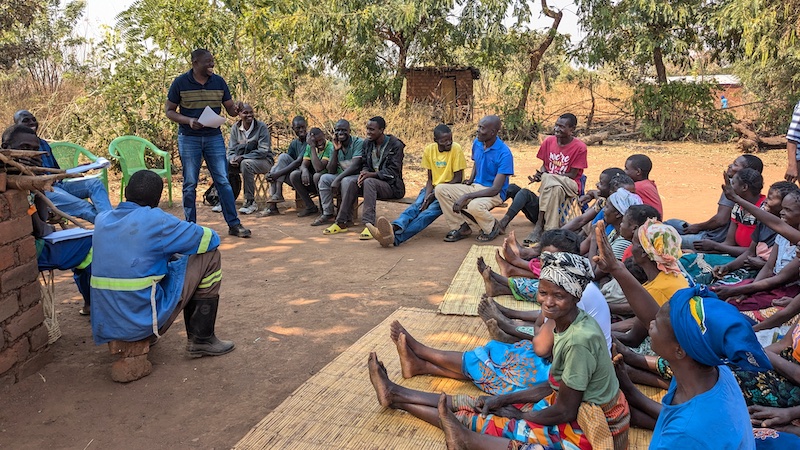
Owen Machuku from ZARI conducting an interactive focus group discussion in Kalichelo in Kefa village, Chipata © 2024 Cotton made in Africa


Measures to promote biodiversity

The small-scale farmers involved in the six group discussions clearly made the point that the way in which their cotton fields are managed has a significant impact on soil health and biodiversity in their surroundings. This is why small-scale farmers use crop rotation or integrated pest management for their fields in addition to limiting the use of chemical pesticides and herbicides to a minimum and substituting organic alternatives whenever possible. To conserve soil quality, they avoid tillage, and to increase it, they apply compost and organic fertilisers such as cow manure.

The promotion of sustainable practices for more climate and environmental protection in agriculture has been enshrined in the Cotton made in Africa standard for many years, and these values are shared with small-scale farmers through regular training courses. Through these and similar training programmes, CmiA primarily aims to increase small-scale farmers’ resilience against the effects of climate change and to improve their livelihoods in the long term. 

The survey was carried out in July 2024 by the Zambia Agriculture Research Institute (ZARI), in co-operation with the Aid by Trade Foundation, through six focus groups in Zambia. The group of CmiA small-scale farmers consisted of 46 percent men and 54 percent women; of this total, 66 percent have lived in the area since birth and 34 percent for 10 to 20 years.
More News from Cotton made in Africa (CmiA)

#Raw Materials

New study shows low environmental impact by Cotton made in Africa Organic Cotton from Tanzania

Today, the Aid by Trade Foundation (AbTF) is announcing the results of a comprehensive life-cycle analysis (LCA) for cotton produced in Tanzania under the Cotton made in Africa Organic (CmiA Organic) standard. The study emphasises the small ecological footprint of CmiA Organic verified cotton. This can largely be traced back to the absence of synthetic pesticides, artificial fertilisers, and artificial irrigation. Consequently, CmiA Organic cotton can help the textile industry meet regulatory requirements as well as science-based targets. The results also show that the consequences of climate change threaten the livelihoods of these cotton farmers, even though the type of agriculture they practise barely contributes to climate change.

#Raw Materials

International Women’s Day: Cotton made in Africa strengthens equality for women through targeted investments

On the occasion of International Women’s Day—which will be observed on 8 March under the motto “Rights. Justice. Action. For ALL Women and Girls”—the Aid by Trade Foundation (AbTF), which is responsible for Cotton made in Africa® (CmiA), underlines its long-standing and ongoing commitment to the equality of women in African cotton production areas.

#Natural Fibers

Human Rights Day: Cotton made in Africa reinforces its commitment to ensuring respect for human rights in cotton production

The sustainable cotton standard Cotton made in Africa (CmiA) has always focussed on respect for human rights, including by prohibiting child labour and discrimination. With the new version of the CmiA standard coming into force, AbTF raises requirements for due diligence in the areas of human rights and risk management.

#Natural Fibers

Cotton made in Africa launches public consultation for standard revision

The Aid by Trade Foundation (AbTF) is opening public consultation on its Cotton made in Africa standard today. Interested parties will have 60 days to provide feedback, helping shape the future of one of the world’s largest standards for sustainable cotton. The latest update to the standard, Version 5.0, focusses on increasing Cotton made in Africa’s effectiveness and adapting its criteria and indicators to external factors, which currently include biodiversity loss and a growing set of reporting requirements for companies.

More News on Raw Materials

#Raw Materials

China projected to increase cotton production, yields, and imports in 2026/27

World cotton production in the 2026/27 season is projected at 25.9 million tonnes, exceeding global consumption of 25.2 million tonnes, according to the May 2026 issue of Cotton This Month. That means both production and consumption are expected to remain close to current season levels, while global cotton trade is projected to decline by 2.7% to approximately 9.6-9.7 million tonnes.

#Raw Materials

ICAC launches Carbon Credits Initiative to deliver new income streams to cotton farmers

The International Cotton Advisory Committee (ICAC) has announced a new initiative designed to unlock additional income streams for cotton farmers through participation in carbon credit markets, linking sustainable production practices directly to financial returns.

#Raw Materials

ECCO introduces first shoe featuring innovative protein-based fibre

ECCO, in partnership with Spinnova, announces the launch of the limited edition ECCO BIOM® 720, a first-of-its-kind shoe utilising an often overlooked leather by-product, transformed into a protein-based fibre. The fibres are produced using patented technology that advances material innovation while reducing waste and supporting full resource use across the leather and textile industry.

#Raw Materials

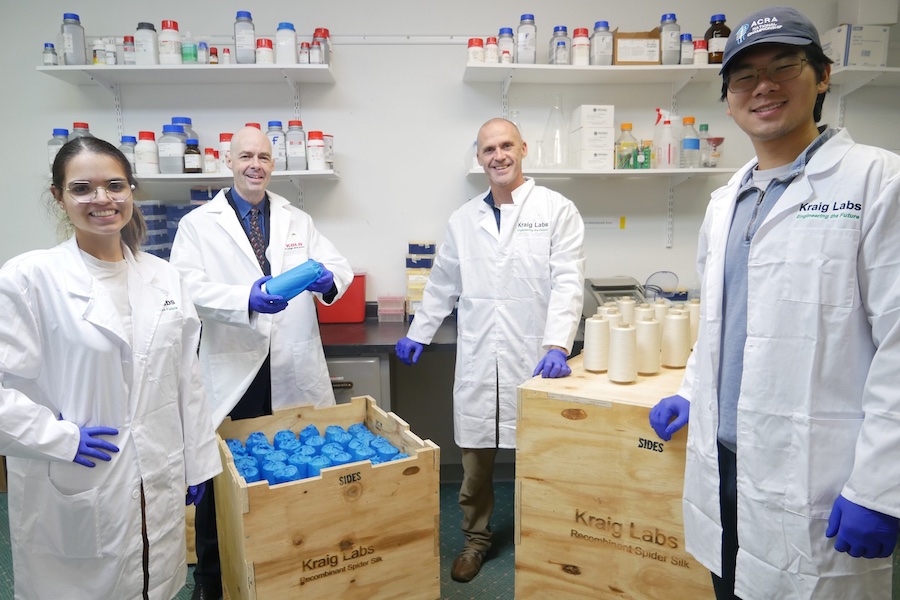
Kraig Biocraft Laboratories reports major progress converting record-setting spider silk cocoon production into reeled silk

Kraig Biocraft Laboratories, Inc. (OTCQB: KBLB) (“the Company”, “Kraig Labs”, or “Kraig’s”), a world leader in spider silk technology*, today announced significant progress in the processing of its recently produced recombinant spider silk cocoons into reeled silk.

Latest News

#INDEX 2026

ANDRITZ at INDEX ’26: Driving sustainability with next-generation nonwoven technologies

From May 19-22, ANDRITZ Nonwoven & Textile is presenting its innovative solutions for the nonwoven & textile industry in Geneva, Switzerland. ANDRITZ will focus on technologies for sustainable and durable nonwovens, converting, sustainable fiber processes, textile recycling, and life-cycle services on booth 2114 in hall 02.

#INDEX 2026

INDEX™26: World’s leading nonwovens exhibition presents groundbreaking product launches, exclusive seminars and immersive experiences

From 19 to 22 May 2026, 620 exhibitors from 44 countries will gather in Geneva at Palexpo for INDEX™26. The exhibition aims to demonstrate how the future of technical materials will increasingly be shaped by collaborative supply chains and integrated innovation across the nonwovens industry. This year’s edition focuses not only on individual technological advances, but also on how cooperation throughout the value chain can enhance the performance, sustainability and value of nonwoven solutions.

#INDEX 2026

The LYCRA Company launches LYCRA® ADAPTIV fiber for nonwovens, advancing comfort and fit in disposable hygiene at INDEX™ 26

The LYCRA Company, a leader in innovative and sustainable fibers for apparel and personal care, today announced the official global launch of LYCRA® ADAPTIV fiber for nonwovens at INDEX™ 26, in Geneva, Switzerland, May 19–22. This breakthrough stretch fiber, already trusted by leading global apparel brands, now ushers in a new era of comfort, fit, and performance for baby diapers, disposable hygiene products, adult incontinence, and feminine care.

#INDEX 2026

Innovations for today – solutions for tomorrow: Trützschler Nonwovens at INDEX™ 2026

From 19 to 22 May, Trützschler Nonwovens will present itself at booth 1641 as a long-term partner to its customers. The focus will be on new products for all nonwoven processes, further developments of the digital working environment T‑ONE, and an expanded service portfolio.

TOP