[pageLogInLogOut]

#Raw Materials

Textile Exchange announces that eTransactions are live on eTrackit for GRS and RCS certified materials

Textile Exchange has announced that eTransactions are live on the Electronic Trackit (eTrackit) platform, for material certified to the Global Recycled Standard (GRS) and Recycled Content Standard (RCS). eTrackit is a multi-stakeholder system designed to deliver granular traceability to raw materials certified to Textile Exchange’s standards. It traces certified material via eTransactions and establishes material accounting at the product level throughout the supply chain. eTransactions are dually verified by peer-to-peer validation and third-party certification body transaction approval.

eTrackit?is a core aspect of Textile Exchange’s traceability roadmap, a comprehensive framework guiding the organization’s traceability efforts. At the heart of Textile Exchange’s vision for the industry is the creation of a robust, credible, and scalable traceability system. This vision is driven by the need to maintain industry trust, evolve with legislative changes, and ensure interoperability with diverse technology platforms. 

As of September 18, 2024, eTransactions went live in eTrackit, which means transactions of GRS or RCS certified material can begin flowing on the platform. In the eTrackit system, transaction certificates are replaced by eTransactions, which are the foundation for validating the chain of custody in the platform. 

eTrackit is set to expand to include a wider selection of Textile Exchange standards and is only intended to trace material certified to these standards, meaning it will not scale to include other standard systems or materials that are not certified. 

eTrackit’s initial release application is powered by the traceability platform TextileGenesis. Textile Exchange is working towards bringing other technology solutions into the eTrackit system. At this time, Textile Exchange will work in parallel with a shortlist of technology platforms to pilot the eTrackit system.

More News from Textile Exchange

More News on Raw Materials

#Raw Materials

The 83rd Plenary Meeting: Reports from the ICAC Secretariat

Every year, one of the most anticipated sessions at the International Cotton Advisory Committee's (ICAC) Plenary Meeting is the Reports from the Secretariat — and the 83rd edition in Bremen, Germany, did not disappoint.

#Raw Materials

A Powerful Opening: Global thought leaders launch the International Cotton Conference Bremen

The International Cotton Conference Bremen will open on 25 March 2026 in the Parliament building of the Free Hanseatic City of Bremen with a keynote session of exceptional calibre. Distinguished international experts will set the stage for the conference by offering incisive perspectives on the most pressing challenges and the defining trends shaping the future of the global cotton trade. Their insights will span a broad spectrum — from geopolitically driven disruptions affecting global supply chains to the opportunities emerging from innovation-led agriculture capable of supporting a growing world population. Together, these opening keynotes will frame the dialogue of the conference, highlighting both the complexity of today’s market environment and the pathways toward a resilient and forward-looking cotton sector.

#Raw Materials

Lenzing Group positions bio‑based materials as a strategic asset for Europe’s economic security

The Lenzing Group, a leading supplier of regenerated cellulose fibers for the textile and nonwovens industries, hosted a high‑level roundtable in Brussels to discuss how bio‑based materials can strengthen Europe’s economic security and support the shift toward a fossil‑free future. Organized in cooperation with Euractiv, the event brought together representatives of the European Commission, the UK Mission to the EU, academia, civil society, and industry.

#Natural Fibers

Beyond Cotton: Natural Fibres in the Spotlight at the Bremen Cotton Conference - Branded by DNFI

Climate targets, fragile supply chains, and rising regulatory requirements are fundamentally changing the perspective of the textile industry - the focus is increasingly shifting toward the base material. Not only cotton, but natural fibres are gaining significant importance: they stand out not only because of their outstanding functional properties, but also because they make a valuable contribution to the bioeconomy and responsible product development.

Latest News

#Textile processing

Major expansion for ACG Kinna follows record year

In response to growing demand for its full textile and finished product line automation services, ACG Kinna – a member of TMAS, the Swedish textile machinery association – has inaugurated a 1,000-square-metre expansion at its headquarters in Skene, Sweden.

#Textiles & Apparel / Garment

YKK launches “YZiP® Light” aluminum alloy zipper for cotton pants

YKK Corporation (Headquarters: Chiyoda-ku, Tokyo; President: Koichi Matsushima; hereafter, YKK) has launched YZiP® Light, a lightweight aluminum alloy zipper for cotton pants, with sales beginning in late March. The introduction of YZiP® Light expands YKK’s zipper portfolio—led by the flagship YZiP® copper alloy zipper—providing customers with greater flexibility to meet diverse garment needs.

#Techtextil 2026

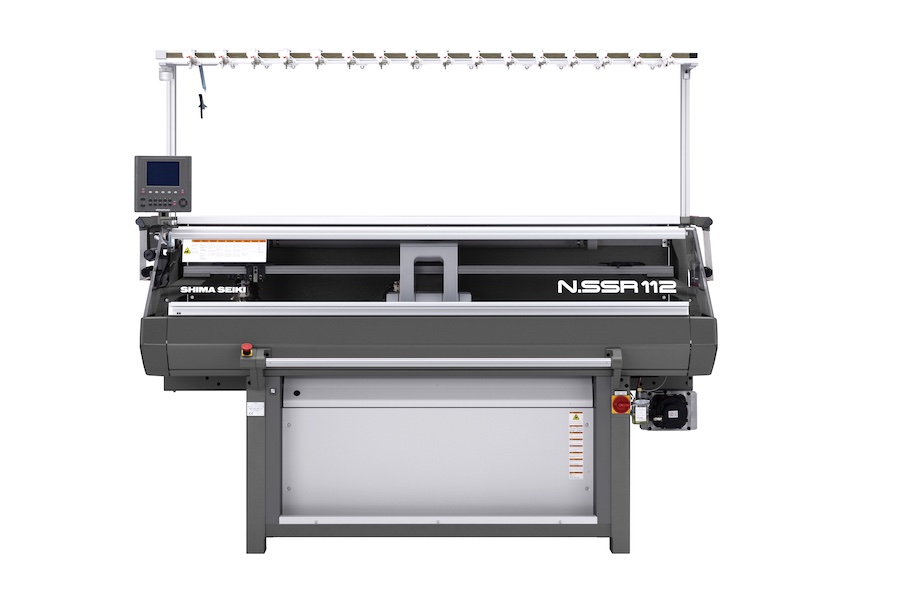
Shima Seiki showcases WHOLEGARMENT® and 3D knitting solutions for technical textiles at Techtextil 2026

Leading textile technology solutions provider SHIMA SEIKI MFG., LTD. of Wakayama, Japan, along with its Italian subsidiary SHIMA SEIKI ITALIA S.p.A., will be participating in the Techtextil 2026 exhibition in Frankfurt, Germany next month. On display will be WHOLEGARMENT® and other advanced three-dimensional knitting applications across a wide range of industries besides fashion apparel that are not typically associated with knitting, such as technical textiles using industrial materials and advanced three-dimensional knitting.

#Research & Development

Textilfabrik 7.0 launched: Mönchengladbach becomes a real-world lab for sustainable textile production

With the official kick-off event of the Textilfabrik 7.0 (T7), a major transformation project for the German textile and apparel industry has been launched in the Monforts Quarter in Mönchengladbach. At the “Textile Roundtable,” an event format organized by the Zukunftsagentur Rheinisches Revier, representatives from industry, research, politics, and the regional economy came together to jointly lay the foundation for CO₂-neutral, circular, and economically viable textile production in Germany.

TOP