[pageLogInLogOut]

#ITMA 2023

KnitExcellence from Goller at ITMA 2023

Goller, a member of the CHTC Fong’s Group, will promote its KnitExcellence package at ITMA 2023 in Milan from June 8-14, at stand B106 in Hall 18.

The KnitExcellence package includes a full range of machinery for the complete treatment of knitted fabrics – Knit Complexa for bleaching, Knit Mercer for mercerisation, Knit Economica for dyeing and the versatile Sintensa washing concepts for washing after dyeing and printing.

The multi-purpose rollerbed steamers of the Knit Complexa can be used for steaming after bleaching but also washing, when required. The rollerbed in the steamer transports the material while slightly shifting the material from roll to roll to avoid yellowing on the fabric surface. A sump heating equalises the steam condition in the entire compartment and guarantees a homogeneous humidity.
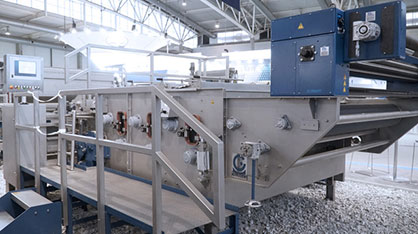
The Knit Mercer unit provides very low tension during caustic treatment and a homogeneous mercerizing effect. © 2023 Goller


The Knit Mercer unit provides very low tension during caustic treatment and a homogeneous mercerizing effect. Short distances, load cells and drive control provide continuously smooth transport of the material through the machine.

The Knit Economica S Roll padder secures the same pressure over the width of the squeezing rollers and assures an equal dyeing of the fabric The combination of dwelling and drum wash concepts with cyclone rotors realises the best use of washing times and mechanical treatment to minimise water and chemical consumption.


Overall, the Goller Knit Excellence concept is a reliable and efficient package that is well-suited to all wet finishing treatments of knitted textiles. Its robust and high quality design and advanced features make it a popular choice for textile manufacturers around the world.

The Goller Sintensa is a continuous washing machine used for washing off knitted textiles after reactive dyeing and printing as well as polyamide after acid printing, wash off disperse print and every kind of spin oil washing. The machine uses a combination of mechanical action, water and detergent to remove any residual dye or chemicals from the fabric. It can handle large volumes of fabric, making it ideal for use in industrial settings instead of discontinuous treatments.
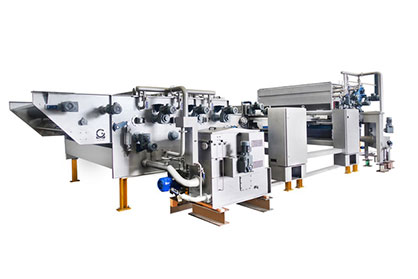
The Knit Mercer unit provides very low tension during caustic treatment and a homogeneous mercerizing effect. © 2023 Goller


The machine is designed to minimise water and energy consumption, which can help to reduce operating costs.




More News from TEXDATA International

#Texprocess 2026

Texprocess 2026: Automation, digitalisation and AI redefine textile processing

Making investment decisions in textile processing has become significantly more demanding. Increasing energy costs, a shortage of skilled labour and ongoing geopolitical uncertainties are compelling companies to focus on technologies that deliver clear gains in efficiency and process reliability. This applies equally to apparel manufacturing and to the processing of technical textiles and high-performance materials. As a result, modernisation initiatives are assessed more carefully – even as the need to upgrade production systems continues to intensify.

#Techtextil 2026

Techtextil 2026: Between innovation pressure & market reality

From 21 to 24 April 2026, Techtextil in Frankfurt am Main will once again become the central meeting point for the international technical textiles and nonwovens industry. Running in parallel, Texprocess will focus on the industrial implementation of textile processing technologies as the leading platform in this field. Together, the two trade fairs form a closely integrated presentation and working platform along the entire textile value chain – from material development to finished applications.

#Techtextil 2026

Between geopolitical pressure and industrial resilience

In this interview, Dr. Janpeter Horn (VDMA) discusses the current challenges facing textile machinery manufacturers, shaped by geopolitical tensions, regulatory developments and subdued investment. He also outlines why innovation strength, integrated solutions and strategic positioning remain key to global competitiveness.

#Texprocess 2026

Between investment restraint and modernization pressure

Texprocess 2026 takes place in a complex market environment shaped by uncertainty and innovation pressure. In this interview, Elgar Straub (VDMA) explains why the trade fair is particularly relevant this year and which technologies are driving efficiency and competitiveness.

More News on ITMA 2023

Latest News

#Associations

BTMA backs global growth while investing in future UK leaders

As one of a number of new initiatives launched this year, the British Textile Machinery Association (BTMA) is launching the UK-India Textile Machinery Coalition. The UK-India Free Trade Agreement, signed in July 2025, has implications that extend across sourcing, competitiveness and long-term trade dynamics, believes BTMA CEO Jason Kent.

#Raw Materials

China projected to increase cotton production, yields, and imports in 2026/27

World cotton production in the 2026/27 season is projected at 25.9 million tonnes, exceeding global consumption of 25.2 million tonnes, according to the May 2026 issue of Cotton This Month. That means both production and consumption are expected to remain close to current season levels, while global cotton trade is projected to decline by 2.7% to approximately 9.6-9.7 million tonnes.

#Raw Materials

ICAC launches Carbon Credits Initiative to deliver new income streams to cotton farmers

The International Cotton Advisory Committee (ICAC) has announced a new initiative designed to unlock additional income streams for cotton farmers through participation in carbon credit markets, linking sustainable production practices directly to financial returns.

#Sustainability

Number of GOTS-certified facilities grow 15% globally as demand for credible sustainability standards continues to strengthen

Global Organic Textile Standard (GOTS) certification continued to grow in 2025, with nearly 18,000 certified facilities worldwide, despite ongoing geopolitical uncertainty and rapidly evolving regulatory requirements across global textile supply chains.

TOP