#ITMA 2015
Innovative Online Data Management System for Yarn Clearers
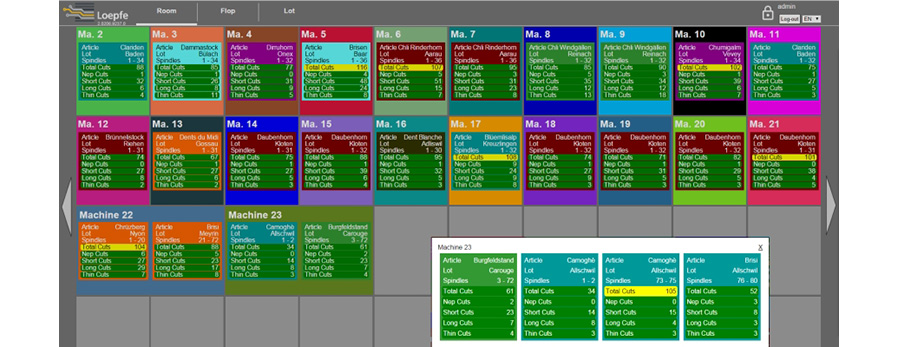
Loepfe is introducing its new MillMaster TOP online data management system, which monitors and analyses the quality data from Loepfe yarn clearers. MillMaster TOP - a new generation innovative system – provides online data from connected yarn clearers in real-time. The modern software can visualise and analyse quality data from up to 7,200 spindles.
The data management system has a comprehensive functionality. Data from all winders are recorded automatically and can be monitored and analysed in real-time. The mill floor view gives an overview of all winding machines. Traffic light colours indicate the performance of the different machines or yarn production lots. The performance criteria and thresholds can be set individually. This enables fast reaction in the case of insufficient quality. A double-click on a machine or a production lot opens a dashboard view with detailed data. There the user can access all quality data in one view.
Setting-up MillMaster TOP is very easy. All connected machines are recognised automatically, and afterwards all data is available immediately. With its modern client server architecture the system is the ideal solution for winding machines. The data is not only available on the server, but can also be displayed on a handheld device, e.g. a tablet computer. MillMaster TOP can be individually customized with various options, which are installed automatically via Loepfe´s cloud service.