[pageLogInLogOut]

#ITMA 2015

Santex Group at ITMA 2015
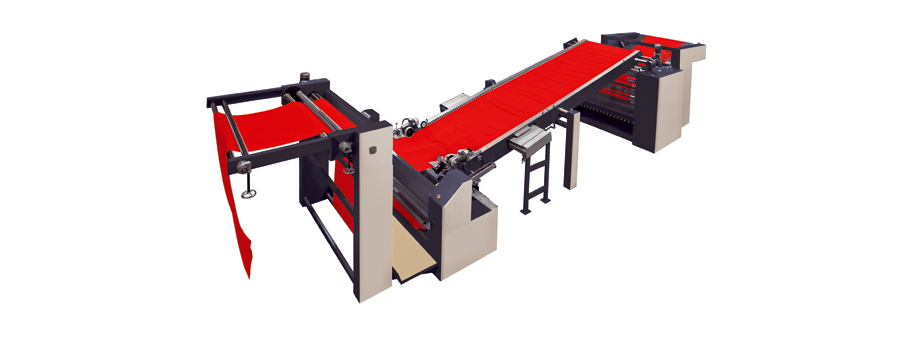
Knits finishing machine Santasynpact, (c) Santex Group
Santex Group will present knits finishing machine Santasynpact and the new CAVIMELT "Plug + Play" for coating and laminating on ITMA 2015 in Milan
Santex Textile Division is showing with Santasynpact their newest addition to the Santex family of knits finishing machines. The main goal is to provide the highest performance and best fabric quality with minimum production costs. Santasynpact is a combination of rubber belt shrinkage and felt belt compacting unit in one line with levelling frame at the entry. With this new development compaction results are significantly improved and at production speeds 2 to 3 times higher than conventional felt compacting systems. Santex will show the latest version with special designed felt belt features to ensure the sensitive handling of cotton or cotton blended knits and to maximise performance.
Cavitec, a brand name of Santex AG Switzerland is showing their new CAVIMELT P+P. It is a streamlined machine developed with the goals of precision, production and cost effectiveness in Hotmelt Coating and Laminating using the rotogravure system. This compact design integrates the unwinder and rewinder in one machine frame, accepting rolls up to 600 mm in diameter and working width of 1600 – 2’400 mm. Operating speed is up to 40 m/min and  allows coating weights from 3 – 80 gsm. All well known adheseves in thermoplastic and reactive Hotmelts are applicable. The end use of the so produced fabrics are for active wear, automotive interiors, home textiles, technical composites, etc. The machine is delivered pre-wired, assembled and tested. The CAVIMELT P+P stands for Plug+Play, because of short installation and commissioning time.


More News from Santex Rimar Group

More News on ITMA 2015

Latest News

#Techtextil 2026

AI, Start-ups, Research: Techtextil and Texprocess bring together players in the textile industry

From start-ups to universities and research institutes: at Techtextil and Texprocess, the world’s leading innovation trade fairs in Frankfurt am Main, exhibitors present future-oriented concepts for the global textile industry. With the international Campus & Research area, a strong participation from start-ups and the latest AI applications for textile processing, both trade fairs showcase current developments in the textile industry. By bringing together innovation, research and application, they enable new partnerships across the textile value chain.

#Techtextil 2026

IVGT joint stand brings innovation and networking to Techtextil 2026

At Techtextil 2026 and the parallel Texprocess 2026, key transformation topics such as artificial intelligence, digitalisation, sustainability, recycling and the circular economy will be reflected across the show. Against this backdrop, the IVGT, together with 16 member companies, will present its joint stand in Hall 12.1 (Stand D62) as a platform for exchange and networking.

#Man-Made Fibers

Indorama Ventures supports Southeast Asia’s textile customers with reliable regional supply and global innovative portfolio

Indorama Ventures, one of the leading global polyester fiber and filament yarn suppliers globally, will participate in Indo Intertex 2026 in Jakarta this April, making its diverse global portfolio available to apparel, home textile, and hygiene customers across Southeast Asia.

#Raw Materials

New study shows low environmental impact by Cotton made in Africa Organic Cotton from Tanzania

Today, the Aid by Trade Foundation (AbTF) is announcing the results of a comprehensive life-cycle analysis (LCA) for cotton produced in Tanzania under the Cotton made in Africa Organic (CmiA Organic) standard. The study emphasises the small ecological footprint of CmiA Organic verified cotton. This can largely be traced back to the absence of synthetic pesticides, artificial fertilisers, and artificial irrigation. Consequently, CmiA Organic cotton can help the textile industry meet regulatory requirements as well as science-based targets. The results also show that the consequences of climate change threaten the livelihoods of these cotton farmers, even though the type of agriculture they practise barely contributes to climate change.

TOP

