[pageLogInLogOut]

#Nonwovens / Technical Textiles

The compacting revolution
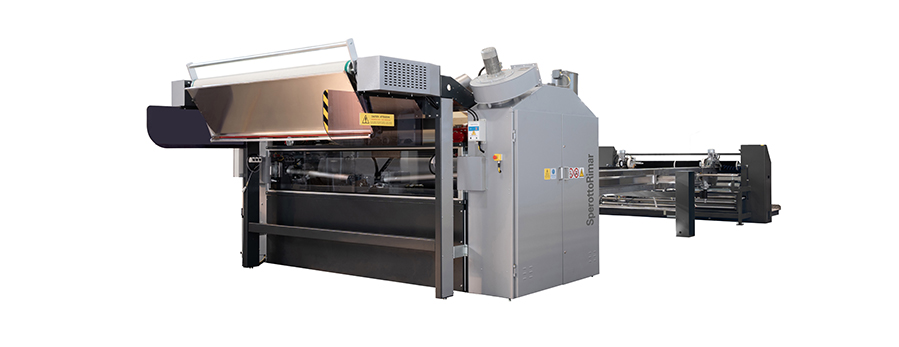
Compas – the compacting revolution © 2023 Santex Rimar
Sustainable compacting with Compas is the environmentally-friendly route to controlled shrinkage. Sperotto Rimar’s revolutionary compacting technology brings unmatched results without adding chemicals.

Compas: maximum effect, minimum environmental footprint

Compas is an open-width compacting and finishing machine for knitted and woven fabrics, which uses a unique compacting concept. This is based on a belt with specific elasticity characteristics, which enhances the fabric compacting process.

Revolutionary and effective

The belt is set to a control level of pre-tension and the fabric contacts the belt at the point when it is at its maximum tension. When the tension is released and the belt returns to its original position, the fabric follows, so that it is compacted lengthwise.

This compacting revolution guarantees optimum compacting capability for both knitted and woven fabrics. Outstanding residual shrinkage values are achieved with all fabric types, including extremely difficult ones such as 100% viscose knitted and woven articles. Finishers are amazed by the natural stretch effect on the fabric warp achievable on 100% wool worsted fabrics and end-users appreciate the silky and smooth touch which has become a recognized feature of Compas.

Compas is compact

The design of the Compas system enables easy handling of all machine operations – especially the tension control applied to the fabrics, which is critical in compacting processes.

During operation, fabrics are warm and somewhat humid and are subject to lengthwise tensions which can severely impact the results. The Compas configuration ensures very short distances between machine elements. Even the pin tenter controlling the fabric width is integrated into the main body of the machine. This minimizes the distance between the point where the fabric leaves the pins and the compacting section, where the lengthwise shrinkage is actually imparted.

The compactness of the machine also limits energy consumption, unlike systems comprised of several separate units where both energy and steam requirements are increased dramatically.


Innovations with an ‘eco-attitude’

The Compas pin tenter has a V-shaped steaming unit which follows the fabric so that steam is applied only where fabric is running. That means the steam is exploited to maximum effect, without wasting energy.

Sperotto Rimar developments are designed to express the company’s stated ‘eco-attitude’. The sophisticated technology of Compas embodies this policy, by empowering more sustainable finishing with a closed-loop cooling circuit to save precious water. Indirect rubber belt cooling enables recycling with totally unpolluted water. This contrasts with conventional compacting machines using standard rubber belt technology, which can consume up to 4 cubic meters of water per hour.

Another plus comes from the fact that water is not sprayed directly onto the compacting belt, avoiding water absorption by fabric being processed. This responsible use of water further underlines the eco-attitude.
More News from Santex Rimar Group

More News on Nonwovens / Technical Textiles

#ITMA Asia + CITME Singapore 2025

ANDRITZ sets focus on textile recycling and durable nonwoven production technologies at ITMA Asia 2025

International technology Group ANDRITZ will be presenting its innovative nonwovens production and textile solutions at ITMA ASIA + CITME 2025 in Singapore, from October 28 to 31, 2025 (Hall 2, D106). ANDRITZ will showcase its MMCF production plants, textile sorting and recycling, bast fiber processing, needlepunch, airlay, and life-cycle service technologies, with a focus on sustainable solutions. Discover how these innovations can grow your business opportunities and support a greener future.

#ITMA Asia + CITME Singapore 2025

Dilo Group at ITMA ASIA Singapore 2025

At ITMA ASIA Singapore, the Dilo Group will exhibit at Booth No. H2 – D202. Together with Kansan Materials, Izmir, the company will present its latest developments and looks forward to welcoming visitors to exchange ideas and explore innovations in needling technology.

#Nonwovens

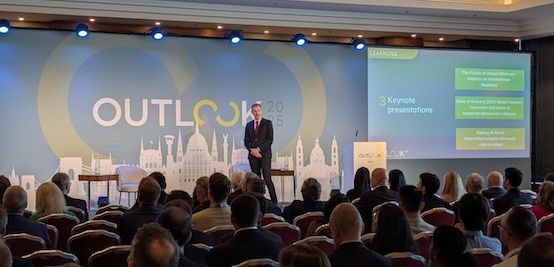
OUTLOOK™ 2025: Charting a sustainable and innovative future for the Nonwovens Industry

EDANA concluded its flagship event, OUTLOOK™ 2025, last week, marking it as a major success and addressing the biggest questions facing the industry. The three-day conference highlighted the urgent need for a unified approach to sustainability, regulation, and innovation in the absorbent hygiene and wipes sectors.

#Nonwovens

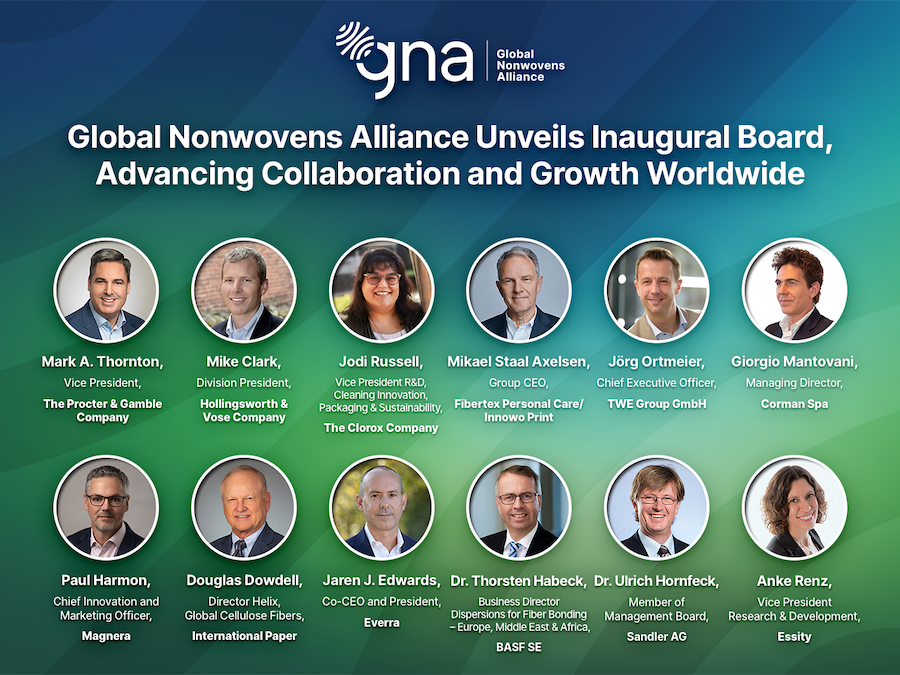
Global Nonwovens Alliance unveils Inaugural Board, advancing collaboration and growth worldwide

The Global Nonwovens Alliance (GNA), a tax-exempt federation jointly founded by INDA, the Association of the Nonwoven Fabrics Industry, and EDANA, the Voice of Nonwovens, announces the appointment of its founding Board of Directors. This group of leaders represents some of the most influential executives across the nonwovens value chain and reflects GNA’s mission to foster global collaboration, innovation, and growth in the industry.

Latest News

#Sustainability

Ying McGuire becomes new CEO of Cascale

Cascale today announced the appointment of Ying McGuire as Chief Executive Officer, effective June 1, 2026.

#Technical Textiles

Sustainable, lightweight, and sound absorbing: Polyester-based front trunk solution for BEVs

As car manufacturers look to further reduce their carbon footprint, Autoneum has developed an innovative front trunk solution for battery electric vehicles (BEVs), made entirely from polyester-based textile. The Ultra-Silent Frunk offers significant weight reduction, improved acoustic and thermal insulation, and uses up to 70 percent recycled material, supporting sustainable and efficient vehicle design. Autoneum, global technology leader in acoustic and thermal management for vehicles, has already received orders for the new frunk from three major OEMs in Asia and Europe to be built in three BEV models. Series production for two BEVs has been underway in China and Germany since last year.

#Raw Materials

Modern testing methods for raw cotton

The 38th International Cotton Conference Bremen will take place from 25 to 27 March 2026 at the Bremen Parliament. This conference has traditionally stood for in-depth expertise and international exchange. The program will focus on technical innovations, market trends, and regulatory frameworks across the entire value chain – from agriculture to the circular economy. With high-profile speakers, the conference is regarded as the key meeting point for the global cotton industry. Today’s focus: Cotton quality and testing methods.

#Spinning

Rieter responds to higher raw material prices

Global political and economic developments have been leading to rising raw material and energy costs for some time. The textile machinery industry is also affected by this trend. Rieter machines and components consist to a large extent of steel, copper, aluminum and electronics. These materials in particular have seen higher demand and higher prices in recent months.

TOP