[pageLogInLogOut]

#ITMA-Asia + CITME-2016

Respected solutions for spinning synthetic fibres and blends

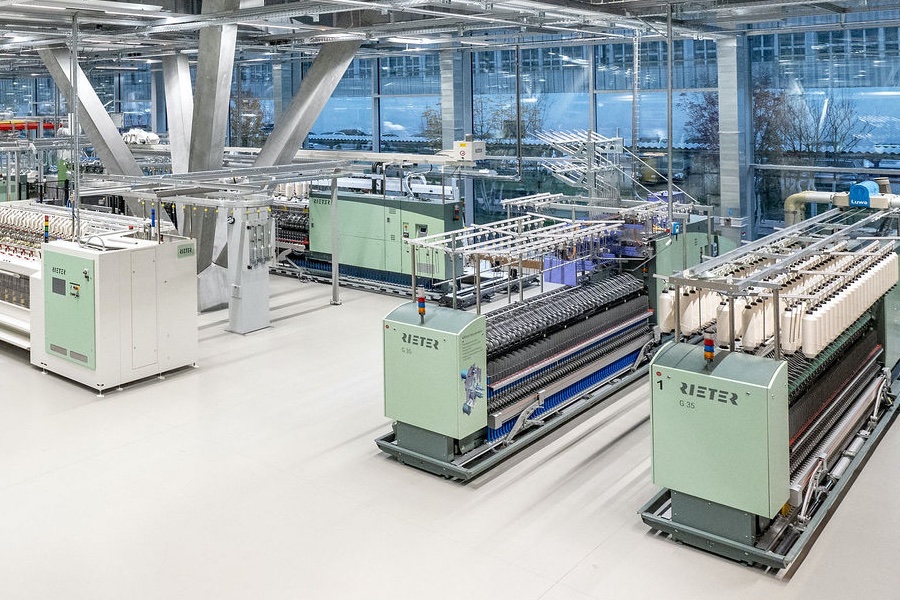
Textiles made of synthetic fibres and blends have a large share of the Chinese market. Consequently, solutions for processing these base materials are in high demand. At the textile machinery trade fair ITMA Asia 2016 in Shanghai (21-25 October) Rieter therefore shone the spotlight on relevant offerings. The company showed their products and service innovations for complete systems, spinning preparation and the end spinning process under the Rieter, Bräcker, Graf, Novibra and Suessen brands.
Rieter gave visitors to the exhibition information about the comprehensive portfolio of the after sales services, about components for the economic manufacture of high-quality yarns as well as the extended SPIDERweb mill control for the optimal use of the spinning mill.

The solutions presented made a big impact on trade fair visitors. In particular, the new single-head RSB-D 50 draw frame generation, which offers hitherto unattained productivity combined with the highest quality, struck a chord. It enables up to 33 % higher delivery speed with significantly lower energy consumption.

The J 26 air-jet spinning machine, which is a much-improved version of the previous model and debuted for the first time in China, also enjoyed greater attention. This machine is offered as a solution for processing viscose, combed cotton and blends. It enables a wide range of yarn to be produced economically.

Numerous people from China, neighbouring Asiatic countries and other markets visited the Rieter stand. We at Rieter were able to conduct many interesting and fruitful conversations with our guests. We would like to tender our heartfelt thanks to our customers and everyone who visited Rieter at ITMA 2016.  
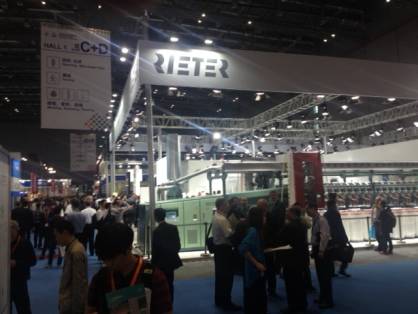
Pic: Rieter trade fair booth

More News from Rieter Textile Systems

#Spinning

Rieter advances strategic repositioning amid market volatility

Rieter successfully completed the acquisition of Barmag on February 2, 2026, and reached an important milestone in the company’s repositioning. Barmag will be integrated into the Rieter Group as the “Man-Made Fiber” Division. With this strategically transformative acquisition, Rieter is expanding its core business beyond the short-staple fiber business in a targeted way. This positions Rieter as the global market leader along the entire value chain for natural and man-made fibers. In addition, as a complete systems supplier, Rieter is further strengthening its technological leadership in the areas of automation and digitization.

#Spinning

Rieter responds to higher raw material prices

Global political and economic developments have been leading to rising raw material and energy costs for some time. The textile machinery industry is also affected by this trend. Rieter machines and components consist to a large extent of steel, copper, aluminum and electronics. These materials in particular have seen higher demand and higher prices in recent months.

#Spinning

Rieter completes acquisition of Barmag

Rieter has successfully completed the acquisition of Barmag as of February 2, 2026. This strategically important acquisition makes Rieter the world’s leading system provider for natural and synthetic fibers.

#Spinning

Rieter adjusts group structure in preparation for Barmag integration

The planned acquisition of the “Barmag” Division of OC Oerlikon will create the leading system provider worldwide for natural and man-made fibers. Rieter is confident it will receive all regulatory approvals to complete the acquisition in the fourth quarter of 2025. The Rieter Group is therefore adjusting its Group structure as of January 1, 2026, to take this acquisition into account and to be able to provide an even more agile response to market challenges.

More News on ITMA-Asia + CITME-2016

Latest News

#Raw Materials

New study shows low environmental impact by Cotton made in Africa Organic Cotton from Tanzania

Today, the Aid by Trade Foundation (AbTF) is announcing the results of a comprehensive life-cycle analysis (LCA) for cotton produced in Tanzania under the Cotton made in Africa Organic (CmiA Organic) standard. The study emphasises the small ecological footprint of CmiA Organic verified cotton. This can largely be traced back to the absence of synthetic pesticides, artificial fertilisers, and artificial irrigation. Consequently, CmiA Organic cotton can help the textile industry meet regulatory requirements as well as science-based targets. The results also show that the consequences of climate change threaten the livelihoods of these cotton farmers, even though the type of agriculture they practise barely contributes to climate change.

#Raw Materials

Better Cotton Initiative strengthens regenerative focus in standard update

The Better Cotton Initiative (BCI) has strengthened the regenerative focus of its field-level standard with the launch of a new version of its Principles & Criteria (P&C), which marks the next step in the organisation’s journey to becoming a regenerative standards system.

#Man-Made Fibers

Selenis and Kintra Fibers partner to scale 100% bio-based synthetic fiber technology

Selenis, a leading global specialty polyester manufacturer, today announced a strategic manufacturing partnership with materials science company Kintra Fibers to scale Kintra’s patented fiber-grade PBS resin - a 100% bio-based and biodegradable material designed for textile applications.

#Functional Fabrics

PERFORMANCE DAYS proves its relevance as the industry’s key meeting point

Held on March 18–19, 2026, PERFORMANCE DAYS once again confirmed its position as a leading international platform for functional textiles. A total of 3.366 trade visitors and around 560 exhibitors gathered in Munich, with the event already kicking off successfully on DAY 0, which received highly positive feedback for its interactive format. Despite challenging conditions caused by the public transport strike in Munich, the event saw strong attendance and a consistently high level of activity across both exhibition days.

TOP