[pageLogInLogOut]

#ITMA-Asia + CITME-2016

Reiners + Fürst presents its premium rings and travellers 'Made in Germany' at ITMA Asia 2016

Mr. Benjamin Reiners, Owner and Managing Director of R+F (c) 2016 R+F
At ITMA Asia + CITME 2016 in Shanghai Reiners + Fürst will present new travellers for Siro-Compact with optimized geometry and new surface characteristics. The end-users benefit from low yarn hairiness and longer traveller service life.
Customers in China prefer the latest generation of TURBO rings especially for Compact and Siro yarns. During ITMA in Milan R+F introduced this further milestone in high speed spinning. Already more than 2.5 Mio. units are running successfully in the markets. The enhanced surface allows increasing machine efficiencies by up to 10% – especially when producing yarns of sensitive fibres or with highest spindle speeds. For worsted spinning R+F introduces J-travellers for ring heights of 9.1 and 11.1 mm with enhanced surface for better performance of the spinning process. Different shapes are available for top results in the whole range of worsted spinning. For the processing of fibre glass R+F shows the latest series of horizontal travellers for twisting of fine fibre glass filaments for ring heights of 9.5 and 4.8 mm. Customers especially value the professional service and support R+F is providing particularly for finding solutions of increasingly complex applications. Visitors are invited to stop by at R+F’s booth at ITMA Asia + CITME in Shanghai: Hall H1, Stand B 30
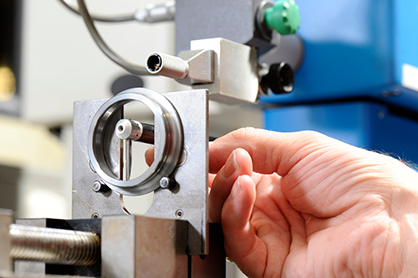
Pic: R+F spinning rings in the production process
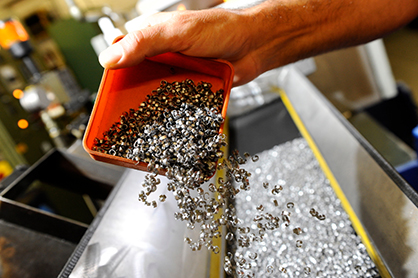
Pic: R+F ring travellers in the production process

More News from Reiners + Fürst GmbH u. Co. KG

More News on ITMA-Asia + CITME-2016

Latest News

#Techtextil 2026

AI, Start-ups, Research: Techtextil and Texprocess bring together players in the textile industry

From start-ups to universities and research institutes: at Techtextil and Texprocess, the world’s leading innovation trade fairs in Frankfurt am Main, exhibitors present future-oriented concepts for the global textile industry. With the international Campus & Research area, a strong participation from start-ups and the latest AI applications for textile processing, both trade fairs showcase current developments in the textile industry. By bringing together innovation, research and application, they enable new partnerships across the textile value chain.

#Techtextil 2026

IVGT joint stand brings innovation and networking to Techtextil 2026

At Techtextil 2026 and the parallel Texprocess 2026, key transformation topics such as artificial intelligence, digitalisation, sustainability, recycling and the circular economy will be reflected across the show. Against this backdrop, the IVGT, together with 16 member companies, will present its joint stand in Hall 12.1 (Stand D62) as a platform for exchange and networking.

#Man-Made Fibers

Indorama Ventures supports Southeast Asia’s textile customers with reliable regional supply and global innovative portfolio

Indorama Ventures, one of the leading global polyester fiber and filament yarn suppliers globally, will participate in Indo Intertex 2026 in Jakarta this April, making its diverse global portfolio available to apparel, home textile, and hygiene customers across Southeast Asia.

#Raw Materials

New study shows low environmental impact by Cotton made in Africa Organic Cotton from Tanzania

Today, the Aid by Trade Foundation (AbTF) is announcing the results of a comprehensive life-cycle analysis (LCA) for cotton produced in Tanzania under the Cotton made in Africa Organic (CmiA Organic) standard. The study emphasises the small ecological footprint of CmiA Organic verified cotton. This can largely be traced back to the absence of synthetic pesticides, artificial fertilisers, and artificial irrigation. Consequently, CmiA Organic cotton can help the textile industry meet regulatory requirements as well as science-based targets. The results also show that the consequences of climate change threaten the livelihoods of these cotton farmers, even though the type of agriculture they practise barely contributes to climate change.

TOP


