[pageLogInLogOut]

#Europe

The Digital Product Passport registry is now live

Marking an important milestone in making the DPP a practical reality for businesses
Regulation (EU) 2024/1781 of the European Parliament and of the Council of 13 June 2024 establishing a framework for the setting of ecodesign requirements for sustainable products, amending Directive (EU) 2020/1828 and Regulation (EU) 2023/1542 and repealing Directive 2009/125/EC (Text with EEA relevance), OJ L, 2024/1781, 28.6.2024 © 2026 TexData International / based on AI
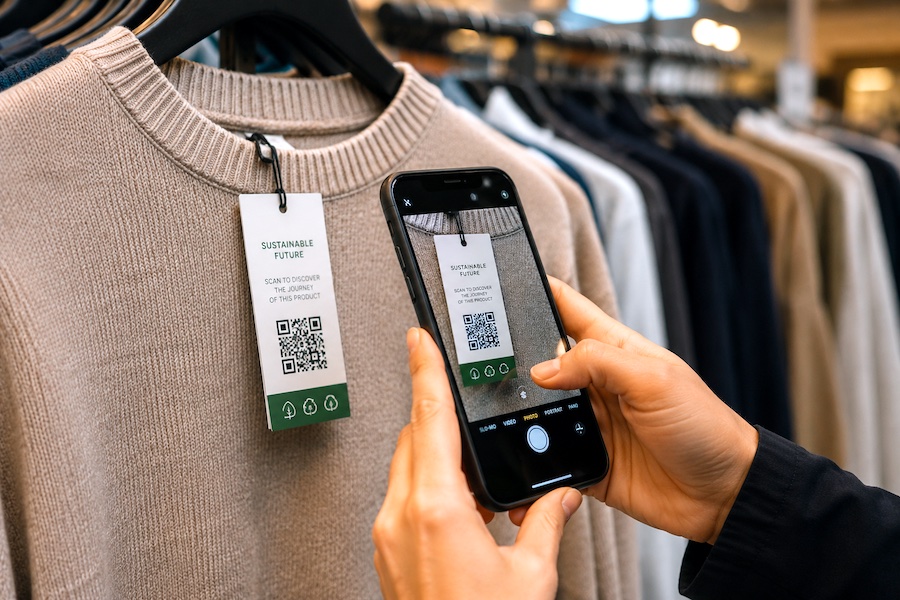
On 20 July, the European Commission launched the Digital Product Passport Registry together with a testing environment, marking an important milestone in making the Digital Product Passport (DPP) a practical reality for businesses placing products on the EU market.


Established under the Ecodesign for Sustainable Products Regulation (EU) 2024/1781, the Digital Product Passport is a digital container of product information designed to strengthen supply chain transparency, support more informed consumer choices and facilitate compliance across the Single Market. While product data is stored in a decentralised manner, economic operators must register each Digital Product Passport in the Registry, which provides the secure infrastructure needed to register unique product identifiers and associated metadata.

This milestone follows the adoption of the Implementing Regulation establishing the practical arrangements for the Registry, bringing an essential component of the Digital Product Passport system into operation.

The Registry will support products covered by the Ecodesign for Sustainable Products Regulation, including textiles, steel and aluminium, tyres, furniture, ICT products and energy-related products. It will also support product groups covered by other Union legislation requiring Digital Product Passport registration, including certain large batteries, construction products, toys, detergents, and end-user surfactants.

Clear rules for implementation

The Implementing Regulation establishes

  • clear rules for access management and user verification;
  • requirements for the registration and storage of the necessary data;
  • the technical architecture of the Registry.

Registration is available through either a secure user interface or an application programming interface (API), enabling economic operators to integrate registration into their existing digital systems where appropriate.

Economic operators can also request proof of registration in the form of a secure electronic document. This can be used to demonstrate compliance with third parties, particularly in business-to-business (B2B) transactions.

The Implementing Regulation also clarifies the respective responsibilities of the European Commission and EU countries, helping to ensure legal certainty, predictability and trust.

Designed for usability, interoperability and trust

Responding to feedback from EU countries and stakeholders, the Registry has been designed with a strong focus on usability, interoperability, and trust. Businesses will have access to a free semantic repository providing machine-readable data models, definitions and vocabulary across product groups through documented APIs. This will support interoperability, facilitate data management, and help reduce administrative burden as the Digital Product Passport is rolled out across different sectors. The Registry also includes a verification framework and logging system that strengthens security, accountability and reliable access management.

The Digital Product Passport is a key enabler of the circular economy, a more transparent Single Market and more informed consumer choices. By putting the operational foundations of the Registry in place, the Commission is making it easier for economic operators to register product information, demonstrate compliance, and exchange reliable, interoperable data across the Single Market.

Publication of the six : standards

In parallel, and to facilitate the creation of Digital Product Passports and complement the Registry, eight harmonised standards underpinning the interoperability of the : system have been developed in close cooperation with the CEN-CENELEC. Six of these standards, covering unique identifiers, interoperability, data carriers, APIs, data exchange protocols and data storage, are already available and published by the national standardisation organisations. References to the harmonised parts of these standards are already published by the European Commission.

Resources now available to support implementation

The Commission will continue to support implementation and ensure that the Registry is accessible, secure and effective for all users. The current testing phase will help ensure a smooth rollout ahead of the first implementation deadline on 18 February 2027 for certain types of large batteries.

Economic operators can now access the testing environment, technical documentation, implementation guidelines, webinars, and the latest information through the new : website. A dedicated helpdesk is also available to support businesses throughout the registration process.

Learn more:

The Digital Product Passports Registry


More News from European Commission

#Europe

EU ban on destroying unsold clothing and footwear now in force

The European Union's ban on the destruction of unsold clothing, clothing accessories and footwear has entered into force. Since July 19, 2026, large companies across the EU have been prohibited from destroying unsold textile products, while medium-sized companies will be required to comply with the same rules from 2030.

#Recycling / Circular Economy

Commission clarifies rules on plastic bottles recycling

The European Commission today adopted new rules on recycling of single-use plastic beverage bottles made primarily of polyethylene terephthalate (PET bottles). These rules establish, for the first time, a methodology to calculate, verify and report chemically recycled content. This is part of the Commission’s December 2025 plastics package.

#Europe

EU and Australia strengthen relations with Security and Defence Partnership and Trade Agreement

The EU and Australia have today announced the adoption of a groundbreaking Security and Defence Partnership. They have also concluded negotiations for an ambitious and balanced free trade agreement (FTA) and agreed to launch formal negotiations for the association of Australia to Horizon Europe, the world's largest funding programme for research and innovation. With these steps, the EU and Australia are delivering mutually beneficial outcomes and further reinforcing their already close relations in a time of geopolitical uncertainty.

#Europe

Commission presents proposal for EU Inc. - unlocking the full potential of the Single Market for Europe's entrepreneurs

Today, the European Commission presented its proposal for EU Inc., a new single set of corporate rules, building the cornerstone and starting point for the EU's 28th regime. EU Inc. is an optional, digital-by-default European corporate framework. It will make it easier for businesses to start, operate and grow across the EU – incentivising them to stay in Europe, and encourage those who once looked elsewhere to return.

More News on Europe

#Europe

Circular economy offers the EU win-win on environment and economy

Stepping up a circular economy offers the European Union the potential for significant positive impacts on Europe’s environment and poses an untapped and strategic economic opportunity in terms of better access to materials and the creation of new businesses. Three new assessments on circularity, published today by the European Environment Agency (EEA), also stress the need to accelerate investment in circularity efforts to meet EU climate and environment policy targets.

#Associations

European Business Coalition welcomes provisional application of EU–Mercosur Agreement and calls for Swift and full implementation

With the European Commission’s decision to provisionally apply the EU–Mercosur Interim Trade Agreement, a process spanning more than 25 years now moves decisively into its implementation phase.

#Europe

Antwerp Declaration community urges EU leaders to deliver emergency measures as Europe’s competitiveness crisis deepens

EURATEX, representing the European textile and fashion industry, joins the Antwerp Declaration Community’s call on EU Heads of State and Government to adopt emergency measures that restore industrial competitiveness and deliver tangible results for Europe’s manufacturing base in 2026.

#Europe

New EU rules to stop the destruction of unsold clothes and shoes

The European Commission today (Feb 9) adopted new measures under the Ecodesign for Sustainable Products Regulation (ESPR) to prevent the destruction of unsold apparel, clothing, accessories and footwear.

Latest News

#Recycled Fibers

Eastman Naia™ brings its inside-out denim vision to Kingpins New York

Following its debut at Kingpins Amsterdam, Eastman Naia™ brings the next chapter of its denim story to Kingpins New York, taking place July 22–23. At Booth Green 7, Naia™ presents its denim proposition built around three complementary design directions: Performance Denim, Fashion Denim and Authentic Denim.

#Recycling / Circular Economy

Pirelli, Pyrum, Synthos and BASF partner to transform end‑of‑life and scrap tyres into recycled materials for new products

Pirelli, Pyrum, Synthos and BASF are jointly advancing a tyre-to-tyre circular economy initiative in Europe, driving the development of an industrial ecosystem designed to increase the use of recycled materials derived from end-of-life and scrap tyres.

#Recycling / Circular Economy

Recover™ showcases textile recycling to European ambassadors in Bangladesh

Representatives of the European Union, the Netherlands and Spain have visited Recover™’s textile recycling facility in Bangladesh to discuss the implications of upcoming EU textile regulations and the role of textile-to-textile recycling in future supply chains.

#Dyeing, Drying, Finishing

Contactless measurement of coating for Technical Textiles with PLEVA AF 310 and AF 120

Textiles used for protection and defense must perform reliably – whether they are protective garments, tents, tarpaulins, covers, or technical carrier materials. Properties such as flame resistance, water repellency, weather resistance, or defined air permeability are often only achieved through precise coating, finishing, or printing processes.

TOP