[pageLogInLogOut]

#Recycling / Circular Economy

Commission clarifies rules on plastic bottles recycling

The new rules include chemical and mechanical recycling technologies to help Member States meet the recycled-content target set under the Single-Use Plastics Directive
© 2026 European Commission
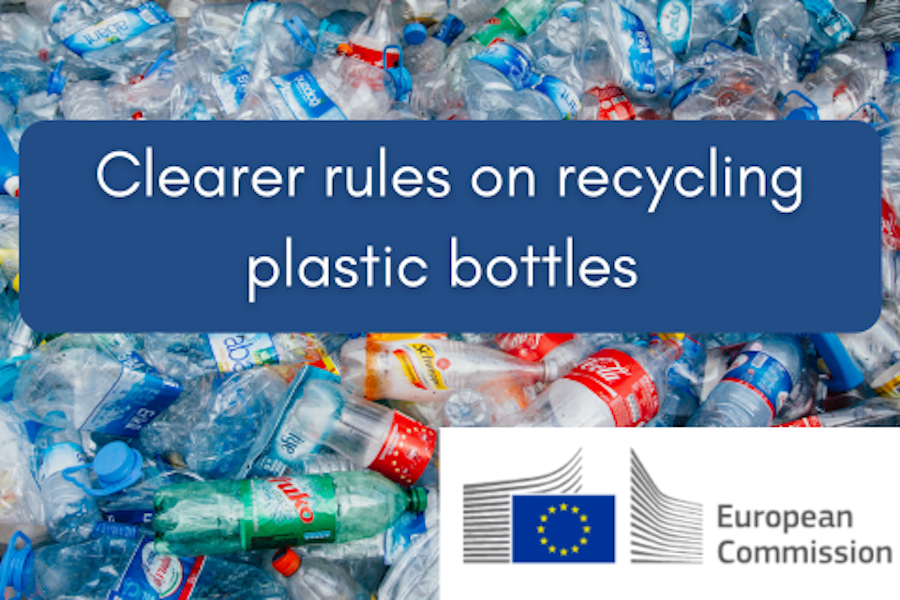
The European Commission today adopted new rules on recycling of single-use plastic beverage bottles made primarily of polyethylene terephthalate (PET bottles). These rules establish, for the first time, a methodology to calculate, verify and report chemically recycled content. This is part of the Commission’s December 2025 plastics package.


The new rules will ensure transparency in calculating recycled content in new single-use PET bottles. This is key to creating a level playing field and providing investment security for the plastic recycling sector. The new rules can be applied to any recycling technology, including chemical and mechanical recycling technologies. This will help Member States meet the recycled-content target set under the Single-Use Plastics Directive.

Mechanical recycling is currently the most widely used method for recycling plastics. This is typically used to sort, clean, shred and remold plastics into new products. However, some plastic waste streams cannot be effectively recycled mechanically. This includes for example plastic waste with food residues, additives and mixed materials which reduce recyclability. In these cases, chemical recycling can complement mechanical recycling. In contrast to mechanical recycling, chemical recycling breaks down plastics into smaller molecules, which can be reused for feedstocks for new plastics or other chemicals. This helps to return more plastic waste streams to the circular economy, including for products that have to meet high-quality standards like food-contact packaging.

In a first phase, the EU will count as recycled plastics material from the Union and EEA countries, where compliance with EU environmental rules can be fully verified. From 21 November 2027, recycled plastic from OECD countries will also count, unless excluded under the Waste Shipment Regulation. Also material from non-OECD countries will count when covered by arrangements ensuring equivalent standards related to human health and environmental protection requirements, for example in the Waste Framework Directive and the Packaging and Packaging Waste Regulation.

Recycled content is counted towards EU targets based on credible, traceable and environmentally sound standards.

Next steps

The Implementing Act will be published in the Official Journal shortly and will enter into force 20 days later.

More News from European Commission

#Europe

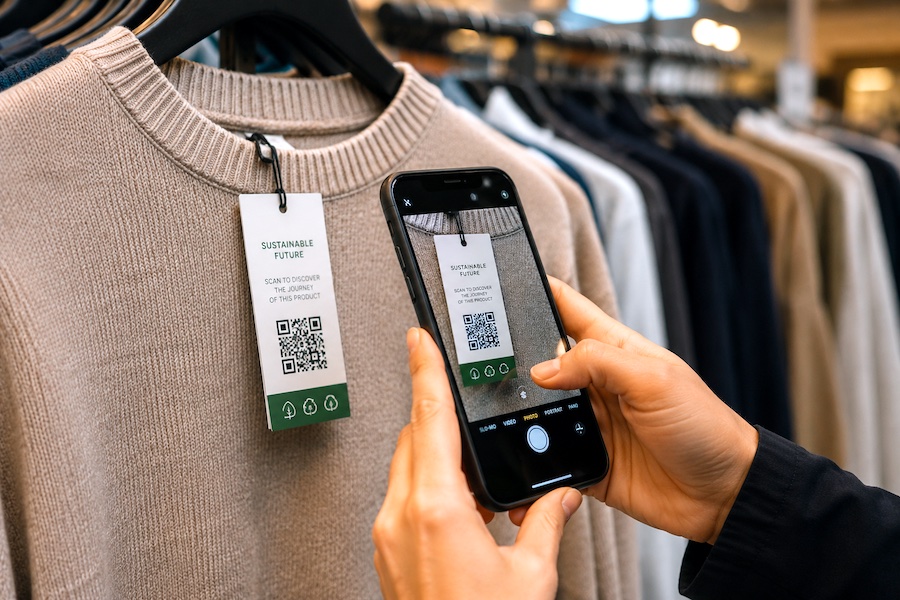
The Digital Product Passport registry is now live

On 20 July, the European Commission launched the Digital Product Passport Registry together with a testing environment, marking an important milestone in making the Digital Product Passport (DPP) a practical reality for businesses placing products on the EU market.

#Europe

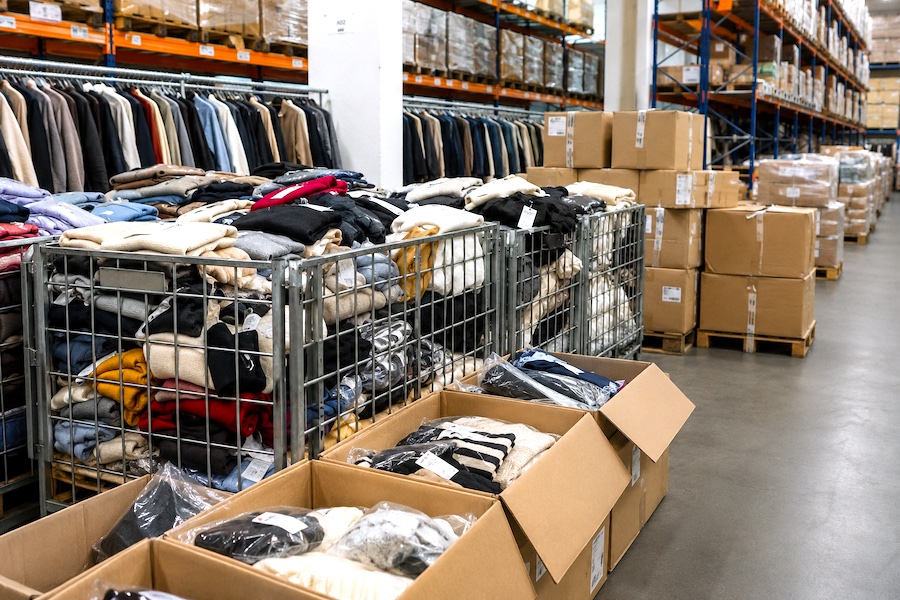
EU ban on destroying unsold clothing and footwear now in force

The European Union's ban on the destruction of unsold clothing, clothing accessories and footwear has entered into force. Since July 19, 2026, large companies across the EU have been prohibited from destroying unsold textile products, while medium-sized companies will be required to comply with the same rules from 2030.

#Europe

EU and Australia strengthen relations with Security and Defence Partnership and Trade Agreement

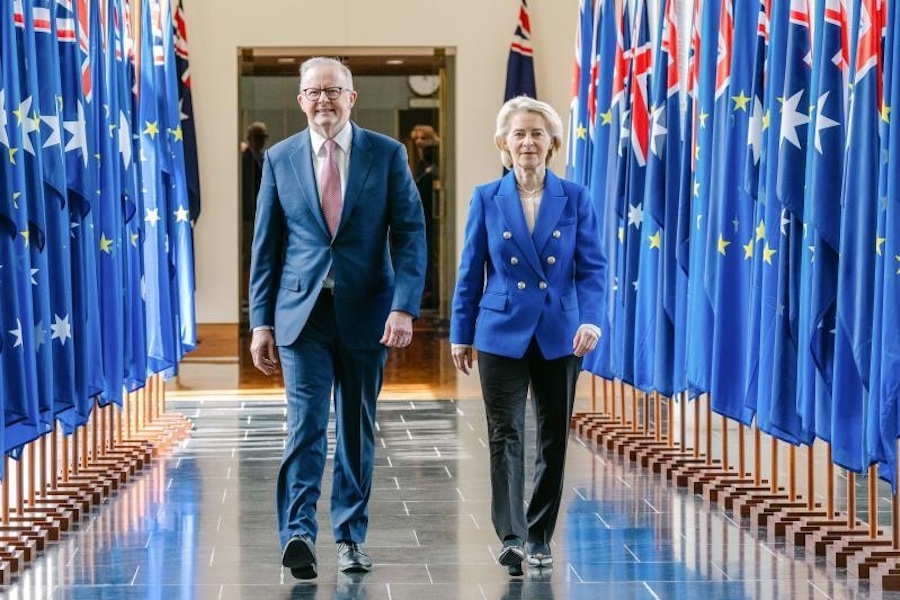
The EU and Australia have today announced the adoption of a groundbreaking Security and Defence Partnership. They have also concluded negotiations for an ambitious and balanced free trade agreement (FTA) and agreed to launch formal negotiations for the association of Australia to Horizon Europe, the world's largest funding programme for research and innovation. With these steps, the EU and Australia are delivering mutually beneficial outcomes and further reinforcing their already close relations in a time of geopolitical uncertainty.

#Europe

Commission presents proposal for EU Inc. - unlocking the full potential of the Single Market for Europe's entrepreneurs

Today, the European Commission presented its proposal for EU Inc., a new single set of corporate rules, building the cornerstone and starting point for the EU's 28th regime. EU Inc. is an optional, digital-by-default European corporate framework. It will make it easier for businesses to start, operate and grow across the EU – incentivising them to stay in Europe, and encourage those who once looked elsewhere to return.

More News on Recycling / Circular Economy

#Recycling / Circular Economy

Indorama Ventures advances circularity tthrough PETValue Philippines' “Zero Waste to Landfill Partnership” with Republic Cement

Indorama Ventures Public Company Limited, a global sustainable chemical company, is advancing the circular economy through a new Zero Waste to Landfill initiative at its recycling site PETValue Philippines, further demonstrating how collaboration across industries can maximize resource efficiency and reduce waste.

#Research & Development

Networking Day 2026: Industry stakeholders unite around textile recycling

In 2026, the Industry Research Group (IRG) Polymer Recycling once again brought together some of the key stakeholders in textile recycling for its annual Networking Day. This year, the event took place at EREMA’s premises in Ansfelden, Austria. It brought together key players from across the textile recycling value chain for a day of structured exchange and in-depth discussions.

#Recycling / Circular Economy

Circ launches first denim collection with H&M featuring TENCEL™ | Circ® with REFIBRA™ technology

Circ today announced that the first men's denim collection featuring TENCEL™ | Circ® with REFIBRA™ technology is now available at H&M, marking the commercial delivery of this unique pilot project first announced in October 2025. Featuring two styles available across the UK, Scandinavia, Central Europe, Eastern Europe, South Europe, Turkey, North America, Mexico, Canada, and the Middle East, the launch brings TENCEL™ | Circ® with REFIBRA™ technology into H&M's standard men's denim assortment for the first time.

#Recycling / Circular Economy

ReSpin joins TMAS to advance textile recycling technology

Swedish textile recycling company ReSpin has joined the Textile Machinery Association of Sweden (TMAS) as a new member. The company develops a patented mechanical recycling technology designed to transform textile waste into new fibres suitable for yarn production.

Latest News

#Man-Made Fibers

Ministry of Industry Delegation visits NatureWorks’ second global manufacturing site at Nakhon Sawan Biocomplex

NatureWorks Asia Pacific Limited welcomed a high-level delegation led by Mr. Varawut Silpa-archa, Minister of Industry, to its manufacturing site at the Nakhon Sawan Biocomplex (NBC). The visit follows the successful inauguration of the site on April 29, 2026, and highlights the role of public-private collaboration in advancing Thailand’s sustainable industrial development and bioeconomy ambitions.

#Associations

IVGT membership: expertise that pays off

For energy-intensive textile companies, government compensation mechanisms are an important economic factor. The IVGT successfully supports its member companies in applying for state aid and thereby regularly contributes to significant financial relief.

#Knitting & Hosiery

The new RDJ 7/3 defines the design footprint of modern athletic shoes

Stylish, functional, and efficient to produce – spacer fabrics are the all-arounders among textile materials. These versatile fabrics are particularly in demand in the sports and casual footwear sector, as they combine comfort, breathability, and design freedom. At the same time, this industry is trend-driven, dynamic, and price-sensitive like few others. Innovations are therefore a decisive factor for success. With the RDJ 7/3, KARL MAYER offers a solution specifically tailored to these requirements. The particular strength of the new double raschel machine: its exceptional flexibility, thanks to its three jacquard bars.

#Research & Development

Smart textiles reversibly change shape in an energy-efficient manner in response to ambient temperature

Self-actuating textile structures are used in a wide range of applications, such as medical technology, automation, architecture, agriculture, and the apparel industry. An example is the use of shading nets in greenhouses, which can be deployed and retracted depending on the sunlight intensity. The German Institutes of Textile and Fiber Research Denkendorf (DITF) are developing textiles based on shape-memory polymers with reversibly controllable geometry.

TOP