[pageLogInLogOut]

#Associations

European and Canadian textile associations call for stronger transatlantic cooperation

Ahead of the EU–Canada Summit in Montréal on 29–30 October 2026, EURATEX, the Canadian Textile Industry Association (CTIA) and the Canadian Apparel Federation (CAF) have issued a joint statement calling for closer industrial cooperation, improved implementation of the CETA trade agreement and stronger partnerships in innovation, sustainability and advanced textile technologies.


The three associations welcome closer cooperation between the European Union and Canada, highlighting the textile and apparel industry's potential to strengthen transatlantic economic relations. As an important part of advanced manufacturing in both regions, the sector offers opportunities for expanding trade, developing industrial partnerships and improving supply chain resilience.

Textile trade between the EU and Canada continues to grow

The Comprehensive Economic and Trade Agreement (CETA), provisionally applied since September 2017, has established a foundation for bilateral trade.

EU exports of textiles and clothing to Canada approached €997 million in 2025, while imports from Canada totalled €147 million. During the first six months of 2026, EU textile and apparel exports to Canada reached €702 million, representing an increase of 5.7% compared with the same period in 2025.

According to the associations, these figures demonstrate the potential for further growth along the textile and apparel value chain.

For Canadian manufacturers, the European market provides opportunities to expand exports, establish new commercial relationships and diversify beyond traditional markets. Canada's textile and apparel industry has particular expertise in technical textiles, advanced materials and specialised products for defence, healthcare, transportation, construction and other industrial applications.

Industry associations call for better utilisation of CETA

EURATEX, CTIA and CAF emphasise that further efforts are needed to enable companies, particularly small and medium-sized enterprises (SMEs), to benefit fully from CETA.

The associations encourage EU Member States that have not yet ratified the agreement to complete their national procedures, allowing CETA to enter fully into force and providing greater long-term stability for textile and apparel businesses

According to the European Commission, the overall preference utilisation rate for EU exports to Canada increased from 38.7% in 2018 to 63.2% in 2024. Despite this progress, a considerable proportion of eligible exporters are still not taking advantage of available tariff preferences.

The associations therefore call for clearer information, practical guidance and simplified procedures to help SMEs make better use of the agreement.

They also stress the importance of ensuring that Canadian manufacturers can fully benefit from access to the European market. Greater awareness of tariff preferences and stronger business connections could help unlock additional opportunities on both sides of the Atlantic.

Building on existing industry partnerships

Cooperation between the European and Canadian textile industries has already intensified.

In April 2026, EURATEX signed complementary joint policy statements with CAF at Première Vision Montréal and with CTIA at Techtextil Frankfurt.

These agreements established a framework for closer industry dialogue, stronger business relationships and cooperation on sustainability and innovation.

The resulting EU–Canada Textile and Apparel Dialogue provides a platform for translating shared priorities into concrete initiatives, facilitating business-to-business partnerships and strengthening cooperation between manufacturers.

Technical textiles, circularity and innovation as priorities

Looking ahead, the three associations support joint research and industrial partnerships in technical textiles, advanced materials, circularity and recycling technologies.

These areas are considered important for strengthening industrial competitiveness, developing innovative solutions and creating additional value throughout the textile and apparel supply chain.

EURATEX, CTIA and CAF also advocate more coherent approaches to traceability, eco-design and digital product information.

Closer regulatory cooperation, including the alignment of technical requirements and, where appropriate, mutual recognition of standards, could reduce unnecessary administrative burdens, particularly for SMEs.

The associations emphasise that regulatory frameworks should support innovation, investment and industrial competitiveness to maintain a strong manufacturing base in both Canada and Europe.

Strengthening transatlantic supply chains

Against the backdrop of global trade uncertainty, EURATEX, CTIA and CAF underline the importance of open, rules-based trade and resilient, diversified supply chains.

They call on European and Canadian leaders to use the EU–Canada Summit to strengthen CETA implementation, facilitate business-to-business connections, support joint industrial projects and promote innovation.

The three associations reaffirm their willingness to work with governments and industry partners to translate these objectives into concrete opportunities for manufacturers and reinforce the competitiveness, resilience and sustainability of the transatlantic textile and apparel industry.


More News from European Apparel and Textile Confederation (EURATEX)

#Associations

EU and Mercosur textile industries launch new Textile and Apparel Dialogue

EURATEX, ABIT and FITA have launched the EU–Mercosur Textile and Apparel Dialogue (TAD), a new industry platform aimed at strengthening cooperation between the European and Mercosur textile and apparel sectors.

#Associations

EURATEX urges Member States to prioritise competitiveness in the next EU budget

Ahead of crucial discussions among EU Member States on the next Multiannual Financial Framework (MFF) for 2028–2034, EURATEX, the European Apparel and Textile Confederation, calls on European leaders to safeguard ambitious funding for industrial competitiveness and ensure that these resources translate into concrete investment support in European companies.

#Associations

EURATEX calls for urgent action on industrial competitiveness

EURATEX, the European Apparel and Textile Confederation, welcomes today’s State of the Union Address by European Commission President, Ursula von der Leyen, and in particular her recognition of Europe’s need to rebalance unfair trade, cut red tape, and strengthen its industrial and strategic autonomy.

#Europe

European textile industry calls for €10 handling fee on ultra-fast-fashion imports

The introduction of the €3 customs duty on low-value imports marks an important milestone in Europe’s efforts to address the challenges created by the rapid growth of ultra-fast-fashion imports. Together with the abolition of the €150 customs duty exemption, it demonstrates that policymakers are willing to act when market distortions become impossible to ignore. However, the European textile and clothing industry considers this a first step rather than the final destination.

More News on Associations

#Associations

China and India: Different market dynamics create opportunities for Swiss textile machinery

Ahead of ITMA Asia + CITME in Shanghai and India ITME in Greater Noida, Swiss Textile Machinery highlights the contrasting industrial structures, investment priorities and technological requirements of two of the world's most important textile manufacturing markets.

#Associations

Italian textile machinery orders rise 7% in Q3 2026 as export demand strengthens

Order intake for Italian textile machinery manufacturers increased by 7% in the third quarter of 2026 compared with the same period of 2025. Growth was driven by international markets, where orders rose by 8%, while domestic demand remained weak, declining by 4%.

#Associations

Data and skills, not algorithms, hold back AI adoption in textiles, finds ITMF and ITA white paper

The International Textile Manufacturers Federation (ITMF) and the Institut für Textiltechnik of RWTH Aachen University (ITA) have published a new white paper entitled AI in the Textile Value Chain: A Strategic Guide to Artificial Intelligence for the Global Textile Industry. The study concludes that the main barriers to artificial intelligence adoption in the textile and apparel industry are not technological limitations, but poor data integration, skills shortages and gaps in governance. According to the authors, further progress will depend on coordinated efforts to develop capabilities across the industry.

#Associations

Brazil: The Italian textile and textile-machinery sector takes centre stage at two workshops

From 19 to 24 October 2026, Brazil will host a mission showcasing Italian excellence in the textile and textile machinery sectors, with two workshops scheduled for 20 October in the state of Santa Catarina and 22 October in São Paulo. The initiative will bring together Italian companies specialising in textile machinery, yarns, fabrics and clothing accessories, with the aim of strengthening commercial and industrial ties between the two countries and opening up new opportunities for collaboration.

Latest News

#Digital Printing

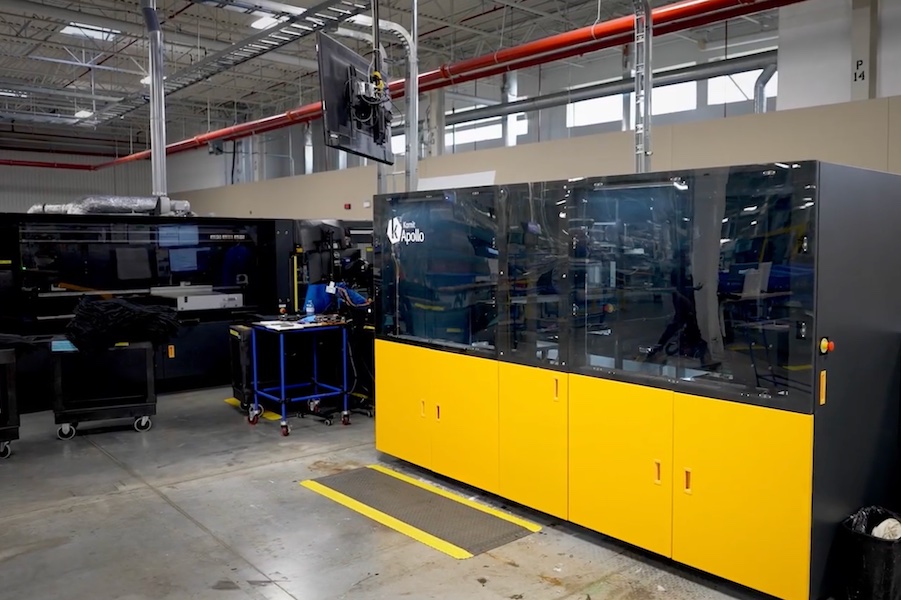
VistaPrint increases apparel production capacity with Kornit Apollo

Kornit Digital (NASDAQ: KRNT), a provider of on-demand digital textile production technologies, reports that VistaPrint has significantly increased its apparel production capacity through the implementation of the Kornit Apollo system. The installation has enabled the international print and design company to add approximately 25,000 units of weekly production capacity while improving production speed, operational efficiency and order turnaround times.

#ITMA Asia + CITME 2026

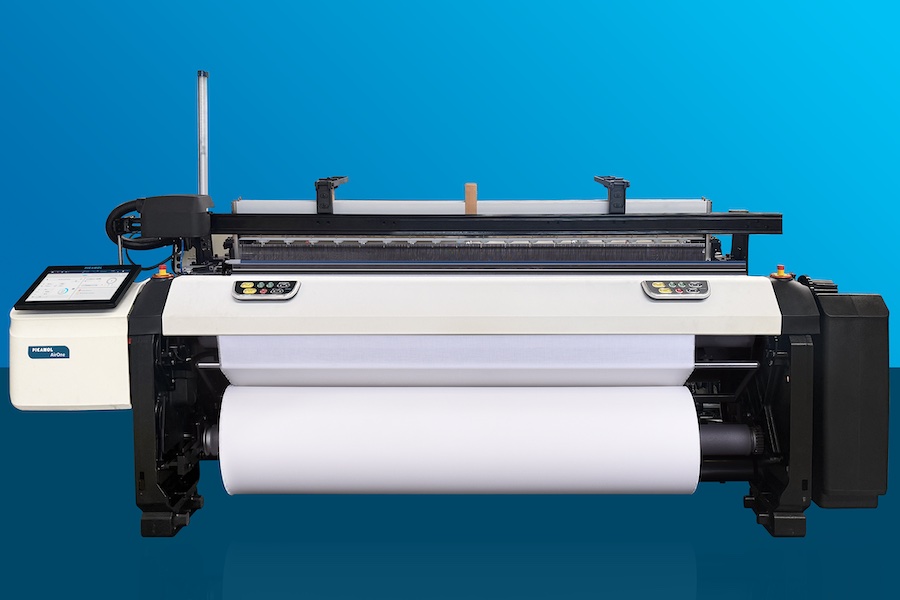
Picanol to unveil new AirOne airjet weaving machine at ITMA Asia 2026

From November 20 to 24, 2026, Picanol will present the world premiere of its new AirOne generation of airjet weaving machines at ITMA Asia + CITME in Shanghai. Developed in response to the latest requirements in basic woven fabric production, AirOne marks an important expansion of Picanol’s airjet weaving portfolio. Featuring a newly developed crank shedding motion, the machine combines high performance and low energy consumption with advanced digitalisation and ease of operation.

#ITMA Asia + CITME 2026

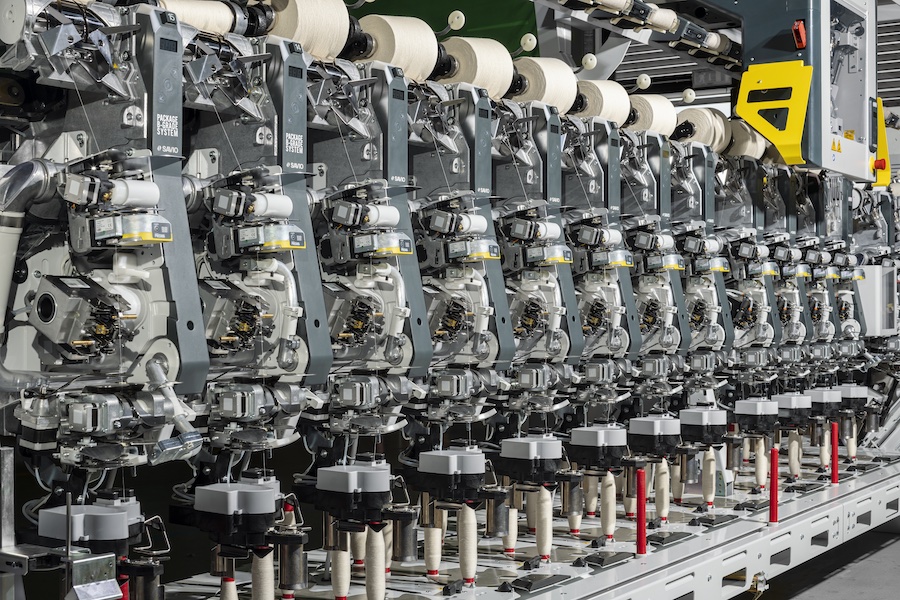
Savio presents intelligent winding and air-jet spinning technologies at ITMA Asia 2026

At ITMA Asia Shanghai 2026, Savio will showcase its latest developments in winding and spinning technology, focusing on artificial intelligence, automation and digital integration. The spotlight will be on two machines: the Proxima Smartconer®, Savio’s next-generation winding platform, and the Lybra Smartspinner®, an air-jet spinning solution designed for flexible yarn production and a wide range of textile applications.

#ITMA Asia + CITME 2026

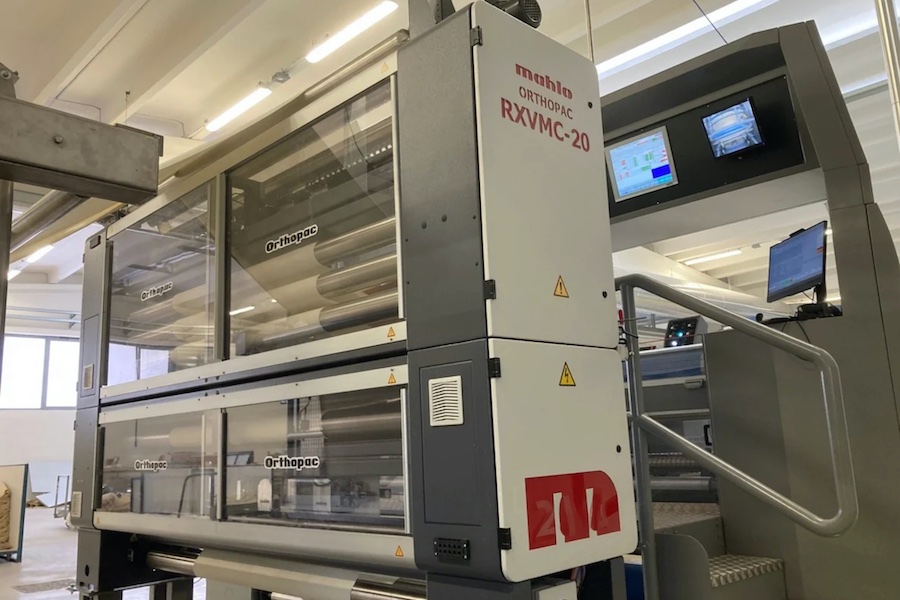
Mahlo introduces AI-supported Orthopac RVMC-20 plus at ITMA Asia 2026

From November 20 to 24, 2026, Mahlo GmbH + Co. KG will present its system portfolio for the textile industry at ITMA Asia in Shanghai. Together with its local sales and service partner Kuantex and Mahlo China, the Bavarian technology specialist will demonstrate at Booth C22 in Hall 7.1 how intelligent measurement and control technology can improve the quality and efficiency of textile production processes. The spotlight will be on the new Orthopac RVMC-20 plus, which combines precise weft straightening with fully integrated process control.

TOP