[pageLogInLogOut]

#Europe

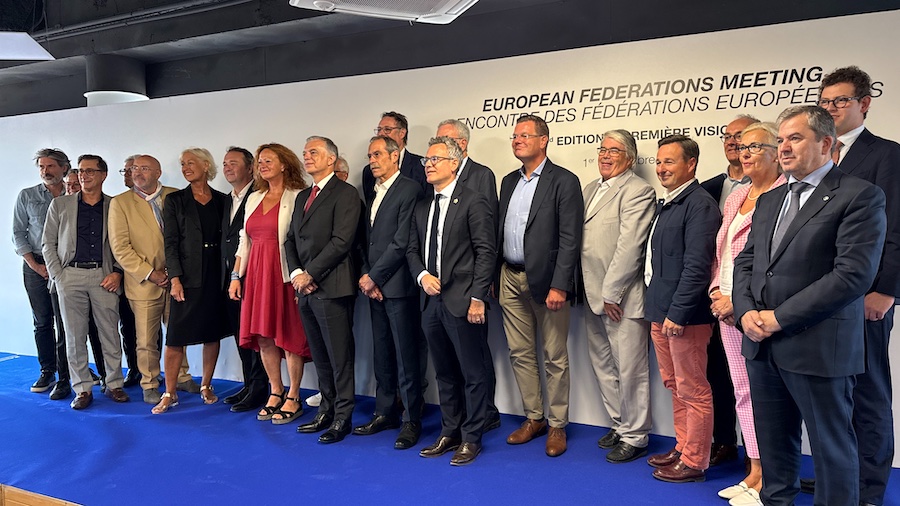
EEA Scientific Committee elects new chair and vice-chairs
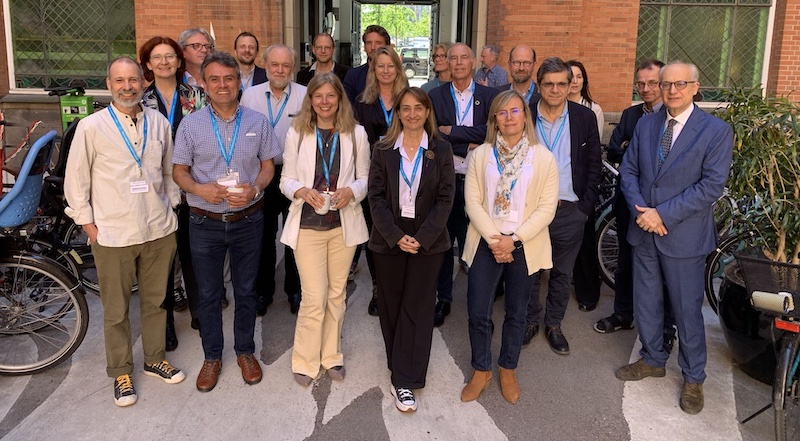
The European Environment Agency’s (EEA) Scientific Committee has elected a new chair and two vice-chairs at its spring meeting held over two days at the EEA headquarters in Copenhagen.
© 2025 EEA
© 2025 EEA


Dr. Louis Meuleman, Special Visiting Professor in Public Governance at Leuven University, Belgium, was elected as the new chair. A member of the committee since 2020, Dr. Meuleman has previously served as both vice-chair and acting chair. He will lead the committee’s efforts to ensure strategic guidance and compliance with the EEA Regulation and Scientific Committee Rules of Procedure. 

Professor Adina Dumitru and Professor Teis Hansen, both newly appointed members in 2025, were elected as vice-chairs. They bring broad expertise in environmental psychology and innovation studies, respectively. 

Professor Dumitru is Professor of Psychology at the University of A Coruña, Spain, and President of the International Association of People-Environment Studies (IAPS). Professor Hansen is Professor of Innovation and Entrepreneurship at the University of Copenhagen’s Department of Food and Resource Economics. 

Leena Ylä-Mononen, EEA Executive Director, commented: "The EEA Scientific Committee has been busy, starting the year by welcoming nine new members and this week electing a new chair and two new vice-chairs. The committee gives invaluable ‘hands-on’ input to EEA knowledge and contributes to the scientific quality of our work. I look forward to working closely with the newly-elected chair and vice-chairs as well as the other committee members over the coming years."

"I am very pleased and honored that the members have elected me to lead the committee in the coming years, in a leadership team with the two vice-chairs. In these very turbulent times, scientifically sound environmental evidence will be crucial to maintain and improve the EU’s environmental sustainability. The committee is well-placed and equipped to support the EEA with advice. We kick-started this week with discussions on future environmental knowledge needs and the challenges posed by widespread mis- and disinformation, among others", said Dr. Louis Meuleman, Chair of the EEA Scientific Committee.
More News from European Environment Agency

#Sustainability

Renewables lower energy prices and play key role to reduce vulnerability to fossil fuel supply shocks

Renewables lower energy prices and play key role to reduce vulnerability to fossil fuel supply shocks Boosting the use of homegrown renewable electricity is Europe’s best way to reduce its vulnerability to volatile international energy supplies and rising energy prices according to a European Environment Agency (EEA) assessment published today.

#Europe

Circular economy offers the EU win-win on environment and economy

Stepping up a circular economy offers the European Union the potential for significant positive impacts on Europe’s environment and poses an untapped and strategic economic opportunity in terms of better access to materials and the creation of new businesses. Three new assessments on circularity, published today by the European Environment Agency (EEA), also stress the need to accelerate investment in circularity efforts to meet EU climate and environment policy targets.

#Europe

State of Europe’s environment not good: threats to nature and impacts of climate change top challenges

State of Europe’s environment not good: threats to nature and impacts of climate change top challenges Significant progress has been made in reducing greenhouse gas emissions and air pollution, but the overall state of Europe’s environment is not good, especially its nature which continues to face degradation, overexploitation and biodiversity loss. The impacts of accelerating climate change are also an urgent challenge, according to the European Environment Agency’s (EEA) most comprehensive, ‘state of environment’ report, published today. The outlook for most environmental trends is concerning and poses major risks to Europe’s economic prosperity, security and quality of life.

#Sustainability

What are the impacts of PFAS polymers on our health and the environment?

The widespread use of PFAS polymers in everything from consumer products to green technologies can lead to contamination of water, air, soil, food and people. A European Environment Agency (EEA) assessment, published today, says that these chemicals can also contribute to global warming and ozone depletion.

More News on Europe

#Europe

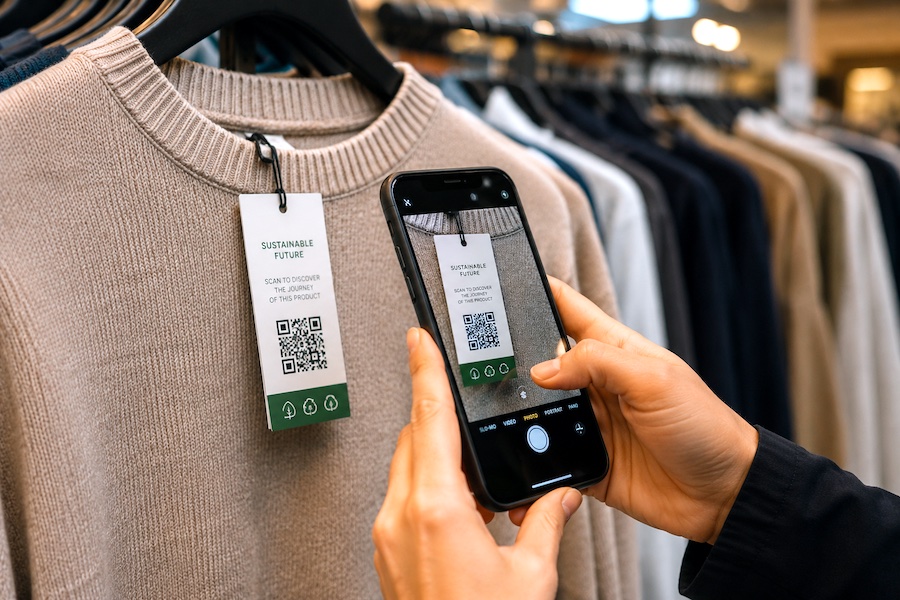
The Digital Product Passport registry is now live

On 20 July, the European Commission launched the Digital Product Passport Registry together with a testing environment, marking an important milestone in making the Digital Product Passport (DPP) a practical reality for businesses placing products on the EU market.

#Europe

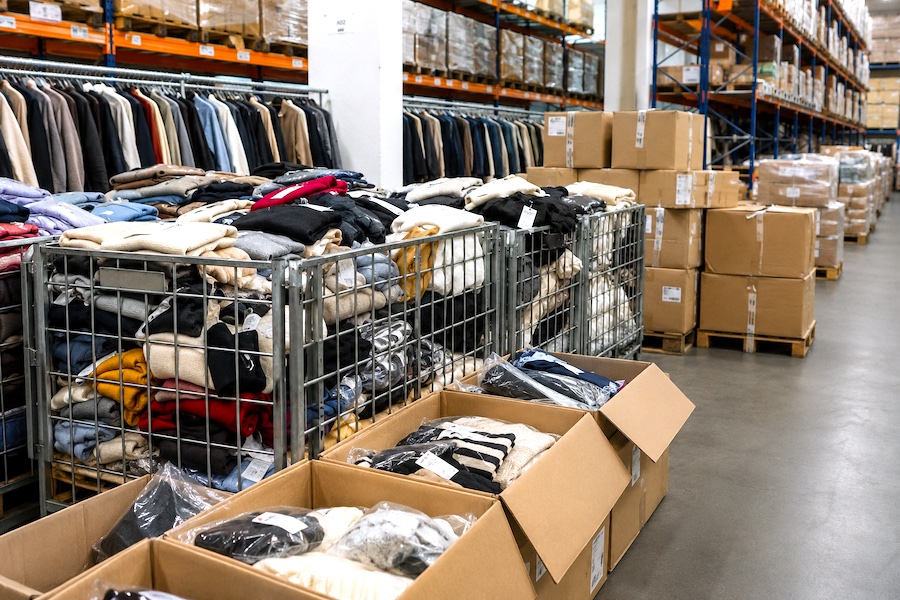
EU ban on destroying unsold clothing and footwear now in force

The European Union's ban on the destruction of unsold clothing, clothing accessories and footwear has entered into force. Since July 19, 2026, large companies across the EU have been prohibited from destroying unsold textile products, while medium-sized companies will be required to comply with the same rules from 2030.

#Recycling / Circular Economy

Commission clarifies rules on plastic bottles recycling

The European Commission today adopted new rules on recycling of single-use plastic beverage bottles made primarily of polyethylene terephthalate (PET bottles). These rules establish, for the first time, a methodology to calculate, verify and report chemically recycled content. This is part of the Commission’s December 2025 plastics package.

#Europe

EU and Australia strengthen relations with Security and Defence Partnership and Trade Agreement

The EU and Australia have today announced the adoption of a groundbreaking Security and Defence Partnership. They have also concluded negotiations for an ambitious and balanced free trade agreement (FTA) and agreed to launch formal negotiations for the association of Australia to Horizon Europe, the world's largest funding programme for research and innovation. With these steps, the EU and Australia are delivering mutually beneficial outcomes and further reinforcing their already close relations in a time of geopolitical uncertainty.

Latest News

#Recycled Fibers

Eastman Naia™ brings its inside-out denim vision to Kingpins New York

Following its debut at Kingpins Amsterdam, Eastman Naia™ brings the next chapter of its denim story to Kingpins New York, taking place July 22–23. At Booth Green 7, Naia™ presents its denim proposition built around three complementary design directions: Performance Denim, Fashion Denim and Authentic Denim.

#Recycling / Circular Economy

Pirelli, Pyrum, Synthos and BASF partner to transform end‑of‑life and scrap tyres into recycled materials for new products

Pirelli, Pyrum, Synthos and BASF are jointly advancing a tyre-to-tyre circular economy initiative in Europe, driving the development of an industrial ecosystem designed to increase the use of recycled materials derived from end-of-life and scrap tyres.

#Recycling / Circular Economy

Recover™ showcases textile recycling to European ambassadors in Bangladesh

Representatives of the European Union, the Netherlands and Spain have visited Recover™’s textile recycling facility in Bangladesh to discuss the implications of upcoming EU textile regulations and the role of textile-to-textile recycling in future supply chains.

#Dyeing, Drying, Finishing

Contactless measurement of coating for Technical Textiles with PLEVA AF 310 and AF 120

Textiles used for protection and defense must perform reliably – whether they are protective garments, tents, tarpaulins, covers, or technical carrier materials. Properties such as flame resistance, water repellency, weather resistance, or defined air permeability are often only achieved through precise coating, finishing, or printing processes.

TOP