[pageLogInLogOut]

#Europe

Consumer protection: enabling sustainable choices and ending greenwashing

Today, the Commission is proposing common criteria against greenwashing and misleading environmental claims. Under today's proposal, consumers will have more clarity, stronger reassurance that when something is sold as green, it actually is green, and better quality information to choose environment-friendly products and services.

Businesses will also benefit, as those that make a genuine effort to improve the environmental sustainability of their products will be more easily recognised and rewarded by consumers and able to boost their sales – rather than face unfair competition. This way, the proposal will help establish a level playing field when it comes to information about environmental performance of products.

A Commission study from 2020 highlighted that 53.3% of examined environmental claims in the EU were found to be vague, misleading or unfounded and 40% were unsubstantiated. The absence of common rules for companies making voluntary green claims leads to ‘greenwashing' and creates an uneven playing field in the EU's market, to the disadvantage of genuinely sustainable companies.

Reliable, comparable and verifiable information for consumers

According to the proposal, when companies choose to make a ‘green claim' about their products or services, they will have to respect minimum norms on how they substantiate these claims and how they communicate them.

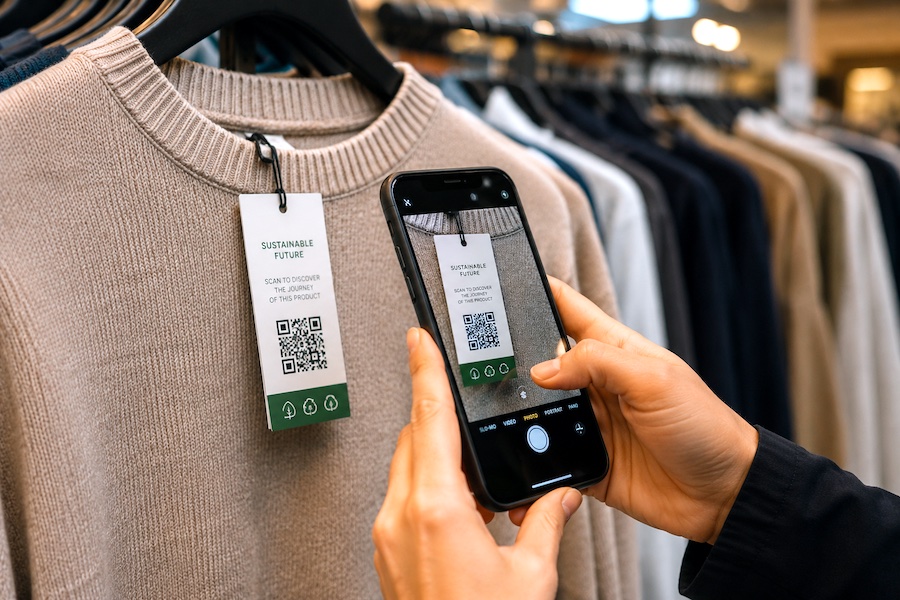
The proposal targets explicit claims, such as for example: ‘T-shirt made of recycled plastic bottles', ‘CO2 compensated delivery', ‘packaging made of 30% recycled plastic' or ‘ocean friendly sunscreen'. It also aims to tackle the proliferation of labels as well as new public and private environmental labels. It covers all voluntary claims about the environmental impacts, aspects or performance of a product, service or the trader itself. However, it excludes claims that are covered by existing EU rules, such as the EU Ecolabel or the organic food logo, because the current laws already ensure that these regulated claims are reliable. Claims which will be covered by upcoming EU regulatory rules, will be excluded for the same reason.

Before companies communicate any of the covered types of ‘green claims' to consumers, such claims will need to be independently verified and proven with scientific evidence. As part of the scientific analysis, companies will identify the environmental impacts that are actually relevant to their product, as well as identifying any possible trade-offs, to give a full and accurate picture.


Clear and harmonised rules and labels

Several rules will make sure that claims are communicated clearly. For example, claims or labels that use aggregate scoring of the product's overall environmental impact, will no longer be permitted, unless set in EU rules. If products or organisations are compared with others, such comparisons should be based on equivalent information and data.

The proposal will also regulate environmental labels. There are currently at least 230 different labels and there is evidence that this leads to consumer confusion and distrust. To control the proliferation of such labels, new public labelling schemes will not be allowed, unless developed at EU level, and any new private schemes will need to show higher environmental ambition than existing ones and get a pre-approval to be allowed. There are detailed rules about environmental labels in general: they must also be reliable, transparent, independently verified, and regularly reviewed.

Next steps

Following the ordinary legislative procedure, the Green Claims Directive proposal will now be subject to the approval of the European Parliament and the Council.

Background

Today's proposal complements the March 2022 proposal on ‘empowering consumers for the green transition' by providing more specific rules on environmental claims, in addition to a general prohibition of misleading advertising. Today's proposal is also presented together with a proposal on common rules promoting the repair of goods, which will also contribute to sustainable consumption and enhance the circular economy.

Today's proposal makes good on an important Commission commitment as part of the European Green Deal. It is the third package of proposals on circular economy, together with the proposal on common rules promoting the repair of goods. The first and second circular economy packages were adopted in March and November 2022. The first package included the new proposed Regulation on Ecodesign for Sustainable Products, the EU Strategy for Sustainable and Circular Textiles, and the proposed Consumer law directive on empowering consumers in the green transition. The second package included the proposals for the Packaging and Packaging Waste Regulation, the communication on biodegradable, biobased and compostable plastics and the proposed EU Certification for Carbon Removals Regulation.




More News from TEXDATA International

#Recycling / Circular Economy

textile.4U publishes special edition “Top 100 Textile Recycling Companies 2025”

With a comprehensive 176-page special edition, textile.4U is dedicating its latest issue entirely to one of the most dynamic and influential topics in today’s textile industry: textile recycling. The new issue, published exclusively in high-quality print, presents the Top 100 textile recycling companies researched and selected by TexData – organizations that already play a key role in the transition to circular textiles or are expected to have a significant impact in the near future.

#Recycling / Circular Economy

Responsible Textile Recovery Act of 2024 signed by Governor

Senator Josh Newman (D-Fullerton) is proud to announce that Senate Bill 707 (SB 707), the Responsible Textile Recovery Act of 2024, has been signed into law by the Governor of California, Gavin Newsom. This groundbreaking legislation establishes the country’s first Extended Producer Responsibility (EPR) textile recycling program, marking a significant step forward in the state’s efforts to combat waste and promote sustainability.

#Textiles & Apparel / Garment

Modtissimo promotes sustainability with 28 coordinates in the Green Circle

Modtissimo is proving more and more to be a textile and clothing show that delivers the latest innovations in the area of sustainability, with the iTechStyle Green Circle being the main showcase for companies' creations. In this 60+4 edition, taking place on 12 and 13 September, 28 coordinates will be exhibited in a section organised by CITEVE and curated by Paulo Gomes.

#Europe

The EU and Egypt team up to mobilise private sector investments at Investment Conference and sign a Memorandum of Understanding underpinning €1 billion in macro-financial assistance for Egypt

At the EU-Egypt Investment Conference, co-organised by the EU and the Government of Egypt on 29-30 June, the EU and Egypt are teaming up to intensify private sector investments in Egypt. They are also signing a Memorandum of Understanding (MoU) for the disbursement to Egypt of up to €1 billion in Macro-Financial Assistance.

More News on Europe

#Associations

European business associations celebrate the signature of the EU-Mercosur FTA

The 17th January marks a historic milestone with the signing of the EU-Mercosur Trade Agreement, creating the biggest trading block in the world. European business – represented by more than 28 associations across a wide range of sectors – warmly welcomes this signature. It sends a strong and timely signal that the EU remains open and is committed to rules-based global trade. In a time of global uncertainty, this agreement is a key growth booster.

#Europe

EU and Mercosur sign historic and ambitious partnership

Today, the European Union and Mercosur signed a Partnership Agreement (EMPA) and an Interim Trade Agreement (iTA), representing a historic milestone between the two regions, and an ambitious platform for strengthening their economic, diplomatic and geopolitical relations.

#Nonwovens

EDANA wraps up its Sustainability & Policy Forum 2025: Uniting the industry and EU policymakers to navigate the future of nonwovens

Against a backdrop of rapidly evolving environmental legislation, the EDANA Sustainability & Policy Forum 2025 concluded the past week in Brussels, marking a step forward in the dialogue between the nonwovens industry and European policymakers. Held from 9-10 December at the historic Residence Palace, the two-day event successfully brought together business leaders, sustainability experts, and EU officials to address the dual challenges of circularity and industrial competitiveness.

#Europe

Level playing field at stake: Europe’s textile industry demands decisive action

Yesterday, the European Parliament took a welcomed and necessary step by voting a resolution calling for stronger market surveillance, reinforced customs controls and faster enforcement of the Digital Services Act in case of infringements. For Europe’s textile and clothing manufacturers, this is the first political acknowledgement that the system is broken — and that enforcement must finally match the scale of the problem.

Latest News

#Fabrics

MUNICH FABRIC START: Between Attitude and Sensuality

The future begins where we reimagine it. After seasons of restraint, Spring.Summer 27 marks a conscious counter-trend: optimism, sensuality, and creative freedom are replacing pragmatism and neutrality. Physical presence and individuality are regaining importance – as a response to uncertainty, exhaustion, and algorithmic predictability. The overarching theme of PLEASURE stands for fashion as an emotional space, as an expression of attitude and cultural reflection. Colours, surfaces, and materials become vehicles for self-confidence and joie de vivre.

#Denim

organIQ seek: smart alternative to potassium permanganate

CHT Group announces new technical findings within its organIQ seek platform that significantly advance the transition toward permanganate-free denim bleaching. Through extensive industrial testing and application research, CHT confirms that organIQ seek can now be used with remarkable effectiveness as a substitute for potassium permanganate in spray bleach, while remaining aligned with sustainability expectations and cost realities in the European market. At the COLOMBIATEX in Medellín as well as at the Exintex in Puebla and the Kingpins Show in Amsterdam the CHT Group will present organIQ seek as an alternative to potassium permanganate.

#Functional Fabrics

PERFORMANCE DAYS: Focus topic shifts to the beginning of the value chain

Following the last Focus Topic in October 2025, which placed Textile-to-Textile Recycling at its core, PERFORMANCE DAYS continues to drive the conversation around circularity – this time with an expanded and more upstream perspective. The upcoming Focus Topic, “Textile to Textile: The Role of Collectors and Sorters,” presented during the spring edition on March 18–19, will spotlight one of the most essential yet often overlooked components of a functioning circular textile system: the efficient collection and sorting of post-consumer textiles.

#Knitting & Hosiery

Proven performance, optimised costs – the new RE 6 EL

Nowadays textile companies increasingly need to produce small production runs and respond to market changes with instantaneous pattern changes in order to operate profitably – meaning they require machines that offer maximum flexibility, reliability and cost efficiency. KARL MAYER understands the challenges of the market and is launching its new RE 6 EL. The Raschel machine offers the core strengths of the classic RSE 6 EL and essentially the same performance parameters, but has been further cost-optimised largely due to local production advantages. This makes the newcomer an efficiency champion in production, especially when it comes to frequent pattern changes.

TOP