[pageLogInLogOut]

#Weaving

NIEN HSING buys the first GREENDYE unit from KARL MAYER // environmental pioneer relies on GREENDYE

Jeans are the evergreens of the clothing industry, but are increasingly criticized for their negative impact on the environment. Manufacturers are looking for efficient as well as green production technologies for the indigo fabric - and they have found them at KARL MAYER.

KARL MAYER ROTAL, the site with the KARL MAYER Group's denim center of excellence, has developed GREENDYE, a technology that offers both: Sustainability and at the same time more economic efficiency than conventional plants.

The innovation was launched in 2019. The first sale followed this year. The premiere machine goes to Taiwan, to the innovative global player NIEN HSING.

A company with a sense of responsibility

The fully integrated denim manufacturer has written the topic of sustainability at the top of its corporate agenda. Already in 2015, a development and innovation center was established to promote ecological finishing processes. In 2017, NIEN HSING's corporate policy committed to reducing its ecological footprint and using clean production technologies for this purpose. In warp preparation, the environmentally conscious denim player aims to improve its eco-balance, especially with KARL MAYER's GREENDYE unit. "We got to know the pilot plant at KARL MAYER ROTAL and studied its operation in detail in terms of output, costs and sustainability. The results convinced us." says Chairman Chen, Chao Kuo.

With GREENDYE, indigo dyeing is two times cleaner and at the same time three times more efficient than with the processes of conventional equipment. The basis for the excellent performance is the use of nitrogen (NOX) technology to control the chemical dyeing process.

Tripling of dyeing efficiency, halving of resource consumption

The nitrogen atmosphere temporarily prevents the necessary oxidation of the indigo dye. In the NOX reactor, the indigo dye has time to create a more solid physical bond into the fiber composite, adhere there and be fixed.

It is also possible to increase the indigo concentration in the dye bath. These effects enable the yarn to absorb three times more dye than in case of conventional processes.

Further advantages result from the design of the dyeing vats. A high-flow, low-speed indigo circulation system and a design that avoids turbulence and surface foaming significantly reduce chemical consumption. A saving of up to 50% of hydrosulphite and caustic soda – the main environmental polluters of the process - and thus a halving of the gray water footprint is possible.

A reduction of 50% is also possible in the final washing water consumption. Thanks to the NOX reactor, the GREENDYE system requires only three dyeing baths instead of nine - like conventional systems - to achieve the same indigo dye shade, with correspondingly lower water consumption. In addition, the washing process is more economical due to the higher fixation of the indigo dye on the fiber.

Fewer dyeing baths also mean shorter dyeing sections. The difference in length is two-thirds and reduces the amount of yarn waste.

The reduction of daily water and chemical consumption as well as waste water and yarn waste optimizes not only the environmental balance but also the production cost in indigo dyeing. In addition, the operating costs are extremely low. Compared to traditional indigo dyeing systems, the GREENDYE system requires less space due to its shorter design, less maintenance, less time for operation and less spare parts for the same output.

Role model for the sector

From next year, NIEN HSING will benefit from the advantages of the GREENDYE technology. The delivery of the first machine on the market is scheduled for November 2022.

Stefano Agazzi, Chief of Technology and Products at KARL MAYER ROTAL is delighted with the sales success. "With our GREENDYE line, NIEN HSING can set completely new sustainability and efficiency standards in denim production. We hope to see significant impetus for change throughout the industry," says the indigo dyeing specialist. He will continue to support NIEN HSING with his team and the possibilities offered by KARL MAYER ROTAL's denim center of excellence. In Mezzolombardo, samples can be made with the customers' specific materials, staff can be trained, and joint projects can be developed.
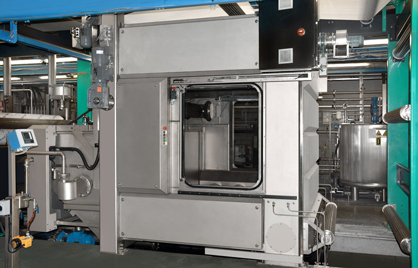

(c)2022 KARL MAYER - The NOX reactor of GREENDYE


More News from KARL MAYER Textilmaschinenfabrik GmbH

#Knitting & Hosiery

The new RE 6 EL from KARL MAYER shows what it can do

KARL MAYER’s new RE 6 EL from KARL MAYER brings a breath of fresh air to raschel fabric production. The latest samples from the textile product development department of this innovative textile machine manufacturer demonstrate the extensive design possibilities on offer.

#Knitting & Hosiery

KARL MAYER and Lenzing partner to advance warp knitting with scalable cellulose fiber solutions

The Lenzing Group, a leading supplier of regenerated cellulosic fibers for the textile and nonwovens industries, together with KARL MAYER, the global market leader in warp knitting machines and warp preparation systems, debut a joint innovation project during Premiere Vision, Paris.

#Knitting & Hosiery

KARL MAYER opens a new TEXTILE INNOVATION CENTRE – a new era of textile innovation begins

KARL MAYER is opening its new TEXTILE INNOVATION CENTRE (TIC), sending a strong signal that it is driving textile innovation forward and opening up new perspectives for the textile industry. The TIC brings together the latest developments in Warp Knitting, Technical Textiles and Warp Preparation – KARL MAYER’s core areas of expertise.

#Knitting & Hosiery

Proven performance, optimised costs – the new RE 6 EL

Nowadays textile companies increasingly need to produce small production runs and respond to market changes with instantaneous pattern changes in order to operate profitably – meaning they require machines that offer maximum flexibility, reliability and cost efficiency. KARL MAYER understands the challenges of the market and is launching its new RE 6 EL. The Raschel machine offers the core strengths of the classic RSE 6 EL and essentially the same performance parameters, but has been further cost-optimised largely due to local production advantages. This makes the newcomer an efficiency champion in production, especially when it comes to frequent pattern changes.

More News on Weaving

#Weaving

Stäubli demonstrates how innovation translates into real benefits for weaving mills at SITEX 2026

One of India’s most prominent textile industry events, SITEX 2026, is held from February 21 to 23 in Surat. Committed to empowering Indian weaving mills with state‑of‑the‑art solutions tailored to regional needs, Stäubli will present a selection of solutions designed for performance, reliability, and power efficiency. Through its weaving preparation, cam and dobby shedding solutions and Jacquard technologies, Stäubli highlights its global expertise tailored to the specific needs of the local market.

#Weaving

Itema exhibits the two best-selling high-end rapier weaving machines of the Region, R9500EVO and Galileo-RX at SITEX 2026

Following the opening of its new Surat Service Center in November, Itema will exhibit at SITEX (Stand 286) from February 21st to 23rd at the Surat International Exhibition and Convention Centre (SIECC). Surat has long been one of Itema’s most strategic markets, a role further reinforced by the inauguration of the Surat Service Center last November. Equipped with an advanced electronic repair center, a weaving machine behavior simulator, and a local spare parts warehouse, the new facility strengthens Itema’s presence in the region while bringing the company even closer to its Customers.

#Composites

Breaking new ground in Technical Textiles: Stäubli at JEC World 2026

Stäubli, a global leader in industrial and mechatronic solutions, will showcase its cutting-edge weaving machinery solutions for technical textiles at JEC World 2026, from 10 to 12 March in Paris-Nord Villepinte.

#Weaving

Groz-Beckert launches comprehensive Reed Portfolio in Ichalkaranji to advance weaving excellence in India

Groz-Beckert, the world’s leading provider of industrial machine needles, precision parts, and systems for the textile industry, hosted an exclusive customer event titled “Advancing Weaving Excellence – Reed Portfolio Launch” in Ichalkaranji, one of India’s most prominent weaving hubs.

Latest News

#Sustainability

Ying McGuire becomes new CEO of Cascale

Cascale today announced the appointment of Ying McGuire as Chief Executive Officer, effective June 1, 2026.

#Technical Textiles

Sustainable, lightweight, and sound absorbing: Polyester-based front trunk solution for BEVs

As car manufacturers look to further reduce their carbon footprint, Autoneum has developed an innovative front trunk solution for battery electric vehicles (BEVs), made entirely from polyester-based textile. The Ultra-Silent Frunk offers significant weight reduction, improved acoustic and thermal insulation, and uses up to 70 percent recycled material, supporting sustainable and efficient vehicle design. Autoneum, global technology leader in acoustic and thermal management for vehicles, has already received orders for the new frunk from three major OEMs in Asia and Europe to be built in three BEV models. Series production for two BEVs has been underway in China and Germany since last year.

#Raw Materials

Modern testing methods for raw cotton

The 38th International Cotton Conference Bremen will take place from 25 to 27 March 2026 at the Bremen Parliament. This conference has traditionally stood for in-depth expertise and international exchange. The program will focus on technical innovations, market trends, and regulatory frameworks across the entire value chain – from agriculture to the circular economy. With high-profile speakers, the conference is regarded as the key meeting point for the global cotton industry. Today’s focus: Cotton quality and testing methods.

#Spinning

Rieter responds to higher raw material prices

Global political and economic developments have been leading to rising raw material and energy costs for some time. The textile machinery industry is also affected by this trend. Rieter machines and components consist to a large extent of steel, copper, aluminum and electronics. These materials in particular have seen higher demand and higher prices in recent months.

TOP