[pageLogInLogOut]

#Digital Printing

DTF vs DTG Printing - The technologies shaping today’s custom merchandise market
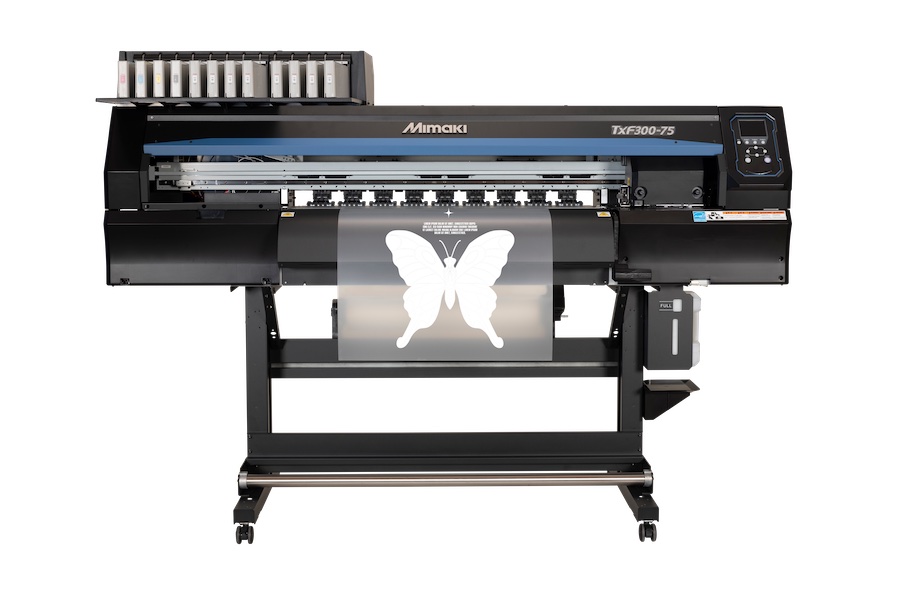
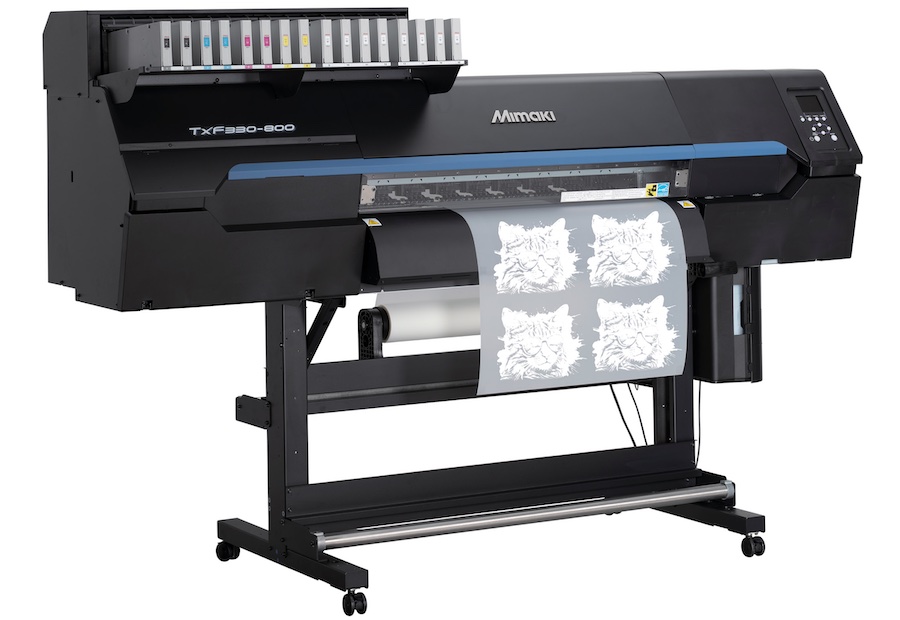
Mimaki’s DTF flagship, the TxF Series, delivers stable performance across a broad range of applications, as well as precision reproduction of fine lines and smooth gradations supporting sharp details, consistent white opacity and reliable transfer quality. © 2026 Mimaki
From sportswear to branded tote bags, custom merchandise continues to grow in popularity across sectors, driving print shops to cater to short runs, personalisation, and rapid turnaround. As print providers look to this market, two printing technologies often stand out: Direct‑to‑Film (DTF) and Direct‑to‑Garment (DTG). Each offers its own benefits, and understanding these differences helps determine the most suitable production method for print service providers.


What is DTF Printing?

DTF (Direct‑to‑Film) printing is a relatively new printing process, tailored to the fast-moving promotional merchandising market. The process includes printing a design onto a specialist film followed by a hot‑melt adhesive powder being applied. The printed film is then passed through a dryer unit, drying the ink and smoothing the powder layer. This direct-to-transfer sheet can then be applied onto almost any fabric, such as cotton, polyester and leather, using a heat press.

What is DTG Printing?

DTG (Direct‑to‑Garment) is a more traditional process, where the material is pre-treated before being printed directly onto and then cured. Due to the direct-to-garment technique, this technology is best suited for natural fabrics such as cotton and linen, while some blended fabrics can also be used with varying results. The resulting product is more breathable and softer when compared to more textured DTF prints.

To DTF or to DTG?

While both printers are well suited for merchandise and custom apparel production, there are key differences when it comes to the workflow and end-product. DTF printing offers broader flexibility, with more applications available thanks to its ability to be applied to any fabric via the transfer sheet. This can easily be produced and stored ahead of time, before the garment even arrives at the printshop. The manual heat-press application also means that the prints can be applied to hard-to-reach areas, instead of being restricted to flat and accessible surfaces.

On the other hand, DTG is more adept at producing intricate details and subtle gradients in its prints. Since it is applied directly onto the fabric, the resulting print is more breathable and washable compared to DTF prints, which sit on top of the fabric. Sustainability depends on the workflow, DTG typically uses water-based inks but may require pre-treatment and washing, while DTF eliminates water usage but introduces consumables such as film and adhesive powder.

Lastly, when it comes to production processes, there is a notable difference between the two technologies. DTF only requires a two-step printing process with the DTF printer and a heat press, meanwhile DTG requires multiple steps, including pre-treatment so that the ink can adhere to the fabric, printing and curing. Due to this more time-consuming DTG process, DTF printing is more adept at bulk orders as can operate easily without constant supervision, while DTG printing is better at producing a few custom products on demand. This also means that DTF operates much better in smaller print shops, as the entire process requires less space compared to the DTG workflow.
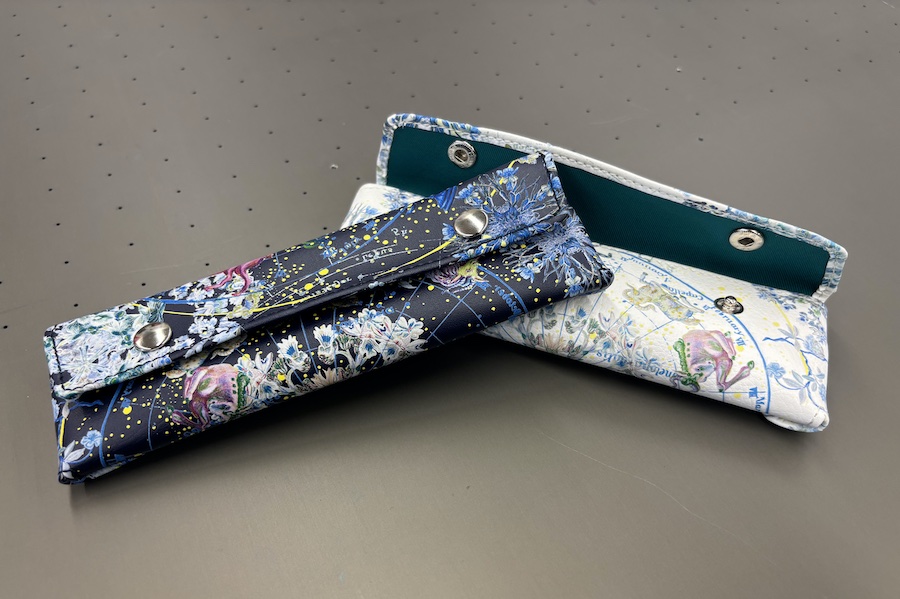
DTF printing offers broad application flexibility, thanks to its ability to be applied to any fabric, leather and synthetic leather via a transfer sheet. © 2026 Mimaki


Why DTF Is Gaining Momentum

In recent years DTF has seen rapid adoption across the merchandise and promotional sectors due to its versatility, production efficiency, and compatibility with a wide range of fabrics. The technology is constantly undergoing significant innovation, including emerging powderless DTF capabilities and automated heat-press systems, helping businesses streamline workflow and improve scalability to match demand.

Mimaki’s launch of its pioneering DTF technology in 2023 with the TxF150-75 marked a significant step in bringing reliable and colour accurate print capabilities to the market, addressing key challenges such as colour consistency, white ink reliability and production stability that had previously limited wider DTF adoption. Developed alongside Mimaki’s PHT50 ink set, the TxF Series is designed to deliver stable performance across a broad range of professional DTF films, including hot-peel, cold-peel, matte and glossy types – helping reduce media-related instability while supporting sharp details, consistent white opacity and reliable transfer quality. This progress reflects the wider momentum behind DTF, a sector that continues to grow year on year, with strong sales across EMEA and a growing range of solutions entering the market – even extending beyond textile applications with UV-DTF technology.

Matching Technology to Market Demand

For print service providers, the decision between DTF and DTG comes down to the types of applications being produced, the desired finish and required production capacity. For example, while some printers prefer the softer hand feel of DTG prints, others utilise the textured finish achieved by DTF to produce faux embroidery effects, which saw a notable rise in popularity last year. An increasing number of print service providers are adopting hybrid workflows, combining DTF for versatility and scalability with DTG for premium, soft-touch applications, while some choose to focus on DTF for its broad application scope, efficient workflow and smaller footprint.

Ultimately, the choice between DTF and DTG is not about which technology is better, but which is better suited to a specific business model. As customer demand continues to evolve towards faster turnaround, greater personalisation and broader application possibilities, the most successful print providers will be those able to align technology with market needs or increasingly, leverage both.
More News from Mimaki Europe B.V.

#Digital Printing

Mimaki celebrates Triple EDP Award win at FESPA 2026

Mimaki Europe, a leading manufacturer of industrial inkjet printers and cutting plotters, was presented with 3 EDP Awards at the association’s 2026 ceremony, held at FESPA Global Print Expo. These highly acclaimed awards celebrate best-in-class innovation across the print industry, and Mimaki was honoured in three different categories.

#Digital Printing

Mimaki ‘Powers Possibilities’ with a market-diverse application and printer line-up at FESPA 2026

Mimaki Europe, a leading manufacturer of industrial inkjet printers and cutting plotters, is bringing its “Print Different - Powering Possibilities” theme to life at FESPA Global Print Expo 2026 (Fira de Barcelona, 19-22 May 2026), demonstrating how digital printing technology can turn ideas into high-value applications and new business opportunities.

#Digital Printing

Mimaki takes DTF performance to the next level with TxF300-75Plus

Mimaki Europe, a leading manufacturer of industrial inkjet printers and cutting plotters, announces the TxF300-75Plus, an upgraded model within its high-productivity direct-to-film (DTF) printing portfolio. Following on from the success of the original TxF300-75, this enhanced version reflects Mimaki’s commitment to continuously evolving its solutions to meet the changing demands of the market.

#Digital Printing

Keeping print inclusive: Empowering women in the print industry

Across all industries, cultivating a diverse and inclusive workplace is increasingly recognised as valuable and essential to long-term success. However, despite the print industry’s significant advancements in technology and innovation, visible representation of women remains limited. As the sector grapples with low recruitment, it’s important to challenge outdated perceptions. Creating real change, however, requires collective effort - no single company can do it alone.

More News on Digital Printing

#Digital Printing

EFI brings high-performance display graphics, packaging, and textile printing innovations to FESPA 2026

Electronics For Imaging, Inc. (EFI™) is bringing a broad range of new hybrid, roll-to-roll, and textile inkjet innovations to FESPA Global Print Expo 2026, taking place 19-22 May at Fira Barcelona Gran Via. Visitors to the EFI stand (Hall 3, #C85) will see the new EFI VUTEk M3h X hybrid LED printer, new EFI VUTEk® FabriVU® 340 i8 eight-colour dye sublimation printer, the EFI VUTEk X5r roll-to-roll LED printer, and the EFI VUTEk Q3h XP seven-colour hybrid printer in action, each designed to help sign and display producers scale output, diversify applications, and drive more profitable growth.

#Digital Printing

Kornit Digital announces commercial availability of Atlas MATRIX following successful global Beta program

Kornit Digital (NASDAQ: KRNT, "Kornit Digital", "Kornit", or the "Company"), a global leader in sustainable, on-demand digital fashion and textile production technologies, today announced the commercial availability of the Atlas MATRIX platform following the successful completion of a global beta program across leading production environments in Europe and North America. The announcement, made ahead of FESPA 2026 in Barcelona, marks a major milestone in the evolution of digital apparel production.

#Digital Printing

Kornit Digital launches Konnections 365

Kornit Digital (NASDAQ: KRNT) (“Kornit” or the “Company”), a global pioneer in sustainable, on-demand digital fashion and textile production today announced the launch of Konnections 365 - a year-round movement designed for the people moving the apparel, print, and retail industries forward. The strategy is built on the overwhelming success of Konnections 2026 held in Hollywood, Florida, featuring more than 500 customers, partners, and collaborators who together are driving the future of apparel and textiles.

#Digital Printing

FESPA’s new textile event set to debut in Barcelona this May

In less than one month, the first edition of FESPA’s new Textile event will take place at the Gran Via, Fira de Barcelona, from 19 – 22 May 2026. Co-located with FESPA Global Print Expo, European Sign Expo, Personalisation Experience, WrapFest and the brand-new Corrugated, each of the events will serve as the ideal meeting point for experts across each field to discover the latest technologies and trends, and explore cross-sector opportunities for business growth.

Latest News

#Research & Development

GenuTrace client advisory: Is your cotton supply chain UFLPA ready?

U.S. Customs and Border Protection has released updated operational guidance (CBP Publication No. 5560-0526) expanding its forced labor enforcement framework. The guidance supersedes the original 2022 UFLPA Operational Guidance and now covers all forced labor enforcement authorities — UFLPA, CAATSA, and WROs/Findings — in a single unified document. For cotton importers, the enforcement posture has not softened. It has become more structured, more documented, and more demanding. Learn more about UFLPA.

#Carpets

DOMOTEX Hannover 2028 off to a strong start with expanded portfolio

Preparations for DOMOTEX 2028 are already gaining strong momentum. Following its successful repositioning as the Home of Flooring & Interior Finishing, around 100 international manufacturers have already secured their place during the initial registration phase.

#Knitting & Hosiery

STOLL: Agreement signed for the divestiture of selected assets

In early 2025, KARL MAYER announced its strategic decision to focus on its core business areas of WARP KNITTING, WARP PREPARATION, and TECHNICAL TEXTILES. As part of this move, the flat knitting machine business under the STOLL brand was discontinued and the production site in Reutlingen was closed in October 2025.

#Research & Development

TERNAfil wins first place at PitchMiUp Night 2026 in Minden

The RWTH spin-off TERNAfil has developed MAXCarbon, a new high-performance hybrid fibre that combines the mechanical performance of carbon with the temperature and corrosion resistance of ceramic materials. For this development, TERNAfil was awarded first prize at the PitchMiUp Night in Minden on 21 May 2026.

TOP