[pageLogInLogOut]

#Denim

Jeanologia brings “Billy” to China, the AI transforming denim design
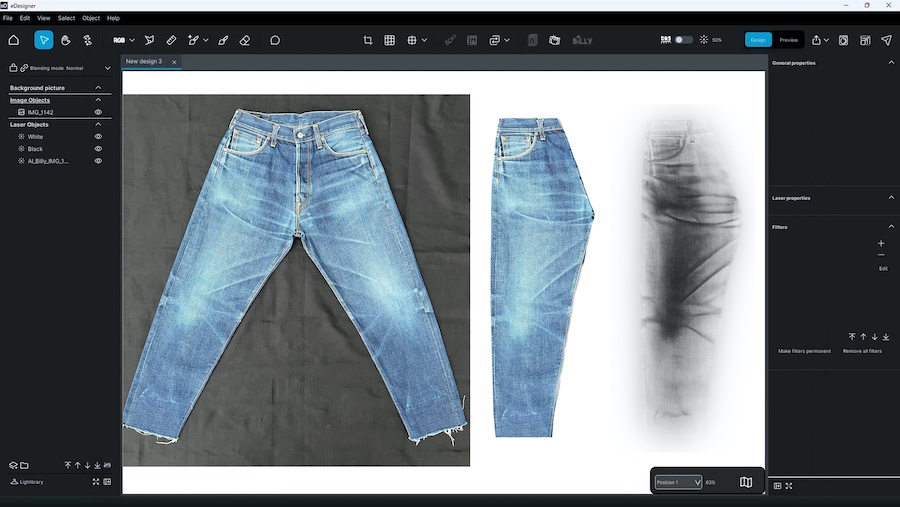
“Billy” introduces a new way of developing denim by directly connecting inspiration and production © 2026 Jeanologia
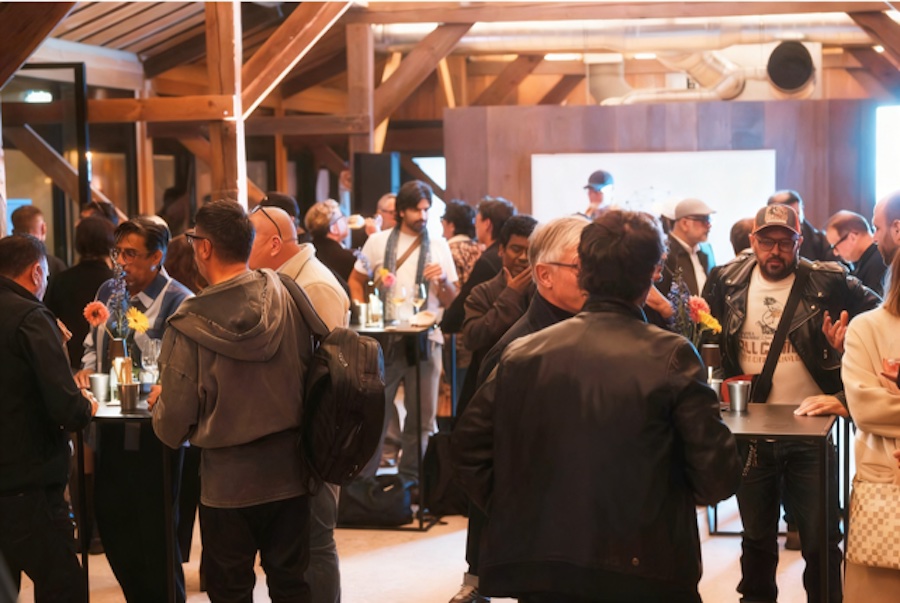
The denim industry is turning its attention to Hangzhou this week, where a new edition of Kingpins, the leading international trade show for the sector, takes place on May 21 and 22. There, the Spanish company Jeanologia, a global leader in sustainable technologies for the textile industry, is introducing its latest innovation to the Chinese market: “Billy”, the first artificial intelligence specifically developed for denim finishing design.

Following its recent international launch, and at a time when brands are demanding faster development cycles and increasingly authentic vintage aesthetics, Jeanologia is showcasing in Hangzhou how artificial intelligence can simplify one of the most complex stages of denim product development: translating authentic vintage finishes into reproducible industrial designs.

From real vintage to production-ready design

More than just a design tool, “Billy” introduces a new way of developing denim by directly connecting inspiration and production. The system transforms garment images into precise laser designs within minutes, interpreting fades, contrasts and signature vintage denim details to automatically generate files optimized for industrial laser execution.

What traditionally required hours of technical work and multiple manual adjustments can now be achieved in minutes through a direct digital workflow connecting design and production.

“The industry is looking for faster and more precise ways to develop authentic vintage products,” says Jean Pierre Inchauspe, Business Director Asia at Jeanologia. “With Billy, brands and manufacturers can directly connect inspiration and production, reducing complexity while maintaining authenticity.”

The system has been trained using more than 9,000 laser designs developed by Jeanologia over decades of work in laser technology and denim finishing alongside some of the world’s leading denim brands, designers and suppliers. This extensive knowledge base allows “Billy” to understand how vintage wear patterns are created and convert them into reproducible laser designs optimized for industrial application.

Combined with Jeanologia’s laser technology, the system enables digital designs to be reproduced on garments with precision and consistency, eliminating the need for manual retouching and reducing inefficient production processes.

At Kingpins China, visitors will be able to experience live demonstrations where vintage garment images are instantly transformed into laser executions through a fully digital workflow integrating AI and laser technology.

AI, laser and automation shaping the future of denim

Introduced by Jeanologia more than 25 years ago, laser technology transformed denim finishing by replacing traditional manual techniques associated with high environmental impact and health risks for workers. Today, the combination of AI, laser and automation is accelerating a new generation of denim production focused on speed, digitalization and efficiency.

Inspired by decades of research into vintage denim and supported by Jeanologia’s archive of laser developments, “Billy” transforms heritage into digital intelligence applied to design. Every fade, contrast and wear pattern can now be analyzed and translated into reproducible laser executions with precision and consistency.

The result is a process capable of preserving the visual authenticity and character of vintage denim while enabling a more precise, efficient and responsible approach to production.

China’s role in the next generation of textile manufacturing

The arrival of “Billy” in China comes at a time when the Asian textile industry is accelerating investments in automation, digitalization and more efficient production systems. As one of the world’s leading textile manufacturing hubs, China is becoming a key market for the adoption of automation, AI and digital product development technologies capable of accelerating both productivity and sustainability.

Jeanologia has been operating in China for more than 18 years and currently works with more than 200 customers in the country through local teams specialized in laser design and product engineering. Today, more than 20% of jeans produced in China are manufactured using technologies developed by Jeanologia.

“What we are seeing is the beginning of a new digital workflow for denim creation, where AI helps transform inspiration into production with much greater speed, precision and consistency,” adds Jean Pierre Inchauspe.

To explore the growing role of AI across the denim industry, Jessica Lau from Jeanologia’s Asia Brainbox team will participate in the Denim Talks panel “Artificial Intelligence: From Cotton to Culture” at Kingpins China, discussing how artificial intelligence is transforming the denim value chain, from design and product development to manufacturing and consumer experience.



More News from JEANOLOGIA S.L.

#Industry 4.0 / Digitalization

Jeanologia and BCome connect factory data with Life Cycle Assessment and Digital Product Passports

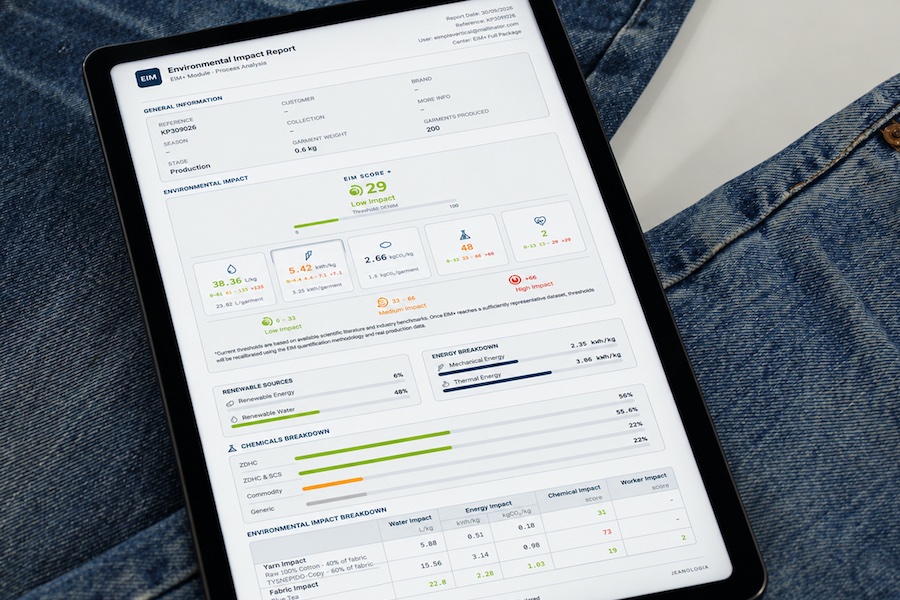
A new white paper by EIM by Jeanologia and BCome demonstrates how primary environmental data from denim finishing processes can be integrated into a garment's Life Cycle Assessment (LCA) and prepared for use in a Digital Product Passport (DPP). A comparative case study highlights significant improvements at the production stage while also showing how these translate into the environmental performance of the finished garment.

#Industry 4.0 / Digitalization

Jeanologia presents expanded EIM platform and COMMON GROUND collection at Kingpins Amsterdam

Jeanologia is presenting two approaches to textile product development at Kingpins Amsterdam on October 14–15: measuring the environmental impact of textile production and exploring new creative possibilities through garment finishing technologies.

#Industry 4.0 / Digitalization

EIM evolves into a new Environmental Intelligence to measure the impact of textile production

¿Do we really know the environmental impact behind a garment? Answering this question remains one of the textile industry’s major challenges. Garment production involves multiple stages, from yarn and fabric to final finishing, carried out by different players across the supply chain. Accesing reliable data from each process, connecting it and establishing a common language are essential to understanding a product’s true impact.

#Sustainability

Jeanologia Sustainability Report highlights environmental impact of textile technologies

Jeanologia has published its Sustainability Report 2025, reporting a 13.64% reduction in its own carbon footprint and quantifying the environmental impact associated with the use of its technologies across the global textile industry. According to the company’s calculations, their use avoided the pollution of 21.52 million m³ of water and emissions of approximately 103,530 tonnes of CO₂ compared with conventional textile finishing processes.

More News on Denim

#Recycling / Circular Economy

Blue Jeans Go Green celebrates 20 years of denim recycling with more than six million items collected

Cotton Incorporated is celebrating the 20th anniversary of its Blue Jeans Go Green™ denim recycling program. Since its launch in 2006, the initiative has collected more than six million denim items, diverted over 3,000 tons of textile waste from landfills and enabled the production of more than 12 million square feet of denim-based insulation. What began as a college campus collection drive has developed into a nationwide recycling initiative involving consumers, retailers, schools and community organisations across the United States.

#Denim

Inside the Making connects denim and sportswear supply chains at Ecomondo 2026

Six European companies are joining forces at Ecomondo 2026 in Rimini to demonstrate how different stages of denim and sportswear production are interconnected. The new initiative, Inside the Making, highlights the importance of cooperation across the textile supply chain in addressing sustainability challenges, from reducing resource consumption to improving transparency and the reliability of environmental claims.

#Denim

Catalyst Club connects fashion industry leaders and emerging talent at Kingpins Amsterdam

Following its debut in Florence, Catalyst Club hosted its second networking event during the Kingpins Show in Amsterdam, bringing together international fashion and denim industry representatives to exchange ideas, share experiences and explore new opportunities for collaboration.

#Denim

Wrangler introduces debris-repellent sherpa fleece technology Hay Away™

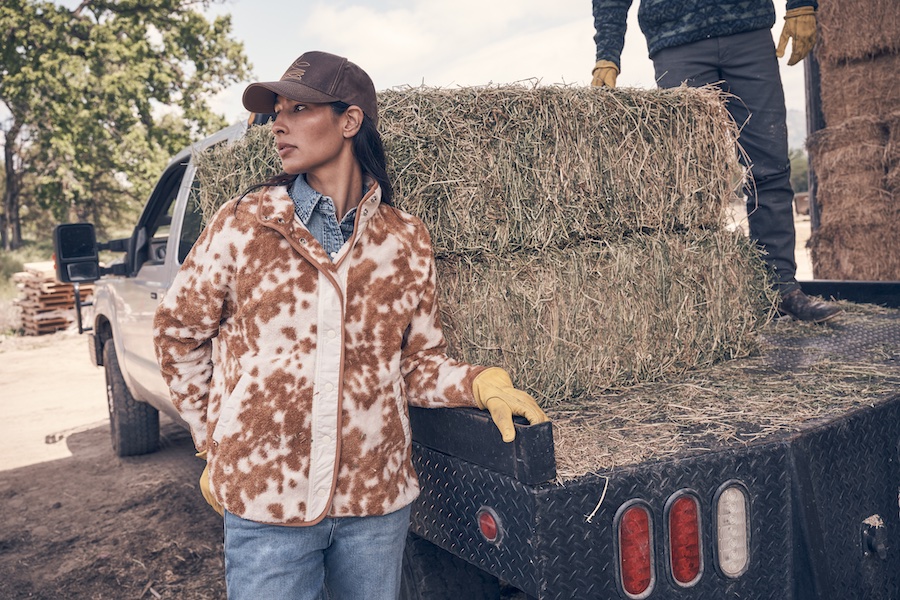
The patent-pending fabric technology prevents hay, straw, mulch and grass from clinging to high-pile fleece. The development received a category award in Fast Company's 2026 Innovation by Design Awards.

Latest News

#Spinning

Barmag’s single-stage Bi-Shrinkage concept impresses with yarn quality and efficiency

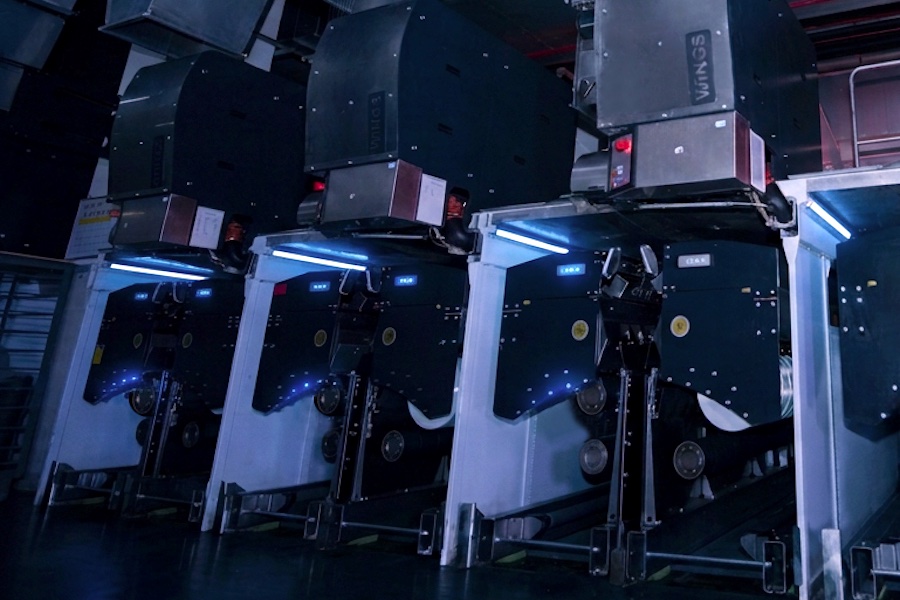
The Indian company Garden Silk Mills Pvt. Ltd. adopts Barmag's new single-stage Bi-Shrinkage Yarn (BSY) spinning concept based on WINGS FDY PLUS eco. The systems, which have been in operation for about a year, deliver excellent yarn quality with very good productivity.

#India ITME 2026

Trützschler brings intelligent fiber processing and automation to India ITME 2026

From December 4 to 9, 2026, the Trützschler Group will present its latest innovations in spinning, card clothing and nonwovens at India ITME in Greater Noida, India. At Hall 11, Booth B15, visitors can discover solutions designed to increase productivity, reduce operating costs and ensure consistently high product quality. Key highlights include the intelligent card TC 26i, the 12-head comber TCO 21XL, innovative card clothing solutions for improved fiber utilization and quality, as well as advanced nonwovens technologies for hygiene, wipes and technical applications.

#Recycling / Circular Economy

Circulose resumes recycling of discarded cotton textiles and appoints interim CEO

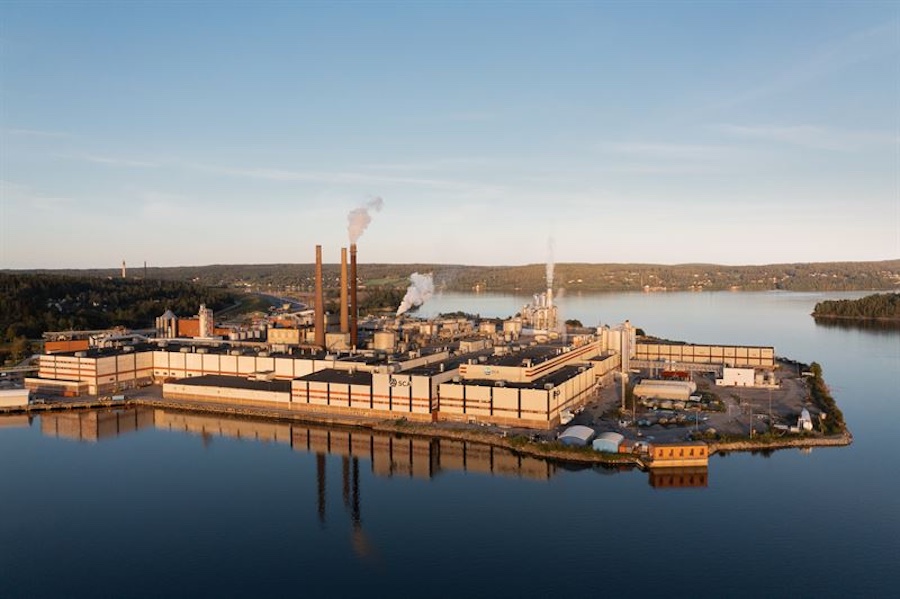
Circulose today announced its restart of commercial-scale production plant at Ortviken in Sundsvall, Sweden, marking a significant step in scaling next-generation materials for the global fashion industry. The Ortviken plant is the world’s first commercial-scale chemical textile recycling facility. Its restart demonstrates that the fashion industry is seeking ways to scale proven solutions that move beyond pilots and into commercial production.

#ITMA Asia + CITME 2026

Itema brings textile versatility to ITMA ASIA + CITME 2026

Itema announces its participation in ITMA ASIA + CITME 2026, taking place November 20–24 at the National Exhibition and Convention Center in Shanghai. In Hall 3 – Stand D06, the company will showcase two Galileo-RX rapier weaving machines weaving heavy denim and conveyor belt fabrics, demonstrating its ability to address different textile requirements with application-specific configurations. Five additional Itema machines at partner booths will extend the exhibition lineup to upper shoe fabric, label, Jacquard leno fabrics, and shirting, offering visitors a broader view of Itema rapier and air-jet weaving technologies.

TOP