[pageLogInLogOut]

#Composites

Spinnova enters composite markets with premium alpine skis

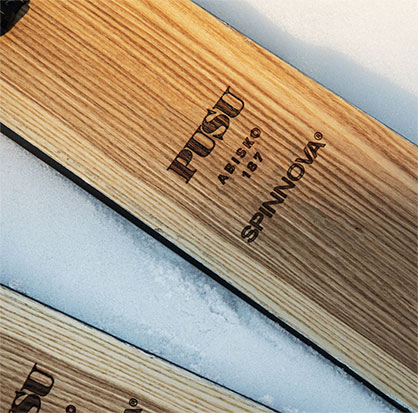
Sustainable material company Spinnova makes its debut in composites in partnership with ski manufacturer Pusu. In Pusu X Spinnova® alpine skis, carbon and glass fibres are replaced with Spinnova®.

Composites is a new application area for Spinnova, as the SPINNOVA® fibre has until now been demonstrated in apparel and interior design applications. Spinnova and Finnish ski maker PUSU today announce their partnership and pre-sales of skis strengthened with SPINNOVA® materials. Consumers can sign up for pre-sales at PUSU’s webshop, and deliveries of the first skis are expected to take place in early 2022.?

The products’ key features are high performance, sustainability and functional design. The sustainable SPINNOVA® material is laminated to the PUSU ski woodcore to replace carbon and glass fibres. Based on vigorous testing, initial results show that SPINNOVA® reinforced skis improves skiing experience and provides long-lasting performance and durability. Moreover, SPINNOVA® materials are safer to process than conventional composite materials.


"It’s been clear to us since the beginning that our fibre can be used in multiple ways. This is a great example of how SPINNOVA® fibres can be used in composites, and there are plenty of other exciting opportunities in the composites area in the future."

Spinnova’s CTO and co-founder Juha Salmela 


– It’s been clear to us since the beginning that our fibre can be used in multiple ways. This is a great example of how SPINNOVA® fibres can be used in composites, and there are plenty of other exciting opportunities in the composites area in the future. We’re happy that PUSU saw the potential in SPINNOVA® fibre as well. We expect to create sustainable skis without compromising excellent performance, says Spinnova’s CTO and co-founder Juha Salmela. ?

PUSU has been making skis and snowboards from sustainably sourced wood since 2016, and their philosophy is to maximize the use of natural materials. Ski manufacturing has traditionally relied on non-renewable materials like plastic, glass fibre, carbon fibre and costly metal blends. Winter-loving alpine skiers are now, however, more and more keen on alternatives that contribute to climate change as little as possible.

– We strongly believe that focusing on quality and natural materials creates the best and the most sustainable products for the environment and the user. Working with the SPINNOVA® fibre seems to prove we’re right – we have received outstanding feedback from professional test skiers using PUSU x SPINNOVA® skis, says PUSU founder and CEO Jani Ahvenainen.

There are some 135 million alpine skiers in the world, served by a 1.3 billion USD equipment market that has not seen much in the way of sustainable innovation yet.


Spinnova’s breakthrough technology makes textile fibre out of wood pulp or waste mechanically, with no harmful chemicals, minimal water usage and CO2 emissions. The 100% circular SPINNOVA® fibre does not shed any microplastics to the environment. The first commercial factory producing SPINNOVA® fibre is expected to begin production by the end of 2022. 
© 2021 SPINNOVA®
© 2021 SPINNOVA®


The ski collaboration is not expected to have a significant impact on Spinnova’s financial performance in 2021-2022.




More News from TEXDATA International

#Techtextil 2026

Performance Apparels: Functional textiles drive innovation at Techtextil 2026

From high-performance fibres and advanced membranes to smart textiles and sustainable material concepts – functional apparel is becoming one of the most dynamic innovation fields in technical textiles. At Techtextil 2026, exhibitors demonstrate how new materials, finishing technologies and digital functions are shaping the next generation of protective, workwear and outdoor systems.

#Texprocess 2026

Texprocess 2026: Automation, digitalisation and AI reshape textile processing

Investment decisions in textile processing have become increasingly complex. Rising energy prices, labour shortages and geopolitical uncertainties are forcing companies to prioritise technologies that deliver measurable improvements in efficiency and process stability. This applies not only to apparel production, but also to the processing of technical textiles and high-performance materials. Modernisation projects are therefore being evaluated more selectively – but the pressure to upgrade production systems continues to grow. Texprocess 2026 reflects this tension between cautious investment behaviour and increasing technological demand.

#Techtextil 2026

Textile Chemicals & Dyes: Innovation in Textile Chemistry moves into focus at Techtextil 2026

From PFAS-free finishes and water-saving dyeing technologies to advanced coatings and recycling-compatible formulations, innovation in textile chemistry is accelerating across the industry. Reflecting this development, Techtextil 2026 introduces Textile Chemicals & Dyes as a dedicated product segment, highlighting the growing role of chemical solutions in shaping the next generation of technical textiles.

#Recycling / Circular Economy

textile.4U publishes special edition “Top 100 Textile Recycling Companies 2025”

With a comprehensive 176-page special edition, textile.4U is dedicating its latest issue entirely to one of the most dynamic and influential topics in today’s textile industry: textile recycling. The new issue, published exclusively in high-quality print, presents the Top 100 textile recycling companies researched and selected by TexData – organizations that already play a key role in the transition to circular textiles or are expected to have a significant impact in the near future.

More News on Composites

#Composites

JEC World 2026 confirms its standing as the unmissable event for composites and their applications

JEC World 2026 confirms its position as the leading global event for the composite materials industry and its applications across multiple sectors, bringing together the entire composites ecosystem in Paris for three days of business, innovation, and collaboration. True to its Pushing the Limits motto, the 2026 edition delivered outstanding results despite travel disruptions worldwide. The numbers speak for themselves: more than 1,400 exhibitors from over 50 countries, including over 150 first-timers, presented a global panorama of products, equipment, and services across the entire composites value chain.

#Composites

KARL MAYER strengthens partnerships in the composites industry at JEC World 2026

KARL MAYER further strengthened its role as a reliable and competent partner to the composites industry at JEC World 2026. The global market leader in textile machinery manufacturing used the trade show to meet key customers, establish numerous new contacts, and engage in in-depth technical discussions.

#Composites

Kordsa showcases its global expertise in material technologies at JEC World 2026

Kordsa, a subsidiary of Sabancı Holding, shared its global expertise in material technologies with participants at JEC World 2026, held in Paris. The company’s solutions developed for a wide range of industries—particularly aviation, energy, and automotive—stood out among its key innovations at the exhibition. Throughout the event, Kordsa also presented its vision for sustainable growth and its strategic transformation in composite technologies to international stakeholders.

#Composites

JEC Composites Startup Booster: 2026 winners announced

The leading global startup competition for composites and advanced materials has crowned its 2026 champions, ahead of a landmark 10th anniversary edition next year. The winners of the JEC Composites Startup Booster 2026 were announced on Wednesday, 11 March, at JEC World, recognizing the most promising emerging companies reshaping the future of composites and advanced materials.

Latest News

#Raw Materials

New study shows low environmental impact by Cotton made in Africa Organic Cotton from Tanzania

Today, the Aid by Trade Foundation (AbTF) is announcing the results of a comprehensive life-cycle analysis (LCA) for cotton produced in Tanzania under the Cotton made in Africa Organic (CmiA Organic) standard. The study emphasises the small ecological footprint of CmiA Organic verified cotton. This can largely be traced back to the absence of synthetic pesticides, artificial fertilisers, and artificial irrigation. Consequently, CmiA Organic cotton can help the textile industry meet regulatory requirements as well as science-based targets. The results also show that the consequences of climate change threaten the livelihoods of these cotton farmers, even though the type of agriculture they practise barely contributes to climate change.

#Raw Materials

Better Cotton Initiative strengthens regenerative focus in standard update

The Better Cotton Initiative (BCI) has strengthened the regenerative focus of its field-level standard with the launch of a new version of its Principles & Criteria (P&C), which marks the next step in the organisation’s journey to becoming a regenerative standards system.

#Man-Made Fibers

Selenis and Kintra Fibers partner to scale 100% bio-based synthetic fiber technology

Selenis, a leading global specialty polyester manufacturer, today announced a strategic manufacturing partnership with materials science company Kintra Fibers to scale Kintra’s patented fiber-grade PBS resin - a 100% bio-based and biodegradable material designed for textile applications.

#Functional Fabrics

PERFORMANCE DAYS proves its relevance as the industry’s key meeting point

Held on March 18–19, 2026, PERFORMANCE DAYS once again confirmed its position as a leading international platform for functional textiles. A total of 3.366 trade visitors and around 560 exhibitors gathered in Munich, with the event already kicking off successfully on DAY 0, which received highly positive feedback for its interactive format. Despite challenging conditions caused by the public transport strike in Munich, the event saw strong attendance and a consistently high level of activity across both exhibition days.

TOP