[pageLogInLogOut]

#Associations

A voluntary Textile PRO Forum to harmonize textiles EPR implementation to support Circular Economy in Europe
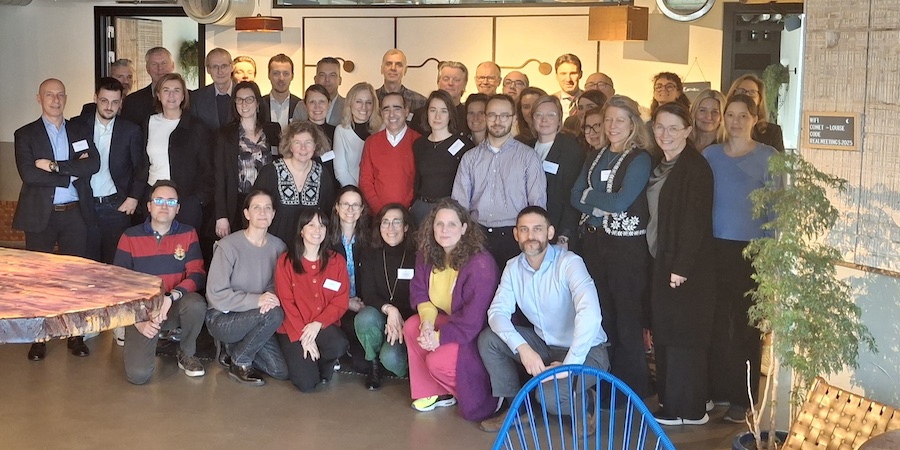
Yesterday, the undersigned PROs and business associations launch the Textile PRO[1] Forum, a unique voluntary initiative designed to harmonise and share best practices for effective and efficient implementation of the Extended Producer Responsibility for textiles and footwear (Textiles EPR) across Europe.
© 2025 EURATEX
© 2025 EURATEX


As Europe prepares for the mandatory separate collection of textile waste and with the revision of the Waste Framework Directive entering its final stage, the EPR schemes have become a cornerstone of the European strategy for sustainability and circularity of textiles.

These EPR schemes and the related PROs will operate differently in each EU Member State, reflecting national legislation, market conditions, and infrastructure. While this diversity reflects local features, it also presents a challenge for efficiency and for businesses which will face the complexity of up to 27 different EPR models for textiles.

The Textile PRO Forum addresses this need by bringing together experienced PROs and national business associations engaged in the implementation of the Textile EPRs. Its mission is to foster collaboration, harmonization, and knowledge-sharing among the Textile EPR Producer Responsibility Organizations (PROs).

Initiated by Refashion, the first PRO for textiles, and by EURATEX, the European Textile and Apparel Confederation, the Textile PRO Forum is coordinated by EURATEX. The initial key activities include the Forum set up and the following strategic workstreams:

+ Reduce administrative burden

+ Harmonize approaches to implement the eco-modulation fees, set by legislation

+ Supporting recycling

+ Harmonise framework

+ Set up, creation and expansion of PROs


List of the participating organizations

Asociación para la Gestión del Residuo Textil y Calzado

ATOK

Cobat Tessile

Comeos

Creamoda

Danish Fashion & Textile

Electrao

Erion Textiles

EURATEX

Fedustria

Finnish Textile & Fashion

Gesamtverband Textil- und Mode

Inretail

Modint

Reconomy / Redress

Recydata

Refashion

RETEX.Green

Retur

REFABRIK

Stichting Producentenorganisatie UPV Textiel

TEKO – Swedish Textile and Fashion Industries


[1] As per the Waste Framework Directive proposal 2023 the PRO (Producer Responsibility Organisation) means “a legal entity that financially or financially and operationally organises the fulfilment of extended producer responsibility obligations on behalf of producers”

More News from European Apparel and Textile Confederation (EURATEX)

#Associations

EURATEX calls for urgent action on industrial competitiveness

EURATEX, the European Apparel and Textile Confederation, welcomes today’s State of the Union Address by European Commission President, Ursula von der Leyen, and in particular her recognition of Europe’s need to rebalance unfair trade, cut red tape, and strengthen its industrial and strategic autonomy.

#Europe

European textile industry calls for €10 handling fee on ultra-fast-fashion imports

The introduction of the €3 customs duty on low-value imports marks an important milestone in Europe’s efforts to address the challenges created by the rapid growth of ultra-fast-fashion imports. Together with the abolition of the €150 customs duty exemption, it demonstrates that policymakers are willing to act when market distortions become impossible to ignore. However, the European textile and clothing industry considers this a first step rather than the final destination.

#Associations

Towards pragmatic and harmonised labelling in the EU

EDANA, alongside 14 European associations, urges the European Commission and Member States to adopt a pragmatic approach for the future harmonised packaging labels, in line with the EU’s agenda for the EU Single Market, simplification and competitiveness. The system should rely on text-free pictograms, available in achromatic or monochromatic versions matching the packaging palette, with the possibility of using digital labelling as a core element. Our associations represent manufacturers of consumer goods across Europe.

#Associations

Textile PRO Forum calls for greater harmonisation of textile EPR systems across Europe

The Textile PRO Forum has published a new analysis highlighting the need for greater harmonisation of textile Extended Producer Responsibility systems across Europe. The document, Toward harmonised Textile EPR Systems in Europe: analysis and recommendations, presents the results of work carried out by Workstream 1 of the Textile PRO Forum, led by Dr. Eng. Viola Corbellini, Strategic Development and Innovation Expert at Erion Textiles, and Eng. Luca Campadello, General Director at Erion Textiles. The workstream focused on reducing administrative burden for textile producers by identifying areas where procedures could be better aligned across countries.

More News on Associations

#ITMA Asia + CITME 2026

TMAS members drive textile technology innovation ahead of ITMA Asia

As the global textile machinery industry prepares to meet at ITMA ASIA in Shanghai this November, Swedish textile technology companies are responding to a rapidly changing market with investment, innovation and new solutions.

#Associations

VDMA Textile Machinery with new Executive Board

At the general meeting of VDMA Textile Machinery held in Hanover at the end of September, Dr Janpeter Horn, Managing Director of A. Herzog Maschinenfabrik, was re-elected as Chairman of the trade association. Regina Brückner, managing partner of Brückner Trockentechnik, and Verena Thies, managing partner of Thies Textilmaschinen, will once again serve as vice-chairs for the next four years.

#Associations

ITMF names three winners of the Sustainability & Innovation Award 2026

Three projects from the UK, Korea and China have been selected as winners of the ITMF Sustainability & Innovation Award 2026. The projects address textile-to-textile recycling, chemical recycling for automotive textiles and a regenerative approach combining silk production with ecological restoration.

#Associations

TMAS technology behind the perfect little black dress

The little black dress may be one of fashion’s simplest and most enduring garments, but achieving its characteristic clean lines depends on manufacturing precision of the kind supplied by Swedish textile machinery specialist and TMAS member Svegea.

Latest News

#Knitting & Hosiery

SHIMA SEIKI to showcase digital product creation at Apparel Sourcing Week

Leading digital textile solutions provider SHIMA SEIKI MFG., LTD. of Wakayama, Japan will exhibit at Apparel Sourcing Week 2026 in Bengaluru, India next month. The exhibition provides a platform for the entire apparel value chain, bringing together manufacturers, brands, suppliers and solution providers in one location.

#Digital Printing

SNA GZ accelerates its on-demand production strategy with Kornit Digital

SNA GZ is leveraging the Kornit Atlas MAX PLUS to expand its music merchandise production, streamline e-commerce order fulfillment, and grow its print-on-demand business across Europe. This investment increases SNA GZ's textile production capacity by 150% (2.5×), enabling the company to meet growing demand and support its continued expansion.

#Recycling / Circular Economy

NEUMÜHLE launches mono-material hoodie designed for textile recycling

With the Circular Mono Hoodie, Zurich-based label NEUMÜHLE introduces a new essential designed around a single-material principle. The textile construction is cotton throughout, right down to the sewing thread. Entirely free from elastane, the hoodie launches as a Limited Drop for CHF 139. Take-back, collection and existing recycling partnerships complement its circular design.

#Raw Materials

New Cotton Review examines competitiveness, market risk, and opportunities

From moving record volumes of Brazilian cotton to market, to managing price volatility, unlocking Ethiopia’s production potential, and strengthening African textile trade, the latest edition of Cotton: Review of the World Situation examines some of the most consequential opportunities and challenges facing the global cotton industry.

TOP



