[pageLogInLogOut]

#Associations

StitchTogether project - Turkish social partners present the Istanbul Declaration
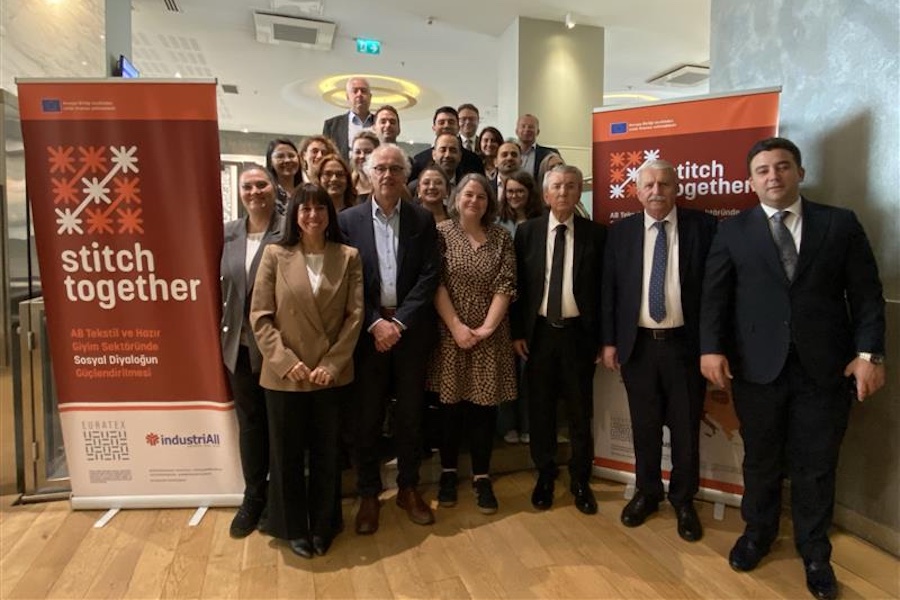
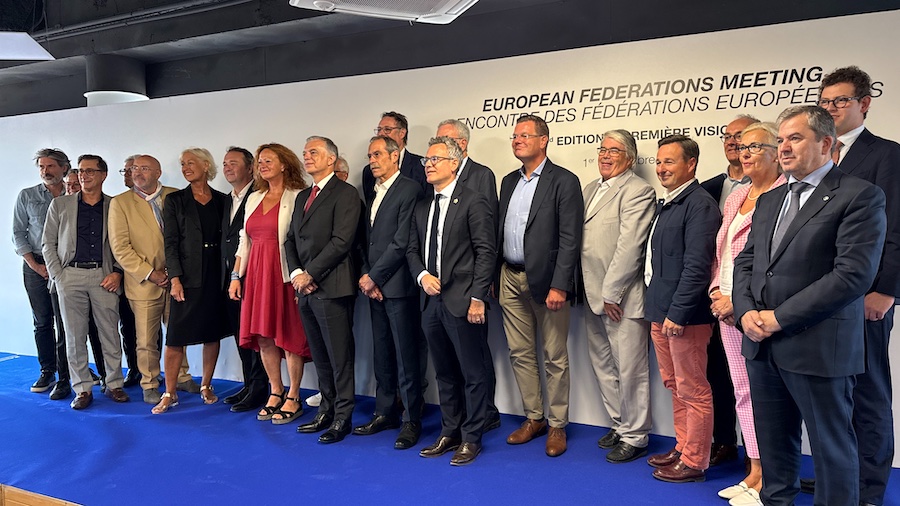
On 8-9 April 2025, social partners from the Turkish textile industry met in Istanbul to discuss different topics such as the green and digital transition, due diligence and brand responsibility, skills and training in the textile sector, as well as the next steps in their efforts to achieve broader and more effective social dialogue.
© 2025 EURATEX
© 2025 EURATEX


In the context of the EU-funded StitchTogether project, which aims at promoting social partnerships in the European Textiles and Clothing Industry in seven countries in the EU and Türkiye, this seminar was also the occasion to draft the Istanbul Declaration: a joint statement to emphasise the social partners’ strong commitment to work together.

The meeting in Türkiye brought together representatives of the Turkish textile industry, including the Turkish employer association (TTSiS), national trade unions (Teksif, Öz Iplik Is, DiSK Tekstil), brands representatives, the Ministry of Labour and stakeholders from the International Labour Organisation (ILO) and the Social Labour Convergence Programme, to discuss the future of the industry.

Together, social partners call upon the Government and the European Union to support the upcoming transformation of the textile and clothing industries, technology and skills upgrades, regional development and just transition. The Istanbul Declaration also includes a series of priorities, confirming social partners’ commitment in working together for a more competitive and fair Turkish textile industry.

Judith Kirton-Darling, IndustriAll Europe's general secretary stated that “There are more than 1 million workers in the textile industry in Türkiye, who are facing many challenges which they have to adapt to. We stand in solidarity with our Turkish partners and recall the fundamental importance of freedom of association and freedom of collective bargaining in both law and practice, essential for the sector’s economic resilience.”

Dirk Vantyghem, EURATEX Director General, stressed that “Turkish companies face important challenges to adapt to a fast changing environment. This requires flexibility and joint efforts from workers and employers alike, to remain competitive. A constructive and open social dialogue is critical in this regard.”

More News from European Apparel and Textile Confederation (EURATEX)

#Associations

EURATEX calls for urgent action on industrial competitiveness

EURATEX, the European Apparel and Textile Confederation, welcomes today’s State of the Union Address by European Commission President, Ursula von der Leyen, and in particular her recognition of Europe’s need to rebalance unfair trade, cut red tape, and strengthen its industrial and strategic autonomy.

#Europe

European textile industry calls for €10 handling fee on ultra-fast-fashion imports

The introduction of the €3 customs duty on low-value imports marks an important milestone in Europe’s efforts to address the challenges created by the rapid growth of ultra-fast-fashion imports. Together with the abolition of the €150 customs duty exemption, it demonstrates that policymakers are willing to act when market distortions become impossible to ignore. However, the European textile and clothing industry considers this a first step rather than the final destination.

#Associations

Towards pragmatic and harmonised labelling in the EU

EDANA, alongside 14 European associations, urges the European Commission and Member States to adopt a pragmatic approach for the future harmonised packaging labels, in line with the EU’s agenda for the EU Single Market, simplification and competitiveness. The system should rely on text-free pictograms, available in achromatic or monochromatic versions matching the packaging palette, with the possibility of using digital labelling as a core element. Our associations represent manufacturers of consumer goods across Europe.

#Associations

Textile PRO Forum calls for greater harmonisation of textile EPR systems across Europe

The Textile PRO Forum has published a new analysis highlighting the need for greater harmonisation of textile Extended Producer Responsibility systems across Europe. The document, Toward harmonised Textile EPR Systems in Europe: analysis and recommendations, presents the results of work carried out by Workstream 1 of the Textile PRO Forum, led by Dr. Eng. Viola Corbellini, Strategic Development and Innovation Expert at Erion Textiles, and Eng. Luca Campadello, General Director at Erion Textiles. The workstream focused on reducing administrative burden for textile producers by identifying areas where procedures could be better aligned across countries.

More News on Associations

#Associations

Automation, digitalization and new business models are shaping the future of footwear and leather technology

The European footwear and leather machinery industry is facing profound transformations. Global competitive dynamics, technological innovation, automation and digitalization are fundamentally reshaping markets, production processes and business models. This is one of the key findings of the new study “Threads of the Future – Footwear and Leather Technology Edition”, which was presented today by VDMA Textile Care, Fabric and Leather Technologies (VDMA TFL) during a press conference at SIMAC Tanning Tech in Milan.

#Raw Materials

Cotton Brazil Dialogues 2026 concludes with 50 international participants immersed in Brazilian cotton production

The Cotton Brazil Dialogues concludes its 2026 edition after a series of technical visits to farms, cotton gins and reference centers, as well as workshops focused on Brazilian cotton production. A total of 50 participants from 14 countries took part in the field trips. The initiative is led by the Brazilian Association of Cotton Growers (Abrapa) and the National Association of Cotton Exporters (Anea), with support from the Brazilian Trade and Investment Promotion Agency (ApexBrasil).

#Associations

Business situation weakens slightly, but the industry stays cautiously optimistic

The International Textile Manufacturers Federation (ITMF) has published the results of its 39th Global Textile Industry Survey (GTIS), conducted from 14 to 22 July 2026 among companies along the entire global textile value chain. Worldwide, 10% of participants rated their business situation as good, 53% as satisfactory and 37% as bad — a balance of -26pp, down from -17pp in May but still well above the 2023 lows. All regions are now in negative territory, from South Asia at -3pp to North & Central America at -58pp.

#Associations

IVGT membership: expertise that pays off

For energy-intensive textile companies, government compensation mechanisms are an important economic factor. The IVGT successfully supports its member companies in applying for state aid and thereby regularly contributes to significant financial relief.

Latest News

#Sustainability

Global Standards announce launch of a new textile processing standard

The 14th September 2026 marks the public launch of the Global Responsible Textile Standard (GRTS), a new standard for the processing of textiles made from fibres certified to third-party standards recognised by GRTS and covering a broad range of plant, animal, synthetic, man-made cellulosic and recycled fibres.

#Industry 4.0 / Digitalization

Orient Rongheng connects production planning across China and Bangladesh with FastReactPlan

Chinese apparel manufacturer Orient Rongheng is implementing Coats Digital’s FastReactPlan to digitalize production planning across its manufacturing operations in China and Bangladesh. The project aims to connect capacity, materials and order planning across multiple factories while integrating these processes with the company’s existing ERP and Manufacturing Execution System (MES).

#Raw Materials

ALLIED expands down traceability with lot-level carbon footprint data

ALLIED Feather + Down has expanded its TrackMyDown traceability platform to include validated cradle-to-gate carbon footprint data linked to individual down lots. The initiative is designed to provide brands and consumers with more detailed environmental information on the materials used in finished products and could also support future data requirements associated with Digital Product Passports.

#Sustainability

bluesign launches bluepass alongside first consumer-facing campaign

With its first consumer-facing advertising campaign, bluesign is taking a new approach to making chemical management, manufacturing standards and third-party verification more visible to consumers. The UNSEEN campaign will launch on September 20 around New York Climate Week and accompanies the introduction of bluepass, bluesign’s new consumer-facing designation.

TOP