[pageLogInLogOut]

#Associations

Joint Business Statement on the due diligence proposal

© 2023 EURATEX
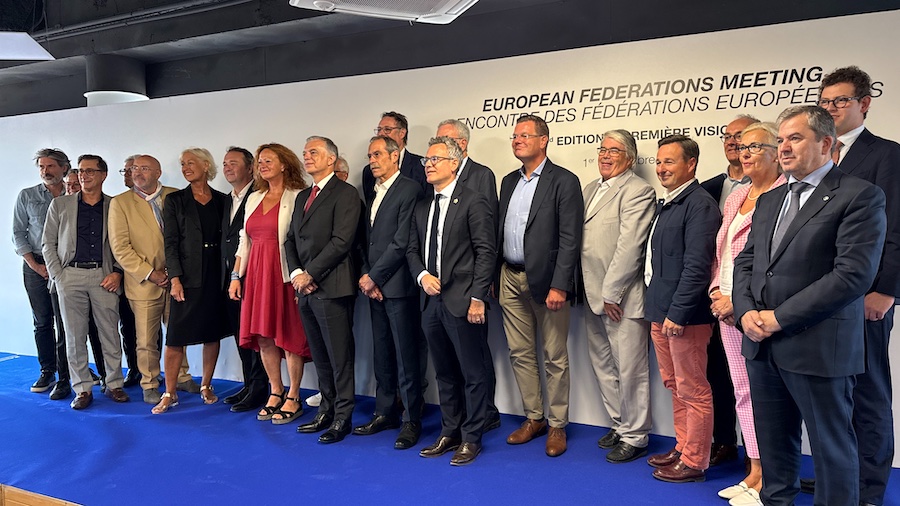
The European Apparel and Textile Association EURATEX , which represents the interests of the European textile and clothing industry at the level of the EU institutions, has issued a joint statement on the EU due diligence framework together with other associations and organisations from Europe.

This states:

"The European business community supports an EU due diligence framework. However, it calls for realism, proportionality, and workability for this framework to truly enable and guide businesses in taking necessary steps towards more sustainable supply chains.This includes companies under the scope but also SMEs that will be impacted. In this crucial phase of the legislative process, the business community would like to put forward a number of recommendations and concerns to enhance the benefits of the corporate sustainability due diligence proposal (CS3D):

• The most important element of the proposal should be full harmonisation. This is necessary to avoid fragmentation of the EU single market and ensure a level playing field. This can be achieved by using, for instance, an “internal market clause”. If the EU wishes its model to be used as a reference elsewhere in the world, it cannot rely on the limited harmonisation provided by the directive that would potentially lead to 27 different frameworks.

• Focusing on all aspects within the whole value chain is neither manageable nor realistic. Supply chains alone can comprise multiple tiers with hundreds or thousands of locations, product lines and entities. Companies should be able to prioritise the most salient risks and have the freedom to take appropriate actions to cease, prevent or mitigate identified adverse impacts in accordance with a risk-based approach. Without this ability to prioritise, companies cannot realistically implement due diligence requirements in an efficient way. The absence of a risk-based approach could also lead to counter-productive disengagement from value chains. The obligation to exercise due diligence must be proportionate to the size and means of the company in question.

• Regulating directors’ duties is unnecessary to reach the objectives of the proposal and does not belong in a due diligence framework. It will have negative side-effects, e.g. interfering with national company law systems and creating legal uncertainty, without added value to the ability of companies to apply effective due diligence.

• The list of norms/conventions in the Annex is too far reaching and generates legal uncertainty. Most of the norms in the annex are only applicable to states and not legal private entities like companies. To be workable, this list should be reviewed and shortened, clearly indicating what are the requirements directly applicable to companies, and guidance must be provided on how this should be implemented in practice.


• Legal liability provisions need to be balanced and truly incorporate the widely accepted principle that due diligence is first and foremost an obligation of means and that companies cannot be made liable for damages they have not caused or directly contributed to (intentionally or negligently).

• Clear guidance needs to be adopted and made available before rules enter into effect to help companies comply with and national authorities to enforce the legislation. Sectoral guidance would be helpful for specific industries as well as commodities such as minerals based on applicable relevant international guidelines and standards. More emphasis should be given to multi-stakeholder and industry initiatives to support companies’ due diligence efforts, for example by recognising relevant initiatives where appropriate.

• The legislation should acknowledge the possibility of organising due diligence at group level, including groups of companies that do not have a classic corporate structure consisting of parent companies and subsidiaries.

We urge the European Parliament and the Council to take these recommendations and concerns into account in the following steps of the legislative process. As it has been the case so far, the European business community stands ready to engage constructively to make the upcoming framework fit for purpose."

To see the list of signatories, please open the pdf file:

https://euratex.eu/wp-content/uploads/23-01-19-Joint-Business-Statement-on-the-due-diligence-proposal-CS3D_final.pdf
More News from European Apparel and Textile Confederation (EURATEX)

#Europe

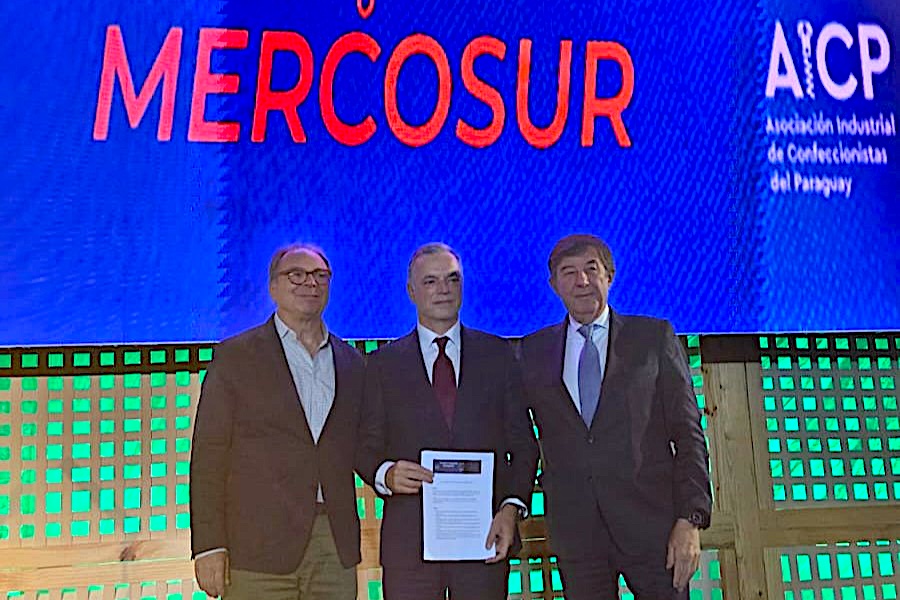
FITA, ABIT and EURATEX underline strategic importance of Mercosur – EU Partnership Agreement for the textile and apparel industry

The Argentine Textile Industry Federation (FITA), the Brazilian Textile and Apparel Industry Association (ABIT), and the European Apparel and Textile Confederation (EURATEX) continue to monitor the process of internalizing the Mercosur-European Union Partnership Agreement. This agreement is essential for the competitiveness of our industries, on both sides of the Atlantic.

#Associations

Industry associations warn against state-run EPR models in the EU

European industry associations, led by Euratex, have raised concerns over a growing trend in several EU Member States to introduce state-run Producer Responsibility Organisations (PROs) within Extended Producer Responsibility (EPR) schemes.

#Associations

European business associations celebrate the signature of the EU-Mercosur FTA

The 17th January marks a historic milestone with the signing of the EU-Mercosur Trade Agreement, creating the biggest trading block in the world. European business – represented by more than 28 associations across a wide range of sectors – warmly welcomes this signature. It sends a strong and timely signal that the EU remains open and is committed to rules-based global trade. In a time of global uncertainty, this agreement is a key growth booster.

#Europe

Level playing field at stake: Europe’s textile industry demands decisive action

Yesterday, the European Parliament took a welcomed and necessary step by voting a resolution calling for stronger market surveillance, reinforced customs controls and faster enforcement of the Digital Services Act in case of infringements. For Europe’s textile and clothing manufacturers, this is the first political acknowledgement that the system is broken — and that enforcement must finally match the scale of the problem.

More News on Associations

#Associations

Engineering depth and diversity for composites

Airbond is the latest member of the British Textile Machinery Association (BTMA) to receive recognition for contributions to the composites industry. The engineering firm based in Pontypool, South Wales, has just received the Make UK Energy and Sustainability Award for its Lattice 3D Printing project.

#Composites

Alliance for European Flax-Linen & Hemp expands bio-materials presence at JEC World 2026

The Alliance for European Flax-Linen & Hemp is pleased to announce its participation at JEC World 2026, featuring a significantly expanded presence and an enhanced offering for the global composites industry.

#Associations

INDA announces future dates and locations for FiltXPO™ and IDEA® events

INDA, the Association of the Nonwoven Fabrics Industry, announced the future dates and locations for its FiltXPO™ and IDEA® events, reaffirming its long-term commitment to serving the global filtration, nonwovens, and engineered materials communities.

#Associations

Latest news from Bremen: ICAC Plenary Meeting to take place right before the International Cotton Conference

The International Cotton Advisory Committee (ICAC) will hold its 83rd Plenary Meeting on 23–24 March 2026 at the Parliament building in Bremen. The meeting will take place immediately ahead of the 38th International Cotton Conference Bremen (25–27 March 2026) and marks a historic premiere: for the first time, the ICAC Plenary will be hosted in close cooperation with the Bremen Cotton Exchange and the Faserinstitut Bremen e.V. (FIBRE).

Latest News

#Knitting & Hosiery

The new RE 6 EL from KARL MAYER shows what it can do

KARL MAYER’s new RE 6 EL from KARL MAYER brings a breath of fresh air to raschel fabric production. The latest samples from the textile product development department of this innovative textile machine manufacturer demonstrate the extensive design possibilities on offer.

#Research & Development

Testing and research laboratory ensures safe and more sustainable products worldwide

For 80 years, Hohenstein has stood for independent testing, scientific expertise and practical solutions. Today, the testing and research service provider supports manufacturers and brands worldwide in making textiles, hardlines and medical devices safe, more sustainable and market-ready – thereby building trust among consumers. With an international presence and interdisciplinary expertise, Hohenstein supports its customers from production through to market launch, helping them navigate an environment of growing regulatory and societal demands.

#Spinning

Perfect quality through collaboration: Machinery from Trützschler, Toyota and Murata at Zirve Tekstil

In today’s textile industry, excellence is not achieved by chance – it’s the result of deliberate decisions, technical expertise, and the courage to go beyond conventional paths. The Turkish company Zirve Tekstil has done just that: by combining the best technologies from Trützschler, Toyota and Murata, they’ve created a production setup that delivers outstanding yarn quality – recognized worldwide.

#Research & Development

Award-winning research for sustainable carbon fibre cycles

Sustainable recycling of carbon fibres is possible through targeted electrochemical surface modification, which makes the sizing of carbon fibres resistant to solvolysis. ITA PhD student Sabina Dann was awarded the MSW Award from RWTH Aachen University for her master's thesis on this development. The award ceremony took place on 12 November 2025 in Aachen.

TOP