[pageLogInLogOut]

#Associations

EU-India Free Trade negotiations: an opportunity to rebalance trade relations and promote a global sustainable textile industry.
© 2022 EURATEX
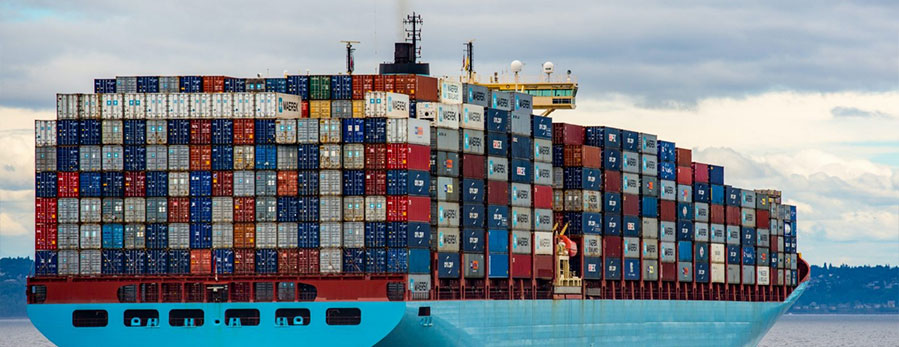
Today’s trade relations between the EU and India in textiles and clothing are characterised by a large and systemic trade deficit for the EU; annual imports from India exceed €6 bln (2021) – making it the 4th supplier – while EU exports to India reached just half a billion – the 20th place in the export markets.

Against this background, the free trade negotiations are an opportunity to rebalance that relationship; European textile and clothing companies can offer high quality and innovative products for the Indian market, but they can also offer solutions to reduce the environmental footprint of the textile industry.

EURATEX, as the voice of textiles and apparel manufacturers in Europe, supports an ambitious EU trade agenda, that puts reciprocity, transparency, fair competition and equal rules at the centre of its action. The FTA is an opportunity to establish a more sustainable and fair trading system, based on rules, global environmental and social standards, which are effectively respected by all.

In this context, EURATEX highlights that the sector needs open and efficient markets, but combined with effective controls where necessary, thus ensuring level playing field for European companies. It is clearly essential that the same level of market access to India – both in terms of tariff and non-tariff barriers – is available to EU producers as vice versa.

India today benefits from reduced customs duties due to GSP. For European companies instead, market access to India is challenging, facing non-tariff barriers (related to proof of origin, quality control procedures, etc.) as well as national or state-level support programmes which distort the level playing field between EU and Indian companies.


That level playing field should also apply to our sustainability targets. As the EU will roll out its EU Textile Strategy, setting ambitious standards and restrictions (e.g. on chemicals), we must ensure the FTA is fully aligned with that strategy.

Director General Dirk Vantyghem commented: “We look to these negotiations with great interest. The FTA is an opportunity to develop a shared ambition between the European and Indian industry to make sustainable textiles the norm, and to create a regulatory framework where our companies can compete in a free and fair environment.”
More News from European Apparel and Textile Confederation (EURATEX)

#Associations

Industry associations warn against state-run EPR models in the EU

European industry associations, led by Euratex, have raised concerns over a growing trend in several EU Member States to introduce state-run Producer Responsibility Organisations (PROs) within Extended Producer Responsibility (EPR) schemes.

#Associations

European business associations celebrate the signature of the EU-Mercosur FTA

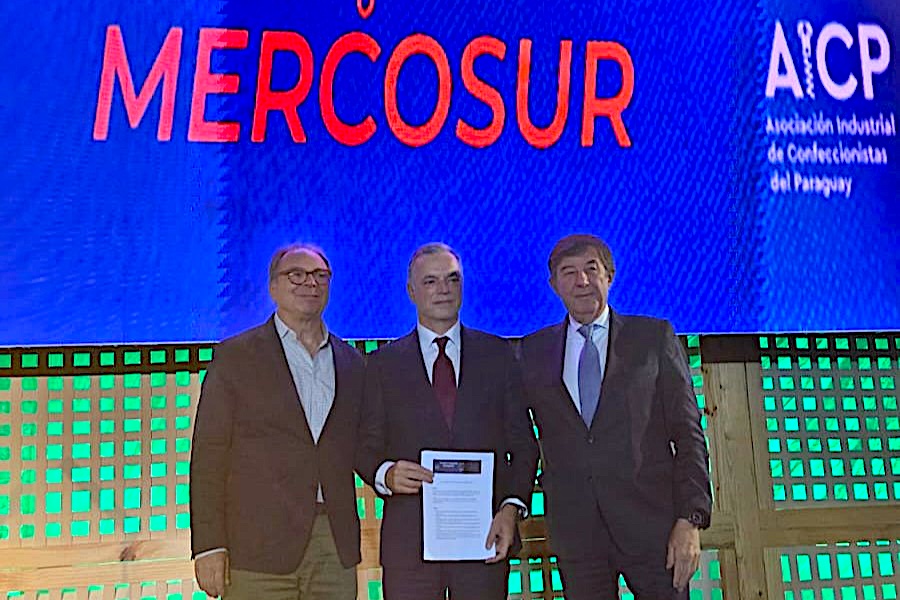
The 17th January marks a historic milestone with the signing of the EU-Mercosur Trade Agreement, creating the biggest trading block in the world. European business – represented by more than 28 associations across a wide range of sectors – warmly welcomes this signature. It sends a strong and timely signal that the EU remains open and is committed to rules-based global trade. In a time of global uncertainty, this agreement is a key growth booster.

#Europe

Level playing field at stake: Europe’s textile industry demands decisive action

Yesterday, the European Parliament took a welcomed and necessary step by voting a resolution calling for stronger market surveillance, reinforced customs controls and faster enforcement of the Digital Services Act in case of infringements. For Europe’s textile and clothing manufacturers, this is the first political acknowledgement that the system is broken — and that enforcement must finally match the scale of the problem.

#Recycling / Circular Economy

EURATEX calls for a competitive and harmonised Circular Economy Act For Textiles

EURATEX, representing Europe’s textile and clothing industry with over 200,000 companies and 1.3 million workers, has submitted its official position paper to the European Commission’s consultation on the upcoming Circular Economy Act (CEA). The association welcomes the Commission’s initiative to shape a framework that strengthens Europe’s circular economy while maintaining industrial competitiveness.

More News on Associations

#Associations

INDA announces future dates and locations for FiltXPO™ and IDEA® events

INDA, the Association of the Nonwoven Fabrics Industry, announced the future dates and locations for its FiltXPO™ and IDEA® events, reaffirming its long-term commitment to serving the global filtration, nonwovens, and engineered materials communities.

#Associations

Latest news from Bremen: ICAC Plenary Meeting to take place right before the International Cotton Conference

The International Cotton Advisory Committee (ICAC) will hold its 83rd Plenary Meeting on 23–24 March 2026 at the Parliament building in Bremen. The meeting will take place immediately ahead of the 38th International Cotton Conference Bremen (25–27 March 2026) and marks a historic premiere: for the first time, the ICAC Plenary will be hosted in close cooperation with the Bremen Cotton Exchange and the Faserinstitut Bremen e.V. (FIBRE).

#Associations

Textile machinery: the upcoming Colombiatex 2026 speaks Italian

Numerous Italian textile machinery companies will be attending the upcoming Colombiatex, the premier trade fair for the Colombian textile supply chain, held in Medellin from January 27 to 29, 2026. This year’s edition further confirms the strong bond between local textile manufacturers and Italian technology providers.

#Associations

Waste2Fashion: FTTH Committed to advancing Circular Fashion in the Mediterranean

As an official partner of the Waste2Fashion project, the Tunisian Federation of Textile and Apparel (FTTH) participated in the Kick-off Meeting held on 10–11 December in Spain. The event brought together project partners from across the Mediterranean, including Spain, Italy, Egypt, Lebanon, and Tunisia, to align on a shared vision and initiate the first implementation steps.

Latest News

#Knitting & Hosiery

SHIMA SEIKI to exhibit at GMMSA Expo India

Leading Japanese computerized flat knitting technologist SHIMA SEIKI MFG., LTD. of Wakayama, Japan, together with its Indian sales representative Universal MEP Projects & Engineering Services, Ltd., will participate in the upcoming Garments Machinery Manufacturers & Suppliers Association (GMMSA) Expo India 2026 exhibition to be held in Ludhiana, India next month. Through its lineup at GMMSA, SHIMA SEIKI aims to further strengthen its presence within the Indian market with an exhibit that caters to diverse needs, consisting of seam-free WHOLEGARMENT® knitting technology as well as a brand-new shaping machine with high productivity and excellent cost performance.

#Research & Development

Bio-based fibers with good flame retardancy

Fibers made from bio-based plastics reduce dependence on fossil raw materials and promote the circular economy. The covalent bonding of flame-retardant additives can open the way for these fibers to enter the mass market.

#Nonwovens

ENDURANCE Program: Driving operational sustainability at Magnera

As Magnera enters a new year, the company is reflecting on a key sustainability milestone from 2025: the launch of ENDURANCE, its global, employee-led initiative focused on waste reduction and sustainable innovation. Launched on Earth Day 2025, this initiative has generated more than 250 improvement submissions from team members across Magnera’s global operations, demonstrating strong engagement and shared accountability for sustainability across the organization.

#Digital Printing

Maximising print efficiency exploring ink saving features for modern print production

In today’s print industry, balancing quality, efficiency, and environmental responsibility is a growing priority. With increasing pressure on margins and sustainability, solutions that streamline production without sacrificing results are more relevant than ever.

TOP