[pageLogInLogOut]

#Europe

EU-UK trade figures confirm: BREXIT has been a “lose-lose” deal for the textile industry
© 2022 EURATEX
Latest trade data (January-September 2021) show a dramatic drop of imports and exports of textile goods between the EU and UK, with significant losses for companies on both sides. The situation is likely to get worse, as the full customs regime between UK and EU has entered into force on 1 January 2022. EURATEX calls on the European Union and the United Kingdom to effectively cooperate to remove the issues in the EU-UK Trade agreement that prevent smooth trade flows.

All the sectors have been already suffering a significant loss in the past year and textiles has been no exception. Compared to the same period in 2020, between January and September the EU recordeda dramatic fall in imports (-44%, corresponding to almost € 2 billion) and in exports (-22%, corresponding to € 1.6 billion). The data show that the most impacted EU countries on the export side are Italy, Netherlands, Belgium and Germany while on the import side the most impacted countries are Germany, Ireland and France. Among the T&C sectors, clothing articles are facing the most severe drop in both imports and exports, corresponding to a total trade loss of more than € 3.4 billion over the 9 months period. Despite these alarming figures, the UK continues to be the most important export market for EU textiles and clothing. 

Concerning the impact on the UK textiles sector, in May 2021 the UK Fashion and Textile Association’s (UKFT) surveyed 138 businesses, including leading UK fashion brands, UK textile manufacturers, wholesalers, fashion agencies, garment manufacturers and retailers. 


The results of the survey showed that: 

• 71% currently rely on imports from the EU 

• 92% are experiencing increased freight costs  

• 83% are experiencing increased costs and bureaucracy for customs clearance 

• 53% are experiencing cancelled orders as a result of how the EU-UK agreement is being implemented 

• 41% had been hit by double duties  

• The vast majority of the surveyed companies declared they are looking to pass the increased costs on to consumer in the next  6-12 months 

The above situation is expected to get worse. Since 1 January, full customs controls are being implemented. It means that export and import rules have become stricter: products should already have a valid declaration in place and have received customs clearance. Export from Britain to the EU must now have supplier declarations and the commodities codes changed.  

EURATEX calls on the European Union and the United Kingdom to effectively cooperate to address, solve and remove the issues in the EU-UK Trade agreement that currently prevent smooth trade flows between the two sides of the Channel. It is causing considerable losses for textile companies both in the EU as well as in the UK.  


More News from European Apparel and Textile Confederation (EURATEX)

#Europe

Level playing field at stake: Europe’s textile industry demands decisive action

Yesterday, the European Parliament took a welcomed and necessary step by voting a resolution calling for stronger market surveillance, reinforced customs controls and faster enforcement of the Digital Services Act in case of infringements. For Europe’s textile and clothing manufacturers, this is the first political acknowledgement that the system is broken — and that enforcement must finally match the scale of the problem.

#Recycling / Circular Economy

EURATEX calls for a competitive and harmonised Circular Economy Act For Textiles

EURATEX, representing Europe’s textile and clothing industry with over 200,000 companies and 1.3 million workers, has submitted its official position paper to the European Commission’s consultation on the upcoming Circular Economy Act (CEA). The association welcomes the Commission’s initiative to shape a framework that strengthens Europe’s circular economy while maintaining industrial competitiveness.

#Associations

European textile and clothing federations mobilize against ultra-fast fashion

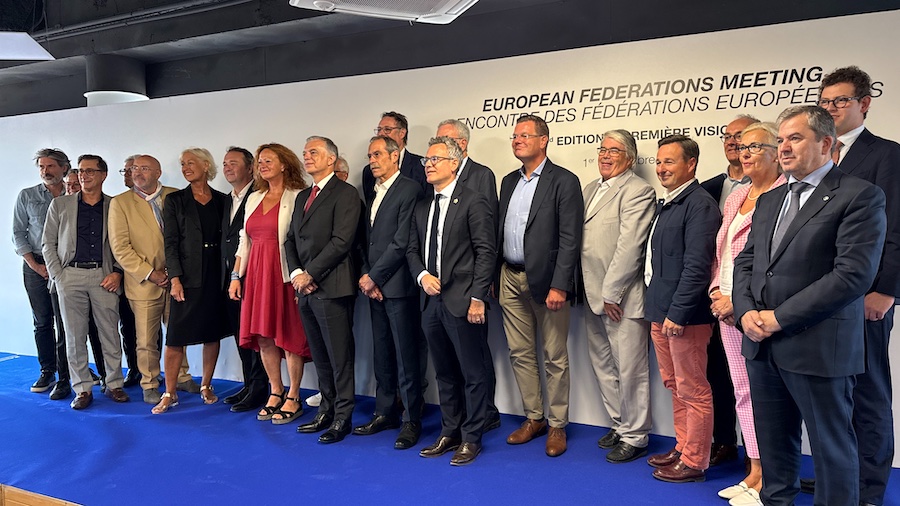
On the occasion of the Première Vision trade fair in Villepinte, the leading European textile and clothing federations issued a solemn call for urgent action against the rapid rise of ultra fast fashion. This model, driven by major non-European e-commerce platforms, already accounted for 4.5 billion imported parcels in the European Union in 2024—representing 5% of clothing sales (20% online)—and continues to grow at a staggering pace.

#Associations

Joint statement by EURATEX and Danish Fashion and Textiles

EURATEX and its Danish member Dansk Mode & Textil are calling upon the Danish Presidency of the EU to bring back stability and transparency to the European agenda. These last few months we have seen major upheavals and turbulence in global markets, as well as uncertainty surrounding a number of regulatory initiatives. All this creates a climate of uncertainty for European industry and anxiety with the consumers. As a result, demand for textile and garments is low, and entrepreneurs are hesitant to make any further investment decisions.

More News on Europe

#Europe

EU aims to advance global clean transition and implementation of the Paris Agreement at UN's COP30

At the COP30 UN Climate Change Conference in Belém, Brazil, from 10-21 November, the European Union will reaffirm its strong commitment to climate action. The EU is dedicated to paving the way toward a global transition that is clean, fair, and resilient. This transition aims to provide clean and affordable energy, create business opportunities, stimulate growth, enhance industrial competitiveness, and leave no one behind.

#Nonwovens

EDANA calls for clarity and consistency on the EU Deforestation Regulation (EUDR)

EDANA, the international association representing the nonwovens and related industries, considers the European Commission’s recent U-turn on the EU Deforestation Regulation (EUDR) a missed opportunity to deliver a clear and effective framework to help effectively fight global deforestation.

#Europe

State of Europe’s environment not good: threats to nature and impacts of climate change top challenges

State of Europe’s environment not good: threats to nature and impacts of climate change top challenges Significant progress has been made in reducing greenhouse gas emissions and air pollution, but the overall state of Europe’s environment is not good, especially its nature which continues to face degradation, overexploitation and biodiversity loss. The impacts of accelerating climate change are also an urgent challenge, according to the European Environment Agency’s (EEA) most comprehensive, ‘state of environment’ report, published today. The outlook for most environmental trends is concerning and poses major risks to Europe’s economic prosperity, security and quality of life.

#Recycling / Circular Economy

EU to make textile producers pay for collection and recycling

On Tuesday, Parliament gave its final green light to new measures to prevent and reduce waste from food and textiles across the EU.

Latest News

#Natural Fibers

38th International Cotton Conference Bremen: Let´s Talk about Cotton!

The 38th International Cotton Conference Bremen, to be held on 25-27 March 2026 in Bremen’s parliament building on market square, once again sends a powerful signal for professional excellence and international dialogue. The focus is on the latest market trends and technical innovations throughout the entire value chain – from agriculture and quality assurance to processing and the circular economy. With its high-calibre speakers, the conference remains an indispensable forum for anyone involved in shaping the cotton industry scientifically, technically, or economically.

#Recycled_Fibers

Leading fashion brands step up to unlock the next chapter of Circulose

Since 2024, under new ownership and leadership, Circulose has set a renewed strategic direction focused on securing long-term commitments with partner brands to bring CIRCULOSE® back to market at scale. This strategy has proven successful.

#Research & Development

More safety and comfort for protective clothing thanks to auxetic fabrics

When everyday materials are pulled, they stretch or elongate in the direction of the pull and become narrower in cross-section. We can also observe this property in two-dimensional textiles. Auxetic structures behave differently here. They have the striking property of not changing under tensile stress or even increasing their width or thickness. These properties are advantageous, for example, in protective textiles or textile filter media. The DITF are researching auxetic fabrics for various applications.

#Recycled_Fibers

Recycling mixed-fibre garments becomes a reality: RadiciGroup, The LYCRA Company and Triumph take circular fashion a step forward

The process, which is both economically and environmentally sustainable, has enabled the production of an underwear set made from 100% recycled nylon and LYCRA® fibre in a closed-loop system.

TOP