[pageLogInLogOut]

#Associations

Global Textile and garment manufacturers initiative publishes white paper on commercial compliance

The initiative, led by the STAR Network, the International Apparel Federation (IAF) and the Better Buying Institute and supported by GIZ FABRIC consists of 13 industry associations from nine countries facing similar challenges regarding purchasing practices in the textile and garment industry. Through a process of consultation, these associations have now jointly agreed on the text of the white paper that is published today. This marks the first joint manufacturers’ position on the improvement of purchasing practices.

The white paper contains the core principles that manufacturers as part of the Sustainable Terms of Trade Initiative (STTI) do not want to see breached by the companies that buy from them. And it suggests how manufacturers will collaborate to apply commercial compliance in the apparel sourcing business

The white paper establishes commercial compliance as a leading principle for the manufacturer’s perspective on the improvement of purchasing practices. STTI defines it as ‘purchasing practices that do not cause obvious and avoidable harm to manufacturers’. The white paper lists ‘key recommendations’, defining what purchasing practices manufacturers consider to be breaches of their definition of commercial compliance. The associations participating in the initiative recognise that the breaches of these key recommendations seriously impair their ability to run a commercially viable business, let alone to contribute to stronger and more sustainable supply chains.

Going beyond the key recommendations, the work by the associations has also yielded a set of further recommended improvements to current common purchasing practices. Importantly, the white paper also contains a comprehensive research agenda aimed at finding out how purchasing practices can adhere to commercial compliance and be further improved while maintaining the flexibility and commercial independence that is to the advantage of both buyers and suppliers, as well as their customers and workers.


A phase 2 to the initiative is foreseen to start within weeks. In phase 2, two major and interconnected approaches will emerge. The initiative will seek structural dialogue with buying brands and retailers and some of the MSIs in which they participate on the inclusion of the concept commercial compliance in purchasing practices codes. Secondly, the initiative will aid the creation of a system of improved transparency regarding commercial compliance.

More News from INTERNATIONAL APPAREL FEDERATION (IAF)

#Textiles & Apparel / Garment

IAF Position on tariffs

The International Apparel Federation (IAF) represents the apparel manufacturing community across more than 40 countries—a global industry comprising hundreds of thousands of companies and millions of employees. Apparel and textiles are among the most globalized industries, historically foundational to industrial development around the world.

#Associations

IAF and ITMF unite global fashion and textile leaders

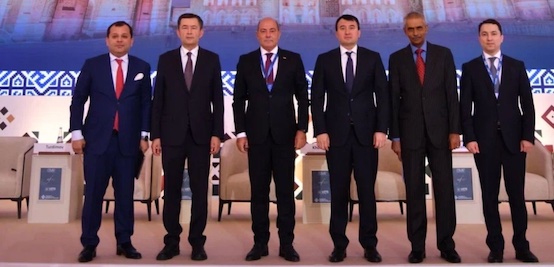
The joint ITMF Annual Conference and IAF World Fashion Convention was held on September 8-10 in the historic city of Samarkand, Uzbekistan. This year’s convention, co-organized by the International Apparel Federation (IAF) and the International Textile Manufacturers Federation (ITMF), and hosted by Uztextileprom, the Uzbekistan Textile and Garment Industry Association, and the Chamber of Commerce & Industry, Uzbekistan highlighted the crucial interdependence of our sectors.

#Associations

Partnership ITC and IAF: Full supply chain profitability

The International Trade Centre (ITC) and the International Apparel Federation (IAF) announce a partnership to stimulate innovation towards “full supply chain profitability” for apparel manufacturers and brands. The first phase of collaboration is research to be previewed at the 38th IAF World Fashion Convention, Philadelphia, October 23-24. Applying learning in autos and electronics, a joint study articulates how material suppliers and garment manufacturers create ‘smart flexibility’ by postponing production commitments closer to actual demand, unlocking capital from unneeded inventory and excess production. Smart Flexibility is a new approach that uses a mix of process and data tools enabling suppliers to create additional value for brands and manufacturers alike that supersedes the benefits of lowest cost global sourcing.

More News on Associations

#Associations

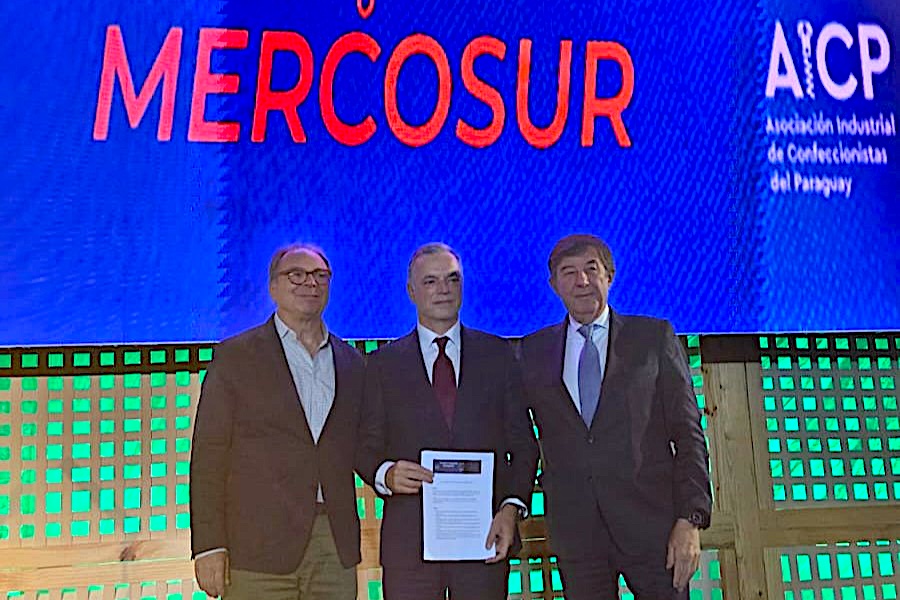
European Business Coalition welcomes provisional application of EU–Mercosur Agreement and calls for Swift and full implementation

With the European Commission’s decision to provisionally apply the EU–Mercosur Interim Trade Agreement, a process spanning more than 25 years now moves decisively into its implementation phase.

#Associations

EDANA joins industry coalition urging a strong internal market legal basis for the New Circular Economy Act

EDANA has joined 67 European industry associations in a joint industry statement calling on the European Commission and co-legislators to anchor the forthcoming New Circular Economy Act (CEA) in the Internal Market legal basis (Article 114 TFEU).

#Associations

EDANA warns of consequences of misclassification of PET spunbond imports

EDANA would like to remind its members and industry stakeholders of the legal requirement to comply with the EU rules on customs classification when importing nonwovens from third countries outside the EU. In this regard, it was recently discovered that there appears to be a high level of customs misclassification occurring in our industry. This could have dangerous and costly consequences for importers.

#Associations

Engineering depth and diversity for composites

Airbond is the latest member of the British Textile Machinery Association (BTMA) to receive recognition for contributions to the composites industry. The engineering firm based in Pontypool, South Wales, has just received the Make UK Energy and Sustainability Award for its Lattice 3D Printing project.

Latest News

#Recycled_Fibers

Worn Again Technologies unveils the Accelerator

Worn Again Technologies unveils the Accelerator, the next major step towards commercialising its pioneering Textile-to-Fibre recycling process and proving the technical and economic feasibility of polycotton recycling.

#Knitting & Hosiery

Driving WARP KNIT Inspiration

KARL MAYER sees performance fabrics and next-level textile solutions in particular as potential growth drivers for its customers, as a motor for business development and as real game changers for the entire textile industry. Innovation does not happen by chance. It is the result of close exchange with customers & brands, textile expertise and competence in textile machine engineering. This is why KARL MAYER is investing in progress and collaborative development and opening its TEXTILE INNOVATION CEN-TER (TIC) – a place to be for the entire textile world.

#Dyeing, Drying, Finishing

Monforts unveils interactive digital platform for textile finishers

Monforts has launched a new digital platform designed to give textile manufacturers faster, more intuitive access to the company’s finishing technologies, technical expertise and aftersales support worldwide.

#Techtextil 2026

Knowledge that drives progress: Techtextil and Texprocess forums strengthen the global textile industry with a future-oriented programme

From AI-supported production optimisation and digital manufacturing solutions to circular technologies and bio-based high-performance materials: the Techtextil and Texprocess forums provide answers to the key challenges of the global textile industry with a curated content programme. As hubs for innovation and knowledge, they enhance competitiveness and offer orientation in changing markets. From 21 to 24 April 2026, Frankfurt is once again the global meeting point for thought leaders from industry, research and business.

TOP