[pageLogInLogOut]

#Nonwovens / Technical Textiles

INDA releases 2020 Nonwovens Supply Report

INDA, the Association of the Nonwovens Fabrics Industry, announces publication of the eighth edition of the annual North American Nonwovens Supply Report for its members.
  • The North American Nonwovens Industry Responds to the Pandemic?
  • Report Offers INDA Members Key Metrics to Assist in Decision Making?
  • Benchmarks North American Capacity, Production and Operating Rates

Based on extensive research, producer surveys and interviews with industry leaders, the report provides an overall view of North American supply, including the key metrics of capacity, production and operating rates, in addition to regional trade, through the year 2020. The 72-page report contains 36 figures and 11 tables, with two new figures this year.

“One of INDA’s key services is to provide valuable data and actionable industry information to enhance decision making in our capital-intensive industry. This report is the most complete and accurate portrayal for both rolled goods for sale and also material produced for internal consumption in North America. It also presents the industry operating rates in key areas; the essential element for strategic planning and business investment decisions,” said Dave Rousse, INDA President.

The report—and the quarterly INDA Market Pulse and monthly Price Trends Summary—are provided to the approximately 375 INDA member companies and associates as part of their membership. The data gathered for this annual report serves as the foundation for the biannual North American Nonwovens Industry Outlook, which was recently published in December of 2020.


Findings from this year’s Supply Report include:

• In 2020, North American nonwoven capacity increased to 5.552 million tonnes, a net increase of 0.7 percent (39 thousand tonnes) over 2019. This growth figure accounts for not only the addition of new lines, but also machine productivity increases and line closures to arrive at a net increase growth figure. In the last three years, 51 lines have come online and 22 lines have been shut-down. Furthermore, as a result of the pandemic some of the new line additions planned for 2020 have shifted to 2021.

• Operating rates in 2020 were two-sides of the same coin, as some end-use markets were completely shut-down for a few months, notably building and vehicle construction, and other end-uses were operating full-out…if they could. Producers were challenged by workforce and transportation issues. As a result, the overall operating rate only increased one-percentage-point over 2020. Additionally, as the operating rate is based upon tonnage, the increased demand for lighter-weight materials – medical apparel and fine-fiber meltblown – affected the total tonnage output, as some lines were running full-throughput of surface area, but not tonnage.

• North American imports and exports, in tonnage, increased 51.2 percent and 14.2 percent respectively year-over-year. Imports were led by China (+97,200 tonnes, +121 percent) and India (+11,000 tonnes, +37 percent). Even with the significant shifts in North American trade dynamics, nonwovens tend to stay where they are produced, with the net trade balance (imports less exports) accounting for less than ten percent of the region’s capacity.

“This is a great time to be in nonwovens,” said Brad Kalil, Director of Market Intelligence & Economic Insights, INDA. “We are in a business that is expanding faster than the economy as production growth exceeded U.S. real GDP for the seventh consecutive year. Production growth also exceeded capacity growth for the fourth consecutive year. The overall operating rate for the industry also improved for the fourth consecutive year. Lastly – and most importantly – we are in a business that protects and improves people’s lives. This has been brought to the forefront recently with the benefits of protective medical apparel, respirators, face masks, and disinfecting wipes, now known by all. The nonwovens industry has responded to the pandemic and will continue to provide materials that keep the surfaces we touch clean, make safe the air we breathe, and provide a barrier to keep our bodies safe.”




More News from TEXDATA International

#Texprocess 2026

Texprocess 2026: Automation, digitalisation and AI redefine textile processing

Making investment decisions in textile processing has become significantly more demanding. Increasing energy costs, a shortage of skilled labour and ongoing geopolitical uncertainties are compelling companies to focus on technologies that deliver clear gains in efficiency and process reliability. This applies equally to apparel manufacturing and to the processing of technical textiles and high-performance materials. As a result, modernisation initiatives are assessed more carefully – even as the need to upgrade production systems continues to intensify.

#Techtextil 2026

Techtextil 2026: Between innovation pressure & market reality

From 21 to 24 April 2026, Techtextil in Frankfurt am Main will once again become the central meeting point for the international technical textiles and nonwovens industry. Running in parallel, Texprocess will focus on the industrial implementation of textile processing technologies as the leading platform in this field. Together, the two trade fairs form a closely integrated presentation and working platform along the entire textile value chain – from material development to finished applications.

#Techtextil 2026

Between geopolitical pressure and industrial resilience

In this interview, Dr. Janpeter Horn (VDMA) discusses the current challenges facing textile machinery manufacturers, shaped by geopolitical tensions, regulatory developments and subdued investment. He also outlines why innovation strength, integrated solutions and strategic positioning remain key to global competitiveness.

#Texprocess 2026

Between investment restraint and modernization pressure

Texprocess 2026 takes place in a complex market environment shaped by uncertainty and innovation pressure. In this interview, Elgar Straub (VDMA) explains why the trade fair is particularly relevant this year and which technologies are driving efficiency and competitiveness.

More News on Nonwovens / Technical Textiles

#ITMA Asia + CITME Singapore 2025

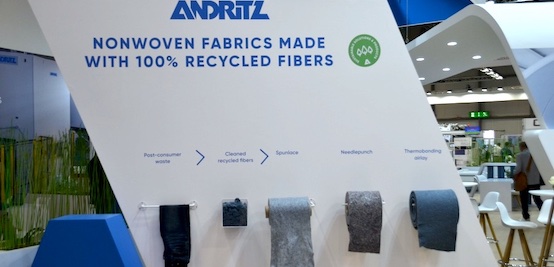
ANDRITZ sets focus on textile recycling and durable nonwoven production technologies at ITMA Asia 2025

International technology Group ANDRITZ will be presenting its innovative nonwovens production and textile solutions at ITMA ASIA + CITME 2025 in Singapore, from October 28 to 31, 2025 (Hall 2, D106). ANDRITZ will showcase its MMCF production plants, textile sorting and recycling, bast fiber processing, needlepunch, airlay, and life-cycle service technologies, with a focus on sustainable solutions. Discover how these innovations can grow your business opportunities and support a greener future.

#ITMA Asia + CITME Singapore 2025

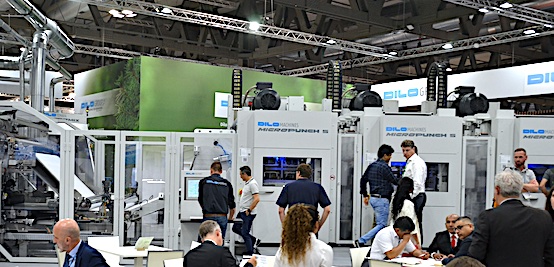
Dilo Group at ITMA ASIA Singapore 2025

At ITMA ASIA Singapore, the Dilo Group will exhibit at Booth No. H2 – D202. Together with Kansan Materials, Izmir, the company will present its latest developments and looks forward to welcoming visitors to exchange ideas and explore innovations in needling technology.

#Nonwovens

OUTLOOK™ 2025: Charting a sustainable and innovative future for the Nonwovens Industry

EDANA concluded its flagship event, OUTLOOK™ 2025, last week, marking it as a major success and addressing the biggest questions facing the industry. The three-day conference highlighted the urgent need for a unified approach to sustainability, regulation, and innovation in the absorbent hygiene and wipes sectors.

#Nonwovens

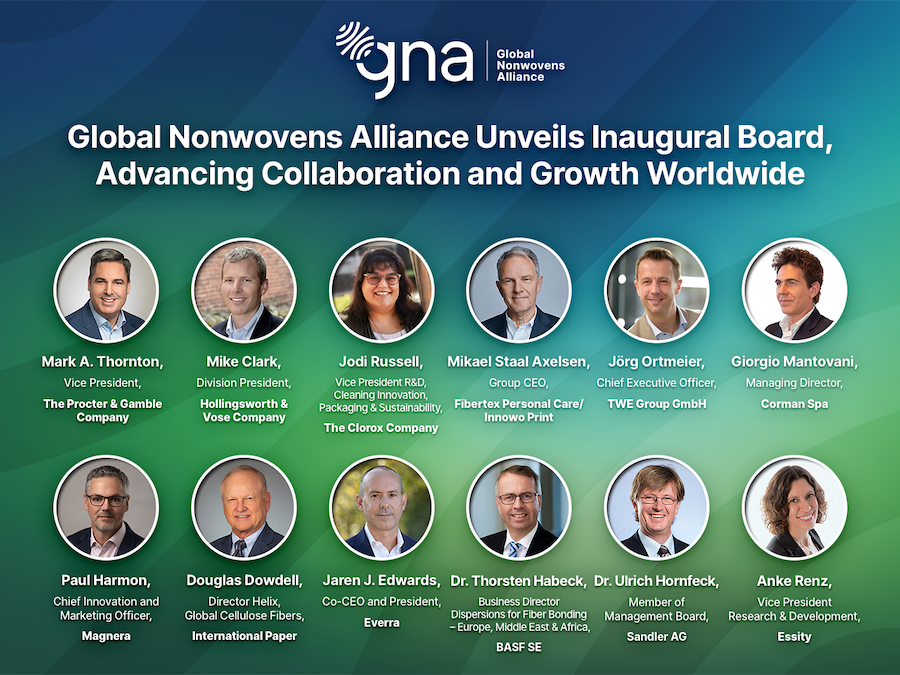
Global Nonwovens Alliance unveils Inaugural Board, advancing collaboration and growth worldwide

The Global Nonwovens Alliance (GNA), a tax-exempt federation jointly founded by INDA, the Association of the Nonwoven Fabrics Industry, and EDANA, the Voice of Nonwovens, announces the appointment of its founding Board of Directors. This group of leaders represents some of the most influential executives across the nonwovens value chain and reflects GNA’s mission to foster global collaboration, innovation, and growth in the industry.

Latest News

#Associations

BTMA backs global growth while investing in future UK leaders

As one of a number of new initiatives launched this year, the British Textile Machinery Association (BTMA) is launching the UK-India Textile Machinery Coalition. The UK-India Free Trade Agreement, signed in July 2025, has implications that extend across sourcing, competitiveness and long-term trade dynamics, believes BTMA CEO Jason Kent.

#Raw Materials

China projected to increase cotton production, yields, and imports in 2026/27

World cotton production in the 2026/27 season is projected at 25.9 million tonnes, exceeding global consumption of 25.2 million tonnes, according to the May 2026 issue of Cotton This Month. That means both production and consumption are expected to remain close to current season levels, while global cotton trade is projected to decline by 2.7% to approximately 9.6-9.7 million tonnes.

#Raw Materials

ICAC launches Carbon Credits Initiative to deliver new income streams to cotton farmers

The International Cotton Advisory Committee (ICAC) has announced a new initiative designed to unlock additional income streams for cotton farmers through participation in carbon credit markets, linking sustainable production practices directly to financial returns.

#Sustainability

Number of GOTS-certified facilities grow 15% globally as demand for credible sustainability standards continues to strengthen

Global Organic Textile Standard (GOTS) certification continued to grow in 2025, with nearly 18,000 certified facilities worldwide, despite ongoing geopolitical uncertainty and rapidly evolving regulatory requirements across global textile supply chains.

TOP