[pageLogInLogOut]

#Associations

Mask production: Nothing runs without textile machinery

Protective masks, everyday masks, disinfecting wipes and surgical gowns are goods in demand in times of corona. In their manufacture, textile machines are at the beginning of the production chain.

The production of the textile raw material is the first step of the usually multi-stage production processes. Members of the VDMA Textile Machinery Association are at the beginning of this technological chain.

The production of protective masks starts with the manufacture of the filter material, which for surgical masks as well as FFP2 and FFP3 respirator masks consists of fine-pored nonwoven fabric to intercept coronaviruses. In addition to the systems, machines and components used for this purpose, measurement and control technology ensures the highest quality of important parameters such as basis weight and air permeability. Nonwovens used for respiratory masks have to meet the same high-quality requirements as the masks – to ensure the protection of the mask wearer.

Members of the VDMA Textile Machinery Association have reacted to the new market requirements in a very short time and developed new technologies for knitted, warp knitted as well as woven mouth and nose masks that can be produced without the need for sewing. For surgical masks, FFP2 respirators and social distancing masks, a wide variety of other materials and combinations of materials are used (nonwovens, woven fabrics, knitted or warp knitted fabrics and laminates thereof). Elastic bands are required to wear the masks and several association members provide technologies for their production.

Materials for masks can be treated with textile chemicals to make them antiviral and antibacterial. For this purpose, the VDMA member companies offer application systems which apply the corresponding chemicals to fabric webs. As already mentioned, quality assurance is extremely important for medical products. For this purpose, member companies of the VDMA offer software systems with which each mask can be traced through the entire production process.

VDMA members also offer solutions for the assembly of respirator masks, some of which were developed at short notice. These solutions enable respirators to be produced that meet the relevant standards and the highest quality requirements of customers and market surveillance. This applies to systems for the production of surgical masks and FFP respirators. At the end of the production chain, machines are used to pack masks in single or multiple packs.

In pandemic times, the demand for protective gowns (so-called surgical gowns) also increases. The same applies to disinfecting wipes. For these textile products, too, VDMA members manufacture tailor-made machines for production through to packaging. The quality of the products is ensured by means of measurement and control technology.


An Internet article at http://www.machines-for-textiles.com provides detailed information on process steps and the range of services offered by the members of VDMA Textile Machinery. The overview is continuously updated. For research purposes, the manufacturers' directory at http://www.machines-for-textiles.com is also available, as are the industry experts by sending an enquiry to txm@vdma.org.

In the wake of the corona crisis, VDMA Textile Machinery has launched a new series of web events called "Textile Machinery Webtalk". Here, experts from up to four VDMA member companies present their innovative technologies on a specific topic in a maximum of 90 minutes and are available to answer questions from participants. The presentations are held in English. Participation in the web events is free of charge.

Topics of the first two webtalks were:

"Technologies for the production of melt-blown nonwovens for respiratory protection masks (FFP masks and surgical masks)."

"Technologies for the production of respiratory protection masks (FFP masks and surgical masks)."

The format is well received. Around 180 people from more than 30 countries took part in the first two webtalks. With this format, the VDMA reaches both textile and nonwovens manufacturers who already manufacture these products and companies that want to invest in new business areas.

The next webtalk will take place on 23 July 2020 from 14.00 to 16.00 (CEST) on the current topic "Technology solutions to produce fully-fashioned community face masks." Experts from KARL MAYER, STOLL by KARL MAYER and Jakob Müller will be presenting their technologies for producing everyday textile masks to an international expert audience. Interested parties can register here: https://register.gotowebinar.com/register/2607744021751510284

Further webtalks are in preparation. Up-to-date information on this will be published at http://www.machines-for-textiles.com/webtalk.
More News from VDMA Fachverband Textilmaschinen

#Associations

Young researchers recognised for cutting-edge work in recycling, fibre technology and textile mechanics

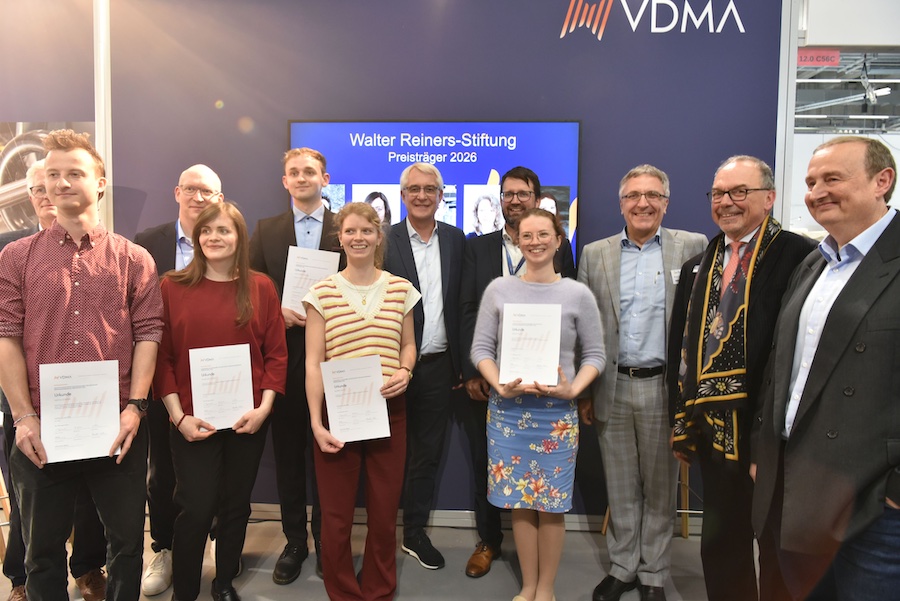
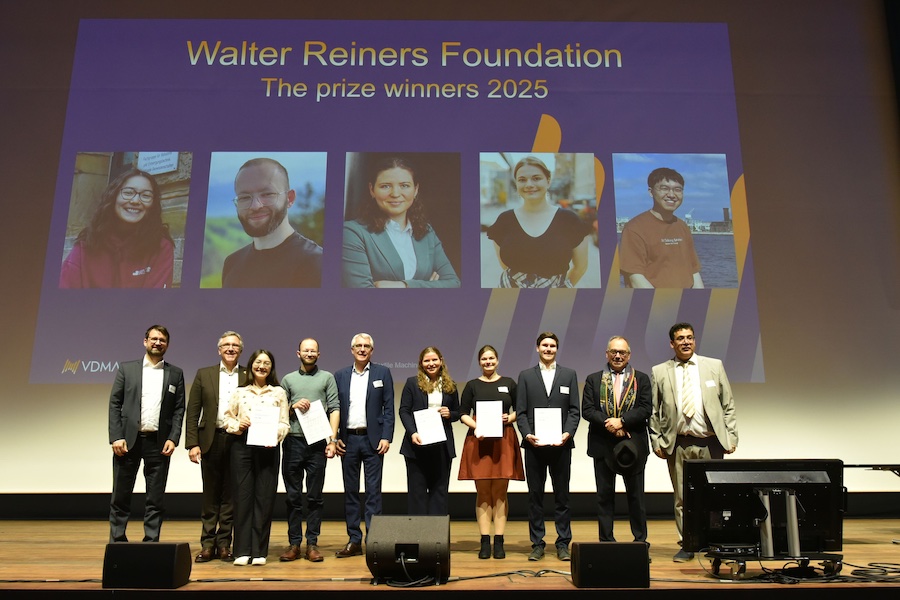
At the Aachen-Dresden-Denkendorf International Textile Conference held in Aachen at the end of November, Peter D. Dornier, Chairman of the Walter Reiners Foundation of the VDMA, honoured five successful young engineers. Promotion and sustainability prizes were awarded in the categories bachelor/project theses and diploma/master theses. Academic theses that develop solutions for resource-saving products and technologies, for example, are eligible for the sustainability awards.

#ITMA Asia + CITME Singapore 2025

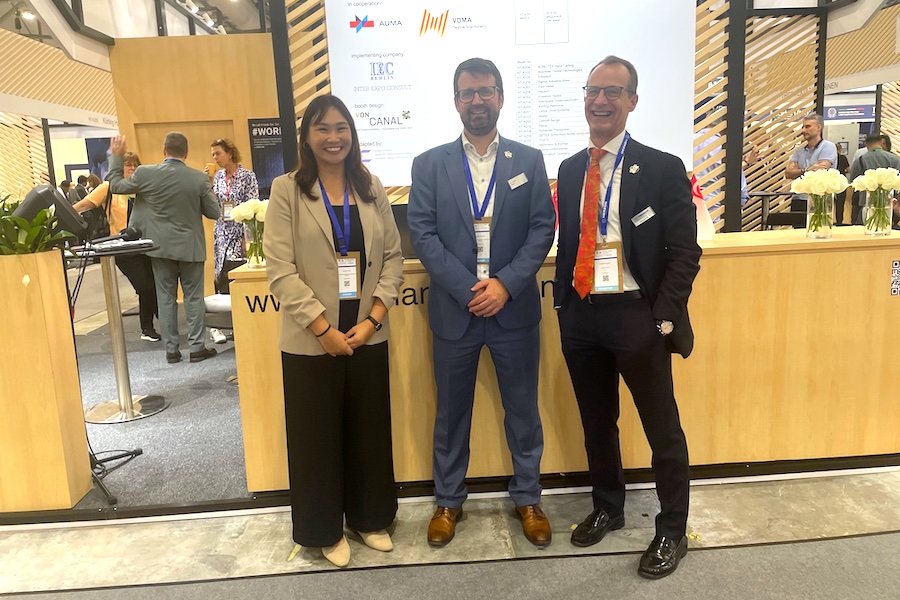
VDMA members at ITMA ASIA + CITME in Singapore

With 69 exhibiting member companies, ITMA ASIA + CITME 2025 is once again marked by a strong presence of VDMA companies. Altogether 82 companies from Germany will exhibit at the show, covering about 3,500 square meters of exhibition space, topped only by China and Italy. VDMA initiated a German Pavilion with two group stands (spinning in hall 4 and finishing in hall 7) with a total of 30 exhibitors.

#ITMA Asia + CITME Singapore 2025

VDMA member companies on display at ITMA ASIA

ITMA ASIA + CITME end of October in Singapore will see a strong participation of around 70 VDMA member companies. They will cover nearly all different machinery chapters along the textile value chain including spinning and man-made fibres, nonwovens, weaving, braiding, knitting & warp knitting, finishing & dyeing as well as technologies for textile recycling and processing of recycled material. VDMA initiated a German Pavilion with two group stands (spinning in hall 4 and finishing in hall 7) with a total of 30 exhibitors.

#ITMA Asia + CITME 2024

Smart technologies for green textile production

With 42 exhibiting member companies, ITMA ASIA + CITME 2024 is once again marked by a strong presence of VDMA companies. They cover nearly all different machinery chapters with a focus on spinning and man-made fibers, nonwovens, weaving, braiding, knitting & warp knitting, finishing & dyeing as well as technologies for textile recycling and processing of recycled material. In total, the German participation at the fair is the largest from outside China.

More News on Associations

#Associations

Engineering depth and diversity for composites

Airbond is the latest member of the British Textile Machinery Association (BTMA) to receive recognition for contributions to the composites industry. The engineering firm based in Pontypool, South Wales, has just received the Make UK Energy and Sustainability Award for its Lattice 3D Printing project.

#Composites

Alliance for European Flax-Linen & Hemp expands bio-materials presence at JEC World 2026

The Alliance for European Flax-Linen & Hemp is pleased to announce its participation at JEC World 2026, featuring a significantly expanded presence and an enhanced offering for the global composites industry.

#Europe

FITA, ABIT and EURATEX underline strategic importance of Mercosur – EU Partnership Agreement for the textile and apparel industry

The Argentine Textile Industry Federation (FITA), the Brazilian Textile and Apparel Industry Association (ABIT), and the European Apparel and Textile Confederation (EURATEX) continue to monitor the process of internalizing the Mercosur-European Union Partnership Agreement. This agreement is essential for the competitiveness of our industries, on both sides of the Atlantic.

#Associations

Industry associations warn against state-run EPR models in the EU

European industry associations, led by Euratex, have raised concerns over a growing trend in several EU Member States to introduce state-run Producer Responsibility Organisations (PROs) within Extended Producer Responsibility (EPR) schemes.

Latest News

#Sustainability

Ying McGuire becomes new CEO of Cascale

Cascale today announced the appointment of Ying McGuire as Chief Executive Officer, effective June 1, 2026.

#Technical Textiles

Sustainable, lightweight, and sound absorbing: Polyester-based front trunk solution for BEVs

As car manufacturers look to further reduce their carbon footprint, Autoneum has developed an innovative front trunk solution for battery electric vehicles (BEVs), made entirely from polyester-based textile. The Ultra-Silent Frunk offers significant weight reduction, improved acoustic and thermal insulation, and uses up to 70 percent recycled material, supporting sustainable and efficient vehicle design. Autoneum, global technology leader in acoustic and thermal management for vehicles, has already received orders for the new frunk from three major OEMs in Asia and Europe to be built in three BEV models. Series production for two BEVs has been underway in China and Germany since last year.

#Raw Materials

Modern testing methods for raw cotton

The 38th International Cotton Conference Bremen will take place from 25 to 27 March 2026 at the Bremen Parliament. This conference has traditionally stood for in-depth expertise and international exchange. The program will focus on technical innovations, market trends, and regulatory frameworks across the entire value chain – from agriculture to the circular economy. With high-profile speakers, the conference is regarded as the key meeting point for the global cotton industry. Today’s focus: Cotton quality and testing methods.

#Spinning

Rieter responds to higher raw material prices

Global political and economic developments have been leading to rising raw material and energy costs for some time. The textile machinery industry is also affected by this trend. Rieter machines and components consist to a large extent of steel, copper, aluminum and electronics. These materials in particular have seen higher demand and higher prices in recent months.

TOP